
Stakeholder perceptions of IELTS as a gateway to the professional workplace: The case of employers of overseas trained teachers
Official IELTS research report on IELTS Test - Speaking; IELTS Test - Writing; Impact and Washback - Impact theory and practice; Impact and Washback - Predictive validity; Impact and Washback - Stakeholder attitudes; Impact and Washback - Use of test scores, published in 2014.
Abstract
This paper reports on a qualitative study which explored stakeholder perceptions of the IELTS test as a gateway to the professional workplace for teachers in Australia and New Zealand.
The goal of this study was to research perceptions of school principals as regards teachers who have entered the profession through IELTS or other English language proficiency test pathways and how the changing language demands of teaching may have impacted on these perceptions.
Three research questions were addressed, with data for the study collected from 21 principals through their participation in one-to-one interviews and/or face-to-face focus groups. Five IELTS sample Speaking tests and three sets of IELTS Writing tests were used as the basis for discussion in the focus groups.
Findings from the analysis of the three data sources showed that:
- participants’ knowledge of IELTS was lower than expected
- participants’ expectations of overseas trained teachers’ proficiency in English was not always realistic, being heavily influenced by the demands of the school environment, especially in regards to interaction with students and parents
- while technological advances had changed some literacy practices, employer expectations regarding high standards of accuracy remained unchanged.
The paper concludes that stakeholders need to be better informed of what English proficiency tests can and cannot assess.
Further research could be undertaken to explore stakeholder needs, expectations and suggestions in terms of how best to interpret English proficiency standards and organise workplace processes for the purpose of optimising present practices in the employment of overseas trained teachers.
1 INTRODUCTION
This study explores the use of IELTS scores for measuring the language proficiency of overseas trained teachers (OTTs) in Australia and New Zealand (NZ), and the use of these scores in decision-making about workplace readiness. In these contexts, assessment of English language proficiency for entry to professions is sometimes achieved by specifically customised tests and sometimes by generic ones, including IELTS (Merrifield 2008). (The term ‘internationally-educated’ teacher is used in North American and Canadian research, perhaps to avoid the parochialism of the term ‘overseas-trained’ teacher. We have used the older term as this term is currently used in the regions investigated in this report, reflecting the Australian and British terminology as well as that used in the majority of the research literature.)
Relevant professional bodies determine language proficiency benchmarks, but there is a history of inconsistency both across and within professions as to how proficiency is measured and how test results are recognised, interpreted and applied (Chalhoub-Deville & Turner 2000; Wette 2011). In some fields, for example, law, the results of IELTS are accepted as evidence of English proficiency for professional registration, while other professions have tailored assessment tools reflecting their specific communication requirements. The Occupational English Test (OET) is one such assessment tool, and is applied to a range of health specialisations. However, its broader application is limited by the fact that there are significant costs incurred in the design and validation of tailored versions. For example, the Australian Institute of Medical Scientists (AIMS) investigated having an OET examination designed for medical scientists, but reported that as they have only 200 to 300 applicants per year, the cost of a specific test was found to be prohibitive. This economic imperative tends to propel professional bodies towards generic tests, even in circumstances where these may prove to be problematic (Wette 2011).
Some professional bodies accept more than one type of test result (as in pharmacy, nursing and podiatry). Alternative assessment, such as testimonials or a portfolio, can sometimes be considered as evidence. For example, for speech pathologists, the OET is preferred and recommended, but IELTS results are also accepted. Occasionally candidates may be requested to provide specific English usage samples rather than formal test results; for example, recording of a session with a client, or testimony from a supervisor as to their ability to use English. This practice suggests there is an awareness in the profession that IELTS alone may not be totally suitable for a gate-keeping role and that a combined approach may be an effective alternative.
In the case of overseas trained teachers (OTTs) in Australia and New Zealand, English language assessment requirements are becoming more standardised, but some differences remain. IELTS results of 7 in Reading and Writing, with IELTS results of 8 in Listening and Speaking, are now accepted in all Australian states and territories with the exception of NSW, where the Professional English Assessment for Teachers (PEAT) is the only recognised pathway. In territories and other states of Australia scores of 4 for Speaking, Listening, Reading and Writing on the International Second Language Proficiency Test (ISLPR) are also now recognised, in addition to IELTS and PEAT. In New Zealand, IELTS, ISLPR and PEAT results, as well as other tests such as Cambridge and Pearson, are accepted for registration purposes. To date, there have been no published studies exploring their equivalence and there is a widespread belief that the standard required by the PEAT is a more demanding one (Sawyer & Singh 2012).
Concerns have been expressed that IELTS is being applied outside the areas for which it was designed and validated (Ahern 2009; Hall 2010). Recent research supports the view that many uses are appropriate (Merrifield 2011), but not enough is known about the validity of the extrapolation inference in all these cases. The aim of this study is to contribute to the validity argument by investigating the use of IELTS in the assessment of OTTs, and to make recommendations about how both the effectiveness and ethical aspects of this professional application of the test can be optimised
1.1 Pathways into teaching for Overseas Trained Teachers (OTTs)
Gaining accreditation to teach in Australia has been difficult for immigrant or overseas trained teachers mainly because of the multiplicity of separate education systems. Overseas trained teachers traditionally had to apply to 16 different state and territory systems, each with differing requirements, to gain accreditation over Australia. The NSW Department of Education and Training (DET) policy, for example, required internationally educated teachers to first have their qualifications assessed according to NOOSR Country Education profiles (DET 2003). Teachers then had to sit for the Professional English Assessment Test (PEAT) gaining an A in all four macro-skills. Next they underwent an employment suitability interview. The final step was a mandatory pre-employment program involving a 12-day orientation program, a nine-day in-school placement and a five-day in-school assessment with final approval by the principal and coordinating teacher.
1.1.1 Registration bodies
Between 2001 and 2012, eight states and territories in Australia established Institutes or Colleges of Teachers to oversee the accreditation and recognition of teachers according to professional standards and also to influence the quality of teacher training and continuing professional development. A national body, the Australian Institute of Teaching and School Leadership (AITSL), established in 2001, gained endorsement from all Ministers of Education in 2011 for a nationally consistent approach to teacher education. This agreement included English language proficiency requirements, agreement on mutual recognition, on requisite qualifications as well as on initial and fixed periods of registration.
Overseas trained teachers must now apply to the relevant state registration authority across Australia and New Zealand. Assessment of qualifications is then done relying on the Country Education Profiles (AEI 2013) States and systems, however, have differing professional requirements. In Western Australia, overseas trained teachers can only apply for “non-practising teacher registration” since they cannot demonstrate “knowledge of Australian curriculum” and other competencies. After a minimum of 80 teaching days, they can apply for full registration. Victoria requires 55 days of supervised practicum. Up until 2013, the NSW Department of Education and Communities (DEC - formerly DET) required completion of a pre-employment course, school practicum and suitability interview. Queensland requires set amounts of recent teaching practice and professional development. Some systems have flexibility in undertaking casual work at different stages of the process. There is no information available on professional assessment in other systems.
1.1.2 English language requirements
Since 2010, the English language tests and levels required for registration have become more standardised. All systems, except New Zealand, require that teachers without all four years of tertiary qualifications completed in English in one of the designated countries where English is an official language must sit for an English language proficiency test.
IELTS scores are accepted by New Zealand and all Australian states, territories and systems apart from NSW DEC. Australian states and territories now require a minimum of 8 on Speaking and Listening subtests and 7 on Reading and Writing. The New Zealand Teachers’ Council accepts a minimum of 7 on all subtests of IELTS: Academic.
The International Second language Proficiency Rating Scale (ISLPR) is available across Australia and New Zealand and a level of 4 is accepted by all states and territories (except for NSW DEC). The ISLPR has a research base (Ingram 2003, 2007; Wylie 1997) with a range of studies into aspects of its validity and reliability (Lee 1992; Wylie 2001).
The Professional English Assessment Test (PEAT) was designed by the University of NSW Institute of Languages (UNSWIL) for the NSW DET. There is little available research on the test (Murray & Cross 2009; Murray, Riazi & Cross 2012). A level of A on speaking, listening, reading and writing subtests is accepted by NSW DEC and other systems across Australia and New Zealand (with some qualifications), but the limited availability of the test is one shortcoming (Merrifield 2008, p. 11).
The New Zealand Teachers’ Council also accepts the Cambridge CAE Grade B and CPE Pass.
2 RESEARCH QUESTIONS
As no single test can assess all aspects of language competence, it is important for employers of the OT who have been successful in IELTS to be aware of areas in which these teachers might still be in need of further language support. This is particularly salient at present, as current and future availability of technology may impact the areas in which teachers need to be competent, while testing instruments may not necessarily keep pace with these changes. In order to investigate this, and also stakeholder perceptions of the appropriacy of benchmarks, the following research questions were formulated.
Research question 1: How do principals describe and evaluate their experience of working with OTTs who have entered employment through (a) an IELTS score of 7 or above, and/or (b) other entry pathways?
Research question 2: What speaking and writing IELTS scores do principals believe to be an appropriate indicator of professional level language proficiency for teachers to be employed in Australian and New Zealand primary and secondary schools?
Research question 3: What genres of spoken and written discourse do principals identify as vital for effective functioning in the school workplace and how has this changed in recent years as a result of technological or other advances? (See Section 3.3 for explanation of the uses of the term ‘genre’.)
3 LITERATURE REVIEW
The goal of this study is to research perceptions of school principals as regards teachers who have entered the profession through IELTS or other English language proficiency test pathways and how the changing language demands of teaching may have impacted on these perceptions. The research literature into overseas trained teachers and the pathways for entry to the teaching profession will be reviewed in this regard. The issues emerging from the research in terms of the interrelationship between levels of English Language Proficiency (ELP) and professional skills and competence will be explored. The final section of this review considers the changing language demands of teaching, as well as the various ways and extent to which these can be effectively assessed.
The mobility of teachers across national borders is a growing feature of global society (Birrell, Dobson, Rapson & Smith 2006; OECD 2011; Penson & Yonemura 2012). Present and projected teacher shortages in OECD countries, as well as the desire and ability of teachers to travel and gain international experience, are contributing to this trend.
This increasing movement of teachers has been accompanied by an expanding body of research in Canada (Bascia 1996a, 1996b; Beynon, Llieva & Dichupa 2004; Chassels 2010; Faez 2012; Pollock 2010; Schmidt 2010; Schmidt & Block 2010; Schmidt, Young, & Mandzuk, 2010), the UK (McNamara, Lewis & Howson 2007; Maylor, Hutchings, James, Menter & Smart 2006; Miller 2008c; Miller, Ochs & Mulvaney 2008; Warner 2010), Israel (Epstein 2000; Remennick 2002), Europe (Boyd 2003; Grantham, McCarthy & Pegg 2007) and Australia (Collins & Reid 2012; Guo & Singh 2009; Peeler & Jane 2003; Reid 2005; Robertson 2007). Over 120 scholarly books, journal articles, reports and studies have been published in the last decade. Although many earlier studies tended to take a descriptive case study approach to specific programs, teachers or aspects of teaching, culture and identity, there is now a strong tradition of qualitative and quantitative work exploring broader issues, including the impact of mobility on the countries of teacher emigration (Iredale, Voigt-Graf & Khoo 2012; Penson & Yonemura 2012; Miller, Ochs & Mulvaney 2008).
The theoretical areas that will be reviewed in this section concern the nature of language competence, ability and proficiency, as well as how these constructs are operationalised in language assessment and its applications. In addition, theoretical approaches to genre, as well as research into the assessment of the English of teachers and other professionals, will be addressed.
3.1 Language competence, ability and proficiency: Theoretical frameworks and models
Language proficiency is a psychological construct which is invisible in itself but can be indexed to performance of assessment tasks and thus rendered accessible and measurable. Inferences can be drawn concerning test-takers’ language proficiency on the basis of test performance (Bachman & Palmer 1996; Hulstijn 2006) but the conclusions can only be valid if the underlying construct of language competence has been comprehensively modelled and defined and the test tasks are effectively designed to access it (McNamara 1996; Piggins 2012; Taylor 2006). A number of models have influenced how proficiency has been conceptualised, and the relationship of proficiency, ability and communicative competence. In this section we will outline some of the influential models.
The components of communicative competence outlined in the seminal paper of Canale and Swain (1980) and developed in Canale (1983) were originally formulated for the purpose of teaching and testing and, despite being critiqued as “static” (Bachman 1990), have been highly influential in the design of assessment tools. In their original paper, Canale and Swain make a clear distinction between communicative competence: “the relationship and interaction between grammatical competence or knowledge of the rules of grammar and or sociolinguistic competence or knowledge of the rules of language use”, and communicative performance: “the realisation of these competencies and their interaction in the actual production and comprehension of utterances (under general psychological constraints that are unique to performance” (1980, p. 6).
Communicative competence is defined as: “knowledge of basic grammatical principles, knowledge of how language is used in social contexts to perform communicative functions, and knowledge of how utterances and communicative functions can be combined according to the principles of discourse” (1980, p. 20). However, communicative competence is not the superordinate term in this model, but “a sub component of a more generalised language competence”, while communicative performance is “one form of a more general language performance” (1980, p.7).
Descriptions in the Common European Framework (CEF) show the influence of this model, dividing communicative competences (referred to in plural form) in terms of three areas of knowledge and the ability to apply it: language competences, sociolinguistic competences and pragmatic competences (including discourse and functional). Strategic competence is absent from this model (COE Policy Unit 2001).
The four components of communicative competence in the 1983 framework are linguistic, sociolinguistic, strategic, and discourse competence. The authors do not attempt to explore the interaction between these elements. This work was later developed by Bachman (1990) in the form of an extended model which considers how Canale and Swain’s competencies operate in language use and in defined contexts. Bachman (1990) suggested using the term communicative language ability as it combines the meaning of “communicative competence” and “language proficiency”. The resulting framework “attempts to characterize the processes by which the various components interact with each other and with the context in which language use occurs” (1990, p. 81).
It was extended again by Bachman and Palmer (1996). In their amended model, designed for “describing the characteristics of the language users, or potential test takers” (1996, p 61), language ability is conceptualised as consisting of knowledge (organisational and pragmatic) and competence (strategic). Bachman and Palmer emphasise that this model was not intended to be a representation of how language processing works, but rather “a conceptual basis for organizing our thinking about the test development process” (1996, p. 62). Their model is shown in Figure 1.
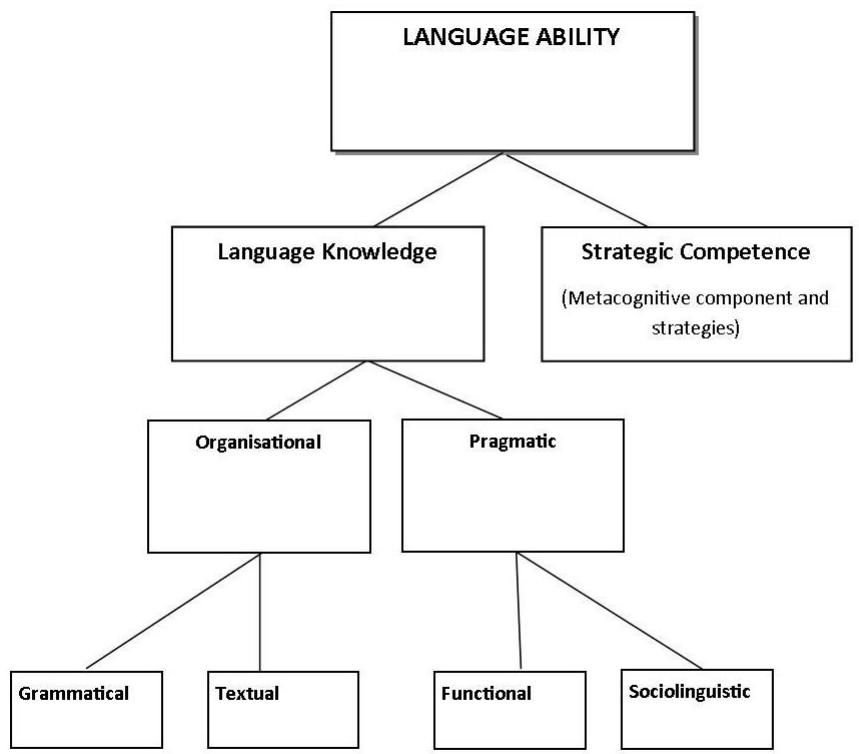
Figure 1: Model of language ability (Bachman & Palmer 1996)
As mentioned above, the term “proficiency” tends to be found more in test development literature rather than that centred on theoretical model building, although one notable exception is found in the work of Chapelle, Grabe and Berns (1997). Their research report describes how the committee of examiners (COE) developed a model for application to the TOEFL academic test, which attempts to represent the language processing occurring during use, but is nevertheless referred to as “communicative language proficiency”. It resulted in “a framework for defining communicative proficiency in academic contexts, called the COE model” (the terms framework and model are used interchangeably in this work). The aim was “to suggest both the types of information that should go into a construct definition (for language proficiency) and a starting point for the test developer to compose such a definition” (1997, p. 30).
The COE model favours an integrated approach to test design. Language proficiency is conceptualised as consisting of strategies and processes and described as “consisting of components, however the components are hypothesised to work together in communicative language performance” (1997, p. 33).
Context, defined as “the environment of a text”, has a prominent role in this model, and is based on Hymes’ (1972) “SPEAKING” categories. “Situation” (aspects that are likely to influence language use) includes setting, participant, task, text and topic. Performance (linguistic or behavioural output) is also part of context as it consists of the contribution that is made to it by the language user.
The COE model’s view of language competence is securely grounded in Canale’s 1983 model, but like the CEF, it has excluded the strategic component.
Grammatical competence includes phonological/ orthographic, morphological, lexical, structural and semantic knowledge. It includes knowledge of possible structures, word order and words. Discourse competence refers to the language users’ knowledge of how language is sequenced and how it is organised above the discourse level. Sociolinguistic competence includes knowledge of language functions and language variation (1997, pp. 14-15).
The model differs from its predecessors in that it also includes world knowledge, or “the store of information that the individual has from past learning and experience in life”, and proposes that this “works together with language competence to comprehend and produce language in context”. A psycholinguistic cognitive focus is evident in the inclusion of internal processing output in the model (see 1997, p. 16 for detailed description). The implications of the model for testing are explored, leading to a strong focus on the importance of the context.
In his comprehensive account of the development of IELTS (Davies 2008), Alan Davies provides an account of the influences on the development of the current test, and charts its evolution from its predecessors, the structural English Proficiency Test Battery (EPTB) and the communicative ELTS. He defines proficiency in academic English as “the ability to operate successfully in the English used in the domain” (2008, p. 1) and “to perform the appropriate discourse” (2008, p. 113).
In this report, we favour the use of the term “proficiency” for the measurable construct represented by a band score, and “competence” for the underlying ability that this seeks to represent. Where inconsistencies in terminology arise either in the work we have reviewed or the comments of participants, we point this out.
3.2 Operationalising language proficiency in IELTS tasks and assessment criteria
Our study required the use of test materials, assessment criteria and band descriptors that had been developed for the speaking and writing sections of the academic IELTS test. We did not attempt to evaluate these criteria or the underlying models on which they were built but rather explore how they were applied in the measurement of the language proficiency of overseas trained teachers.
The IELTS academic speaking task consists of a face-to-face interview with an examiner. There are three parts to the test. The first, taking four to five minutes, involves the examiner asking the candidate a set of general questions on familiar topics. The candidate then has one minute to prepare to make a two-minute speech on a topic provided by the examiner. The final section, lasting four to five minutes, consists of a less structured interaction in which the interviewer probes issues related to the topic and its more general, abstract and challenging aspects are explored.
The academic writing test is 60 minutes long and consists of two discrete equally weighted tasks. In the first, the candidate is presented with a non-linear text (such as a chart, graph or table) and asked to summarise the information in the form of a descriptive or explanatory written text. The second task is an essay, in which the candidate draws on his/her own knowledge and resources to respond to a problem, argue or present a point of view.
Decision-making about language assessment criteria and weighting are fundamental to test design. Practicality constraints mean that it is never possible to include everything that one might like to assess or to recreate the real world conditions of language use; this must be done through sampling. Davies (2008) reflects on how this has developed through the evolution of IELTS to its current form.
“Sampling is inescapable: that is the first of the problems facing the test constructor…while the choice may be to sample linguistic features or forms the tester needs to be convinced that these features and forms have a connection (which may of course be indirect) with the kinds of uses of the language that successful users will be capable of” (2008, p. 106).
IELTS provides material to help organisations set appropriate standards for entry to academic study, employment and migration (IELTS 2009). The view of language taken in the IELTS academic module is evident in the following set of published assessment criteria. These have been informed by several decades of trialling and research (Clapham & Alderson 1997; Davies 2008; Taylor & Falvey 2007).
As well as descriptions of the test tasks, they contain public abridged versions of the band scores descriptors and assessment criteria. Because of the significance to this study, the latter are reproduced in full below.
3.2.1 The speaking task
Four equally weighted criteria are used to assess the speaking task.
Speaking
Fluency and Coherence, which refers to the ability to talk with normal levels of continuity, rate and effort and to link ideas and language together to form coherent, connected speech. The key indicators of fluency are speech rate and speech continuity. The key indicators of coherence are logical sequencing of sentences; clear marking of stages in a discussion, narration or argument; and the use of cohesive devices (e.g. connectors, pronouns and conjunctions) within and between sentences.
Lexical Resource refers to the range of vocabulary the candidate can use and the precision with which meanings and attitudes can be expressed. The key indicators are the variety of words used, the adequacy and appropriacy of the words used and the ability to circumlocute (get round a vocabulary gap by using other words) with or without noticeable hesitation.
Grammatical Range and Accuracy refers to the range and the accurate and appropriate use of the candidate’s grammatical resource. The key indicators of grammatical range are the length and complexity of the spoken sentences, the appropriate use of subordinate clauses, and the range of sentence structures, especially to move elements around for information focus. The key indicators of grammatical accuracy are the number of grammatical errors in a given amount of speech and the communicative effect of error.
Pronunciation refers to the ability to produce comprehensible speech to fulfil the speaking test requirements. The key indicators will be the amount of strain caused to the listener, the amount of the speech which is unintelligible and the noticeability of L1 influence.
3.2.2 The writing task
There are also four criteria for the assessment of the writing task.
Writing
Examiners award a band score for each of four criterion areas: Task Achievement (for Task 1), Task Response (for Task 2), Coherence and Cohesion, Lexical Resource and Grammatical Range and Accuracy. The four criteria are equally weighted although Task 2 responses are weighted more highly. (See ‘IELTS Writing Band Descriptors: Task 1’ and ‘IELTS Writing Band Descriptors: Task 2’).
Task 1
Task Achievement:
This criterion assesses how appropriately, accurately and relevantly the response fulfils the requirements set out in the task, using the minimum of 150 words. Academic Writing Task 1 is a writing task which has a defined input and a largely predictable output. It is basically an information-transfer task which relates narrowly to the factual content of the input data or diagram and not to speculated explanations that lie outside the provided diagram or data.
Coherence and Cohesion: This criterion is concerned with the overall clarity and fluency of the message: how the response organises and links information, ideas and language. Coherence refers to the linking of ideas through logical sequencing. Cohesion refers to the varied and appropriate use of cohesive devices (for example, logical connectors, pronouns and conjunctions) to assist in making the conceptual and referential relationships between and within sentences clear.
Lexical Resource: This criterion refers to the range of vocabulary the candidate has used and the accuracy and appropriacy of that use in terms of the specific task.
Grammatical Range and Accuracy: This criterion refers to the range and accurate use of the candidate’s grammatical resource as manifested in the candidate’s writing at the sentence level.
Task 2
Task Response:
In both Academic and General Training Writing tests, Task 2 requires candidates to formulate and develop a position in relation to a given prompt in the form of a question or statement. Ideas should be supported by evidence, and examples may be drawn from the candidates’ own experience. Responses must be at least 250 words in length.
The other criteria for assessment of Task 1 and 2 are identical.
Davies also notes: “Since the interpretive construct for a test involves an argument leading from the scores to score based decisions, it follows that the language sample for the test acts itself as a corroboration of the interpretive construct” (2008, p. 106).
As such, these elements are seen as measurable indicators of language proficiency within the IELTS assessment framework. They necessarily formed the starting point for the way language proficiency is conceptualised in this study. As we will discuss below in reference to our second research question, it is to be expected that there will be some aspects of communicative competence that are not directly measurable by an assessment tool that is designed for the measurement of the readiness to undertake academic study.
3.3 Genre
In this report, we refer to genre, notably in reference to research questions 1 and 3. Because of the differences in the technical and lay uses of this term, and the overlap in educational contexts between the terms “genre” and “text type”, we will provide some background and clarification of the meanings and use of the term “genre”.
The word “genre” comes from the French (and originally Latin) word for “kind”, “type” or “class”. The term has been widely used in rhetoric, film and advertising, literary and media theory and also, more recently, in linguistics to refer to a distinctive type of “text”. It is largely typological in function.
Schooling in Australia has probably been most influenced by the approach to genre developed in Sydney by linguists and educators such as Martin (1990, 1997), Derewianka (1990) and others. Their conceptualisation of genre has often been briefly summed up as a “staged, goal-oriented social process” (Martin 1997, p. 13) in spite of the complexity of the systemic-functional theory underlying this simple formulation. The way in which this approach to genre has been interpreted in schools has been to emphasise its purpose-related nature and the alternative forms of staging of texts, while endeavouring to “scaffold” or support (Vygotsky 1978) the learner.
The main text types or genres taught in Australian schools, generally implementing this type of “curriculum cycle approach”, include Recount, Procedure or Instruction, Narrative, Report, Explanation and Argument or Opinion. This pedagogy uses modelling, joint negotiation and independent construction. Callaghan and Knapp (1993) argue that the curriculum cycle attempts to engage students in an awareness of the social purposes, text structure and language features of a range of identified text types or genres. In other words, “text types” and “genres” are terms often used interchangeably.
However, genre distinctions do not always adequately represent the underlying text functions of English. Trosbor (1997), for example, believes that genres and texts types must be distinguished. Texts within particular genres can differ greatly in their linguistic characteristics; for example, texts in newspaper articles can range from narrative and colloquial to informational and elaborated, while different genres can be similar linguistically, as in some newspaper and magazine articles. In summary, the relationship between text types and genres is not straightforward.
Bhatia (1993) argues that the main goal of genre identification is to find out why they are written the way they are; he stresses the dynamic and cross-cultural nature of genres as social processes. In a review of approaches to genre, Paltridge (1997) has observed that the approach advocated may distinguish itself by a particular concern in terms of social situatedness and dependence on interpretation by members of the community within which they arise. That is, genres exist primarily in the common understandings of people within a shared life context.
Key to Bhatia, Paltridge, Martin and others, nevertheless, is the importance of the communicative purpose and move-structure (or process-orientated nature) of a particular genre. Genres reflect differences in external format and situations of use and are defined on the basis of systematic linguistic as well as non-linguistic criteria. Text types, on the other hand, may be defined on the basis of cognitive categories or linguistic criteria, such as narration, evaluation or description. Genre refers to completed texts and communicative functions, whereas text types, being properties of a text, cut across genres. Text types may be fictional (made up) or factual (information reports). Text types are used for different purposes and usually follow a different style or structure.
Section 5 provides a more detailed explanation of how we have used the term and the reasons for these choices.
3.4 Gaining entry to teaching: Research evidence on overseas trained teachers (OTTs)
The organisation and process of language proficiency testing, of assessment of qualifications and of teaching experience and classroom skills all impact on each other. This section considers English language entry requirements for teachers in conjunction with key studies into other aspects of professional entry: the assessment of qualifications and professional experience, the order, importance and interrelationship of these assessments and then the pre- and post- entry support structures.
Recent research has investigated the effectiveness of current entry requirements. Collins and Reid (2012) surveyed and conducted focus group interviews with teachers in NSW, South Australia and Western Australia along with interviews of key stakeholders (n=229). Their sample was representative in terms of gender and cultural/language background of the wider immigration intake: 36% were from the UK and 16% from Asian countries. Guo and Singh (2009) surveyed (n=111) and interviewed overseas trained teachers on gaining accreditation and employment in NSW and on language issues. There is also the older study by Inglis and Philips (1995) that involved a comprehensive study of teacher education programs, employer bodies and interviews with teachers (n=89).
3.4.1 Assessment of qualifications
All studies report problems in the process and time takes for gaining assessment of teaching qualifications (Collins & Reid 2012; Guo & Singh 2009; Inglis & Philips 1995). Overseas trained teachers often find that they need to upgrade qualifications, even though these have been accepted for migration purposes (Guo & Singh 2009). The assessment of qualifications relies on guidelines with little or no flexibility in detail or as to when there is a lack of alignment in systems (for example, with middle school or primary/ pre-school teachers). Individual employer bodies often lack expertise in interpreting AEI guidelines and there are few avenues available for teachers to follow in order to fill in perceived gaps in their qualifications when recognition for these is sought in the newly adopted country.
3.4.2 Professional knowledge and experience
When asked about the professional knowledge and experience they require, teachers generally nominate local knowledge as a key need: in Guo and Singh’s study it rated third in issues (15.32%). On the other hand, the lack of local teaching experience and knowledge is reported as being a reason for many teachers not being able to gain teaching experience in local schools, even as last minute casual work (Guo & Singh 2009).
Several studies report evidence of employer preference for locals or teachers from English-speaking backgrounds (Inglis & Philips 1995; Iredale & Fox 1997). OTTs are reported to have “concerns about whether they will be able to secure employment commensurate with their education and experience even after they have met the requirements for teaching qualification” (Walsh & Brigham 2007, p. 2). Many OTTs commented that such a system devalues their higher qualifications and skills (Guo & Singh 2009).
Miller (2008a, p. 21) argues that “non-recognition of overseas qualifications and prior work experience can be attributed to a ‘deficit model’ of difference”. Several of the key studies find that non-Australian teachers were classified as lacking in skills and experience and that there was little cultural capital attached to what they were bringing into Australia. This is interesting because the same studies show that OTTs see professional expertise and practical teaching experience as the most valuable strengths they bring (83.33% in Guo and Singh’s 2009 study). Hartsuyker (2007) indicates that OTTs and teachers from non-English speaking backgrounds bring “a range of experience, cultural perspectives and languages to … schools, and are important in a multicultural school context” (2007, p. 48).
The experiences of OTTs who have made it through the accreditation process also show positive responses (Collins & Reid 2012). In Collins and Reid (2012), 59% of teachers rated their work “very favourably” or “favourably”. They found that teachers had connected with their new communities, that they would recommend to others coming to teach in Australia and 60% reported that they expected to be still teaching in Australia in five years’ time.
3.4.3 Main issues with current procedures
There is evidence that the pathways for entry are not operating optimally. The current teaching force in Australia, for example, does not reflect the diversity in the community. Some 26.5% of the Australian population is overseas-born (OECD 2011). In NSW, 25% of students come from language backgrounds other than English and 16.5% are born in non-English speaking countries (DET 2011). Only 11% of government school staff, however, comes from a language background other than English and less than 3% have tertiary qualifications gained in non-English speaking countries (NSW DET 2005). One earlier study estimated over 15, 000 overseas trained teachers were not able to gain or upgrade to gain accreditation to teach in Australia (Inglis & Philips 1995). The problem of having a predominantly Anglo-Australian profession and the implications of this for curriculum, resources and teaching in schools has also been a finding of many reports (Iredale & Fox 1997).
Several Canadian studies have reported OTTs being locked into a cycle of diminishing casual employment in schools; teachers lose confidence and schools lose interest (Pollock 2010; Schmidt, 2010; Schmidt & Block 2010). The studies see this situation as a direct outcome of policies, which, in theory, are intended to streamline the entry of OTTs to the profession but which, in practice, marginalise and exclude.
Several key issues emerge from the studies. Much less attention seems to be placed on teachers’ skills and experience with experience teaching overseas often being discounted in preference for “local” experience. Much more emphasis is placed on English language testing and paper qualifications. The lack of pre- and postaccreditation process support and professional development increases the significance of the gatekeeping role of English Language Proficiency (ELP) testing and assessment of qualifications. The order of steps in application for entry, with English language coming before assessment of qualifications and assessment of professional skills, places inordinate importance and expectations on testing of English language proficiency for teaching purposes. The assessment mechanisms for qualifications and professional skills, as well as their efficacy, in turn impact on the role, expectations and perceptions of language assessment.
3.5 English language proficiency and teaching
This section examines research addressing the question of what can and cannot be expected of an English language proficiency test in terms of teaching. It explores the research into the issues relating to the language demands of teaching, and the research into English language proficiency tests used in teaching. The section then focuses on research into the specific proficiency levels. Insights that may be gleaned from language assessment in the health professions are first examined.
3.5.1 Insights from research into language demands of other professions: The case of health care
As foreshadowed above, the strongest traditions of research into the language demands of professions are in the healthcare field. Researchers have analysed healthcare and medical discourse and interactions from a range of perspectives including discourse analysis, functional linguistics and genre and corpus linguistics (Atkinson & Valle 2013; Iedema 2013; Sarangi 2010).
In relation to other professions, there is a smaller body of research into the issues of professional language and language proficiency (Chur Hansen & Vernon-Roberts 1998; Eggly, Musial & Smulowitz 1999; Jacoby & McNamara 1999; Read & Wette 2010; Kurtz, Silverman, Benson & Draper 2003; Wette 2010). The key findings in the literature relate to the tensions between identifying and assessing what constitutes “language proficiency” for healthcare professionals in English. Studies in this area also explore constructs of professional competence and communication skills and their linguistic components.
The communication skills that constitute patient-centred management, for example, are described in several studies (Ong et al. 1995; Kurtz, Silverman, Benson & Draper 2003). These include the ability to establish initial rapport, identify reasons for consultation, explore the presenting problem(s), provide structure for the consultation, use appropriate non-verbal behaviours, provide the correct amount of information, achieve a shared understanding that incorporates the patient’s perspective, share decision-making and close the session appropriately. These skills form the Calgary-Cambridge framework (Kurtz, Silverman, Benson & Draper 2003 in Wette, 2011). The complexity and co-constructed nature of medical interactions make it almost impossible for mapping of professional language demands and the development of any satisfactory proficiency test to cover all contingencies.
Wette (2010) argues that the language of healthcare interactions involves a much broader notion of communicative competence than the linguistically oriented one of applied linguistics. Wette describes this tension as a mismatch between language specialists and medical professionals as to the nature of communication in the health professions.
There is much research evidence to indicate that the mastery of English language proficiency standards is very different in nature to the ability to communicate effectively in healthcare contexts. For example, Merrifield (2008) reported that 70% of complaints about internationally-educated doctors “related to broader communication not English language proficiency” (2008, p. 10). Chur-Hansen et al. (1998) found that undergraduate medical students were deemed unsatisfactory in language screening but this did not strongly relate to their performance in clinical interviews.
One large American study of international-educated medical graduates (Boulet et al. 2001 in Wette 2011) using standardised patients (i.e. trained lay people) to assess language found that assessments correlated with interpersonal skills rather than overall TOEFL scores. On the other hand, studies have found that doctors who scored highly on English proficiency tests were identified as having weaknesses by colleagues and patients in the areas of “ability to communicate” and “English proficiency”. Healthcare professionals were found to have problems in comprehending the role of social talk in medical interactions, everyday language in describing medical conditions and also genre, power and tenor in interactions (Eggly 2002). Read and Wette (2009) concluded that, based on the research, many components of medical communication were beyond the scope of English language proficiency assessment.
The assessment of language competence in authentic or semi-authentic contexts, however, has not proved any more successful. Read and Wette (2009) compared IELTS with a vocationally-oriented language test, the Occupational English Test (OET), and found that neither tested the ability to communicate in clinical contexts and that test participants ended up preferring IELTS as it was cheaper and provided more support in preparation. The researchers criticised the dichotomy between language proficiency and professional communication skills and argued that simulated performance tasks with a medical focus may not be advisable and that these “may not be any more valid than a general proficiency test … in assessing communication skills of health professionals” (2010, p.6).
Wette notes:
“Although it is clearly prudent for individual registration bodies to ensure that candidates are sufficiently proficient in English to have a good chance of achieving success in subsequent assessments of clinical and communicative competence, these bodies appear to regard the benchmark IELTS and OET standards they have set as such trustworthy indicators of candidates’ overall ability in English as to require no further assessment of professional communication skills” (2011, p. 201).
However, Wette also comments: “clinical instructors and local colleagues have often found that advanced English proficiency as measured by IELTS or OET in no way guarantees that overseas qualified professionals will be able to perform competently in healthcare contexts” (2011, p. 205). Documented issues with the competency of successful overseas qualified health professional candidates require a minimum score of 7 in each component of the IELTS academic module, OET or specified alternatives, with the exception of Pharmacy, which now requires a minimum score of 7.5.
3.5.2 The English language demands of teaching
Describing the language demands of teaching, findi a valid way to frame this language and thus being able to develop tools to assess the language use has proved much harder than it seems. There is a body of research into language in education but it draws on very different areas, each of which has developed in response to different issues and problems.
There is a strong tradition of research from the 1960s and 1970s which looked at language in primary and secondary classrooms and the role that language plays in the development of cognition, thinking, speaking and writing (Barnes 1976; Britton 1970; Marland 1977; Rosen & Rosen 1973; Stubbs 1976, 1983). The focus of this research was more on student language and the role of teachers in developing this language and the frameworks describing this language are developmental. Sawyer and Singh (2012, p. 86) present a good overview of this work.
The structure and features of classroom language have been examined within the tradition of discourse analysis, initially by Sinclair and Coulthard (1975), subsequently by Cazden, Walsh (2006) Van Lier (2001), as well as from an anthropological perspective by Spindler (1982). Seedhouse (2004) has applied a conversation analysis approach to the discourse of the language classroom. While the main foci of work in this area have been on the conditions promoting second language acquisition, (i.e. with a focus on the learner) and the role of the teacher as controller of the interaction, it is also informative as regards the interactional complexitie which a teacher has to negotiate, irrespective of the subject content.
There is also a long tradition of work in teacher education on classroom skills and language: questioning, explaining, running class discussion or small groups, and classroom management (Barry & King 1988; Turney 1983). Although there is some focus on teacher language, the main emphasis is on teacher skills. Another tradition is that of TESOL where many teachers of English have English as an additional language (Gebhard 2010; Mahboob 2010; Richards 1998; Richards & Lockhart 1994). There is a strong tradition of research into “non-native” teachers of English which explores the issues of the skills, knowledge and understanding that these teachers bring to language teaching (Braine 1999, 2010; Kamhi-Stein 2004; Llurda, 2005; Medgyes 1994, 2012). Studies also address the issues of prejudice and marginalisation.
The fourth area is that of subject-specific language, particularly in disciplines such as Science and Mathematics. Most of this work draws on notions of register and genre from Systemic Functional Linguistics (Lemke 1990; Rothery 1996; Schleppegrell 2001, 2004; Schleppegrell, Achugar & Oteıza 2004). The benefit of this research is that it provides a framework for viewing language use in teaching contexts and has a strong research base in being applied to specific language proficiency assessment in this area.
The development of a coherent and valid framework to describe teacher language, however, is beset by several problems (Elder 1994a). Firstly, teaching is a complex profession and the development of sets of teacher competencies has been difficult. Descriptions are rarely based on research and tend to be stated as “professional standards”, “domains of teaching” and “descriptors” (AITSL 2013). The identification of teachers’ classroom language has tended to rely on small-scale needs analyse and not the broader sets of teacher competencies. Trying to document the language of teachers for reflective teaching or for scaffolding purposes would be a challenging task.
The second issue is the variability in subject specific language. School subjects draw on wider disciplines of knowledge, and concepts are selected, sequenced and embedded in content that is relevant and engaging for students. The role of teachers is to translate, paraphrase and scaffold student learning into subject knowledge and discourse (Lemke 1990). Elder (1993b) gives the example of a test of teachers’ subject specific language which may actually discriminate against good teaching. A good Science teacher, for example, would explain the concept of reflection through gestures, visuals, concrete examples and use of everyday language. A less skilled teacher may use more technical, abstract and/or academic language to explain such a concept. Language varies between and within disciplines; the type and complexity of language varies according to subject area but also according to the needs of the students being taught.
Elder (1994b) proposes an inventory of language derived from studies of L2 teachers. These include:
medium-oriented interactions, those which focus on the content and understandings message-oriented interactions, such as explaining, categorising, labelling activity-oriented interactions such as giving instructions framework interactions, such as directing, explaining, questioning, paraphrasing extra-classroom use, such as attending professional development, interacting with parents.
The problem with frameworks such as this one is that they combine professional skills and language, making it difficult to test language competence per se. Elder’s inventory includes professional skills identified in earlier skills-based studies of teachers (Turney 1983). As Sawyer and Singh note: “Where the teacher’s own proficiency with spoken language, in particular, has been an object of interest in teacher education it has tended to be dealt with often as a micro-skills issue, highlighting skills such as explaining, discussing, questioning etc.” (2012, p. 13).
The issues emerging in the research into the language demands of teaching are quite similar to those identified in the studies of healthcare language competence.
Professional language skills such as paraphrasing, listening to and extending student talk, technical subjec language and the ability to transform subject knowledge into explanations that are understandable to students are some of the areas that have been identified in studies as beyond the scope of proficiency tests (Sawyer & Sing 2012). Elder found that tests privilege formal English usage rather than everyday language which may be a marker of better teaching in many classroom contexts (Elder 1993a).
Ultimately, the language of teachers is not a well-defined area, since it encompasses everything from informal to academic English across a wide range of skills (Elder 2001). Despite the strength of recent work in systemic functional linguistics and genre/ text types, it has been suggested that there is still not enough research to be able to model and sample systematically the genres of teaching (Elder 2001).
English language competence has been identified in studies as a key issue in teacher accreditation (Genzuk 1995; Inglis & Philips 1995; Lavandez 1994). A number of studies examine evidence from teachers who have been successful in obtaining entry to the Australian workplace. Guo and Singh (2009) interviewed practising teachers and found that although 94.7% of respondents were confident with their English proficiency (n=125), they were less confident with their ability to understand and use the informal Australian English of their students. Ninety per cent were confident in their subject specific language. The problems of educational terminology and jargon also emerged as an issue.
The problems of pronunciation emerged in studies for both English and non-English speaking background teachers. Collins and Reid (2012) found that numbers of immigrant teachers from Africa and India reported negative responses to their accent, as did teachers with American and Irish accents. Some commented that their accent had been mocked, or that negative feedback had occurred as a result of it.
3.5.3 Vocational English language testing
The difficulty of developing a framework for English language teacher proficiency raises several questions. This section discusses the research into vocational/ professional English language testing in terms of teaching and teacher education. To what extent does teacher competence vary between teaching and other professions and between academic and everyday English? Secondly, since teaching is such a complex profession in which teachers’ work goes beyond observable language interactions, can teachers’ work be represented in tasks that could be assessed? This leads on to the third question. The construct of strategic competence is expressed in the teaching literature as “reflection in action” - how can this and other teaching skills be assessed? Should they be assessed separately, independent of the language used, and is this possible?
Elder (2001) addressed these specific questions, drawing on research into three tests: the Victorian Diploma of Education Oral Interview Test of English (DOITE) (Viete 1998), a classroom assessment schedule to identify
English language problems of NESB teachers (Elder 1993b), and a language proficiency test for non-native teachers of Italian and Japanese in Australia (Elder 1994b).
This section analyses research into DOITE to explore issues in vocational language proficiency testing (Elder 2001; Viete 1998; Hill & Viete 1994). The test covered a range of listening and speaking skills not addressed in standard proficiency tests such as participating in multichannel conversations, issuing directives, formulating open, closed and conditional questions and explaining concepts in different ways. It also addressed strategic competence skills such as understanding/ responding to culturally-specific non-verbal language, using appropriate elicitation and information getting techniques and checking understanding.
Elder (2001), in an evaluation of DOITE and other language proficiency tests for teaching, quoted Douglas (2000) in arguing that there was no principled basis for deciding which of the many features of the target context we must sample to be sure that “test tasks and content are authentically representative of the target situation” (Douglas 2000, p. 46). She gave the example of a subject-specific language test, MATHSPEAK, where subject specialists scored no better than in a generalist version of the same test (Smith 1992 in Elder 2001).
She also questioned the possibility of “authenticity”, either situational or interactional (Bachman & Palmer 1996). In addition to concerns about the relationships between tasks and real world performance, there was also the issue of the impact of intra-task effects on test-taker performance; in other words, to what extent can any test represent real life. She concluded that: “the indeterminacy of performance-based tasks as a means of measurement and a realisation that the LSP testing enterprise of the 1980s and 1990s … raises more questions than it answers” (Elder 2001, p. 164).
There is still no way of relating underlying abilities to performance and processing conditions, nor is there an systematic basis for examining the language demands of a range of different contexts. As a result, it is not clear how different patterns of underlying abilities may be more effective in some circumstances than others, nor how these underlying abilities are mobilised into actual performance (Skehan 1998, p. 59).
3.6 IELTS as a measure of language proficiency
3.6.1 Appropriate test use as a component of validity
In consideration of the unintended test uses of TOEFL, Chappelle, Grabe and Berns (1997) suggested it could be argued that: “test developers should not be obligated to investigate the utility of unintended test uses”. But it has also been suggested that, once information has been gathered, there is indeed a responsibility to see that it is used appropriately. The International Language Testing Organisation (ILTA) Code of Ethics principle number 9 states: “Language testers shall regularly consider the potential effects, both short and long-term, on all stakeholders of their projects, reserving the right to withhold their professional services on the grounds of conscience” (ILTA 2011).
This line of research has now become part of “test validation” studies, and is especially crucial in the case of high stakes tests (Spolsky 1997). Systematic or consequential validity of the tests address the social impacts of tests and are included in recent theories of test validity (see Messick 1989 and subsequent elaborations on his model by Bachman 1990; Bachman & Palmer 1996). In view of the breadth of application of IELTS, these are pressing questions. In our consideration of this aspect of validity, this study has been informed by the theoretical framework developed by Messick (1989), shown in Figure 2.
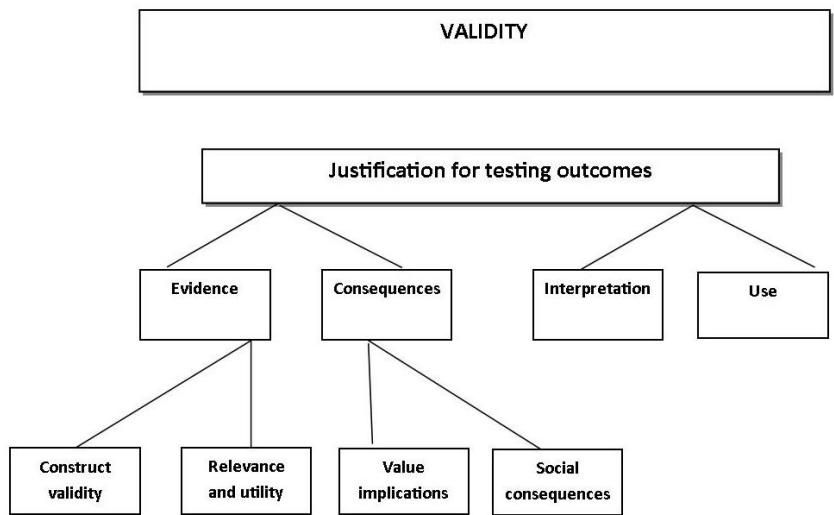
Figure 2: Consequences of test use as a component of validity (Messick 1989)
3.6.2 Research into the predictive validity of IELTS
The predictive validity of IELTS in academic contexts has been a major focus of research: Dooey and Oliver (2002), Humphries, Haugh, Fenton Smith, Lobo, Michael and Walkinshaw (2012), Hill, Storch and Lynch (1999), Ingram and Bayliss ( 2006), Kerstjen and Nery (2000) Storch and Hill (2008), Ushioda and Harsch (2011).
The majority of the research is in the tertiary sector and rehearses many of the issues raised in the previous section. A good summary of the meaning of an IELTS score for tertiary study is given by Bayliss and Ingram (2006) and O’Loughlin and Arkoudis (2009).
“… the score a student achieves in an IELTS test is meant to indicate whether he/she has a sufficient level of English proficiency to cope with the linguistic demands of tertiary studies; it does not necessarily imply that the student will succeed academically or will not struggle linguistically” (Bayliss & Ingram 2006, p. 1)
“… it predicts the extent to which a candidate will be able to begin studying through the medium of English” (O’Loughlin & Arkoudis 2009, p. 100).
Several questions arise when measuring the predictive validity of language proficiency tests such as IELTS. Does the construct relate to proficiency as defined by the test at some future time or does it relate to broader definitions of communicative competence or to “success” in study and professional work? What constitutes success and at what stage can and should this success be gauged? If and when these questions can be answered, then the next questions are: what are the variables which influence success and how can these variables be controlled?
The answer to the question of whether IELTS is a reliable predictor of language ability in postgraduate study seems to be positive. In a study of 28 tertiary students, Bayliss and Ingram (2006) found IELTS to be an effective predictor of general language performance in the first six months of tertiary study. Researcher and participant selfrating scores also were sufficiently close to actual scores to support validity of the IELTS tests. Their data, drawing on interviews, classroom observations and selfrating scales found, however, different perceptions of success and that the correlations were affected by different faculty requirements in terms of spoken English.
The findings from studies of the predictive value of IELTS in terms of “success” are much more mixed. Meta-analyses (Graham 1987) have produced ambiguous findings … about the same number of researchers appear to have concluded that ELP is a useful predictor of academic success as have not (Graham 1987, p. 512). Research undertaken by Cotton and Conrow (1998) produced conflicting results because of intervening variables and difficulties in defining academic success.
A study of 70 international students of Chinese background in Business degrees (Weisz & Nicoletto 2004) found a weak correlation between IELTS scores and GPA results in only two subjects only. This find was confirmed by Dooey and Oliver (2002) who investigated the correlations between IELTS scores an semester weighted averages of students in Business, Science and Engineering. They conclude that IELTS was only one amongst many predictors and that, in this case, there was little evidence for the validity of IELTS as a predictor of academic success. The IELTS reading module was the only one to achieve a significant correlation.
The majority of studies have taken GPAs and semester weighted averages as the marker of success in many cases, accompanied by staff/ student interview and questionnaire data. GPA scores across disciplines can, therefore, not be compared since they rely on such different tasks. ”Success” in education may result from high marks in practical portfolios, reflective reports/ analyses. Elder (1993b), in her study of overseas-trained Diploma of Education students, found that demands differed between institutions and over time in each institution, between emphasis on practical/ teaching and theoretical/ academic aspects. This meant that IELTS writing or listening modules could have higher predictive ability in different institutions because of varying institutional requirements. The term is particularly difficult to define in teacher education programs where a simple GPA gives no sense of student performance in either the practicum or in teaching or in coursework/ research. What role does language proficiency play in GPA? Elder (1993) found that student and staff comments on ”success” had little to do with general language skills as measured by IELTS. Comments, instead, related to teaching skills, a teacher’s role, sensitivity/ responsiveness to students, clarity of instructions and use of idioms and paraphrasing.
In a study of 125 Chinese international students, Phakiti (2008) researched correlations between GPA, IELTS English language proficiency, IELTS reading proficiency and metacognitive reading strategies as measured by a Likert-scale questionnaire. He found little predictive value for any of the variables (7% for English language proficiency, 10% for reading proficiency and 5% for meta-cognitive strategies to academic achievement). Non-linguistic factors were more important in determining and accounting for academic success.
Kerstjens and Nery (2000) in a study of 113 first-year university and TAFE Business students found a small to medium predictive effect (8.4% and 9.1%) for the variation in academic performance. The Reading test was the only significant predictor of performance.
This confirmed the earlier study of Criper and Davies (1988) who found that language proficiency contributed around 10% to academic outcomes, a correlation of 0.3 between GPA and IELTS. In their study, only the IELTS reading module showed a moderate positive correlation.
Correlation was negative in terms of speaking and weak in terms of listening and writing. They also concluded that English language proficiency alone is not a guarantee of success and that other variables may have equal, if not more, importance.
In a study of postgraduate education students, Woodrow (2006) found that IELTS was only moderately predictive of academic achievement. There were weak but significant correlations between overall IELTS score and GPA, and they were significant for writing, speaking and listening. At lower levels, the relationship was stronger: at IELTS 6.5 or below but not at 7 or above.
Ushioda and Harsch’s (2011) study of the predictive validity of the English language entry scores of international students at the University of Warwick found that academic grades were best predicted by overall IELTS scores and writing scores.
Humphreys et al. (2012) investigated the predictive validity of IELTS by examining the relationship between IELTS scores and GPA for 51 undergraduate students at an Australian university. The results differed across skills, with no correlation found for speaking and writing scores. Listening and reading were found to be strongly correlated with GPA in the first semester and second semesters of study, but not the third.
Storch and Hill (2008) followed a cohort of 40 undergraduate students with entry scores of 6.5 to 7 through their first semester at university to investigate whether their performance on a diagnostic English test improved. This was investigated not through an IELTS retest, but using the Diagnostic English Language Assessment (DELA) conducted by the University of Melbourne. The study showed language gain for a majority of students. While the implication can be drawn that students selected by IELTS did continue to improve, no claims were made regarding predictive validity as those who did not gain entry could not be included in the study.
To sum up, the main findings from the literature are that:
IELTS results can generally be predictive of language performance in the first year of tertiary study Other factors come into play when predictive value in terms of “success” is measured and language proficiency as measured by IELTS is only one of many factors.
In conclusion, the factors that interact to determine “success” can be categorised as discipline/course specific (focus on different skills, language and assessment demands, professional/vocational demands), teaching/learning related (the amount and type of support provided, the adjustments in teaching and assessment made to accommodate language and learning needs) and individual (learning goals, styles, motivations).
In the past decades, the use of IELTS has been expanded to cover entry to a range of professions and also for immigration. The use of IELTS for immigration purposes has been hotly contested (Ahern 2009; Merrifield 2011; Read 2001). Read and Wette (2009) argued that IEL was primarily designed for entry to academic study an was “not specifically intended to assess the communication skills required in particular professions” (2009, p. 4). They found that there had been no largescale study to assess the predictive validity of IELTS for professional registration.
The issues discussed in the previous section of the factors impacting on the predictive ability of IELTS apply even more to professional entry. Wette and Basturkmen (2006) found that scores on IELTS and other tests in no way guarantee competent performance in healthcare, and postscreening inadequacies were commonly reported in the literature. These issues are explored further in the discussion in the final section on consequential validity.
3.6.3 Identification of proficiency levels for teacher education
This section reviews the research into the identification of proficiency levels for education professions, returning to the focus of the present study.
Studies on the identification of appropriate IELTS level for entry to professions shows that decisions have not been based on research. Merrifield (2008) found that most organisations selected language proficiency levels based on in-house research and aligned with other organisations. Often, the reasons for decisions on levels remain unknown because of staff turnover. Organisations tended not to review their scores and when they did, it tended to be based on complaints. In many cases scores were raised to 7 - 7.5 in healthcare professions. Read and Wette (2009) also reported band scores of 7 and above used by professional associations for registration depending on the specific healthcare profession.
Two studies of pre-service teacher education recommended IELTS scores of 6.5 to 7 (Elder 1993b; Sawyer & Singh 2012). Elder (1993b) concluded that a “baseline” score of 6.5 - rather than 7.5 - for entry to teacher education programs was sufficient since success in the program depended on so many other factors such as motivation, levels of support, course content. She recommended the setting of entry levels in accordance with the capacity to provide additional support. Sawyer and Singh (2012) surveyed and interviewed lecturers, students and registration authorities to find appropriate IELTS entry scores for pre-service teacher education. They found that of 15 universities, 12 required 7, one required 7.5 and two required 6.5 on IELTS for entry.
They found that teacher educators were generally happy with the entry level although the registration authority interviewee felt it should be raised from 7 to 7.5. Educators felt that the IELTS speaking test was not relevant to teaching as there was little demand for “flexibility of expression”. The researchers found that
there was an assumption of uniformity in the meaning of a score and that there was little acceptance of a diversity of needs. Respondents tended to see speaking and listening as issues rather than reading and writing. They concluded that although a case could be made for an entry score of 7.5 for one-year teacher education courses, this was not necessary in longer courses. Higher entry scores would distract “from other issues to be covered such as familiarisation with Anglophone schooling cultures” (2010, p. 73).
The common finding has been the lack of understanding of what is tested by IELTS and how scores could be interpreted. It confirms the finding from the earlier work of Ballard and Clanchy (1991) that all issues to do with international students tend to be placed under the umbrella of English language proficiency.
3.6.4 Role and consequential validity and IELTS in the assessment of teachers’ language proficiency
The role of IELTS in the accreditation process; its interrelationship with other entry criteria; and the impact and use of the test by test-takers, test users and employers must all be considered in the identification of levels of proficiency. In other words, the consequential validity of IELTS and proficiency testing must be taken into account in any study of expected proficiency levels. The perceptions of test-takers (before and after testing), test users and employers, as well as those in workplace contexts, all need to be explored.
“Validity is not a property of test scores and other modes of assessment as such, but rather of the meaning of the test scores. Hence, what is to be validated is not the test or observation device per se but rather the inferences derived from test scores or other indicators - inferences about score meaning or interpretation and about the implications for action that the interpretation entails” (Messick 1996, p. 235).
There is also a body of research indicating an impact of IELTS and other proficiency tests on test-takers’ psychological well-being and social interactions and thus, the role of advising prior to and after testing is an issue in many studies (Viete 1998; Wette 2011). Most studies indicate that staff in professional organisations have limited understanding of IELTS and other language tests and thus tend to be inflexible in the administration of entry. Merrifield (2008) found that most organisations had a single person who was the expert in IELTS and that, when this person moved on, there was no institutional knowledge of what scores meant.
Findings from research into IELTS and international students at tertiary levels indicate that IELTS scores were taken by staff as an indication that students were able to cope with all the demands of tertiary study and that, if problems emerged, this was the fault of the entry proficiency testing. There was little understanding of the range of support needs of students and of the need for continuing English language support (O’Loughlin 2008).
IELTS scores were not used to guide future English language learning, and universities do little to monitor or evaluate their IELTS requirements (O’Loughlin 2008). Test results and entry were managed and administered by professional staff and there was no flexibility or account taken of standard errors in achievement. These finding are confirmed in data from both test-takers and clinicians that overseas qualified health professionals from non-English-speaking backgrounds in New Zealand and Australia face significant communicative challenges both before and after the English proficiency requirement is achieved (Wette, 2011, 2012). Registration bodies tend to see IELTS as a stand-alone predictor of ability in professional as well as academic communication (Wette 2011, 2012).
There is a body of research into the need for, and role of, support courses for internationally-educated teachers both in pre-service education and in the profession (Campbell, Tangen & Spooner-Lane 2006; Collins & Reid 2012). Elder recognised this in her conclusion that entry language proficiency levels need to be selected in accordance with levels of support provided (1993b). The evidence from teacher registration bodies, however, is that little support is provided. According to the AITSL requirements, IELTS testing must take place before any other form of registration. Only after attainment of 7.5 and assessment of qualifications can teachers then apply to employer bodies. This then means a “stand-alone” interpretation of language proficiency and dichotomy between this and other professional factors. Flexibility is precluded in this division of responsibility for assessing language proficiency and professional and communicative competence.
3.6.5 Summary
The above review of literature has shown there is a research gap in terms of the levels of IELTS required for professional entry, as well as follow-up monitoring and support. Very few studies have looked at the English language demands of teaching and the ways these are changing; fewer have considered the perceptions of the test-takers and their colleagues, employers and students in the workplace contexts. This study goes some way to addressing this gap.
4 METHODOLOGY
4.1 Research approach
While both the literature and anecdotal evidence indicate a compelling need for a better understanding of the use and interpretation of IELTS scores of OTTs, data on the post-test experiences of successful and unsuccessful candidates is difficult to obtain. In order to conduct a study of manageable scope, it was decided to approach one set of stakeholders - the employers of OTTs, and to research their experiences and opinions through qualitative research. Data were collected through their participation in interviews and focus groups. This qualitative and interpretative approach was chosen because it provided opportunities for us to investigate and document the experiences of employers in considerable depth. These participants were not language specialists and were not qualified to make judgements about test validity. However, they did possess a wealth of knowledge about development and change in the written and spoken genres of the school-as-workplace. They also had direct experience of working with teachers who were non-native speakers of English and had not been educated in the Australian system. It is this rich knowledge and experience which form the basis of our data.
4.2 Recruitment
Ethical clearance was obtained through Macquarie University Human Research Ethics secretariat. As part of this process, all recruiting procedures, information and consent forms and interview questions were submitted for approval (see Appendix 1).
It was also necessary to obtain ethical clearance for all DET schools in Australia and New Zealand. This was successfully undertaken for Victoria, Tasmania and the ACT, with some polite refusals from other states, who cited the high number of research projects and the demands these made on their principals’ limited time.
Recruitment was undertaken by emailing the principals directly. However, the demands on principals are such that it is difficult to commit time, and the take-up of invitations to participate was low. For example, 250 emails were sent to schools in urban Victoria without a single response. The single Victorian state school principal who participated in the study had been recruited for an earlier, related study and had indicated her willingness to take part in further research.
After correspondence with the Association for Independent Schools, we were informed that it would be possible to approach their principals individually, so more of our participants were from independent schools than had been planned in the original research design. Nevertheless, as a total, more public than independent school principals were interviewed; also, there was a representative selection of primary, as well as junior and senior high schools whose principals spoke about OTTs teaching various subjects (IT, English, Maths etc.) and coming from a range of culturally and linguistically diverse backgrounds such as China, Sri Lanka, India Russia, France, Israel and Fiji. In NSW, it is only th independent schools who are permitted to use IELT (public schools in NSW must only use the PEAT), so the participation of NSW independent schools was especi ll useful.
Participants were invited to take part in a pilot study, or the main study, which involved either one-on-one interviews, focus group discussions, or both. A total of 21 principals participated in at least one phase of the study. While the overall number of participants was to some extent limited by the constraints of both funding and availability, it was sufficient for the qualitative approach which we had adopted, and the breadth of contexts sampled contributed positively to the validity of our findings. (Appendix 2 shows the focus group questions.)
4.3 Outcomes of the pilot study
The pilot study was undertaken in April 2012. Three principals from schools in the Sydney region were invited to pilot the questionnaire and participate in a focus group session. They were selected on the basis of their experience as employers of OTTs.
As a result of the pilot study:
decisions were made about the length and number of writing and speaking samples that it was feasible to include in the main study some minor changes were made to the interview questions
- focus group procedures were refined.
The pilot study data were manually rather than digitally coded, but they were still useful for the development of the thematic coding approach that was eventually applied in the analysis of data from the main study (Gibbs 2007; Miles and Huberman 1994; Minichiello, Aroni, Timewell & Alexander, 1990).
4.4 The main study
Data collection for the main study was undertaken between October 2012 and April 2013. Interviews and focus groups were conducted with school principals from a range of representative test-user contexts.
4.4.1 Participants
Principals and deputy principals participated in one-on one interviews conducted in person, or by phone or Skype. These were audio-recorded and transcribed. Focus groups involved a personal visit from the researchers and were hosted by one of the participating schools in each state. Six focus group sessions were held, one from each of NSW, Tas, Vic and NZ, and two from the ACT.
Participation was voluntary, but a $100 donation was made to each of the schools whose staff gave their time and expertise to the project. While the issue of motivational payments can be controversial, we made this decision for two reasons. Firstly, as noted by Merrifield (2011, p. 8):
“the twenty-first century workplace is characterised by staff who are “time poor” and who are dealing with a broad range of demand on their time. Some individuals may therefore have been reluctant to participate in a research project which they may have seen as not valueadding to their job or workplace.”
Secondly, we were anxious to attract a balanced sample of participants, not only those who saw our research as an opportunity to voice pre-existing negative opinions, and we believe that the donations did assist in this aim.
Because this is a qualitative study, no claims are made that the 18 participants in the main study were representative of the entire population of principals. While we endeavoured to draw volunteers from a range of contexts, age, gender and ethnic background, a convenience sample was nevertheless considered appropriate for this study, because we were investigating the lived experiences of a set of people in their workplace role. The participating principals are listed by school in Table 1.
4.4.2 Data collection and analysis procedures
The three research questions were addressed as follows:
4.4.2.1 Research question 1
How do principals describe and evaluate their experience of working with OTTs who have entered employment through (a) an IELTS score of 7 or above, and/or (b) other entry pathways?
Using the eliciting techniques of narrative research (Bamberg 2009; Bamberg, De Fina and Schiffrin 2010), principals and deputy principals were encouraged to recall and relate stories involving their experiences with OTTs and situations that have arisen in the workplace. Data for this research question was primarily obtained from the individual interviews, but anecdotes arising spontaneously during the focus group sessions also provided interesting insights. When extracted from the transcripts, the anecdote corpus totalled around 13,000 words.
Anecdotes were uploaded to NVivo 9, the digital software package which we employed to store and code transcripts. These were then examined independently by two of the researchers for emergent themes. Responses were compared and a list of themes compiled. (Bazely 2009). The most fundamental distinction was made between experiences that were judged to be positive and those that were negative. Open coding (Corbin & Strauss 1998) was applied to these central phenomena to reveal a set of factors which could lead to an experience being labelled as either predominantly positive or negative although, as will be demonstrated in our discussion of the results, this was not always a clear and simple division. Axial coding was then applied, revealing the interactions among factors and participants, and leading to the construction of the model shown in Figure 3. A similar process was followed for the negative experiences. These findings were integrated in Figure 4 which shows a model of the factors which had been observed to influence the effectiveness of communication in positive or negative ways.
| # | State | Type of school | Interview | Focus group |
|---|---|---|---|---|
| 1 | ACT | State Secondary | x | x |
| 2 | ACT | State Primary | x | x |
| 3 | ACT | State K12 | x | x |
| 4 | ACT | State Senior School | x | x |
| 5 | ACT | International School | x | |
| 6 | NSW | Independent Primary | x | |
| 7 | NSW | Independent Secondary | x | |
| 8 | Vic | State Primary | x | x |
| 9 | Vic | Independent K-12 | x | x |
| 10 | NZ | State Primary | x | x |
| 11 | NZ | State Primary | x | x |
| 12 | NZ | State Primary | x | x |
| 13 | NZ | State Primary | x | |
| 14 | NZ | State Primary | x | |
| 15 | NZ | State High | x | |
| 16 | Tas | State Junior High ( years 7-10) | x | x |
| 17 | Tas | State Primary | x | |
| 18 | Tas | State Junior High (years 7-10) | x | x |
Table 1: Participants in the main study
4.4.2.2 Research question 2
What IELTS score do principals believe to be an appropriate indicator of professional level language proficiency for teachers to be employed in Australian and New Zealand primary and secondary schools?
In the IELTS test, band scores are calculated for each of the four macroskills: reading, writing speaking and listening. In formulating this research question, it was decided to restrict the focus to the productive skills as the reading and listening tests are objectively marked and do not result in the creation of a text that can be evaluated.
This question was investigated through the focus group sessions, in which it was possible to show the participating principals samples of written and spoken test responses, and to provide a forum for them to discuss their responses.
Participants were first given the opportunity to become more familiar with IELTS tasks, and the significance of IELTS scores ranging from 6.5 to 8 in each of the skills. Assistance was provided from a representative of IELTS Australia to familiarise principals with the test tasks and procedures and to explain the criteria by which IELTS scores were calculated. As this explanation went beyond the level of detail that was available in the public domain (IELTS 2009) the need for confidentiality was emphasised.
In this research, the conceptualisation of language and the way it was represented to the participants were constrained by several pre-existing factors.
Because the participants were evaluating a set of existing benchmarks which were calculated through a specific set of criteria, it was necessary for them to have some background knowledge of how this was done. This is why they were shown expanded versions of the IELTS criteria (discussed in Section 3.2) and the band descriptors, before being exposed to the sample recordings and scripts. In addition, the fact that the principals were not language specialists meant that they were unlikely to be able to make meaningful comments about specific aspects of language without this input. Providing them with the criteria served to provide some of the terminology needed to discuss specific aspects of a candidate’s language proficiency. At the same time, we did not wish to limit the range of possible comments they could make by confining them to the IELTS criteria. For this reason, we removed the slide with the detailed information from the participants’ view and worked instead from a simplified set of cues. In the speaking samples, these were fluency, lexis, grammar and pronunciation. In the writing they were coherence and cohesion, grammar, lexis, and spelling. The last of these was not a separate IELTS criterion, but it had been regularly mentioned in the RQ1 interviews, and it was clear that the principals considered it to be important. We also added an open question for criteria that were not included in IELTS, but which they might feel were important.
While we acknowledge that there are limitations in the wording of these prompts, for example coherence and cohesion does not by any means cover all aspects of text structure, they were still useful as a way to provide some points of focus for the discussion. Specific reference to task completion/response was not included for two reasons - firstly because we considered that the tasks themselves diverged quite significantly from the real world writing activities of a teacher and, as such, it might be less reasonable to draw conclusions about workplace readiness from success or failure in completing them than from the language produced while doing so. The second reason was a practical one, in that we were limited in the amount of time that the participants could spare and we wanted to maximise the effectiveness of how we used it. Eliminating this criterion and reallocating the time that would have been spent discussing it allowed us to include one extra script.
Three writing samples and five speaking samples were provided by IELTS, accompanied by examiner comments. We did not have any information about the candidates who had produced the writing samples, but in selecting the speaking samples, we took care to include a range of language backgrounds that were similar to those encountered in Australia, notably Chinese, South American Spanish and Indian. A similar procedure was followed by Sawyer and Singh (2012) using samples that were available in the public domain, but in our research information regarding the scores for the individual IELTS assessment criteria were also obtained. The samples were all close to the range of the existing benchmark levels and included scores with variance across the four criteria. This was important, because it allowed finer levels of discrimination and identification of the criteria that participants felt should be given greater emphasis in determining suitability.
Thus, by considering samples of test responses at each level, principals had the opportunity to provide their perspectives on what is or is not acceptable language competence for the workplace. They were also invited to express their beliefs on any aspect of language ability (Bachman & Palmer 1996) which may have been important but fell outside the scope of investigation of the test. Speaking and writing samples were evaluated in a 2-2.5 hour session, with a short break after completion of discussion of the first skill. Focus group discussions were audiotaped and transcribed by a professional transcription company.
Transcripts related to the discussion of each sample were checked for accuracy then uploaded to NVivo 9 and coded, first for impressions of the candidates’ overall employability, second for explicit mentions of the aspects of language proficiency specified in the IELTS criteria, and finally for other aspects of communicative competence that were spontaneously noted and mentioned by participants. This method of data collection yielded a rich bank of data that lent itself well to a “grounded theory” approach to coding and analysis, whose value lies in its ability to be traced back to, yet also reach beyond, its data (Corbin & Strauss 1998).
4.4.2.3 Research question 3
What genres of spoken and written discourse do principals identify as vital for effective functioning in the school workplace and how has this changed in recent years as a result of technological or other advances?
Participants were invited to reflect on how the nature of the workplace had changed, especially as a result of the introduction of new technologies. This was undertaken in order to explore the types of communication events in which teachers need to participate, and to capture stakeholder insights into how demanding they are judged to be in terms of language ability.
The data used to explore these perceptions were gathered in response to a specific question put to each participant during the individual interview, and also to groups through the open-ended question at the end of each focus group session.
Is there anything else you would like to add about language issues and teachers in general or revisit any areas mentioned in the first interview?
The data that had been entered in NVivo to investigate the first two questions was revisited in order to extract any mentions of genre and text-type. We also looked for evidence of the effect on changing modalities on the skills and knowledge teachers needed to possess.
The background and theoretical underpinning of the terms “genre” and “text type” was explored in Section 3.3 above. In the data, principals have tended to use the word “genre” as do many others; that is, as an equivalent for the related term of “text type”. However, it is acknowledged that the types of writing discussed in this paper may on occasion need to be more finely distinguished. For example, the communicative purpose or function of a report written by a teacher differs from the communicative purpose of an information repor written by a student and, as a result, some linguistic criteria will also be affected. This is in spite of the fact that both are commonly referred to as “reports” and that these two types of “report” are actually different text types. In summary, we have not used the terms “genre” and “text type” synonymously, even though the loose and overarching term of “genre” has probably been used by some of the principals and deputies we interviewed to indicate either of these constructs.
5 RESULTS
5.1 Research question 1: Principals’ experiences
How do principals describe and evaluate their experience of working with OTTs who have entered employment through (a) an IELTS score of 7 or above, and/or (b) other entry pathways?
The first point that became evident was that while many principals were able to describe both positive and negative experiences involving OTTs, they had very limited knowledge of the language assessment process by which they had gained entry. As such, principals were not really able to compare the performance of teachers who had entered through IELTS as opposed to other pathways, or under current or prior benchmarks. However, they provided rich descriptions of their experiences and these helped to create a vivid picture of the school community’s expectations of what a language test should be able to achieve. These expectations were sometimes realistic, and sometimes not.
5.1.1 Principals’ awareness of IELTS
Only one of the participating principals had seen an example of the test and this had been several decades earlier. None of the others had direct experience of any kind. The following extracts illustrate this low level of knowledge and are also informative regarding some of the misconceptions held by principals.
In the following extracts, the interviewer is labeled as I and the principal as P.
[1] ACT
I: Right, yeah. So the actual test they do, you don’t know anything about what’s in the test and what it involves and what actually tests? Okay.
P1: Very little.
I: Okay.
P2: No, nothing.
The suggestion was made by another of the ACT principals that TESOL specialists in the school would have knowledge of the test: “But as a rule, principals probably in all likelihood would not have been exposed to the test, no.”
A comparable response was made by the New Zealand focus group:
[2] (NZ)
I: Can you just fill me in on what you know about the kind of language test that these overseas teachers did to be able to teach with you?
P: I have no idea.
The following excerpts from the focus groups also provide insights into how existing knowledge had been obtained and ways in which it was inaccurate.
[3] VIC
P: See I don’t know what - I think, did you mention the IELTS or something like that?
I: Yeah, the IELTS test.
P: Yes. I believe that’s what they’ve had. But it never comes up in the paperwork or anything that I see.
I: Okay and what about the other group, the Fijian Indian ones? Do you know anything…
P: Yes, well I assume that’s the same as well.
I: Okay, so no input on the test to you or anything?
P: No, no I don’t have any knowledge of what they are expecting. The only reason I know about that testing is that a number of my parents here, the parents of the children here are Indian and Bangladeshi and Pakistani.
One principal knew of IELTS through having students who were candidates.
[4] ACT
I: Do you know very much about the IELTS test and what’s in it?
P: Not really, I haven’t seen the test, I’ve heard about it from the people who sit for it and we have people in school sitting for it on a regular basis.
Awareness of the test sometimes arose through its consequences, as in this case of a principal not being able to give a contract to a teacher who had not passed.
[5] ACT
I: Do you know anything about the kind of language test they did to be able to teach in your school?
P: I know it exists and I know that one of the questions is if I’ve been unable to give someone a contract and the answer is yes, they hadn’t - I think it was even to recommend them for permanency, and they hadn’t got proficiency, they hadn’t passed a proficiency in English test.
Colleagues were also a source of information
[6] ACT
I: I see, yeah. Do you know anything about the kind of test - the language test - that these teachers did?
P: Yeah, look I am aware that there are series of examinations - and this has all been through informal conversations with a number of colleagues. But as far as I’m aware, there are assessments to do with reading, writing, oral comprehension and speaking. I have heard m colleagues who have trained overseas - learnt languages overseas - discuss their ratings. Discuss either satisfaction or dissatisfaction with the rating that they’ve received.
Another principal was not aware that the English test was generic and thought it might have been tailored to the communication needs of teachers.
[7] TAS
I: So this is just English proficiency. We’re not looking at pedagogy or cultural…
P: No, anything like that, yeah.
I: Yeah.
P: So it’s really not just overseas trained teachers that you’re looking at.
There was also confusion about the role of testing in the screening procedure, and whether it referred to professional standards as well as English.
[8] ACT
P: Well we have teachers from India, Sri Lanka, Africa, Mali in particular, Iran, Iraq. Let me think, of course Canada and America and England, some teachers from England. I’m just thinking of the other - other African nations, New Zealand. Those with training in different countries with different standards to us do have to pass the IELTS.
These responses indicate an alarmingly low level of engagement and awareness, and suggest that that it is important for employers to be better informed about the information, which the IELTS test does and does not claim to provide.
5.1.2 Principals’ experiences with overseas trained teachers
Anecdotes were collected in which both positive and negative experiences were discussed. As discussed in Section 4.2.2, these were coded using NVivo and a grounded theory approach was applied to establish relevant themes and explore the relationships between them. A model (Figure 3) was developed to represent the positive contributions of the OTTs in terms of their interaction with the other members of the school community, while features that were solely negative in nature were used to build the model shown in Figure 4.
Extracts from the anecdotes are reproduced below to illustrate the main and recurring themes that formed the basis of our modelling. The data on positive experiences overwhelmingly confirm that the contribution of OTTs is highly valued, while the discussion of difficulties reveals a wide range of issues. Some of the latter can be addressed by a language test and others cannot.
5.1.2.1 Positive experiences
When asked about the positive contributions made by OTTs, the majority of participating principals were able to respond with at least one example. On many occasions the cases were not specifically related to the teachers’ background, referring instead to outstanding levels of general competency in the classroom. The following example refers to a teacher of Sri Lankan background.
[1] TAS
P: …She is outstanding, a really outstanding teacher and she’s been teaching English History and her English is perfect and in fact she’s been better than most of ours really.
I: That’s great.
P: She’s been in charge of our literacy program.
It was noted that OTTs were sometimes more competent than local teachers in organisational and procedura matters in the school:
[2] TAS
P: Yeah they tended to have a broader view of their role in the school, so they - when you start talking about plans - duty plans and operational plans, they tended to have a much better understanding of around the importance of those and where they fit in, where the teachers currently working at my school and in my previous school thought that that whole planning stuff took place at a level that they didn’t really have an involvement in.
They just expected that to happen, but didn’t really have any handle on what they do, where these overseas-trained teachers, they were asking, where’s the specific plan, where are the milestone goals - so they were much more interested in having that conversation rather than the teachers that just go in the classroom, close the door and get on with it. …So they had a much more …broader perspective around the school and what it does.
Much more frequently, however, accounts were focused on the contributions that could be made by the teachers as a direct result of their connection with their home culture.
Responses were focused predominantly in these areas:
- the products of culture
- contribution to the students’ international perspective and citizenship
- the development of students’ skills in interacting with people with different varieties and different levels of ability in English
- in the case of OTTs teaching their first language, the credibility that comes with being a native speaker and representative of the culture
- second language users’ explicit knowledge about English grammar
- OTTs reflecting the multicultural nature of the student body.
Examples of these are given below.
5.1.2.1.1 Products of culture
The anecdotes revealed that the participants tended towards a product-centred view of culture, but within that restricted definition, it was widely acknowledged that the cultural knowledge of overseas trained teachers was highly beneficial to the students.
[3] ACT
P: In terms of our other teacher who is teaching a mainstream class, who’s come from Africa, she brings a whole - she’s been teaching for a long time over in Africa, but she brings a wonderfu experience of just a different culture and sharing that with the students. I think that’s really a wonderful value adding to our school. Having that diversity, especially with an introductory English centre in our school, I just think it’s so important. I just think it adds another flavour, a really rich flavour to the school.
[4] NZ
I: So this experience of the Indian culture has been a very positive one?
P: Very positive. When we do our enquiry based learning, if it’s an art based one - I can think of where she’s had all the children dressed up…dressed up in Indian costumes and doing an Indian dance, which was extraordinarily well received by parents and children and staff alike.
[5] NZ (referring to a teacher from Ethiopia)
P: The kids love her, because she reflects some of our community and she is very flamboyant. She came in with her hair all gold. She has just had the baby christened and it’s all sticking up and one kids said oh, you look like a princess…That is a richness that I value. I am lucky, because I had to learn about cultures when I went there.
[6] ACT
P: They bring culture, so they bring a difference in culture. They bring diversity for my kids…They get to mix with people from a whole variety of different cultures, which they wouldn’t in their normal community, and that’s a really positive thing. I mean they bring a richness to the school and we reflect a broader society because of those teachers. They bring experiences and stories for the kids as well. They often are in areas that they can enhance an area, for example in our chef who’s South American and he introduced a whole lot of South American cuisine which is really, really good.
[7] NZ
P: So, I mean, that, in terms of cultural diversity just as a staff, having that diversity, I think it’s really good that we all see different ways of working and different styles. The way our school operates as well, they add a different, they organise their kids and their parents into fundraising activities or other activities that promote the French culture.
So, and recently we had pancake day. They got their parents in organising that. Oh, quite a lot of things, oh, baguettes, you know, hot chocolate and a baguette before school. The kids could go and have one. You pay a dollar or something like that. Then they had a fashion show that they kids all dressed up in. It was like Paris.
So I can get that, another view, another cultural world view. So, yes, that wouldn’t happen if we didn’t actually have native French people or people here.
[8] VIC
P: Well, certainly real insight into a very different culture, and different schooling. They’re not reading it just from books; they’re very able to say “this is what happened in my school”. They often still have family and friends and so there’s a lot of ability to share the culture.
[9] TAS
I: Would she be able to offer more for the large numbers of immigrant or refugee students you have in your school?
P: Look all the teachers have been - all the teachers in the school, because we’re a multicultural school, they all offer. I mean she offers experience - Fijian Indian type of experiences in terms of cooking and craft and dressing up and those sorts of things, which are a bit different to what other teachers offer. Yes, but when we do, you know, we’ve got a multicultural day, all the teachers get involved in that. They all dress up in different costume or represent a country quite equally, so it’s not something that really stands out as being [inaudible] just for her.
You know, her love of her culture, which is [inaudible] but her culture because she loves her cooking and loves the Indian, the Fijian lifestyle so much that she brings that into her teaching and brings that into the school, which is really nice. But she does what other teachers do who haven’t got that different overseas background.
This “product” view of culture, (Robinson 1988) referred to as “saris and samosas” in the UK and “chomp and stomp” in Australia, has been criticised as stereotyping. Although education systems now promote more dynamic and critical approaches to cultural issues (Pennycook 2010), we found that overwhelmingly the “product” view was espoused by our participants. Nevertheless, there is no mistaking the genuine warmth and enthusiasm that came through in these discussions and the awareness of the potential for OTTs to make a unique and valuab contribution to the school.
5.1.2.1.2 International citizenship
As well as the specific cultural products, one ACT principal commented that the OTTs brought a more general international perspective.
[10] ACT
I: The maths and science teachers, do they offer anything special?
P: Science teachers? I guess they enrich the delivery of that subject in the school so they have a more international approach. The school is also an IB school so we do a pre-stage, any form of internationalism would be good in the school because we’re teaching the children to becoming international citizens …and global awareness is really important.
5.1.2.1.3 Students’ intercultural awareness and communication skills
Liddicoat et al. (2003) emphasised the importance of intercultural learning in Australian schools. It differs from learning “about” culture, in its transformationa nature. As Liddicoat et al. explain:
“Intercultural learning involves developing with learners an understanding of their own language(s) and culture(s) in relation to an additional language and culture. It is a dialogue that allows for reaching a common ground of negotiation to take place, and where variable points of view are recognised, mediated and accepted. It involves the learner in the ongoing transformation of the self, his/her ability to communicate, to understand communication within one’s own and across languages and cultures and to develop the capability for ongoing reflection and learning about languages and cultures.” ( 2003, p. 1)
A key element of intercultural learning that was mentioned several times in our data was the importance of students being exposed to different varieties of English, and learning to communicate with people from different backgrounds and with different levels of language competence.
[11] ACT
P: So in speaking to teachers, I’ve had a couple of complaints from parents saying I couldn’t understand what the teacher was saying and I think that’s a case of listening very carefully, they’ve got a very different accent. I’m not sure whether you’ve had that. I remember one year when I was at university studying mathematics, I had one particular lecturer that was very difficult to understand, I think we’ve all had experience
with that. But I think we need to train our children to speak up and say can you please speak more slowly or can you explain that again.
[12] NZ
P: I have an Asian teacher who’s lived here 20 years and she has a peculiar way of speaking - an intonation - but she’s a fantastic teacher. The kids seem to cope with the way she speaks. I don’t know whether it’s because everyone here has an accent of some sort, you know what I mean? Doesn’t seem to have made any difference to the children in her classes learning…
[13] ACT
P: The other thing I notice is because we’re in a very multicultural community I was just noticing this the other day, our children are actually getting experience at that deep listening. For example, we hosted an Indian principal here earlier this year. When she spoke at assembly, they really did try very hard to listen.
The same with our African community. We’ve got a couple of parents who will stand up and speak and it’s a little bit harder to listen, but the children will give it a go.
I: So children can actually benefit from that, is that what you’re saying?
P: Oh absolutely, absolutely, yes.
[14] TAS
P: I happen to think it is good for kids to get used to different accents and different ways of viewing the world and I think that getting used to different ways of speaking is okay within limits.
This same principal later added:
P: …I do think that the more you listen to somebody the more you understand them and you can - it’s like learning any language. You learn to predict and then confirm and the more you do that the better you get at understanding them.
I: Okay and will your students have that attitude?
P: They may not have the attitude but that’s life.
P2: Yeah.
P: They have to learn to do that because otherwise they’re going to end up narrow bigoted, insular.
5.1.2.1.4 Credibility of native speaker LOTE teachers
One principal described a personal experience with a teacher who was teaching his own language, Japanese, contrasting it with the more limited claim to authenticity of locally trained LOTE teachers.
[15] ACT
P: He operates really well in both his own culture and in Australian culture. He - in terms of student management, he’s got a very good rapport with our students and his English is really excellent…and what he brings is his own cultural background that he’s able to share with the students and talk to them about. One of the things as a language teacher I’ve found that is able to talk with an authenticity. A lot of teachers who do teach languages in Australia often feel - they don’t feel validated unless they’ve visited the country. So that’s where native speakers have that authenticity, that they can bring their own shared experiences to students and also be able to show them things and have those culture realia that are really important to language learning.
5.1.2.1.5 Knowledge of English
The point was made by one principal that an OTT who has learnt English as a second language may have more explicit knowledge of English grammar than locally born teachers who have acquired it as a native tongue. In the case where many of the local teachers have been educated in a system, which did not place a high knowledge on grammar, this perspective is particularly valuable.
[16] ACT
I: What positive things have these teachers been able to offer the school that the children wouldn’t have been able to get from local teachers?
P: Oh they certainly enrich the culture of the school. It’s fantastic that Australia can be a mix of such a varied number of teachers. They do bring a very different culture to the school. As I say my head of English is Fijian/Indian and she’s a fabulous head of English but she also does bring another culture to the school but she truly values the English language because it’s her second language. She’s fantastic at grammar.
5.1.2.1.6 Reflecting the multicultural nature of the student body
The part played by OTTs as validating role models was pointed out by several of the principals whose schools had high international enrolments. Three representative extracts are cited below.
[17] ACT
P: …we have a number of international kids, well kids from different backgrounds in there, and for them it’s a reflection of the school. The teaching staff reflect the school, which is really good, you know, and they bring different experiences, that’s always positive. That’s about the community.
[18] NZ
P: Well, my school is very multicultural. I have 179 children and only two are European. So it’s good to have teachers from different cultures, I think, to reflect the cultures that are here…I think they just all bring themselves, does that make sense? So whatever they are as people is what they bring to our school, more than, I think, the culture, really.
An Indian child might relate to [Indian teacher’s name] but I think the teachers that we’ve got here are the sorts of people that want to work in a school that’s multicultural. I think it’s who they are as people.
[19] VIC
P: Well it’s wonderful for our Indian, Bangladeshi, all of those children to see those role models. It’s wonderful for them to talk to them in their languages, such as Hindi. It’s that cultural understanding. It’s almost that cultural acceptance that if we employ a teacher of Indian heritage that indicates that we value the Indian culture.
5.1.2.1.7 Knowledge of LOTE
One principal in New Zealand considered the special contribution that OTTs could make to the school community because of their competence in community languages.
[20] NZ
P: Oh yes. I think that they bring a lot of skills . They bring some specialist knowledge and because we’re a very multicultural school and I find that the languages our teachers speak - I’ve got a teacher tomorrow taking some of our Korean children for an interschool Korean speech competition. I’ve got the Indian teacher working on the Hindi competition. So those are the sorts of things we would not be able to do if we didn’t have teachers who spoke different languages.
5.1.2.1.8 Positive experiences: A model of the interaction of contextual factors
The comments quoted here serve to emphasise the positive contributions that can be made by teachers of different backgrounds, and to underline the importance of maximising the chances that they will be successful in their new roles. The themes that emerged and their interaction are illustrated in the following diagram, showing the symbiotic relationship between teachers’ and students’ needs. The important feature is the fact that the needs and affordances complement each other.
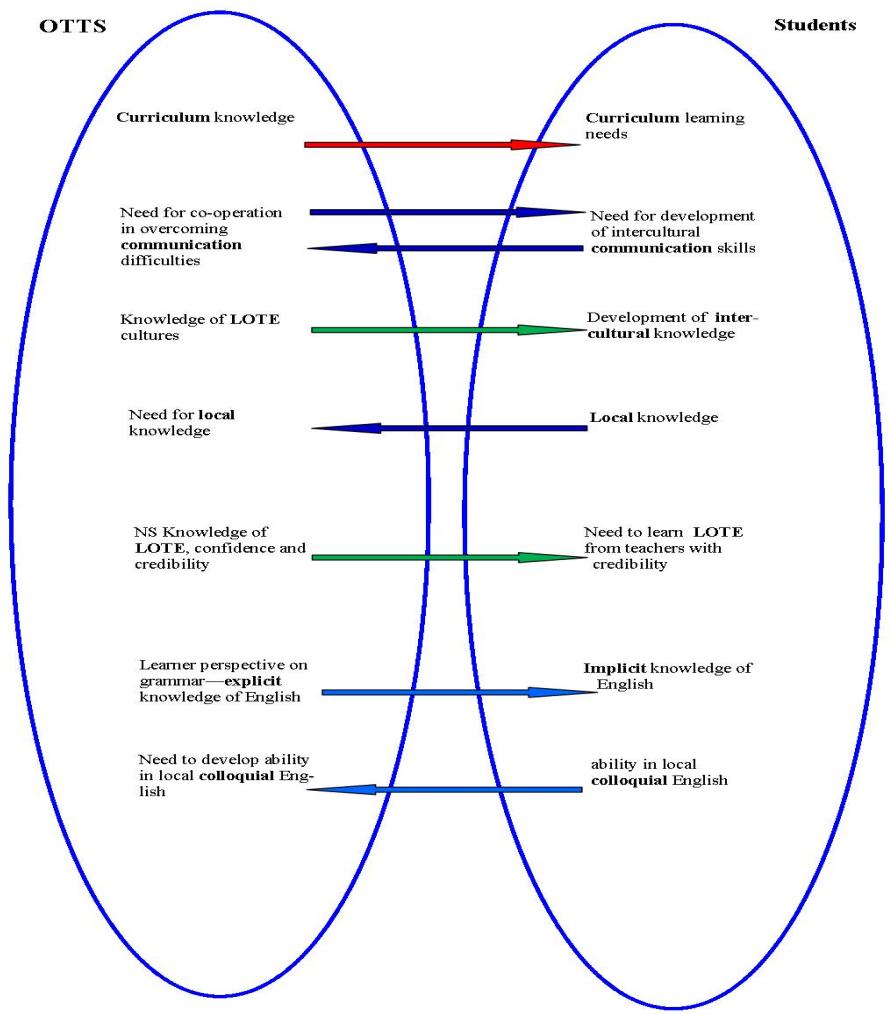
Figure 3: Positive contributions of OTTs - model of interaction
5.1.2.2 Problems encountered
Despite the value of the contribution OTTs can make, the obstacles that they face are also significant. In the following section, we will examine some of the areas of difficulty that the principals identified, and consider which can be attributed to language. Principals were invited to comment on problems they had experienced, and the implications these had had for the school community. They provided an account of the differen ways that their schools approached these problems, which ones had proved to be resolvable and which were not. Although the principals lacked specific knowledge of how the OTTs had had their language assessed, this data provided insight into their expectations of what preservice testing should be able to achieve.
In the analysis, all examples of negative experiences were coded in NVivo by two of the researchers and they were grouped thematically according to the main type of problem identified. The interrelationships and contributory factors were then explored. By far the most commonly mentioned difficulty was comprehensibility, and management of the reactions of students, peers and parents to varieties of spoken English, which had unfamiliar regional pronunciation features.
Sociolinguistic competence was also considered a very major problem area, and it was acknowledged that there were overlaps between language and cultural / pedagogical factors.
5.1.2.2.1 Comprehensibility
The comments quoted below also indicate that it is not the language issue in isolation that is the cause of the difficulty, but its tendency to interact with other features. For example, a teacher already facing discipline issues with a class is likely to find these become much worse when combined with comprehensibility issues. As one ACT principal commented:
[1] ACT
P: Look I think it can cause a lot of frustration in students. Certainly when students are not sure of what’s going on or they don’t feel confident to ask the teacher to slow down. That’s when students become bored. That’s when students become distracted and that’s when some kids can have behaviour problems. All - well no - that’s when their behaviours can cause a problem.
In this section we will consider examples of the different language features, which contribute to comprehensibility issues.
Pronunciation
[2] ACT
P: The other thing that usually comes up as an issue for schools is teachers who have qualified overseas quite often have quite heavy accents, which make them difficult to understand in classrooms….
I: …Can you tell me about the problems that have arisen because of that?
P: Yeah, well simply that it’s very - it can be quite difficult for students and other staff to understand them. So although their command of English is reasonable, the accent can make it quite difficult to understand what they’re saying. That gives a huge, as you can expect, huge issues [laughs] in a classroom with just the simple communication of students not understanding really what’s being said to them, and then getting frustrated and depending on the quality of the students too, they either start playing up, and playing on that, or it just is a source of frustration.
I: How often does this happen?
P: Look, with reasonable regularity.
Such problems are not readily resolved, and if teachers do not have permanent positions, these problems can affect their ongoing employment.
[3] VIC
P: Well yes, I believe there was one teacher that we had and really was exceptionally difficult to understand her. Clearly she had been qualified and had passed whatever test was required. It was just extremely difficult to understand her.
I: What happened as a result of that? How was it resolved?
P: Hey?
I: Was it resolved or…
P: Yeah well to be perfectly frank, it’s the same as what happens with any teacher who comes through an agency to us and does not meet our needs and we just make contact with the agency and say we are unable to have that person here at our school anymore. Then they get us to fill out a little report and we send a report on email and that’s the resolution of that.
It should be noted that it was not only NESB teachers whose pronunciation led to difficulties. Some English regional accents were also difficult due to their unfamiliarity.
[4] ACT
P: I can give you an example of a school I was at which was a pre-school to year 10 school. It was actually a teacher on the primary side who had a heavy Scottish accent…
[Laughter]
… so English was her first language, but the accent was a real issue for us…
…Well, it’s actually raised an interesting question for us, because we absolutely found her, and that was staff and everybody - you really had to listen very hard, even in casual conversation, to understand what was being said.
Use of technical language
Comprehensibility was also an issue in the delivery of technical content, when teachers experienced difficulty in articulating specialist vocabulary. Test developers would class the sounds and stress patterns in individual words as a part of lexical knowledge, but to non-language specialists with a more functional perspective they all fell under the umbrella of “comprehensibility”.
[5] ACT
P: Clearly articulate what they’re trying to say…I think this is the biggest blocker that I referred to earlier. Is that whilst often the language is grammatically correct, often the pronunciation is not what the students expect and they find it hard to hear what the teacher is saying. Particularly when - in science and mathematics - when we’re introducing technical terms. If someone says it in a way that it doesn’t appear to be written. So the verbal word doesn’t seem to match what’s being - what’s written on the page, whether it be due to the accent of the teacher or not. The kids really struggle with that.
[6] ACT
This theme arose again later in the discussion by the same group.
P: Look, I’ll come back to the notion of the technical language that’s required in many subjects. I think introducing new terms and concepts can be problematic to some of my overseas teachers because the way which they’ve learnt the language, they’ve used it in its technical sense. But they’ve used it in an environment where the pronunciation was different. So their learning of how to say various words are different to what my Australian students are expecting.
Grammar and discourse
While grammatical issues were more frequently manifest in written language, some developmental and regional features were observed in the teachers’ spoken language as well, and it was noted that this placed an additional cognitive load on the students. The following discourse level example identifies a possible transfer error affecting the system of reference.
[7] ACT
P: They are different and my experiences have been that sometimes children and staff just find it a bit hard to determine what they’re actually meaning. I’ve certainly found - a prime example would be then, that when one of my Indian colleagues is referring to someone else, they will always use he, she or they. But never refer to a person by their name. Often it’s hard to work out who they’re thinking about or who they’re referring to in the conversation.
So I think that’s a discrepancy between the learnt, formal English but also the cultural way of structuring the communication.
Often it was mentioned there was not a great deal that could be done to remedy these difficulties.
[8] ACT
I: So what happens when you have difficulties like that? How does - how are they managed within the school?
P: Well to be absolutely honest, there’s no real support for the schools or for the teachers in that sense, in that instance. We just have to really - the teachers have to try and do their best to make themselves understood clearly, and we have to do our best to stamp on students if they’re getting out of hand, you know?
One of the very small number of principals with some knowledge of language testing commented on the challenges of assessing actual communicative ability, including both pronunciation and grammar.
[9] ACT
P: We have a number of teachers all using language but either the grammar is not quite right or the accent is thicker in one teacher than another. I’ve actually found that some teachers have performed very well with their language, others not quite so well. Even though one of them has rated lower than the other. So there’s a disparity between how well they’re communicating and their rating in the language proficiency [test].
5.1.2.3 Comprehension
Specialist professional lexicon
Unlike PEAT, listening comprehension in IELTS has general academic content and a focus on international communication is taken in the speaking assessment. As such, teachers may enter a workplace with little knowledge of locally used vocabulary.
[1] NZ
P: Probably the biggest difference is in the educational jargon that we use - that understanding of the jargon that’s particular to New Zealand.
Comprehending colleagues
Principals did not volunteer any examples of teachers failing to understand students, which would in any case have been difficult to observe, but there were several accounts of miscommunications among staff members.
[2] NZ I know that, I can’t think of a specific example but I know my deputy principal sometimes reminds me, you know, how come the staff didn’t get that or how come - I thought we had agreed on this. She said, but I wonder if it is the two language thing that they nod and kind of look like they understand but maybe the subtleties within the language meant that they didn’t really understand.
[3] VIC …one particular Indian trained teacher stands completely out in my mind. I remember her very well from two years ago and she had no comprehension at all. It was as if - and indeed we found out later that she didn’t understand what I was saying and she didn’t understand what I was writing. She had somebody else to do that for her at home, which is really quite bizarre…
…She had apparently been qualified to teach in India. But her communication, her comprehension was a huge concern.
5.1.2.4 Sociolinguistic competence in spoken interactions
Also highlighted by the principals were some sociocultural aspects of language. When communication breaks down due to pragmatic failure (Thomas 1983), it is not always possible to identify whether the cause is linguistic (i.e. because of the teachers not having knowledge of the language forms) or pragma-linguistic (based on an incorrect belief that a known language form is appropriate to a certain context). The examples quoted below refer to selecting the appropriate level of formality and directness for classroom interactions, but participants acknowledge that these overlap with “teaching style”.
“Directness” in language choices
[1] VIC
P: As I say, there are cultural differences, so in Australia it’s very unusual to say to an adult something like no, you’re wrong, you need to try harder next time. We wouldn’t phrase it like that.
I: No, we’d mitigate.
P: Whereas there are other cultures where that’s okay. So some Israeli teachers might talk like that. The Russian teacher might talk like that. She tends to have a fairly - mind you, the kids see her as quite endearingly idiosyncratic, a lot of them, those who aren’t traumatised by some of their comments. Most of them see her as really funny and quirky and so on. Again, it’s hard to say where personality intersects with culture, but she might say something to a student like you’re putting on weight, and then we have to go into the counselling and say look, we don’t comment on students’ bodies and so on. So that may be part personality and part cultural.
Excessive directness was also noted in classroom instructions
[2] NZ
P: When they’re giving instructions to the class, the children don’t always understand the language that they’ve used or sometimes they have quite a dominant way of presenting to the children. Our children don’t respond as well to that ‘you know you’ll do it now’ type of teaching style.
High levels of formality
OTTs did not always select the level of formality in their language which would have best promoted the development of positive teacher-student relationship This may have been because they were less comfortab le with their competence in using more colloquial languag forms, or because they had a different view of what was appropriate in the classroom. The following three examples illustrate this.
[3] ACT
P: I think sometimes too, the sentence construction is often very formal in some of my overseas teachers. Some of the students who are more flexible in understanding a range of ways of expressing a concept or an idea, sometimes then have to think about the formal construction. It will be grammatically, 100 per cent correct, what the teacher is trying to say, but it’s foreign to the kids. They’re not used to hearing that grammar in that sense. It’s not yet part of their home language, it’s not part of what they see on TV and it’s not part of what they say when they’re with each other.
[4] NZ
P: I think that if they sat a formal written test they probably would have passed. It’s that delivery with the children that the children find very hard to understand. So I’m not saying that language was incorrect, it was very formal, not everyday language, and not what the children were expecting - and probably delivered in a very teacher dominated way. So it wasn’t what they were used to. So the children found it hard to work out what was happening and what they were supposed to do.
[5] TAS
P: Yes, she was more formal. That was probably a reflection of her own personality, so she had high expectations of the kids and she expected those expectations to be met, but she didn’t fully understand that they bring all this baggage with them, so it’s not until you start sorting through the baggage that you can actually get them to reach their potential. She was more of a, ‘these are my expectations and then you should be doing it’. She didn’t really initially examine why.. [inaudible] and it was because she wasn’t building that trust and that relationship with them.
In the last of these extracts, the Tasmanian principa makes reference to several additional factors that cooccurred and may have interacted with the teacher’s observed preference for a more formal atmosphere in the classroom. Formality is a way of maintaining distance, (and preferences may relate to personality traits) but literacy in “formal” higher register academic language may also be seen as an indicator of the high standards which the teacher valued. The key point made is that she preferred a formal atmosphere and did not build a relationship of trust.
5.1.2.5 Writing
A range of written language issues were identified. In some instances, teachers did not have the opportunity to obtain employment at all with a particular school because of their limited writing skills. Even if they were successful, they still faced obstacles in and out of the classroom and were frequently the object of parental disapproval. Some schools had a highly supportive culture, but this was not universal and resentment was sometimes expressed regarding the investment of time involved in checking and correcting OTTs written work. In addition, the comprehensibility of the teachers’ board writing was reported to result in problems for learning.
Obtaining employment
Overseas teachers have difficulty in obtaining employment if they are not able to write satisfactory letters of application to the schools.
[1] NZ
P: Sometimes their CVs and their formal letter of application don’t fit into our criteria. It’s the way they’ve worded things and it’s the mistakes they may have made in their letters that sort of puts you off. So they’ve written some things that you think ‘oh I wouldn’t have said it like that’. So I probably - you know when you’re reading, when you’re short listing, that’s been one other thing is their formal skills have not been as well defined as someone who has been trained in an English speaking country.
[2] ACT:
P: They have a typical - they can certainly, can have the typical ESL language issues, particularly around tense. So just the normal - the things that we would expect to see in ESL student writing can also show in that.
I have to say when I’m in at a Workforce Management and reading applications, they will show up in those applications too, so I will tend to put them to one side…
Recognising student errors and giving feedback
Principals perceived this as a key function of all teachers as promoters of literacy across the curriculum, as the following extracts demonstrate.
[3] NSW
P: a teacher would not pick up the students’ errors. A teacher who doesn’t pick up the students’ errors, well, how do the children learn unless they’re given accurate feedback?
The fact that the quality of teachers’ feedback was seen and negatively evaluated by parents resulted in a loss of credibility for both the individual teacher and the school.
[4] NSW
P: Because we get complaints from parents saying, I got this piece of writing come home, said it was terrific and didn’t even have capitals in it. Parental expectations - it might not come through the principal’s office or another teacher’s office. It might go straight directly home. What are we communicating to our parents? Our teachers are not proficient in the English language. We make the global statement. Our teachers, not that one teacher at that one point in time.
Writing reports
Meeting parental expectations of formal reports was given high priority by all principals, as the following conversation illustrates.
[5] NSW
P: We have to correct them all the time. It really is difficult when you have to correct teachers’ language.
I: In the classroom or in…
P: No. The time when it surfaces most is when they’re writing reports.
I: How does that work in this school? Do you have them…
P: I read all the reports and I correct what I can. Now this time I read everything, but we were very pressed for time. I missed a lot of areas, because we do it online. Teachers, I said to them, you’ve got your printed copies. Please go through it and correct anything that - have a look for errors. They found so many errors and I think it really opened their eyes to the number of silly errors that they write. But there were errors that were these sorts of errors that people were saying, but people shouldn’t be making those kinds of errors. So when a teacher is writing reports and making errors in the reports that are basic grammatical errors and basic punctuation errors and basic errors of expression, parents have every right to be upset about it, especially if those teachers are teaching their students English.
Writing on the board
Schools varied in the kind of board writing required; both traditional and interactive whiteboards were used, and also digital presentation technology. The importance of handwriting readability was mentioned, whether it concerned discursive text or symbols.
[6] ACT
P: …some of the writing that is placed on the white board or a black board is beautiful script, beautiful, beautiful script, but the kids can’t read it. They’re like, what are they writing? Because they’re used to the…
I: Printing…?
P: …Australian School cursive style or printing. So that when an overseas teacher writes an American style R, which goes down, up, has a loop and then looks a little bit like an N, they have no idea what that means.
[7] ACT
P: I also think some of the different writing conventions, particularly in science and mathematics, when you’re writing symbols on the board. They might look a little bit different to what the kids are used to, or how they’re represented in textbooks. We all know that our own writing style varies but it’s just assumed that the way I write an X for an unknown value might look a little bit different to the way in which it’s represented in the textbook. It’s the same thing, but sometimes it’s wildly different to what the kids are expecting. They’ve no idea what this thing is that the teacher has drawn.
5.1.2.6 Confidence and professional identity
It was observed by the principals that teachers with language issues also sometimes displayed a lack of confidence and assertiveness, and an inability to project a professional presence and identity. This had further repercussions for relationships with students and other members of the school community, reflecting both on how the teachers were perceived and how they perceived themselves.
Classroom management
[1] ACT
I: What about the other ones with classroom issues, you know, classroom management and this sort of thing? How big a part does language play in that?
P: It’s the package, it’s part of a package. There are definitely issues around kids and understanding what’s being said to them. So there needs to be a particular - a level of ability to articulate what you’re trying to teach, but on top of that of course is how that’s projected, your presence in the classroom. A good example is a science teacher who’s just worked her butt off to do fantastic lesson plans, she was right over all of those, she was incredibly quiet in the classroom but also was difficult to understand and the kids lose patience. Then the parents lose patience and because she didn’t have the confidence, we couldn’t move her along because some of that was around her reticence, her lack of confidence in the classroom. It’s difficult because you can’t really isolate, I don’t think language specifically, because a teacher that’s prepared to get up there and give it a go and then the kids with a particular personality and the kids say, you got that wrong, yeah, right and I’ll work on that. You know, there’s a different way of selling, you know you engage them in your learning and the kids will go a mile with you, so I don’t think you can
necessarily isolate just language from…often with language issues they lack confidence as result and that compounds the problem.
A New Zealand principal described a similar proble m, outlining how language skills and confidence issues interacted.
[2] NZ
P: She was very good at communicating with individuals. I think she even spoke in assembly one time about - so she was willing to do that, which was great. In terms of communication with students, it almost became - I don’t know whether it’s a cultural thing or whether it was to do with her being female and very minute, but classroom management was an issue. I think that was compounded by the language, just made that a little bit more difficult. But I think there were a number of other factors there, like she was really little and I don’t know whether it’s a cultural thing to be that assertive, yes, I’m not quite sure. I think…
I: She was assertive?
P: Well you tend, sort of, you need to be quite assertive to manage 30 kids in a class.
I: And she wasn’t?
P: She wasn’t, as I say, she was very good managing individual students, but that managing 30 at a time was something she had to really work at.
Later in the interview, this principal talked about how her school had dealt with this difficulty.
I: Okay. What were you able to do then to - were you able to assist her with classroom management?
P: Yes, yes, we made sure that there were strong supports there for her and relocation options available and reassured her she didn’t actually need to do it all herself. That there were senior staff and other teachers around that she can relocate students to. I mean she just needed to be assertive so the kids knew she was going to be assertive and then they would respect that and not keep trying to push the limits.
Speaking in school assemblies
Professional face could be threatened in the case of public speaking.
[3] ACT
P: We will also ask teachers to make presentations at school assemblies. Whether it be sector assemblies such as just the senior school or a whole school assembly. Sometimes that can be problematic in terms of using a microphone and projecting the voice appropriately. Also then they will - through nervousness of being in front of a large group of people, they will either revert to not well - not constructing their sentences well, or speaking very rapidly. Then many people have trouble understanding what’s being said.
Misuse of compensatory strategies
It was noted that teachers developed compensatory strategies but frequently they were based on avoidance rather than promoting the development of competence, and the solutions they provided tended to be short-term ones.
[4] ACT
P: Typically if they’re in a subject area that they’re conversant in they’ve got the subject language, that’s not an issue. It’s the general conversation stuff…that goes with it, and then again around the projection around the volume, the amount they speak in the classroom. Often they speak very little because they are not confident, so they’ll resort to other things like overheads and stuff that they would have typically got from a proficient English speaker.
[5] ACT
P: I mean, yeah, a lot of them, and again it’s that combination of lack of confidence. So the guy from Africa was very quietly spoken. English was reasonably good, but he was so quietly spoken and lacked the confidence to engage in deep conversations that I think he actually - he was a maths teacher, structures his classes to avoid it and we worked really hard to try and get him to project himself more and to have more a presence. But the kids, yeah, they didn’t engage with him and they complained that they couldn’t understand him or it wasn’t so much about his language, it was actually the fact that he wasn’t projecting and was reticent to engage in those sorts of conversations I think. So again, it’s that difficult, it’s the delivery as much as it is the actual structure.
Parents’ reactions
Parents’ reactions to a teacher lacking confidence were not always tolerant and sensitive, and this also suggested that the message the students were receiving at home was not one conducive to their developing respect and appreciation of what the teacher could offer.
[6] ACT
P: I’m thinking of this one particular situation, again, where a teacher lacks confidence, wasn’t able to clearly articulate the - the message she was trying to get across and the parent came and said, bloody teacher, my son’s right, can’t understand them, blah, blah, blah. Again, it’s that combination, it’s not just the oral. It’s the fact that they were unable to project themselves, they weren’t confident.
Parents’ complaints about language can have catastrophic consequences for teachers, as in the situation described by this principal.
[7] ACT
P: As previously mentioned our teachers - parents make contact about the language issues, or indirectly. They won’t directly link it to the cultural differences, but that’s what it’s comin down to sometimes. Some of the teachers of course will come and ask for support…Others will start to avoid the contact, so that gives us that problem.
I: Oh, okay. In that case what happens? Is - are they counselled?
P: Well then it can get where - to the stage where they’ve been directed to make the contact. In the worst case, and I’ve been involved in one of those, it goes to the process - to that whole big picture of what I’ve talked about with the teachers really dodging what they’re supposed to be doing professionally. It can go into performance management processes. Yeah.
I: Right. Then that can lead perhaps to the contract not being extended?
P: That can lead to - well certainly a contract - if I was having those issues with a contract teacher then I wouldn’t - would not be wanting to employ them later on as a contract teacher. But certainly for a teacher who’s had permanency it could lead to dismissal.
5.1.2.7 Culture and pedagogy
Another theme that frequently arose in both individual interviews and focus groups was that many of the difficulties experienced by OTTs were not directly attributable to language. However, some culturally and experientially based behaviours did have at least a tangential relationship with speaking and writing ability because they were enacted through language.
For example, the following extract shows a principal explicitly identifying pedagogical and management issues as language-related.
[1] ACT
P: But it’s the teachers that are newly arrived to Australia that find the most difficulty getting to grips with just the language around student behaviour and also the pedagogy.
It is important to examine these issues because the extent to which it is ethical for a language test to probe the cultural aspects of workplace readiness remains a controversial question.
Delivery of the curriculum
Teachers displayed the influence of the pedagogical traditions of their country of origin.
[2] NZ
P: I’ve got teachers who have come from India and then we’ve had a couple that were trained in Korea. So overall what I have found is that, while they have done some retraining with the local curriculum here in New Zealand, they do tend to - they need more support in implementing that curriculum as compared to local teachers and sometimes that’s to do with breaking of the tradition of how they have learned and been educated in a system and how they’ve learned to train and teach in that system.
OTTs sometimes experienced difficulties in delivering the curriculum content at the right speed and lacked appropriate comprehension checking and clarification strategies needed to address this problem
[3] ACT
P: …though sometimes I feel the need to slow down some of these teachers because they’re very passionate about the content and they’re making assumptions about what students already know. The teachers are going at a million miles an hour and the kids are going whoa, this is too quickly, I think we need to slow them down.
Reliance on textbooks
Over-reliance on textbooks is not a language issue in itself but may arise because of a language-related lack of confidence in the production of alternative materials.
[4] NZ
P: Yes, the pedagogy is quite different. They tend to be, you know, “Here’s the textbook. Everybody turn to page whatever it is”. We don’t really use textbooks. I’m trying to move away from worksheets and things like that. So it does take a bit of work. I mean, some of them will come and then apply because it’s just the way, you know, they go into a new country, have to do it this way and we’ll just get on with it.
It takes a while to understand about why we do it that way. Then other people just find it difficult to understand why. They’re just so set in their ways. Yes, it’s quite hard to change.
Being unaccustomed to a learner-centred approach
The teacher-fronted classroom tended to be more common in the OTTs countries of origin than in Australia or NZ.
[5] NZ
P: In my experience, what I’ve seen with the overseas trained, especially the ones from India - so what happens with the ones that come from
India, what I’ve seen is that they have been trained overseas, they have worked for at least 10 years sometimes and they’ve been successful in their schools overseas.
But when they come here they really struggle. They’re not used to the kind of curriculum we have here where children have got the ownership and the whole system is based on keeping an eye on the learning, not the teaching. So the focus is on the learner and the learning and they’re used to their own systems where the focus is on the teacher and the teaching.
Expectations of the physical learning environment
OTTs were sometimes unaccustomed to open work environments where they were under observation.
[6] NZ
P: With our school, being a new school we’re very digital, we have a lot of glass in our school. So there’s a real visual connectedness in the school of what you’re teaching you’re visible at all times. That makes a few overseas trained teachers a little bit uncomfortable. They’re not used to such an open environment.
Beliefs regarding the value of education
OTTs need to re-evaluate their knowledge and beliefs regarding the view that the students take of education and of teachers in general.
[7] ACT
I: You also mentioned cultural differences. Can you tell me a bit about that?
P: Yeah, I would say that I really find more the cultural differences to come particularly from teachers with an Asian background. That’s where they can be - they are quite used to students who are socialised into believing that education is a privilege for them, and they don’t seem to be able to deal with any of what we would regard as normal reasonable behaviour challenges, yeah.
So they can either - it can either go a couple of ways. One they take advice and they listen, and they learn, and they improve their management skills, but go through a period of real hardship, similar to a - to a new teacher. They go through that new teacher syndrome, if you want to call it that, for quite a long period of time.
So even though they’re receptive in terms of that they may be experienced teachers within their own country, with quite often years of experience and even as more senior teachers, they find themselves really thrown back into that beginning teacher syndrome for two or three years, which is a real blow to their confidence and their selfesteem.
[8] ACT
P: One of the other things I will add - and I don’t know whether it’s relevant to this interview or not - would be that the expectations of students a learners is very much biased by the country in which the teacher has had their previous teaching experience. Particularly the Indian teachers where the students in Indian schools are ever so grateful for every snippet of attention that their classroom teacher can give them. Very good teachers but they’re not great managers of some of the behaviours that Australian students show, that sometimes blocks the teaching process.
Perceptions of the teacher’s role
There may be a mismatch between teacher and learner perceptions of the teacher’s role, as the following comment illustrates.
[9] NZ
P: In my school the most important thing is that the role of the teacher is quite different. There are no teachers’ desks, there’s no territorial spaces for teachers in the classrooms. So for us, for the teacher to understand that as a teacher you’re a learner as well is something that the overseas trained teachers find a little bit hard to understand because they see themselves as the sage on the stage kind of syndrome…
…one guy springs to mind who was Iranian and he was from a - well I imagine - from a very formal Iranian school where there were 40 or 50 students in a class that was you know rows of desks, no collaboration, teacher dominated. That was his experience so that was the teacher he was being. For us and our kids that was just - there was no way that was going to work.
In an earlier section we discussed the overuse of formal language. There are cases where this may be a matter of the OTT not knowing how to use informal language, but it can also originate from a culturally-determined perception of the teachers’ role. In the case below, the language choices had directly negative implications for the development of constructive teacher-learner relationships.
[10] TAS
P: the teacher we spoke about from Sri Lanka, she struggled initially with developing relationships with the kids. She was a bit more standoffish and didn’t really invest the time in developing those relationships with the kids. So she saw her role as to come in, stand and deliver and get the best results that they can, whereas some of the others were a bit more well-rounded, so they would come in, they’d invest the time in getting to know the kids…
However, as the principal went on to explain, once this perception had undergone transformation over time and through experience in teaching in an Australian environment, relationships could be managed well.
In fact, the teacher she described above had ultimatel become a successful teacher and a highly valued member of staff.
Expectations of student behaviour
OTTs had difficulty becoming literate in the classroom . discourse of discipline because they were unaccustomed to needing to use it. Their expectations of student behaviour were shaped by the experiences that they had had in their countries of origin.
[11] ACT
P: One of the…I suppose the primary issue that we’ve had with a number of the teachers is their particular view of what education looks like and their expectation around the kids’ behaviour, that’s a critical one. We have quite difficult kids where I operate and we have very particular ways of working around a relational model. We find one of the biggest issues is teachers that come from more traditional settings expect compliance, and don’t have the skills sets and often the flexibility to adapt to that sort of setting, and that’s been a pretty significant issue for us in the past and I’m talking to the point where I’ve had teachers actually physically interact, inappropriately physically harangue the student on a behaviour level, and that’s not a - that hasn’t been an uncommon issue particularly with the male teachers.
Often with the female teachers, but not exclusively, they tend to be less, quieter, because they get compliance they don’t have the same, difficult to explain, perhaps they don’t have the same command or don’t feel that they need that same sort of - I don’t know what you’d call it, and they tend to be less confident and quieter in that sort of setting and they have a pretty tough time typically. Whereas the male teachers they’re often a little overt, hence the reverse. But having said that I’ve had male teachers who have been incredibly quiet and have had a pretty tough time because they just don’t have that command of presence.
You know great lesson planning, all that stuff, but in the classroom, in that face to face, they just don’t have that teacher sense or whatever it is.
In the experience of one ACT principal, Indian teachers sometimes expected automatic deference and compliance solely because of the respect accorded to their role. They were culturally unfamiliar with the idea of teachers needing to earn the respect of students.
[12] ACT
P: Some of my Indian teachers and maybe some of my female, Indian or Fijian Indian teachers have really struggled with the fact that they are required to establish a presence. Typically walk in to the classroom as a classroom teacher is not enough.
The expectation may be cultural, but if adaptations are to be successfully made, there are also language forms which the teacher needs to be comfortable using. For example, in the same interview, the principal also observed:
P: Because I’ve had some teachers walk into a room and look at me and say why aren’t the kids paying attention to me? Whereas I would expect that a classroom teacher walks in, they have clear signals about right, we’re going to start the lesson now, these are my expectations of you and then they begin.
Cultural aspects of teacher-parent communication
Australian and New Zealand expectations of how teachers and parents should interact were also unfamiliar to some OTTs, as the following extract shows.
[13] NZ
P: The other thing was the way that you deal with parents was probably a little bit different as well. Where I think we’re a - like Australia - we’re a much more softly, softly approach and we get everyone on board and we work together as a team. But there wasn’t that team work corroboration effort evident…
I: How did they relate to parents?
P: In a more dominating sort of a way. Definitely - this guy that I’m thinking about in particular, there was the gender as well. You know around being a man and all of those things. I know with some cultures, the age of people is also - you know that is significant as well in some cultures, and that seemed to be evident as well. Yep, that whole respect thing.
Communication issues with parents had on occasions led to complaints being made to the school, and even for requests being made that students be removed from an OTT’s class.
[14] ACT
I: What about communicating with parents directly? Parent-teacher evenings, that sort of thing?
P: Yeah, that’s also an issue, as I said from previous experience with parents, very politely - parents very politely letting us know that there’s a problem with communication. Very politely asking if there’s anything we can do about that. Sometimes it gets to the situation where they will ask if their child can be moved from a teacher’s class because of communication issues.
I: Are you ever able to do that?
P: We’re very reluctant to because once we do it, we can open the floodgates. In the end it presents us with the other problem of that teacher with a very small class, another teacher with a very large class, and the whole peer resentment.
5.1.2.8 Issues with colleagues
A complaint from a parent may lead to a request for special treatment, which in turn produces peer resentment. Difficulties in direct interactions with colleagues were mentioned less often than difficulties with the flow-on effects of problems the teachers are experiencing. For example, the principal quoted in the following extract attributes complaints to a difference in (teacher) attitude to the culture of the classroom and the role of the teacher.
[1] ACT:
I: Do you know of any misunderstandings that have occurred between colleagues that are language-based?
P: No, I wouldn’t say because of the language base, I’d say because of the cultural differences certainly, but not the language base itself.
I: How did the cultural differences cause misunderstandings?
P: The one that - the third category that I talked about before, where the teachers really start fighting to not take students who they don’t think are going to be particularly - if I’m talking to you about language teachers, they will fight to only take the classes of the eight committed students, and they won’t deal with the other 20 who are in there…not behaving. So that starts presenting other problems of course, for their colleague who are having to pick up the pieces that are out in the corridor, or creating a riot and all the rest of it. So you can certainly get a very big resentment.
I: Yeah, I see.
P: Yeah, and so I’ve been in a variety of schools where that has become a massive issue.
When local teachers feel reticent about correcting the language of OTTs, it makes it difficult for them to learn and adapt.
[2] ACT
P: Typically I’d find that my overseas teachers are very grateful to be corrected. But often my local teachers don’t feel confident in correcting them. They feel oh, maybe they don’t need - maybe it’s not my job to correct them. Or I feel awkward if I have to tell the teacher that what they said was incorrect. I have been asked upon a couple of occasions - not typically with [Indian teacher’s name], but with a number of other teachers. To - not as a punishment or anything, but just set a teacher straight on, well this is how we do things here. This is what I need you to do in this team, not this. Because the other classroom teachers o the colleagues at a team haven’t felt confident enough in correcting.
5.1.2.8.1 Difficulty in adapting to change
Because the language issues surrounding OTTs are not always successfully addressed, there can be long-term negative consequences, as this story about a LOTE teacher illustrates.
[1] ACT
P: So this particular teacher, who’d been I think in that school for 15 years, was that she’d been employed as a teacher of Mandarin. There were not the students to - in the senior years - to support classes. So the number of classes - of Mandarin classes that the school could provide her…were not enough for a full-time teacher. The school was - in the junior classes, where it was once again had become compulsory to students, year 7 and 8 certainly, to study in a language, of course she had classes up to 30 students of who maybe two or three wanted to be there…
…and that was the same for the teachers of the French classes, and the teacher of the Indonesian classes. But this particular teacher said “I only want to teach the students who want to be there. The others have to go.” So big issues around that. Then refused to deal with or even recognise that there were issues.
We had issues there with other students - savvier students - in the older classes wanting to join those classes because they knew they could leave the class whenever they felt like. There’d be no follow-up, they could do whatever they liked. So as you can imagine massive issues for us in the management of that.
I: Very difficult, yes.
P: She had been asked over the number - over the years to - or expected to extend her teaching into other areas, and because the faculty where she was sitting was a - SOSE [studies of science and environment] LOTE faculty, and all the teachers around her were teaching LOTE including the other - that school had three languages running in it - were teaching SOSE as well. It was expected. She had taught some in the past but with the changes in the Australian curriculum she just refused to get involved in any of that. Hid her head in the sand. That was both for her own main teaching area, plus the SOSE area. Just wanted to do her own thing, which was totally disconnected, and not up to any professional standings.
So the new management of whom I was part, with a new principal and I came in, just started to put the boundaries around that…
I: Did she remain in the school?
P: No.
5.1.2.8.2 Leaving the profession
The case of the Mandarin teacher above was not the only account of OTTs being lost to the Australian or New Zealand education systems because of the repercussions of language and cultural issues. Regrets were express ed that the talents of many OTTs were being lost because insufficient support when they could not cope.
[1] ACT
P: …they give it up and go look for employment elsewhere, in other fields, which is a shame because there’s a wealth of knowledge and talent being lost…
I: …How does that happen? Do they just - maybe give me an example?
P: Well they give up. They can’t deal with the stress of it. So - and - so sometimes they - and the bes outcome for them, they’ll go and find perhaps jobs in the public service because they are reasonably well qualified. Quite often, if they’re science teachers or with a language background, they’ll go in and find - well obviously having a different language, they’ll go into areas where they can either utilise their language skills or they’ll go into areas where they can utilise their scientific training for example. Where they don’t have all the - yeah, so they’ll do that.
5.1.2.9 Communication issues: A model of the interaction of contextual factors
The principals’ stories of experience revealed a complex set of interacting factors that constitute the construct of professional competence. Many of these are enacted through language, but they also pertain to deeper levels of culture: belief systems and values.
The interactive model below was derived by abstracting the underlying elements of the communication issues raised in the collected anecdotes, and considering the ways in which they were interrelated. It shows clearly how knowledge of language forms (potentially assessable by a formal test) constitutes only a subset of the required workplace communication knowledge and skills.
The principals who contributed their views had less in depth knowledge of language tests than we had anticipated, but their stories of experience provided a good indication of the mismatch between their expectations of what a gateway screening process might achieve and what had occurred in their teaching contexts.
It must be noted that the difficulties do not reflect real or perceived failings of any specific language tests but provide an indication of what the principals would like, in an ideal world, for a test to achieve.
Factors influencing effectiveness of communication
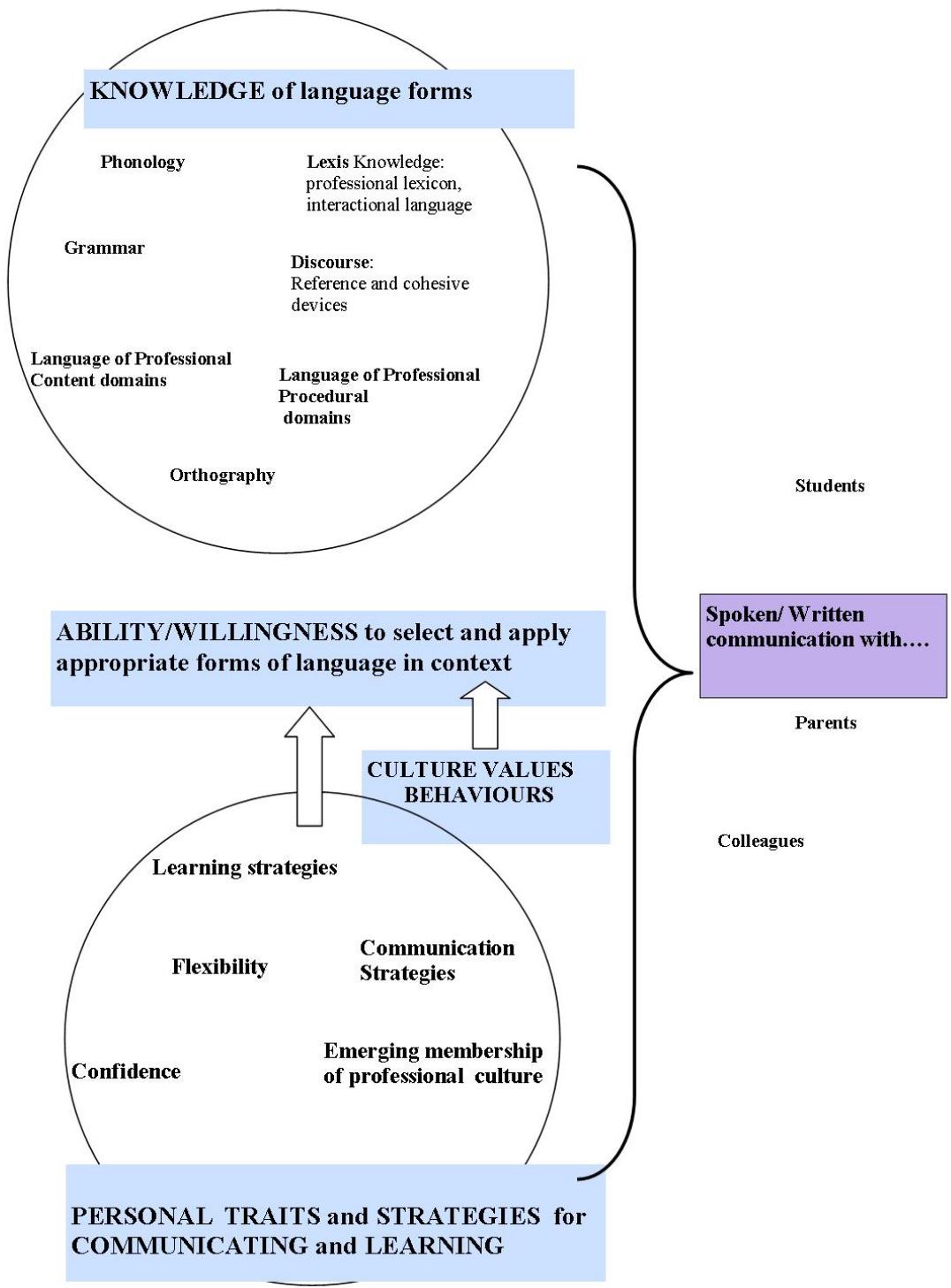
Figure 4: Communication issues of OTTs - model of interactions
What speaking and writing IELTS scores do principals believe to be an appropriate indicator of professional level language proficiency for teachers to be employed in Australian and New Zealand primary and secondary schools?
5.2.1 Speaking
Participants in the six focus groups were invited to comment on five 3-4 minute speaking samples provided by IELTS. The pilot study had confirmed that using the whole test would be too time-consuming for the participants. The part of the test selected for consideration was the discussion, on the basis that it provided opportunities for more authentic interaction. As video was available for some but not all of the interviews, and a sound file had proved equally effective in the pilot study, the latter was used for all the samples. The participant responses are outlined below, in terms of their overall impressions of the employability of the candidate and a set of individual criteria.
- Overall Employment decision
- Individual assessment criteria
o Fluency o Choice and use of words o Grammar o Pronunciation
Where other criteria were mentioned by the participants, these were also coded for consideration.
5.2.1.1 Sample 1 (Andy)
Sample 1 was a male from China, who we will refer to as Andy. His overall IELTS score was a 7, with his lexical knowledge judged by the examiner to be at the high end of the band and his pronunciation at the low end. On the current benchmarks, Andy would have been excluded from Australian schools but could have obtained a teaching position in New Zealand.
Employability
The principals were unanimous in their negative assessment of his employability. The following comments are typical of their evaluations.
[1] NSW
I: What was your initial response to him? Would you like him in your school as a teacher?
P: I don’t think he would survive.
[2] NZ
P1: I wouldn’t even think he’s close.
P2: No.
Fluency
Andy’s fluency was considered by all to be inadequate:
[3] NZ
I: Do you think his fluency was a real problem? That is the hesitations, the…
P1: Yes.
P2: Yes I do yes. I’ve just written down “he struggles”. That was the sort of overall sense I’ve got.
Another principal commented:
[4] ACT There were lots of pauses at inappropriate places, there was no flow.
Lexical resources
This was considered by the examiners to be his strongest feature, and the principals agreed with this. They identified good use of idioms and collocations, and although there were some word choices that a native speaker might not make, none felt that that detracted from his competence. This comment by one principal sums up the response of most of the group.
[5] ACT He was a very sophisticated thinker, got right into the depth.
There was only one dissenter, who voiced an objection regarding the accuracy of his collocations.
[6] NSW
P: There was a word “down” and I tried telling him but it was something about descending and then “down” went at the end of the sentence. I: “Descending down”. It’s understandable, but it’s not accurate. So do you think the accuracy there is a problem? P: For primary school children, especially for the ones that we are interacting with, it’s essential that our children get language models that are correct.
Grammar
The examiners noted successful use of complex structures and a number of error free sentences, but the principals were highly critical of many features of his grammar. They did not focus on successes at all. Tenses, missing auxiliaries and articles, and incorrect use of passives, were all identified as features that would make Andy unsuitable for the classroom.
Pronunciation
The examiners identified pronunciation as his weakest feature and placed him at the very bottom of band 7. However, they considered that despite a range of nonstandard features he was not difficult to understand. Most principals disagreed with this.
In New Zealand, where he would have been accepted on a band 7 score, the responses were as follows:
[7] NZ
P: It’s his accent that’s difficult. His English isn’t actually too bad. It’s his accent.
Another mentioned comprehensibility as an issue.
[8] NZ
P: You have to really listen.
P2: You have to really listen hard.
A more moderate response was recorded by one principa in the ACT
[9] ACT
I: Yes. So pronunciation? Was his pronunciation bad enough do you think to be an obstacle?
P1: My initial thoughts were yes.
P2: Yes.
P1: But I think that exposure to this teacher over time most students might acclimatise. I think that he made a deliberate effort to pace his sentences so that they weren’t as quick as they could have been.
Principals in NSW noted the following specific errors.
[10] NSW
P1: With him, there were problems. There was ‘t’s with ‘ch’s.
P2: The accent on the wrong syllable in places as well. Intonation changes nuance as well.
I: Absolutely, yeah, so there were problems with the intonation there that might cause him some difficulty.
They made the following comments about implications for the classroom
P2: But the accents within words weren’t - like he had stressed wrong syllables in words and that makes it difficult for some children to understand. If they hear from somebody “enormous” and they hear from somebody else “enormouse”, they might not even pick that this is the same word, because children are learning a language and some of our children aren’t exposed to those words yet. When they’re learning them, they need the proper structure at the beginning and the proper intonations and emphases within the words.
Again, these comments relate to principal’s perceptions of the importance of the role of the teacher as a language model.
The IELTS speaking assessment would have been successful in identifying this candidate as unready to work as a teacher in Australia, but in New Zealand he could have been offered employment. This was counter to the recommendation of the New Zealand principa S
5.2.1.2 Sample 2 (Michael)
The second candidate, who we will call Michael, was from Colombia and was evaluated by IELTS examiners as a flat band 7. Like Andy, he would have been eligible to teach only in New Zealand.
Employability
Principals’ evaluations of Michael showed the greatest degree of divergence of any of the speaking samples, both across and within focus groups. As we see from the following exchange.
[1] ACT
I: What did you think about Michael?
P1: I wouldn’t touch him.
P2: You wouldn’t?
P1: No.
P2: (consulting her notes) I said “competent.”
I: You liked him, did you?
P2: Yes.
Reservations were also expressed in the second ACT focus group, with one definite rejection and another one considering him to be “borderline”.
[2] ACT
I: Do you think he’d be all right? What do you think?
P1: I think the children would have trouble adapting to his use of language or to his pronunciation …
P2: Michael - I’m borderline - borderline with him.
The Victorian group was divided, one principal expressing strong reservations the other actually preferring Michael over another candidate who had scored a band 8.
[3] VIC
P1: …and I would definitely have Michael - if it’s Michael, or - before, wouldn’t you?
P2: Certainly above Miranda.
P1: Yes, because he had - if you’re talking about word stress and rhythms, I think he’s got them right and she hasn’t.
One New Zealand response was more positive, based on past experience.
[4] NZ
P: Well to be honest, I’d have to say I would take him because I did take one like this who was probably harder to understand.
However, overall the group remained divided, with another New Zealand principal commenting that it would depend on the situation, and how “desperate” they were.
In NSW, the response was initially negative, with one principal saying:
[5] NSW
P1: I’d be very, very hesitant to put him into a primary classroom on what I’ve heard in that…
However, on reflection and after hearing the five samples, the same principal moderated his view. The extract below is taken from the same transcript.
I: …what we’re trying to see here is, were there any of these that didn’t have nearly enough English, that you wouldn’t give them a try or ones…
P2: Michael.
P1: Michael…
I: Michael’s the only one.
P1: …from Colombia is the one that I would have.
The Tasmanian group described Michael as “borderline”, one adding “borderline but no”.
Fluency
On the IELTS score awarded, Michael’s level of fluency would have been considered inadequate for all contexts except New Zealand. Interestingly, none of the participants found it problematic. The only negative comments referred to difficulties they had had with the speed of his speech, and its effect on comprehensibility. The following comment is typical.
[6] ACT I thought he spoke really fast and I had to listen hard.
There were also several positive comments on the coherence of his responses and how he developed his ideas in a clear way.
Lexical resources
Also graded at band 7, Michael’s use of lexical resources were mostly not considered to be adequate to the needs of the workplace, because of a lack of sophistication and variety.
[6] ACT
P1: I didn’t think he had quite the depth…
P2: The use of words was appropriate. But there wasn’t a great degree of specificity.
[8] NSW
P1: Yeah, he had a lot of trouble finding appropriate words to use.
[9] VIC
A principal from Victoria commented positively on his compensatory strategies.
I: So you were happy with his range of vocabulary?
P: Yes, I think so, even - look, even where he didn’t have all of the words, he actually can qualify what he says, and that was something that I think the first person couldn’t. He couldn’t qualify what he said adequately.
Grammar
There was a consensus amongst the groups that Michael displayed problems in grammar, and the ones identified by the principals corresponded quite closely to the marker comments - tenses, conjunctions, irregular verb forms, modal auxiliaries, and noun-verb correspondence. Unlike the marker, the principals did not comment specifically on articles and word order.
Opinion was divided about whether the problems were serious enough to exclude him or whether they were balanced by other factors. Communication (as in the ability to make oneself understood with existing resources) was often seen as separate from accuracy in the role of language model.
[10] VIC
P: So I don’t think any student would have difficulty understanding him. I don’t think any parent would have difficulty understanding him. Is his grammar correct? No, I think it’s problematic. But that’s not always what makes the difference in the communication.
However, it was clear that prior experience played a role in the principal’s judgement, as the following comment from one ACT focus group shows.
[11] ACT
I: The grammar you’ve mentioned there’s a few problems.
P1: Yes.
P2: Yes.
I: But do you think they’re too serious to give him a job as a teacher?
P1: Well I’ve had worse than that in a school.
While the last comment could have referred to the principal’s experience before the current benchmarks were introduced, it is still possible for a candidate to have an overall band 8 and be less competent grammatically than Michael, for example with a low 7 for grammar balanced by a 9 for one other skill.
Pronunciation
Michael achieved a 7 on pronunciation but the examiners’ comments were not highly critical, suggesting he would probably be in the top half of the range. “Overall”, they concluded, “his accent is slight and has very little impact on intelligibility”.
The principals’ reactions tended to be more negative. One participant from Tasmania identified pronunciation as the main motivator for his overall judgement of unsuitability.
[12] TAS
P1: The pronunciation was the major issue that I think my kids at this school would struggle with to the point where I wouldn’t be confident in putting him in front of a class. No.
P2: No, okay.
I: So mainly the pronunciation.
P1: Yeah it was the pronunciation.
Issues with the production of individual phonemes were identified by the examiner but not given a great deal of importance. However, while an adult listening in a familiar context would be unlikely to be confused, it was felt by the principals that the candidate’s inability to distinguish between long/short vowels and voiced/ unvoiced consonants would be of major importance for the children.
[13] NSW
P1: I think that of the ones that we’ve heard to this point in time, he is the least capable of working in English. I mean, he’s working for peas. I’m not sure who peas are or what size peas he’s after. But if he’s after peace, now that’s a slight difference, but our children will pick up peas and contextually they’ll jump to another realm.
A member of the New Zealand group acknowledged that understanding teachers like Michael was a matter of being accustomed to the accent.
[14] NZ
P: I’m just not used to the accent so I would find it hard, whereas others I can understand quite easily.
5.2.1.3 Sample 3 (Ashley)
The next candidate, whom we will call Ashley, was a male from Nepal. He displayed a range of scores for each criteria (7, 7, 8, 8 respectively), and was evaluated at an overall a score of 7.5 because of his competent grammar and pronunciation. This sample was useful for our evaluation of benchmarks, as his profile represents two scores that would have allowed him entry to the Australian workplace, and two that would not.
Employability
The majority view among the focus groups was that Ashley should not be offered employment. The strength of the opinion varied from unequivocal rejection to moderate acceptance - but even in the latter case, the acceptance was conditional; he would only be employed if support was available.
Sometimes there was a shift in position as the discussion progressed. For example, the initial reaction of a Victorian principal was:
[1] VIC I’d be worried. I think my kids would run rings around him with the language.
Later in the discussion this view was moderated to:
P: I would have to assess how good his subject knowledge is, and how good his language is in relation to the subject. If that enabled him to be more eloquent and specific, then I’d possibly take a chance on it….
…So I think that he would be someone I would definitely offer support to, and be happy to have say as a pre-service teacher. Or someone to come in and do some work to expand their knowledge and expand their work capacity in the classroom. But not someone I would readily employ.
Another group were also doubtful of his suitability.
[2] ACT
I: What’s your general opinion of his abilities?
P: I’ve come down to “limited”…
I: Why would you say “limited”?
P: Well he clearly understood what was being asked, but he really didn’t expand on a range of - he stuck within quite a small range of ideas and words around that, really a lot of repeated…
Employability, for some principals, was not decided on the basis of a global impression, but on the basis of a single feature. As we shall see later in the discussion of fluency, even if all the other features had been acceptable, averaging the score was not acceptable. Problems in one area were seen to negate the other positive features.
The New Zealand and Tasmanian groups were more positive about his employability.
[3] NZ
I: Have you worked with teachers that he reminds you of?
P: Yes. In fact his English, or the way he speaks, is better than some student teachers we’ve had who’ve come out of say, who are Pacifica, who are ESL as well, you know, the second language. I think his English is pretty good myself.
Fluency
The examiners made no specific criticism of individual elements of the candidate’s fluency. They noted, as a positive feature, his ability to restructure what he is saying in order to get around difficulties, suggesting that a listener would be unlikely to be aware of them. They felt that his use of markers and linking words was good. However, the grade they awarded was lower than the Australian entry benchmark.
Principals’ reactions to his fluency were mixed. Tasmania and New Zealand were positive, but the ACT had some major concerns.
[4] ACT
I: Okay, so in terms of his fluency, do you think that would be adequate for coping in a classroom?
P1: No.
P2: No, I think he’d start to struggle certainly.
[5] ACT
I: Have you ever had any teachers that had a similar sort of level of fluency?
P1: Yes.
P2: Yes.
I: What happened with them?
P2: Crucifixion would be the appropriate terminology. Slaughtered. The kids don’t respond because they lose attention because they’re working hard. Even those kids that are engaged, they’re working so hard to understand that they just switch off.
P1: They lose the meaning. They’re focusing on, in effect, a kind of translation rather than themselves being able to reflect on the information that’s being passed and respond to that, react and respond to that.
P2: Absolutely.
In Victoria the participants were less concerned about fluency overall.
[6] VIC
I: Okay, thank you. Now what about his fluency? Let’s start with the fluency. Do you feel it was good enough?
P1: Yes, I do. I do feel his fluency was good enough. There were a number of times when he repeated himself. As you said, rather than refine, just went back over. But I felt his fluency was acceptable to teach in a classroom.
P2: I did, too. I think…
Grammar
The IELTS examiners expressed an overall positive view of Ashley’s grammatical ability, commenting that he used a range of structures and the majority of his sentences did not contain any errors. Non-systematic errors were on occasionally noted. The principals had some difficulty identifying specific issues. Grammar was considered by the majority to be overall adequate, but several referred to it as “limited”.
[7] ACT …some of the syntax I thought wasn’t correct. I found it really difficult to listen to. It was hard.
There were some times where he said those classic mix up, maybe it was an adjective and a noun or something, but where he got the order wrong.
[8] ACT the verbs probably weren’t used as correctly as they could have been
Failure to finish sentences was categorised as a grammatical error.
[9] ACT
P1: … I’ve got here didn’t always finish sentences.
P2: I got that too - finish sentences.
[10] VIC
Again, the Victorian group expressed a more positive view.
I: What about his grammar? What do you think about his grammar? Did you notice anything that would be a problem?
P1: No.
P2: No, I noticed some differences but I wouldn’t have a problem with his grammar in a classroom.
Lexical resources
IELTS markers commented on good use of idioms and collocation, but noted a lack of precision and overuse of some words. Lexical resources were a major issue in the principals’ perception, as this excerpt from the ACT group shows.
[11] ACT
I: How about his use of words? You mentioned that he didn’t go into things in great depth. Do you think that would be a problem for teaching?
P1: Significant problem.
P2: Yes, absolutely.
P1: He doesn’t have the vocabulary.
The principals put a high value on the teacher having the ability to paraphrase, and believed that the test demonstrated a lack of ability in this area that would be problematic in a classroom situation. An ACT principal outlined why this was important to teachers.
[12] ACT
P2: They need to be able to rephrase for students. They need to be able to do it, especially for where we’re working multilevel classes. It doesn’t matter whether they’re multilevel or stream classes, they need to be able to constantly be rephrasing, paraphrasing, reflecting, drawing kids to do the same thing. So if they actually don’t have that wealth of vocabulary then it’s a severe limitation on their ability to teach and encourage students to be expanding their understanding, their ability to express themselves.
Another equated repetition with a lack of vocabulary knowledge, as the paraphrasing would have been expected did not occur. (The genre of interviewing was perhaps less likely to require it than the classroom, but she was willing to make that inference.)
[13] ACT
P1: Yes. He certainly repeated the sentence - repeated the question and made it into a sentence so he didn’t actually change the language. I guess paraphrase - the paraphrasing wasn’t there.
This was also noted by one Victorian principal, who related it directly to the demands of the school context.
[14] VIC:
P: I think that he doesn’t have a wide enough vocabulary. In our school - because our kids tend to be bush lawyers, you have to be very good linguistically to be able to put a stop to it. To halt it and get it back onto what’s really important.
Pronunciation
The examiners commented that Ashley used a wide range of pronunciation features with some precision and skill. Rhythm, stress and intonation - were all considered to be appropriate. A problem was identified with the articulation of the phoneme /!/. The principals tended to agree with this assessment, although their comments centred around different features to those the examiners had highlighted. They did not see them as substantial obstacles to success in the workplace.
[15] ACT
I: Would that be adequate for a class?
P: I think (participant’s name) has already indicated that the speed was the issue. I think had Ashley slowed down, the students would have had a much better chance of understanding what he was saying.
[16] ACT
P1: He was very monotonal, just flat.
P2: … it wasn’t the natural rhythm of speech.
P1: He didn’t project beyond a very flat level and teachers need to be entertainers.
This is important because it is framed in terms of the context. Despite their specific criticisms, ACT principals felt that the pronunciation was adequate.
P1: It wasn’t too bad. He tripped up a little bit on ‘celebrity’ with some of the vowel sound, but self-corrected on that.
P2: I think his pronunciation was okay.
In general, although the principals and the IELTS examiners did not always cite the same reasons, they were in overall agreement that the candidate was not ready for employment and that lexical resources were an issue.
5.2.1.4 Sample 4 (Miranda)
Miranda was from Hong Kong, and was assessed as a flat band 8. Her fluency and lexis were considered by the examiners to be strong, representing a high band 8. However, weaknesses were evident in her grammar and pronunciation; in the words of the examiner: “she is not effortless to understand”. However, the reaction of the principals was much less enthusiastic, and few would have been willing to offer her work as a teacher.
Employability
The Victorian cohort did not find her competence adequate.
[1] VIC
I: (revealing the candidates, band scores and eligibility) The last one, Miranda, would be in. You didn’t like her at all.
P1: No. That’s interesting. Because I wouldn’t have Miranda…
I: Yes. She got an eight.
In the Tasmanian group, one simply described her as “interesting’, while the other said explicitly no.
[2] TAS
I: Would you employ her?
P1: Once again I’d have to - it would be based on whether I - from what I heard, no. But I could understand that she would improve her fluency, the more she was engaged with speaking with people within the school and in the community. So this is the toughest one for me but on balance I’d say no.
The NSW group was not effusive, but willing to “give her a chance”.
[3] NSW
P: Again, I would give her a chance, because I believe she was able to manipulate the language. She was able to listen to the question. She thought about her answers and gave appropriate answers that you could tell she hadn’t prepared…
It should be noted though, that as principals of independent schools, these principals tended to have more autonomy in the employment of staff, and perhaps be in a better position to try out a teacher, whose employment they would be less obliged to continue if problems emerged.
The New Zealand group were overall positive, agreeing:
[4] NZ
P: I would employ her if everything else was fine.
The ACT principals were evenly divided. The following comments are from the first focus group:
[5] ACT
P1: I guess I’d have an issue with her in a classroom because I really believe our teachers needs to be modelling proficient language. P2: I think that is important. I suppose I’m thinking in terms of the scale of what we’ve had. I think if I had a choice out of those two, she would go far. I would consider her.
P1: I certainly prefer her to Ashley, yes, absolutely, but if we’re just saying does she get in front of a classroom, no.
P2: Possibly no.
P1: No.
Later in the interview the following exchange occurred.
I: What was your general impression of Miranda when you see her in a classroom?
P2: I think she could operate in a classroom? She’d need work.
P1: Yes, I’ve actually said not suitable.
P2: I think she’s borderline.
However, the second ACT group would have been happy to employ Miranda.
[6] ACT
P1: I’d say yes to Miranda. She’d be my first choice.
P2: The second one, yes.
There was more unanimity when it came to the individual features of her language.
Fluency
There was full agreement that Miranda’s fluency was not an issue. The examiner also described it as one of her strengths.
Lexical resources
The examiners and principals concurred that Miranda had a good range and only minor inaccuracies in her use of words. None of the principals felt that her proficienc in this area would be a problem. Interestingly, several principals picked up on her idiosyncratic reading of numbers (two-three instead of twenty three) and suggested that this would be an issue in maths classes.
[7] TAS
P: If I can just ask, when she was saying double digit numbers what was she doing with them? Did I hear right that she was saying three five instead of 35? I: Well sometimes people’s numeracy in additional language is a problem. P: Okay that’s something I hadn’t encountered before and so I certainly wouldn’t have her in front of a maths class. She would be confusing everybody. But did I hear right? I just thought oh and I think there was a 23 or something. If she wasn’t saying those numbers in the way that we would expect them to be pronounced to be said, yeah, it’s not two three it’s 23. I: So they need the vocabulary of their subject. P: You need the vocabulary yeah.
Grammar
The examiner noted that despite the production of many error free sentences, Miranda was a weak example of a band 8. Examples given by the examiner were subject/verb agreement and tense errors. If these errors had been systematic she would have been graded at band 7. The principals were more strongly critical. In fact, none of them found her grammatical accuracy adequate.
[8] ACT
I: Her grammar, you’ve mentioned a few of the problems there with the grammar, but in general do you think her grammar would be an obstacle, do you, to being successful?
P: I do.
Several points that would be classified as a mistake or slip rather than a systematic error were not considered important by the IELTS examiner but were more salient to the principals. They saw simple mistakes as a credibility issue as well as a factor that made the teacher less effective as a language model.
P: …the classic, what I think of as classic ESL things of the E-Ds, the I-N-Gs, the tense, the plurals, they were all there.
[9] NZ
P1: I think she’s got nice fluency, she clearly has good comprehension but it’s some of those really bigger grammatical errors with the verbs. I think it was something like they doesn’t or something.
P2: Yeah she said doesn’t instead of don’t.
The same issue was raised by the NSW group.
[10] NSW
P1: Some disagreements in her language, the pronoun disagreements and things like…
P2: With a verb.
P1: With a verb.
P2: Tenses.
P1: Yeah. The we, us - she didn’t quite have all of those things matched…
Pronunciation
The examiners’ noted that Miranda used a wide range of pronunciation features with intonation and stress (emphatic and contrastive) skillfully, but that understanding her required some effort. For the principals, this was a major issue affecting her employment readiness.
[11] ACT
P1 She swallows her start of words, she’s too quick.
P2: As you said (name), too often the ends of words are finished prematurely and then they move on to the next word without having pronounced the previous word adequately.
P1: Yes. It’s really about are they understandable and can we understand them as colleagues and can the students understand what the message they’re trying to get across?
The examiners commented that although her speed of delivery and occasional over-elision limited her rating to the low end of band 8, her accent had a minimal effect on intelligibility. In contrast, none of the focus groups found her pronunciation acceptable.
As the Victorian group summed up:
[12] VIC
P: Yes, the children would have difficulty following her instructions. When she was doing an explanation, they would have difficulty.
and later in the discussion:
I: Do you think the kids would understand her in both of your schools? No, not in your school?
P2: I think within a short space of time, I would have the children complaining to the parents. Possibly to me first, but then to the parents about the fact that they can’t catch what she’s saying.
The Tasmanian group made a distinction between the language requirements of teaching subjects, which was a recurring theme in the focus group
[13] TAS
P: Because when she starts to talk, it’s okay at the start of each sentence for me. But as she talks more she talks quicker and therefore I find it harder to pick up on what she’s actually saying.
I: You’re worried that the students would…
P: Particularly if it was a subject where there was a lot of stand and deliver it would be tough. But if she was teaching IT or her native language it wouldn’t be a problem. But I would have an issue if it was maths or science or particularly English.
Similar beliefs were expressed by the NZ group, as they tried to imagine which subject areas might be possible for a teacher with Melanie’s strengths and weaknesses.
[14] NZ
I: So you think that the students in secondary might be harder in terms of discipline and management?
P1: Depending the subject.
P2: I think it depends on the subject. I do. I think it depends on the subject. Definitely wouldn’t be looking at for something like an English Probably away from the humanities, but possibly maths, science, those sorts of things if they were skilled.
P1: She could even be visual arts, we don’t know what…
P2: Yes, visual arts, yes visual arts.
P1: Or creative arts.
5.2.1.5 Sample 5 (Kara)
This Indian candidate was assessed by the examiners as a clear example of a band 8, with consistently high performance across all criteria. She was the strongest candidate of the five. Like Miranda, she would have been eligible for employment in New Zealand and all states of Australia that use the IELTS as gateway test.
Employability
The majority of participants agreed that Kara should be offered employment. Most were positive, such as in the following comment from NSW.
[1] NSW
P: Very fluent, flowed very well. I wouldn’t have any issue at all.
However, not all the principals were enthusiastic about her abilities.
[2] TAS
P: I’m sort of borderline for me but okay and I think that pronunciation would probably - the more experience she had interacting with our version of English that her pronunciation would merge with how we pronounce things. So yeah that would be okay.
The comment was made by the Tasmanian group that she would not be acceptable as a teacher of English.
[3] TAS
P: So that dilemma I can’t take it away from the context. I’m sort of having this image of her teaching maths or something.
I: So none of these three that you’ve heard you would feel comfortable teaching English.
P: Teaching English, no.
As we found in the New Zealand group’s consideration of the writing samples, there was one person in the Victorian group who focused on the content of what had been said, rather than the English. The IELTS examiners would not have taken anything that was said in the test into account. In her interview, Kara indicated that she had to work within the constraints of corruption in her society and that she did not oppose it, and one principal (who was probably accustomed to a pre-service interview fulfilling a different purpose) found this unacceptable.
[4] VIC
I: You weren’t so keen on Kara?
P1: No, I thought - I think Kara would have been all right. I said I would employ her. She’s the one you didn’t like, because she was corrupt. Well she accepted corruption.
P2: Yeah, that wasn’t the only thing.
P1: No, no, no. I know.
Fluency
All principals found her fluency adequate. Their reaction to her occasional hesitations was exactly the same as that of the examiners.
[5] VIC
P: She did hesitate a number of times to gather her thoughts, which is fine. We all do that.
Lexical resources
Lexical knowledge was considered to be adequate by all but one of the groups.
[6] TAS
P: Yeah I found it quite sophisticated in terms of some of the words she was using. I didn’t have a problem with it.
Some principals identified specific mistakes, but did not consider them to be serious obstacles to success.
[7] VIC
P: There were a few things that were - I mean s he said “do a meeting”, instead of “convene” or “conduct” a meeting.
…Yes, she talked about [product] and walled, which is - but again, these are such minor things.
[8] ACT
P: But again it’s that contextual language. Use of right and correct - she talked about being “diplomatically right” or “politically correct”. She was getting those slightly mixed up when she talked about in the wrong manner. But the - it’s about whether the message gets across and I think even though some of it may have been slightly incorrect, I think she got the message across.
However, the secondary principal who would have rejected Kara for language reasons did so primarily on the basis of her vocabulary, and grammar.
[9] (ACT)
P: Some of the words she used were used inappropriately. Certainly the words ‘what’ and ‘that’ were substituted inappropriately in terms of describing what is happening. I thought there was a lack of depth I don’t think she used new words to describe the influence. She repeated back the words the interviewer and used with her. So I didn’t get a sense that she was communicating new meaning through that interview.
Another admitted to a vague disquiet…
[10] VIC
P: Yes, however she gained her confidence. While she had a better vocabulary, I was a bit concerned about her grasp of the underlying concepts. I can’t really explain that.
Grammar
Mostly, her grammar was considered adequate.
[11] ACT
P1: Yes, absolutely. I’ve got a yes for her. I haven’t got a maybe or a no. I thought her use of tense was good, her vocabulary was good.
However, one other principal who had voiced a strong belief that teachers are models of literacy and should be accurate at all times, did not find this band 8 candidate acceptable.
P2: Look I felt that there was poor sentence structure and poor grammar.
Pronunciation
Kara’s pronunciation was considered by the examiners to be strong, with appropriate use of rhythm, stress and intonation. There were only occasional lapses in word stress and in the formation of the phoneme /!/. Although they identified some specific issues, (word stress and phonemes /w/ and /t /), most principals tended to agree.
The consensus across all groups was that Kara’s pronunciation was adequate and would be likely to improve.
[12] TAS
P: I’m sort of borderline for me but okay and I think that pronunciation would probably - the more experience she had interacting with our version of English that her pronunciation would merge with how we pronounce things. So yeah that would be okay.
Other issues
Distinct from the test criteria, the principals identified several other points that might cause them to have reservations about Kara. For example, the recording has a part where her voice wavers and she is distinctly nervous.
[13] ACT
P: I did hear the voice of wavering so I guess nerves were an issue for her as well.
The implication was that in the classroom one should not betray nervousness, and the fact that she had failed to conceal this in the test was possibly a worrying indicator.
Another issue arose with Kara that could be said to be in the domain of sociocultural or pragmatic competence: that she had what the principals referred to as “a high level of modality”, meaning she was very definite in the way she expressed herself.
[14] NSW
P1: I would be very, very careful, because again it’s the high level of modality in the way that she - well, the ones that we’ve had communicating with the children…
P2: [Corrects things or]…
I: Do you mean that she’s very formal? Is that what you mean by high modality…
P1: It’s not just formal. It’s imperative language is used an awful lot.
I: Authoritarian?
P1: Yes. You’ll have to. You do that. It’s not would you like to do that? It’s you do it.
This aspect of language proficiency is not included in the test criteria.
5.2.1.6 Additional language and non-language features: All samples
There were several points raised by the focus group participants which referred to aspects of effective spoken proficiency not assessed by IELTS, but which they felt were important.
Volume
One additional feature of Andy’s language that contributed to his perceived unsuitability was the low volume of his speech. This is not an IELTS criterion and is not specifically related to his competence in English, but it is clearly viewed as an important contributor to classroom success, as the following comments from the Victorian focus group show.
[1] VIC
P: I also found his volume - he actually dropped - at the beginning of a phrase, he would be very quiet. He’d actually get a little bit of momentum and a volume in the middle. But it would drop away again at the end, and I couldn’t hear it well. I imagine that if he were in a classroom, there would be kids around about the back - there’s not enough command in that voice.
Register flexibility
Register flexibility is not an identified criterion of IELTS, nor is it readily measured in a speaking task with one interlocutor and without a role-play component, but one considered important by the principals.
One principal (in the discussion of Andy’s lexical knowledge) referred to the ability to adjust the level of lexis to that of the students.
[2] NSW
P: I’m thinking from the beginning. I mean, we might have teachers to teach K-6. He’s walking into a kindergarten classroom and he may well have very complex language. His language is actually quite complex. He may use levels of language too high, so we don’t know that about him either as to whether he’s able to adjust his language to meet [ends] that might be at a lower realm
Knowledge of specific cultural resonances
Several of the participants focused on Michael’s misuse of the word “queer” which they felt would cause misunderstanding in a classroom context, but this was not mentioned by the examiners.
Learner levels and subject
The differential language needs of different aged children and different subject areas was commonly mentioned. One principal made the following comment regarding Andy:
[3] NSW
P: …looking for a maths or a science and he migh be expert in that realm and be able to communicate effectively. That might be his realm, but in a primary school, we’re looking for something different.
One Victorian principal based her final negative response to Michael on the specific requirements of the primary context. This was related less to the language learning needs of young children and more to organisational factors - that the children have one main teacher with whom they spend all their time, and therefore the degree of influence is greater.
[4] VIC
P: Look, he’s a really a personable young man - you can hear that from the way he engages. But there are a number of issues with his English. Again, I was thinking before about how sometimes you’ll say oh no, not at all, and I’m saying possibly, depending on the subject.
Because we’re talking from the point of view of a primary teacher, who’s spending the majority of the day with the students, as opposed to - and I’m often thinking about the primary teachers - but also, even in our upper primary, we’ve got very much a secondary model. Where we have a different teacher for perhaps sport and library and art and - so the exposure - because the exposure isn’t as sustained, then it is not quite as problematic if there are odd linguistic mannerisms. Because they will be balanced by other people that the students meet.
Balancing language competence and teaching ability
The following anecdotes from the New Zealand focus group reflect the importance of teaching skills, another area that cannot be assessed by an English test, but which they considered even more important than language competence.
[5] NZ
P: Sometimes they only need support because at the end of the day you want someone who can teach really well, and they could have perfect English. So that’s another issue, is they come with training and often they’re not, it’s very hard to get them into the New Zealand system. They might not speak as well as someone else but they might be fabulous teachers. I mean I’ve got an Asian teacher who’s been here 20 years and she’s really difficult. I can understand her and the kids can, boy can she teach.
P2: I’ve got a Spanish teacher, and to be honest I nearly didn’t take her, in fact I took her on one-year contract because I was so worried about her accent, it was so hard to understand She is an amazing teacher, and a darling, and the kids love her and she’s intelligent. She’s go everything you want, and the kids have just adjusted to her accent…
P: Interesting that isn’t it.
P2: …over the year.
P: If all the other things are in place I think they do.
P2: Yeah I was very worried about her.
P3: I’ve done the same for the Korean teacher, put her in a new entrants classroom wondering how that would go with the parent, and she’s got a strong accent so you can’t really hear her if you’re not going to listen to her carefully. Well she had her first parent meeting and that was the meeting I was watching, what would the new entrants think of. She had everything all, you know, the digital side of it, so well, sort of ready. As she talked to it, because she had everything else there that the parents could hook into, the accent didn’t matter anymore because she was talking through.
She’s developed those strategies and communicating really well, and those five-year olds are doing extremely well.
P: …had an Indian new entrant teacher and she’s fantastic. She has, sometimes the way she speaks, I know what she’s saying because I’m used to her, but to me it doesn’t matter. The kids are adjusted to it and their teaching is fabulous. That’s what you want at the end of the day isn’t it.
Passion and commitment
A comment from the New Zealand group also referred to the importance of “passion for teaching” and how an English test could not assess that.
[6] NZ
I: But you’re saying for you it’s easy because you’ve got a Spanish teacher and you’re used to the accent.
P: I’ve just employed a second one. I’ve just employed one from, well he’s not Spanish, he’s Mexican, but he’s got that same sort of accent, and I was just excited by his energy and hi positivity.
P2: Oh yes.
P: He just…
P2: Oozed.
P: …wanted to teach, and I just felt…
P2: That passion comes across.
P: He’s a beginning teacher and I thought I’m going to give you a go because I think you’ve got a lot to give to teaching. So I might live to regret that.
P2: No you may not.
P3: With someone like this, is it easier…
P: They’re often penalised because of that.
P: …if the questioning was more about what was their passion, and that would help them a little bit more?
P2: Yes, to get excited about something.
P: And get excited about what they’re talking.
P3: He was boring, the person asking, the questions were ghastly.
5.2.1.7 Speaking benchmarks: Summary of findings
Table 2 summarises whether the level demonstrated in each of the five IELTS speaking samples given were considered adequate (+) or not adequate (-) by each of the six focus groups for possibly employing this particular person in a school. The shaded cells indicate a disagreement between the focus groups’ view of suitability overall and by individual criteria, and the minimum IELTS benchmarks for:
(a) Australia (8) - yellow shading
(b) New Zealand (7) - blue shading
(c) both - green shading
[+] shows overall approval of the candidate’s employability within the focus group
[-] shows overall disapproval
[/] shows an even division of views within the group.
| IELTS sample | Band score | Fluency | Lexis | Grammar | Pron | Overall employability |
|---|---|---|---|---|---|---|
| Andy | 7 (7777) (Australia No NZ Yes) | - | + | - | - | - |
| Andy | 7 (7777) (Australia No NZ Yes) | - | + | - | - | - |
| Andy | 7 (7777) (Australia No NZ Yes) | - | + | - | - | - |
| Andy | 7 (7777) (Australia No NZ Yes) | - | + | - | - | - |
| Andy | 7 (7777) (Australia No NZ Yes) | - | + | - | - | - |
| Andy | 7 (7777) (Australia No NZ Yes) | - | / | - | - | - |
| Michael | 7 (7777) (Australia No NZ Yes) | + | + | + | + | / |
| Michael | 7 (7777) (Australia No NZ Yes) | + | + | + | - | / |
| Michael | 7 (7777) (Australia No NZ Yes) | + | - | / | - | / |
| Michael | 7 (7777) (Australia No NZ Yes) | + | - | - | - | / |
| Michael | 7 (7777) (Australia No NZ Yes) | + | - | / | ||
| Michael | 7 (7777) (Australia No NZ Yes) | + | - | |||
| Ashley | 7.5 (7788) (Australia No NZ Yes) | + | + | + | + | + |
| Ashley | 7.5 (7788) (Australia No NZ Yes) | + | - | + | + | + |
| Ashley | 7.5 (7788) (Australia No NZ Yes) | + | - | + | + | + |
| Ashley | 7.5 (7788) (Australia No NZ Yes) | + | - | + | + | - |
| Ashley | 7.5 (7788) (Australia No NZ Yes) | - | - | - | + | - |
| Ashley | 7.5 (7788) (Australia No NZ Yes) | - | - | - | ||
| Miranda | 8 (8888) (Australia and NZ Yes) | + | + | - | / | + |
| Miranda | 8 (8888) (Australia and NZ Yes) | + | + | - | - | + |
| Miranda | 8 (8888) (Australia and NZ Yes) | + | + | - | - | + |
| Miranda | 8 (8888) (Australia and NZ Yes) | + | + | - | - | - |
| Miranda | 8 (8888) (Australia and NZ Yes) | + | + | - | - | / |
| Miranda | 8 (8888) (Australia and NZ Yes) | + | + | - | - | / |
| Kara | 8 (8888) Australia and NZ Yes) | + | + | + | + | + |
| Kara | 8 (8888) Australia and NZ Yes) | + | + | + | + | + |
| Kara | 8 (8888) Australia and NZ Yes) | + | + | + | + | + |
| Kara | 8 (8888) Australia and NZ Yes) | + | + | + | + | / |
| Kara | 8 (8888) Australia and NZ Yes) | + | + | + | + | / |
| Kara | 8 (8888) Australia and NZ Yes) | + | / | / | / | / |
The additional numbers in the band scores column reflect the 4 IELTS criteria discussed in Section 3.2
Table 2: Mismatches between current and preferred speaking benchmarks
In terms of the NZ benchmark of 7 for speaking, the low band 7 (Andy) was considered to be too low to be admitted to teaching on overall ranking and on three of the four criteria. The results for the high band 7 (Michael) were less clear cut, but nevertheless confirmed that despite his fluency, allowing entry to a teacher demonstrating the observed levels of ability in pronunciation and lexis (and whose range and accuracy in grammar was considered to be very borderline) was not supported by the principals.
The Australian benchmark of 8 was more widely supported, although as we see from the table, opinions were very mixed as to whether the excluded Michael (band score 7.5) should in fact have been allowed entry on the basis of his fluency, grammar and pronunciation. The grammar and pronunciation of the low band 8, (Miranda), were not considered to be adequate, although they would have successfully met the Australian entry criteria.
The high band 8 (Kara) was approved on all the individual criteria, but suggesting that in the eyes of these principals, the whole was something different from the sum of the parts, there was still some hesitation about her suitability overall. Only 50% of the groups fully approved her readiness.
5.2.2 Writing
Participants in the six focus groups were invited to comment on three sets of writing samples provided by IELTS. Each candidate’s sample set of writing included a response to the same IELTS Academic Task One and Task Two. This enabled the principals to read and evaluate two different text types written by each candidate: one was a 150-word report interpreting a visual (in this case, a diagram), and the second, a 250- word essay (based on the candidate’s opinion). It has not been possible to reproduce the scripts or examiner comments for reasons of confidentiality, but the writing task is reproduced in Appendix 3.
The same order of presenting each sample set was observed for all focus groups. It began with a set that was deemed by IELTS examiners to be a standard overall 7, followed by one that was awarded a standard overall 8 and concluded with a sample that had a range of scores for each criterion, resulting in an overall score of 6.5. As no information was available about the gender or nationality of the candidates, it was decided that pseudonyms would not be used, and the samples were referred to as 1, 2 and 3.
The participant responses are outlined below, in terms of their overall impressions of the employability of the candidate as well as a set of individual criteria that specifically required comment on all of the IELTS criteria except for Task Completion.
- Overall employment decision
- Individual assessment criteria
o Coherence and cohesion o Choice and use of words o Spelling o Grammar
This first candidate’s writing was evaluated by IELTS examiners at an overall score of 7, with a consistent awarded for each of the four criteria. This sample was useful not only because it represents a standard 7, but also because this score would have allowed the candidate entry to the Australian public school workplace, except for NSW, as a teacher of any subject or for any student level. Independent schools in NSW would have been permitted to offer him employment.
Employability
The principals were almost unanimous in their rejection of this candidate’s employability: most participants agreed this candidate [Sample 1] would not have sufficient English competence even to be considered as a potential employee in a school, although a couple thought employment decisions would also depend on the subject the candidate would be teaching and/or what else (skills and qualities) they could bring to their teaching role
[1] VIC
I: The first one that you looked at would be in.
P1: The really low level?
And also:
P1: …the first one was the worst.
P2: The first one was the worst.
In short:
P1: Sample 1 was atrocious.
P2: Yes.
I: That’s interesting.
P1: You’re telling us that sample 1 got in?
This standard of writing, however, was particularly concerning for principals in the ACT as indicated by the following comments:
[2] ACT
P: Won’t happen…Not teaching in my school.
In New Zealand, this sample was tentatively dismissed early on in the discussion with a proviso that “it goes back to what other skills…they [are] bringing”, whereas in NSW, the rejection was unequivocal.
[3] NSW
P: No, not this one…I wouldn’t let [it] in by any chance.
The importance of correct and appropriate writing for employability impacted the majority of principals’ decisions regarding whether a potential teacher could even be considered for employment.
[4] NSW
P: If I received a letter of application that would have similar features to that [Sample 1]…I’m sorry but that person wouldn’t get past the first letter they wrote…It’d just go into the - put it into to “thanks but no thanks pile and reply”.
However, one principal in Tasmania expressed conditional acceptance for this candidate; that is, as long as they were not employed to teach English or a subject that required extensive written language:
[5] TAS
P: Not English, no, because we would expect them to have a fairly good understanding of that in order to teach the students. Because they wouldn’t be able to pick up the mistakes in the student work if they’re making these mistakes themselves.
I: Right, so it’s only ok if they [Sample 1] were teaching another subject.
P: Yep, but not English.
Another principal in Victoria admitted that written documents were often used as the deciding factor when employing a teacher. The issues evident in letters of application tended to suggest additional problems that would become evident when the teacher arrived, as the following extract shows.
[6] VIC
P: … I won’t be employing that person [Sample 1], because I’ll pick it up as soon as they step in the door. That’s how we find out what our people are like.
Coherence and cohesion
Nearly all principals thought this candidate did not construct a particularly coherent or cohesive argument, or develop the topic with sufficient clarity or depth.
[7] ACT
P2: …it doesn’t really do it justice.
P3: As I said, missed out on talking about [inaudible] shallow development even given the limitations, the space and time…no good
P2: …terrible. There’s a lot to write about in terms of… of stuff in that one and that just didn’t even go near it.
P3: No it didn’t, it was not there.
Similarly, in NSW, there were negative comments based on this criterion:
[8] NSW
P: The thought processes aren’t the issue, but wh en you jam them all into one sentence - and there’s, in some of them, four separate ideas - this becomes too complex.
In Tasmania, the essay (Task 2) was the revealing sample for one principal’s decision.
[9] TAS
P: The first answer is okay. The second answer there really isn’t a - you know in terms of an essay there needs to be a flow and there really isn’t. I don’t think there’s enough flow in there in order to teach English. It may be okay for maths or science or some other subjects but not for English.
Nevertheless, the group in Victoria was particularly intolerant of the writing displayed by this candidate. This is illustrated by the following damning comment from a principal who based her decision not to employ this candidate [Sample 1] on the fact that his/her writing demonstrated a lack of coherence:
[10] VIC
P: I would be hugely worried appointing someone like this [Sample 1] to any teaching position, because I don’t think they could even follow the logic of a staffroom conversation.
This principal interpreted the lack of logic in the argument of this candidate’s written responses as evidence of the candidate’s poor comprehension, concluding such a candidate would not be capable of participating effectively in school contexts; for example, meaningful participation in the discourse of school staff meetings, or appropriate responses to students’ questions would not be possible since comprehension was lacking.
P: There’s no doubt that in his answer he actually touches on the issue that is raised in the topic, but not in any coherent way. So there’s no statement of position…There’s no argument…there is no coherent argument…it’s incredibly muddled thinking…
Both principals in Victoria negatively assessed the logic displayed in the writing of the first sample. Their strong negative reaction is clear from the comments they made after being informed at the end of the focus group session that this candidate had been awarded a 7 for all four criteria:
P2: Yeah, it has to be an error, because…
P: It has to be an error…
P2: …there’s such confusion. There’s such mind confusion in that person, and it’s represent - the writing represents a person with huge mind confusion. So how do you say that the person ha successfully argued to what extent they agree or disagree with the proposition, giving reasons in for their answers and including relevant examples.
Choice and use of words
The principals also came out in general agreement that this sample demonstrated a “poor use of language”. Typical comments were made about semi-technical language, such as in the following extract.
[11] ACT
P: Yeah, the second sentence, the Mont Blanc Tunnel, it’s not its area, it’s its length. She’s picked the wrong word completely.
Another similar comment was that “some words are too general. They should have brought more specificity to their use of language”.
The choice of words was not regarded as satisfactory by the New Zealand group, while in NSW, the principals thought word choice was cause for concern as regards the candidate’s “delivery of concepts, not being able to construct the concept.” As the principal elaborated, “A tunnel doesn’t start in France and allow people to travel to Italy. It is in both directions.”
[12] NZ
P: If you mis-communicate on one, you lose the other two or three anyway…
The Tasmanian principals were not highly critical of the report, but thought the essay of this candidate was particularly revealing.
[13]TAS
P: Yeah there are a couple of mistakes as you go through particularly in the essay type.
For the Victorian group, the essay in this first sample set was also the most problematic and can be summed up by the following comment.
[14] VIC
P: Because I would say that although the person probably has quite a number of words at their command, they’re not using them in a way that constructs meaning usefully.
Spelling
In the ACT, principals were concerned “about some of the mistakes they had made. Certainly in relation to spelling and punctuation. In summary, these principals judged the spelling in this example as “terrible”:
[15] ACT
P: …even on reasonably common words like “helping”.
In New Zealand, the spelling in this first sample of writing was deemed the most unsatisfactory aspect of the sample. Similarly, Sydney principals judged this writing as containing “a whole lot of spelling errors” The number of mistakes was, in fact, a real cause for disquiet if employing this person as a teacher, as expressed by one:
[16] NSW
P: Am I capable of picking up someone else’s [errors in writing]…if I don’t know [them] in my own?”
Although Tasmanian principals said that the spelling in this writing sample would simply be an area that had to be “worked on”, both principals in Victoria agreed that there were “definitely…spelling issues” and that if decisions were based purely on spelling, then this standard was “too bad”. The Victorian group’s comment on the negative assessment of the spelling in Sample 1 was unanimous.
[17] VIC
P: There are spelling issues - “permitted” with one T, the “helping” with two Ls, the “prepare”, which is spelt incorrectly twice.
Grammar
Principals were also highly critical of many features of this candidate’s grammar. For example, one ACT principal commented that “everything” about this person’s grammar was going to be a problem.
In New Zealand, the grammar was simply regarded as “unsatisfactory”, whereas the NSW group picked up on its use of “wrong parts of speech” and deemed “the basic sentence structure [as being] faulty”.
The Tasmanian group stressed the importance of a teacher’s grammar.
[18] TAS
P: But as the senior grades in terms of their ability to spell and their grammar would become more important.
Similarly both principals in Victoria criticised the standard of grammar evident in this writing sample set as being inappropriate for employing such a candidate as a teacher.
[19] VIC
I: Can you tell me what you saw that you think would be a problem?
P: Well the - leaving out “the”, and - he did put in one “an”. But - an something. But there’s quite a number of times, when he [just left out that]. Yes, there were a number of concerns for me in not having grasp of grammatical expectations in writing.
I: Did you feel the same with grammar or differently? P2: I felt the first passage I would almost accept, although there were spelling issues, and again, problems with the use of the definite and partitive article. But the second one was so problematic for me that I don’t think that I could okay this person, certainly not for teaching.
Comments such as these, when combined with the majority’s overall rejection of this sample of writing, indicate most principals would have serious misgivings should they be expected to employ OTTs who only need to have written English proficiency of IELTS 7.
IELTS examiners evaluated the second candidate’s writing at an overall score of 8, awarding a consistent 8 for each of the four criteria. This sample was extremely useful as it represents a standard more similar to the two other English proficiency tests now recognised across Australia (ISLPR4 and PEAT, the latter test requires achievement of four ‘A’s whose standards are based on the ISLPR). This score of 8 in Writing would have allowed the candidate entry to the Australian public school workplace (except for NSW, which only accepts the PEAT) as a teacher of any subject or for any student level.
Employability
The principals were almost unanimous in their decision that this candidate’s writing sample indicated he/she would have sufficient English competence to be considered for employment as a potential teacher in a school.
One of the groups in the ACT, however, was not entirely prepared to offer employment to this candidate because of the potential impact on the school and staff in terms of increased workload:
[1] ACT
I: Even the eight you wouldn’t have, that’s very interesting. P: No, too much. P2: Yeah too much work. Too much - you’re going to have to edit everything that comes out of their pen.
On the other hand, the other ACT group thought that “sample two [was] a superior set of writing samples” and hence, would have employed this candidate as a teacher at their school.
[2] ACT
I: If number two came and knocked on your door and asked for a job P: I would hire this person I: You think two is okay? P: Yes.
Also, in New Zealand, the overall assessment agreed upon was that this sample was “very good” and “better than the first”.
Similarly, in NSW, this sample was deemed to be “a little closer to the mark,” but only “marginally better…there are still some concerns there”.
Further reservations were expressed by one member of the Tasmanian group who was concerned about the subject this candidate might be employed to teach: appointing such a candidate to teach English or History, for example, was a concern for this deputy principal.
[3] TAS
On the other hand, the other Tasmanian principal had no reservations:
P: I’d have no problem employing the second candidate… I: So even for English? P: Yeah I wouldn’t have a problem with that person teaching English.
Nevertheless, and in spite of the numerous reservations expressed, the majority of principals agreed this candidate could at least be offered a chance and possibly employed as a teacher. One principal in Victoria (V2) even positively praised this candidate’s writing, making comments such as “lovely, it’s a model”
[4] VIC
P2: I’m a lot happier with this one… P: Oh, she’s got the job. P2: Yep.
Coherence and cohesion
As mentioned, nearly all principals preferred this sample while its coherence and cohesion played a significant part in this positive appraisal. In the ACT, with specific reference to this criterion, the following qualified approval was given:
[5] ACT
P: Yes. Look I think the nature of answer one is very different because there doesn’t necessarily need to be as much of a connecting structure between the points. I see the first answer as a nice piece of technical writing that has clear sentences and each sentence has a major point. They’ve used two sentences per paragraph that seem to relate fairly well. Maybe they could have included an introductory - well no we were not talking about using dot points weren’t we? Yes. Maybe they could have sequenced the dot points or the separate sentences a little bit more.
On the other hand, New Zealand principals commented on its “very good linking”, while in Sydney, one principal cautiously pointed out that it was “always dangerous to start sentences with connectives”.
In Tasmania, one principal was very doubtful about the coherence of this response, while the other praised this writing by saying:
[6] TAS
P: Both of them are well written and well constructed and there is actually coherence in terms of the second response…the essay.
In Victoria, both principals also praised both pieces of writing in this set highly:
[7] VIC
P2: So there’s a lovely, lovely - I can’t help myself - setting of the scene in the first paragraph of the comparison between the two tunnels. It follows on from there, looking at different aspects of the tunnels and the way they’re constructed and the timing. I think there are a few issues with expression, but again, nothing major.
I think in the second one, again, a very clear opening statement, which responds to the question. Continues to come back to the question, addressing it in a really well structured way, so you get the second introductory paragraph - the second paragraph dealing with primary and secondary education. The third paragraph dealing with tertiary education, and finally a concluding paragraph.
I: Great. So the coherence and cohesion then, you’re very happy with…
P2: There’s crafting. Yeah, clear crafting.
P: Absolutely, yeah. But I even enjoyed the fact that there was almost a bit of literary license, and a real understanding of how to write. Yeah, I thought that was quite - the expression - really quite noticeable.
Choice and use of words
In the ACT, one principal was quite impressed by word use and choice, commenting: “I think that this author has been quite precise”, whereas another was not so pleased.
[8] ACT
P: I think the choice of words, poor use of descriptors, the tunnel is quite superficial at the [name of place]. It runs parallel to the ground but is 3500 metres deep from the top of the mountain that overlies it, in other words, below.
I: So the choice of words there wouldn’t be adequate for…
P: Yeah, as descriptors for me I think they’re a bit out of sync.
In New Zealand, there was a general approval of this standard of lexis.
[9] NZ
P: They’ve used words like “complex” and “technologically superior”.
Principals in NSW, however, were more critical.
[10] NSW
P: The last part in there, “be implemented in the better interests of society” rather than “to serve”. Conceptually it’s okay, but you’ve used the wrong language. It’s not the right language to…
The principals in Tasmania were divided in opinion over this sample. While one was happy with everything about this candidate:
[11] TAS
I: So their choice of words? - you’re happy with that too?
P: Yep
The other participant in the group thought it unnecessarily wordy.
Nevertheless, the principals in Victoria were agreed that even word choice in this sample was manageable if not totally acceptable:
[12] VIC
P2: Generally. Again, there are issues, but they’re no huge. I think over time, they would be corrected. This sounds to me like a person to whom you can say look, just have a look here. You did this. I know it’s in common usage - as regards - but it is really with regard to. So I would counsel someone against using that expression. But they are choices, they’re stylistic choices.
Spelling
In the ACT, one principal commented that there were fewer spelling errors but another was more concerned about inaccuracies in the punctuation rather than the spelling.
[13] ACT
P: The spelling itself was [okay] but there’s missing capital letters and they had “economy” instead of “economic recession”.
Similarly, in NSW, punctuation was considered to be “serious”:
[14] NSW
P: The more serious things are probably around the capital letters for proper nouns and things like that.
Another aspect related to punctuation that received a mention from this group was inappropriate use of symbols.
P2: Using the ampersand in the middle of a sentence.
In NSW, the principals may have preferred this sample overall, but they were still critical of even small or minor errors, such as use of “inposing” rather than “imposing” because of the tasks a teacher must perform:
[15] NSW
P: I’m going to ask a teacher to be correcting other students’ writing at a very basic level. These are errors that our very young children make when they’re beginning to paragraph and get concepts together and collect. If you’re not starting a sentence with a capital letter - I mean this is one of the first things we teach…So it’s those little things.
In Tasmania, there were no complaints about the spelling. Also, in Victoria, the spelling in this sample of writing was not regarded as serious enough an issue.
Grammar
In the ACT, one principal thought this sample demonstrated “better use of grammatical conventions” and another agreed the grammar standard exhibited in this sample of writing was adequate. In New Zealand, all the principals were even impressed.
[16] ACT
P: But the language was there.
P2: Yeah. There are various ways to generate…
P3: Good grammar. Industrial organisation could be persuaded to provide grants of…
P: Yeah. That’s very good. Use of…
P2: Yeah.
P4: Very good.
In NSW, the principals also approved of this sample in general, but they were still critical of any errors such as choice of the wrong parts of speech.
One principal in Tasmania commented: “I don’t have a problem with the grammar”, while in Victoria, another principal summarised her assessment of this writing as demonstrating “a real understanding of how to write”.
Although these comments indicate that not all principals would have offered employment to this candidate, the general consensus was much more favourable and all principals preferred this sample to Sample 1.
IELTS examiners evaluated the third candidate’s writing at an overall score of 6.5 and therefore, this sample was also extremely important. It represents a writing standard that would not have allowed the candidate entry to the NZ or Australian public school workplace, in any state or territory, as a teacher of an subject or for any student level.
Although IELTS examiners awarded the score of 6 to this candidate for two of the four criteria in each of the two tasks: 1. Task Completion and 2. Coherence and cohesion. This candidate also scored 7 for two of the other four criteria (Lexical resources and Grammar) in recognition of his/her performance in Task 2, as well as a 7 for Grammar in both responses.
The fact that a couple of principals actually preferred this candidate’s writing is a concerning finding: this sample was rated by IELTS as only 0.5 lower (marginally) than Sample 1 and 0.5 is an acceptable margin of error. Of paramount concern was that some principals thought this sample of writing was actually better than Sample 1.
[1] VIC
P2: … the last one.
P: You’re sure you’re talking about the right one?
I: Oh yes.
P2: Really? The last one you gave us?
I: Sample 3.
P2: I think there were issues with it, but it wasn’t nearly as bad as the first one. That was totally confused. That was really…
Employability
Probably none of the principals would have offered employment to this candidate because they thought the writing was not of an acceptable standard. However, one of the ACT groups did find something deserving of consideration as regards employment when they looked at this candidate’s writing.
[2] ACT
P: I think too if I was to look at where I was to place this teacher [Sample 3] at the school, I think that to employ them as a teacher of mathematics, science or technology, I wouldn’t have a problem But I think as an English or social studies teacher I would have a problem.
Nevertheless, in the other ACT group, one principal simply refused to bother finishing her reading of this sample of writing.
[3] ACT
P2: I won’t even finish it no. I don’t think she’s good enough.
In New Zealand, this sample of writing also received a resounding “no”. Tasmanian principals were less scathing, but clearly stated that they would have “concerns…around employing that person” or feel especially “hesitant”.
Although the Victorian group thought this sample of writing was charming in parts this did not, nevertheless, make them feel that they would want to give this candidate a chance to be employed as a teacher in their schools.
[4] VIC
I: So does the charm of this person make you feel that you’d want to give them a chance as a teacher in your school? P2: No. No, because I’ve done that before. I rather like quirky. I like quirky in kids; I like quirky in people. But it has led me astray previously, and I think it’s - it’s got to be managed very carefully. I don’t think this would be a success. This will be a problem.
Coherence and cohesion
In one of the ACT groups, both principals seemed impressed by the intelligence of this candidate and they were able to appreciate it, in spite of limitations in his/her English competence.
[5] ACT
P1: Yeah I was going to say the third one’s got more glimpses of thinking but lower [English] skills in being able to express them I think. P2: Yeah, absolutely.
However, in NSW, one thought this candidate was a typical example of someone who might have had the basic structures, but not know how to use them appropriately.
[6] NSW
P: …they’ve got “a Herculean task”, so that’s obviously a phrase they’ve learned. They understand the meaning of it, but the rest of the sentence doesn’t make any sense. “Taking care of every bits and pieces of an institution is a Herculean task”. That’s exactly what I was just talking to you about. Someone being given little chunks of language, but not knowing how to use it.
In Tasmania, one of the principals commented on this sample as being “hard to follow…There’s no coherent argument through it”, whereas the other principal here, hesitant as regards to all three of these pieces of writing, was particularly so this last one.
In Victoria, both principals would have rejected this candidate, but admitted there were some “beautiful” bits. They looked at both samples of this student’s writing and decided:
[9] VIC
P2: Well if we’re comparing and contrasting, we’re saying this tunnel is between these two places, and this one is in Japan. Well yeah, where is it going in Japan? Between what and what? We’ve said there’s one between - that’s what we’d be teaching the kids. We’re saying okay, we’re saying here is [inaudible] between this - what? What’s the comparison here? What’s this between? That’s the sort of thing you’d expect your teachers to… I: You would, yeah. Okay, any other comments about any of those or the test - the writing test, generally? Is [there] something that is suitable for assessing teachers? P2: Certainly the second task, I think, is really good. I think the first task has some merit. It is about organisation of factual material. It is about drawing comparisons and contrasts. I suppose it’s not bad really. P: It’s about obtaining information…
Choice and use of words
In the ACT, principals commented about the “missing words, wrong uses of - wrong words” in this sample of writing. The principals in New Zealand were also scathing about the choice and use of words displayed.
[10] VIC
P: “Bended much.” It’s straight and the other is “bended much”. P2: Yes P3: Yep. No, I think it’s… P: The vocabulary is very limited … P4: I mean there is some good vocabulary, but used out of context. It isn’t the natural way you would use them. P3: Yeah. So someone who has sort of learnt the vocabulary…
Similarly, in Tasmania, choice of words and the “couple of incorrect words that have been used” added to their concerns around employing this candidate as a teacher.
Despite the Victorian group being impressed by certain expressions, they also recognised the inappropriate use of these phrases.
[11] VIC
P2: Some very odd expression…
P: Yes.
P2: I love it - some things, I was just smiling. The Japan Rail Tunnel is a railway track, [bended] much in the middle. Yeah, I love it…
P2: …Then he goes on and says “a Herculean task” - how beautiful. Where did he learn a Herculean task?
P: Exactly, you can read that and think his teacher has said those words, but he just hasn’t managed…
P2: To get the rest of them [out]…
P: To get them in the right context, that’s what I meant …
Spelling
In the ACT, this sample had many things wrong with it in the eyes of the principals who concluded that the: “spelling’s no good”. One ACT principal admitted that correct spelling was a “bugbear” of hers, but she was also “prepared to help provide them [OTTs in general] with strategies around how to improve [their] spelling” providing that “everything else was fine”.
In Victoria, although forgiving of the spelling, and judging this candidate to have been more highly educated, they nevertheless gave it the “thumbs down”. One principal conceded that: “the spelling is not so bad actually. The spelling isn’t hideous; there are very few spelling mistakes. Welfare is two different words, and so on”.
Grammar
For the principals in the ACT, the grammar in this sample was not of an adequate standard.
[12] ACT
I: …so grammar. So what are the problems with the grammar?
P: Everything.
P2: Yeah, it’s all over the place.
A similarly dismissive response was articulated by the second ACT group.
[13] ACT
P1: The sentence structure is very poor. Starting sentences with words that we don’t start sentences with or at least the structure is just a bit awkward. Yes I don’t think their grammar is really sophisticated as the - certainly not as sophisticated as this second example.
When one principal argued that the language of this candidate was different for the two tasks and actually a “fairly well constructed analysis” in the first task, the other succeeded in convincing him that even though Task 1 exhibited a better standard of writing, this candidate simply did not have “a strong enough command of grammar”.
P2: Regardless of what subject they’re teaching they should have a strong enough command of grammar, functional language and also to be able to teach that within the specialty area. Even as a language teacher we also are getting them to reflect and understand the metalanguage but also understand their own language…
P1: Sure. I agree. I’d support that.
In New Zealand, concerns were also expressed.
[14] NZ
P: I think this is primary level writing. Well, from my school, possibly.
P2: There is a real mix of tenses.
Both principals in Tasmania noted “grammatical errors”.
Most principals agreed regarding this sample of writing as they did not believe it met the minimum written English proficiency standard required of a teacher. However, the fact that a few principals preferred it to Sample 1 indicates issues beyond language competence are of concern for principals.
5.2.2.4 Writing benchmarks: Summary of findings
The table below summarises whether the level demonstrated in each of the three IELTS sets of writing samples given were considered:
adequate (+)
not adequate (-) or
possibly adequate (/)
for potential employment of this particular person in a school.
The shaded cells indicate a disagreement between the focus group view of suitability, both by overall and by individual criteria, and the minimum benchmark of IELTS 7 for both Australia and New Zealand.
| IELTS sample | Band score | Coherence & cohesion | Lexis | Spelling | Grammar | Overall employability |
|---|---|---|---|---|---|---|
| 1 | 7777 | - | - | / | - | / |
| 1 | 7777 | - | - | - | - | / |
| 1 | - | - | - | - | - | |
| 1 | - | - | - | - | - | |
| 1 | - | - | - | - | - | |
| 1 | - | - | - | - | - | |
| 2 | 8888 | + | + | + | + | + |
| 2 | 8888 | + | + | + | + | + |
| 2 | + | + | + | + | + | |
| 2 | + | / | + | + | + | |
| 2 | / | / | / | + | / | |
| 2 | / | - | - | + | - | |
| 3 | 6777 | - | - | - | - | /- |
| 3 | 6767 | - | - | - | - | - |
| 3 | - | - | - | - | - | |
| 3 | - | - | - | - | - | |
| 3 | - | - | - | - | - |
Table 3: Mismatches between current and preferred writing benchmarks
The data strongly indicate that principals believe band 7 reflects a level of writing competence which is too low for effective functioning in the workplace.
To sum up the significance of the findings, the principals would generally have been prepared to offer employment to the candidates whose writing proficiency was judged as IELTS 8. On the other hand, most would not have been prepared to offer employment to a 7 especially if the key learning area (KLA) was English and despite the fact that AITSL now deem 7 as a sufficient score. This has major implications for current practice.
5.3 Research question 3
What genres of spoken and written discourse do principals identify as vital for effective functioning in the school workplace and how has this changed in recent years as a result of technological or other advances?
As outlined in Section 4.4.2, participants were invited to reflect on changes in the communication needs in the workplace, especially as a result of the introduction of new technologies.
The interview and focus group data tended to confirm that the division of communicative foci into three levels - communication with students, colleagues and the wider school community - continued to be useful. At each of these levels, there was a range of skills required, and frequently the same skill was noted as being applicable across genres and text types, although often in slightly different ways. Spelling, for example, was important in board work, in writing corrections on students’ work, and in formal reports that would be sent home to parents.
Comprehensible speech was important in the classroom and the staffroom, and in communication with parents a teacher parent consultations. Changes due to technology tended not to diminish the importance of any of these skills, but sometimes to produce shifts in focus or degree of importance or manner of implementation. For example, spelling and grammar could be checked in the planning stages of a lesson to ensure that correct forms were used on PowerPoint slides, and email communication had partially replaced phone interactions with parents. These changes brought some sub-skills into greater prominence, and possibly diminished the importance of others.
In the following sections, the key text-types and skills fo speaking and writing will be summarised.
5.3.1 Speaking
Classroom discourse
The body of research into classroom discourse is considerable (Cazden 2001, Sinclair and Coulthard 1975, Spindler 1982), but much of it was undertaken prior to current technological developments. This research was undertaken with the assumption that it may reflect a different reality to that which is currently experienced.
Teacher student interaction in the classroom context was reported by the principals to contain many sub-genres, skills and processes, which require spoken language. The main areas highlighted by the principals were: establishing positive relationships, delivering curriculum content, providing models of correct spoken language, classroom management and discipline, and providing feedback to learners on progress and behaviour.
Effective delivery of curriculum content required the teachers to be proficient in their display of the following language features; appropriate speed of delivery, clarity of articulation, effective repair strategies, accurate pronunciation of technical lexis, and also in discourse competence, i.e. using cohesive devices and reference to present content in a logical order and manner. It also required teachers either to make correct assumptions about the prior knowledge and ability of students, or to be able to check and modify these assumptions. Particularly if working with younger children within the primary school organisational structure where one teacher has responsibility for one class, it was emphasised that teachers needed to be correct language models with accurate lexico-grammar and phonology.
Establishing positive relationships with students and classroom management required knowledge of specific language formulae, as well as register flexibility. Even if the teachers had procedural knowledge of formal and informal language, they also needed to select the correct forms for use, negotiate different cultural assumptions about teacher and student roles, and to project confidence, authority and professional poise. In order to provide language feedback to learners they needed to be able to correctly identify learners’ errors and to express corrective feedback in sensitive ways, making appropriate choices of formality and directness. The ability to adjust one’s language to the level of complexity appropriate to students’ comprehension was also felt to be important.
The participants reported that technology had changed classroom requirements in a number of ways, although there was general agreement that the impact of this was probably stronger in written than spoken language. It was noted that technology influenced the lexicon of the curriculum content itself, through changing the specific technical language the teacher needed to be able to produce. Use of teaching software could also change the procedural language of the classroom and the types of teacher-student interaction, as discourse became mediated through information and communications technology (ICT). In some cases, the classroom use of ICT could reduce the amount of reliance on the spoken word. It was also mentioned that the use of presentation software, such as PowerPoint, was changing the kind of lesson planning that occurred, and planning could sometimes become a shared activity among colleagues rather than an individual activity.
Students were more likely to be familiar with computer technology and to be competent in it, and this could sometimes tip the balance of power between teacher and student in ways that were professionally challenging to OTTs whose experience was of more hierarchical educational systems. The correction of learner errors in spoken language could also be a different process when mediated by technology - for example, language students would record themselves on dictaphones or use multimedia presentation software, and the role of the teacher in finding and responding to errors would be different in these instances.
Communicating with colleagues
In communication within the school, spoken language was needed for building and maintaining positive working relationships with colleagues, taking part in formal and informal meetings, and collaborative development of teaching materials and assessment tasks Register flexibility, and checking and repair strategies were also important in this type of interaction, although naturally there would be differences in the specific language forms appropriate to different contexts.
The main influence of technology on this language was the use of software in professional collaboration. One principal mentioned a program called “OneNote” which was used to share teaching materials. It was also felt that the rise of internal email communication may have reduced the need for some spoken interactions between colleagues. Public speaking in assemblies and other public contexts was also more commonly supported by presentation software, and thus tended to make fewer (or simply different) demands on teachers’ language ability.
The school community
Spoken communication with parents could occur for a range of reasons and in a range of contexts, from informal phone calls and “car park chats” (whose prime purpose would be the establishment of positive relationships and maintenance of channels of communication), to those focused on a specific, sometimes serious, issue. Teachers needed to be able to deal with the unpredictable elements in these interactions.
Teacher-parent interviews, in which teachers are called on to report on students’ progress and respond to parental concerns, frequently call for high levels of sociolinguistic competence. Informing parents about academic or behavioural performance problems requires confidence and ability to interpret and respond to subtle cues and nuances. As many schools are multicultural and parents English competence is varied, comprehension checking ability is of prime importance in these interactions. Fluency and clarity are important for successfully conveying meanings but accuracy plays a role in establishing and reinforcing the trust parents feel in teachers’ professionalism. Technological developments appeared to have had little impact in this area.
5.3.2 Writing
Throughout the research project, during individual interviews and also during focus group sessions, principals repeatedly emphasised how important it was that their teachers were capable of reaching a high standard in their written expression when communicating with students in the classroom and also with colleagues and parents. There were numerous mentions of the crucial importance of teachers being able to satisfactorily supply appropriately accurate model texts or appropriately and accurately complete formal reports where written expression should not contain any errors. This emphasis on correct use of written English and the formidable task of writing school reports overshadowed acknowledgement that nowadays people frequently tolerated errors in e-texts and expected errors would be corrected, or at least picked up, by a computer’s spelling and grammar checker.
Classroom writing
In the classroom, the main areas of written competency were related to producing accurate models of written language, particularly on the board, identifying students’ language errors, and providing written feedback on students’ work. The subject area largely determined the genres of writing involved in curriculum delivery, and particularly those being modelled for students, but it was noted that primary teachers had to be able to function across a wider range than secondary teachers, although to a lesser degree of depth. One principal commented on the differences as follows:
P: …for primary schools, we are generalist teachers. We have to write sentences that make sense. We have to recognise when a sentence doesn’t make sense. We have to recognise when words have been incorrectly used within sentences…We have to be able to point it out to the students and give them the feedback and say why you don’t use that sentence, that word where it is.
She later summed this up: “You have to be more accurate if you are teaching primary school students, because the less accurate you are, the less accurate they are going to be”.
Further, one of the other important classroom roles for teachers, irrespective of the teacher’s KLA, was being able to teach literacy across the curriculum and provide appropriate modelling of written texts for their students. “For my teachers, I want them to be producing error-free sentences” was a recurrent, as well as either an explicit or implicit prerequisite, especially if the teacher employed was going to deliver in an area such as English or History where the ability “to model extensive written language” was critical.
The fact that it is now possible to prepare teaching materials using PowerPoint and other software packages lessens the need for teachers to produce accurate language in the classroom spontaneously and unassisted. While this was certainly viewed as helpful, it did sometimes lead to the use of avoidance strategies by teachers and may have prevented them from improving their language competence.
Communication with colleagues
While it was noted that teachers need to produce accurate written teaching materials, surprisingly little information was volunteered about other genres of written communication within the school. The availability of spelling and grammar checks, the fact that internal written documents were often not completed under the same degree of time pressure as texts generated within the classroom, and an overall higher level of tolerance to imperfection in internal texts (increasingly written as emails) may have accounted for this.
The school community
As regards documents to be sent outside the school, a very high level of lexico-grammatical and orthographic accuracy was expected. It was emphasised that the accuracy of written feedback on students’ work was vitally important not only for the students but because of the impression it would create for parents or caregivers who saw it. Incorrect grammar and spelling could significantly reduce the teacher’s credibility in the eyes of the parents and by implication also that of the school.
Overwhelmingly however, the principals focused on the report genre. School reports, which are sent home to parents and caregivers, were the main area of concern and there was considerable variation in the nature of checking and monitoring procedures. As these are a major focus of the schools’ operation, some of the principals’ comments are reproduced below.
One principal remarked that these school reports were indeed the crux of a general problem as regards writing:
P: I think that you can make do more with the verbal. From my perspective, the place that we are coming into real issues with our migrant teachers is their ability to write reports and it’s because they have an audience and often a critical audience and our reports are published online, so the parents look at them at home. The grandparents can look at them. Okay, they may be migrants themselves. But I do cringe sometimes when I go in and we have to go back and redo them. So for me, that is - that’s something that I feel is a weakness, is the written - the ability to write a cohesive good paragraph type report on student achievement.
Nearly every school had, therefore, implemented a system for checking teachers’ written reports, describing these texts as being:
P: really complex [formal and specific] documents, even for first language speakers…To be able to say succinctly in plain language what the child - the strengths, trying to translate some of the jargon. I think even for first language speakers, it’s quite hard.
Technological advances were helpful only with spelling and sentence-level grammar, and this tended not to be where the main problems manifested themselves. There were also reports of teachers not using the available technology to maximum effect.
P: I read all the reports and I correct what I can. Now this time I read everything, but we were very pressed for time. I missed a lot of areas, because we do it online. Teachers, I said to them, you’ve got your printed copies. Please go through it and correct anything that - have a look for errors. They found so many errors and I think it really opened their eyes to the number of silly errors that they write. But there were errors that were these sorts of errors that people were saying, but people shouldn’t be making those kinds of errors. So when a teacher is writing reports and making errors in the reports that are basic grammatical errors and basic punctuation errors and basic errors of expression, parents have every right to be upset about it, especially if those teachers are teaching their students English.
Reports were also challenging because of cultural expectations regarding how they were worded, and teachers need to be competent in the strategic use of a specific set of formulaic phrases. As one principal explained:
P: Yeah, we don’t say “your child is lazy and uncooperative”. We say “has difficulty completing tasks”…So yeah, teachers need to be able to describe behaviours without attributing motive or underlying cause to them, in a way that the parents and anybody else can decode. Because we’re not there to pass a moral judgement, but we are there to comment on behaviours that either enhance or impede learning.
Any written communication sent or seen outside the school, such as letters to parents, teacher writing seen by parents or the school community, attracted a variety of approaches in order to “vet”, monitor and ensure appropriate standards of writing were maintained in school documents. These systems were unique to each school, but all appeared to add to the already considerable workload of principals and/or teachers; sometimes it was the principal himself/herself who undertook this monitoring and checking, in other schools it was a particular expert, in others the checking method adopted took on the form of a buddy system.
In short, all written texts seen by parents, even as written comments on children’s work, needed to be error free.
To sum up, ability to identify and correct student errors and accuracy of language and appropriateness of language choices in the genres of board writing, teaching materials, comments on students’ work, and school reports were the most important areas of written communication.
While the question that was used to elicit these responses contained the sometimes contested term “genre”, the responses demonstrate that the participants understood this in the broadest possible way. The information they provided was probably more valuable because of this non-specialist interpretation, as it shed light on the complex pattern of interactions among language
knowledge and skill, cultural awareness, and traits like empathy and adaptability and willingness to communicate (WTC), all of which are important contributors to the success of a written, spoken or mediated communicative event.
6 CONCLUSIONS AND IMPLICATIONS
6.1 Implications of the findings
In this section, we will consider the implications of our findings, in respect of the three research questions, for the impact of IELTS when used as a gate-keeping language proficiency test for OTTs.
The findings of the first research question and their implications were as follows.
6.1.1 Research question 1: Findings
- The degree of autonomy that principals were able to exercise in the selection of their staff varied according to whether the school was government or private, the country and state in which it was located, and the school’s perceived desirability as a place of employment. They were also able to offer different levels of support to new staff and this may account for some divergence in their expectations.
The principals who participated in the study had a very low level of awareness of language proficiency entry requirements, and of the test itself. They tended to be largely unaware of how OTTs were assessed for workplace readiness. Whether or not it was the final arbiter of teacher employability in their context, most principals knew that some kind of test existed. Some had serious misconceptions about the assessment criteria and the significance of the test score, thinking that it included a measure of communicative ability in the professional context, and even of pedagogical knowledge and skill.
Volunteering for a study like this one may reflect a leve of interest in language and language assessment that is not typical of the broader educational management population. Nevertheless, it is worthy of note that the reaction of most of the principals viewing the test materials and band descriptors was one of intense interest. These findings suggest that it would be highly beneficial for employers to have a more informed knowledge of what IELTS does and, more crucially, does NOT claim to assess.
-
The anecdotes principals told about their experiences indicated that OTTs were often very highly valued in terms of the contribution they could make both in the school and the school community, sometimes due to their high levels of professional knowledge and skill, and sometimes because of factors directly arising from their overseas origins, experience, language and culture. By implication, a test which was effective in the selection of employment-ready candidates was also valued, because it provided access to highly desirable employees who could be expected to function effectively in the workplace, unhindered by language proficiency issues.
-
The anecdotes also highlighted a large number of problematic areas of communication, and these revealed a complex pattern of interaction amongst the elements of communicative competence that were necessary in this specific workplace context. Word and sentence-level language features, (lexico-grammatical, semantic, phonological) interacted with discourse and pragmatic levels, as well as culturally determined assumptions, behaviours, values and beliefs. The model we have developed, (Figure 4) indicating these factors and their interactions, could be applied in order to help to dispel unrealistic expectations of what IELTS can be expected to achieve and raise awareness of the need for bridging programs.
6.1.2 Research question 2: Findings
The findings of the second research question and their implications are summed up below.
-
The current practice of band 7 speaking being used for professional entry for New Zealand met with universal disapproval. There was more agreement with the existing speaking benchmark of 8 for Australia, but this was not universal. The high band 8 was considered acceptable but concerns were expressed with the lower one, and the fact that a person with such levels of proficiency in grammar and pronunciation could be allowed to teach caused considerable concern. Overall, the idea of an averaged score was not well received, as high achievement in certain of the criteria, notably grammar and pronunciation, were seen as not negotiable.
-
The reactions to the writing benchmarks were a unanimous rejection of the band 7 sample. This has far-reaching implications as this is the level currently considered acceptable for all states of Australia except NSW, and all of New Zealand. Again, the high 8 was unproblematic but reaction to the low 8 was mixed.
These findings indicate that a review of the benchmarks is in order. It is hoped that the findings of this study may be taken into account in this review.
6.1.3 Research question 3: Findings
- The findings of the third research question indicated that the introduction of technology had not changed teachers’ speaking and writing needs in a fundamental way, but had resulted in some shifts in emphasis and relative importance of different modalities. Although email may have largely replaced earlier oral communications by phone with parents, parent-teacher evenings continue to be important, and for these situations, school principals have expressed concern about the impression their teachers create, specifically as regards the clarity and comprehensibility of their oral communication skills. In addition, although many schools increasingly use iPads and interactive white boards, this has not meant that teachers do not still need to be able to write formal and extremely accurate and appropriate texts; i.e. reports. So, although spelling and grammar checking is increasingly relied upon for PowerPoint presentations, error-free written language remains an expectation high on a principal’s list of essential criteria as regards employability.
6.1.4 Findings: Themes and conclusion
One theme that emerged was that the principals tended to overestimate what a language proficien c test could be expected to do.
A significant number of principals commented on the challenge posed by basing employment decisions solely on either spoken or written English proficiency criteria. There was a general consensus that you cannot employ a teacher purely based on written or spoken evidence obtained through an English proficiency test, even though such evidence may help you eliminate unready candidates before interview.
However, given that writing does attain the minimum standard of English proficiency required and that spoken language meets the minimum standard, principals also recommended there should be something akin to a practicum that potential employee teachers be given, and these work experiences should include opportunities to participate in the school community prior to employment, for example, by attending staff meetings. A practicum and/or relevant work experience were looked on favourably because, ultimately, even adequate English competence did not ensure effective teaching practice. A supervised six-month practicum was regarded as a minimum requirement.
In summary, it seems that in spite of limited knowledge of English language testing procedures, scores and their meanings, principals do expect that their teachers should meet a certain minimum standard of spoken and written English proficiency that the present means of assessing English language competence does not fully satisfy. It also appears that principals recognise that the ability to communicate in English is necessary, but it does not ensure effective or appropriate pedagogy; for this, peer support and relevant work experience are needed.
Thus, this study has added to the body of knowledge on the consequential aspects of test impact.
6.2 Limitations of the study and suggestions for further research
This study drew on the opinions of a sample of one set of stakeholders, school principals. Although participants were drawn from a wide range of teaching contexts and locations, recruitment was not a simple process and it was not possible to select from within a larger pool of possible participants. As such, there may have been some intervening variables such as age, gender or ethnicity/ language background, and these may have influenced responses to some extent. In general, qualitative studies do not make strong claims of generalisability. However, in our case, the interviews and focus group discussions have made it possible to identify the areas of concern that were most commonly felt to be important and the key themes emerged with high levels of consistency across the group.
As this study presents only the employer perspective on the impact of IELTS when used as a gatekeeping test and, as there are multiple stakeholders involved, further research is indicated. A somewhat different view of workplace language needs and the kind of support required in the workplace may be obtained from the teachers themselves, and it would be of considerable interest to further pursue this question in the future. One area that may be interesting to investigate is that of the interaction between language competence and teachers’ sense of workplace self-efficacy.
6.3 A final reflection on the significance of the findings
It is our belief that the time has passed when it was possible to take an ‘agnostic position’ (Alderson 1995: 4) towards the relationship between test impact and test validity. The position has been convincingly argued in the literature that if a test is being used for a purpose other than that for which it was initially conceived and developed, the test provider bears some ethical responsibility for the investigation of these effects. It is for this reason that our study was undertaken.
By clarifying the distinction between language competence and other workplace effectiveness issues, we have attempted to enhance the understanding of nonspecialist test users as to what information a language test can be expected to provide and what must be assessed and evaluated by other means.
By considering the possibility of changes to the workplace communication needs brought about by technology, we have highlighted their dynamic nature.
By investigating the benchmarks for entry to the professional community, which are determined by bodies outside of the testing organisation itself, we have sought to demonstrate the crucial importance both of the decisions themselves and the ongoing evaluation of their consequences.
References
- Ahern, S. (2009). ‘Like cars or breakfast cereal’: IELTS and the trade in education and immigration, TESOL in Context, 19(1), 39-51.
- AITSL. (2013). Australian Institute for Teaching and School Leadership. http://www.aitsl.edu.au/
- Alderson, J. (1995). ‘Ideas for research into Impact, washback, and IELTS’, unpublished paper submitted to the University of Cambridge Local Examinations Syndicate, Ingleton, Lancaster, UK.
- Atkinson, D. and Valle, E. (2013). Corpus Analysis of Scientific and Medical Writing across Time. The Encyclopaedia of Applied Linguistics. UK: Blackwell.
- Australian College of Educators. (2001). Teachers in Australian Schools: A Report from the 1999 National Survey. Executive Summary. ACT: Department of Education, Training and Youth Affairs.
- Australian Education International, (AEI). (2013). Country Education Profiles. <https://aei.gov.au/services-andresources/services/country-education-profiles/aboutcep/pages/default.aspx >
- Australian Education Union. (2005). A National Teacher Shortage: A Solution from the Australian Education Union. http://www.aeufederal.org.au
- Bachman, L. (1990). Fundamental Considerations in Language Testing. Oxford: Oxford University Press.
- Bachman, L. and Palmer, A. (1996). Language Testing in Practice: Designing and Developing Useful Language Tests. Oxford: Oxford University Press.
- Baker, M., Robertson, F. and Sloan, J. (1993). The Role of Immigration in the Australian Higher Education Labour Market (Canberra, Australian Government Publishing Service).
- Ballard, B. and Clanchy, J. (1991). Teaching Students from Overseas: A Brief Guide for Lecturers and Supervisors. Melbourne, Longman Cheshire.
- Bamberg, M., De Fina, A. and Schiffrin, D. (2010). Discursive perspectives on identity construction. In S. Schwartz, K. Luyckx & V. Vignoles (Eds). Handbook of Identity Theory and Research. Berlin/New York: Springer Verlag.
- Bamberg, M. (2009). Identity and narration. In P. Huehn, J. Pier, W. Schmid and J. Schoenert (Eds). Handbook of Narratology. Berlin: Walter de Gruyter.
- Barnes, D. (1976). From Communication to Curriculum. Harmondsworth: Penguin.
- Barry, K. and King, L. (1998). Beginning Teaching: A Developmental Text for Effective Teaching. Wentworth Falls, NSW: Social Science Press.
- Bascia, N. (1996a). Inside and outside: Minority immigrant teachers in Canadian schools, Qualitative Studies in Education, 9, 151-165.
- Bascia, N. (1996b). Making sense of the lives and work of racial minority immigrant teachers. In D. Thiessen, N. Bascia and I. Goodson (Eds). Making a Difference about Difference: The Lives and Careers of Racia Minority Immigrant Teachers. Toronto: Garamond, 1-14.
- Bayliss, P. and Ingram, D. (2006). IELTS as a Predictor of Academic Language Performance. Paper presented at the Australian International Education Conference 2006.
- Bazely, P. (2009). Analysing qualitative data: More than identifying themes, Malaysian Journal of Qualitative Research, 2(2) 6-22.
- Beynon, J., Ilieva, R. and Dichupa, M. (2004). Re-credentialling experiences of immigrant teachers: Negotiating institutional structures, professional identities and pedagogy, Teachers and Teaching, 10, 429-444.
- Bella, M. (1999). A New Beginning: Overseas Teachers and the Queensland Education Context. Queensland: Board of Teacher Registration and Multicultural Affairs Queensland.
- Bhatia, V. (1993). Analysing Genre: Language Use in Professional Settings. Longman: UK.
- Birrell, B., Dobson, I. R., Rapson, V. and Smith, T. F. (2001). Skilled Labour Gains and Losses. Melbourne: Centre for Population and Urban Research, Monash University.
- Birrell, B., Dobson, I. R., Rapson, V. and Smith, T. F. (2004). Skilled Movement in the New Century: Outcomes for Australia. Melbourne: Centre for Population and Urban Research, Monash University.
- Birrell, B., Dobson, I. R., Rapson, V. and Smith, T. F. (2006). Australia’s Net Gains from International Skilled Movement. Melbourne: Centre for Population and Urban Research, Monash University.
- Boyd, S. (2003). Foreign-born teachers in the multilingual classroom in Sweden: The role of attitudes to foreign accent, International Journal of Bilingual Education and Bilingualism, 6, 283-295.
- Brigham, S. (2011). Internationally educated female teachers’ transformative lifelong learning experiences: Rethinking the immigrant experience through an artsinformed group process, Journal of Adult and Continuing Education, 17(2), 55-79.
- Brigham, S. (2011). Braided stories and bricolaged symbols: Critical reflection and Transformative Learning Theory for Teachers. McGill Journal of Education, 46 (1), 41-54.
- Britton, J. (1970). Language and Learning. Harmondsworth: Penguin.
- Callaghan, M., Knapp, P. and Noble, G. (1993). Genre in practice. In Cope, B. and M. Kalantzis (Eds). The Power of Literacy: A Genre Approach to Teaching Writing. London: The Falmer Press, 179-202.
- Campbell, M, Tangen, D and Spooner-Lane, R, (2006). A program for preparing ethnic minority student teachers for practicum. International Journal of Practical Experiences in Professional Education, 9, 1-10. http://eprints.qut.edu.au/6044/
- Canale, M. and Swain, M. (1980). Theoretical bases of communicative approaches to second language teaching and testing, Applied Linguistics, 1(1), 1-47.
- Canale, M. (1983). From communicative competence to communicative language pedagogy. In J. C. Richards and R. W. Schmidt, (Eds). Language and Communication. London: Longman, 2-27.
- Carrington, B. and Tomlin, R. (2000). Towards a more inclusive profession: teacher recruitment and ethnicity, European Journal of Teacher Education, 23(23), 139-157.
- Cazden, C. Classroom Discourse: The language of teaching and learning. Portsmouth: Heineman.
- Charge, N. and Taylor, L. (1997). Recent developments in IELTS, English Language Teaching Journal, 51(4), 374-380.
- Chalhoub-Deville, M. and Turner, C.E. (2000). What to look for in ESL admission tests: Cambridge certificate exams, IELTS, and TOEFL, System, 28(4), 523-539.
- Chapelle, C., Grabe, W. and Berns, M. (1997). Communicative Language Proficiency: Definitions and implications for TOEFL 2000 (TOEFL Monograph 10). Princeton, NJ: Educational Testing Service. <http://www.ets.org/Media/Research/pdf/RM-97- 03.pdf>
- Chassels, C. (2010). Participation of internationallyeducated professionals in an initial teacher education Bachelor of Education program: Challenges and supports, Canadian Journal of Educational Administration and Support, 100, 1-39.
- Christie, F. and Martin, J. (Eds.) (1997). Genre and Institutions: Social Processes in the Workplace and School. London and Washington: Cassell.
- Chur-Hansen, A., and Vernon-Roberts, J. (1998). Clinical teachers’ perceptions of medical students’ English language proficiency, Medical Education, 23, 351-356.
- Clapham, C. and Alderson, J. C. (1997). Constructing and Trialling the IELTS Test, Research Report, 3.
- Coffield, F. and Vignoles, A. (1997). Widening participation in higher education by ethnic minorities, women and alternative students. In Department for Education and Employment (Ed.) Higher Education in the Learning Society (Final Report of the National Committee of Enquiry into Higher Education) (London, HMSO).
- Collins, J. and Reid, C. (2012). Immigrant teachers in Australia, Cosmopolitan Civil Societies Journal, 4(2), 38-61.
- Corbin, J. and Strauss, A. (1998). Basics of Qualitative Research: Techniques and Procedures for Developing Grounded Theory. Thousand Oaks, CA: Sage.
- Cotton, F. and Conrow, F. (1998). An investigation of the predictive validity of IELTS amongst a group of international students studying at the University of Tasmania, IELTS Research Reports, 1, IELTS Australia and British Council, Canberra, 72-115.
- Council of Europe Language Policy Unit. (2001). Common European Framework of Reference for Language Learning Teaching Assessment. Cambridge: Cambridge University Press.
- Court, D. (1999). The influence of immigration on the professional practice and personal practical knowledge of immigrant teachers, Curriculum and Teaching, 14(14), 31-44.
- Criper, C. and Davies, A. (1988). IELTS Validation Project Report. The British Council, University of Cambridge Local Examinations Syndicate, London.
- Cruickshank, K. (1992). The Skills in Question: A Report on the Issues Confronting Overseas-Trained Teachers in Australia (Sydney, Ethnic Communities Council of NSW).
- Cruickshank, K., Newell, S. and Cole, S. (2003). Meeting English language needs in teacher education: a flexible support model for NESB students, Asia Pacific Journal of Teacher Education, 31(31), 239-247.
- Cruickshank, K. (2004). Towards diversity in teacher education: Teacher preparation of immigrant teachers, European Journal of Teacher Education, 27, 125-138.
- Davies, A. (2008). Assessing Academic English: Testing English Proficiency, 1950-1989 - the IELTS solution. Cambridge: Cambridge University Press.
- Department of Education, Science and Training, (2003). Australia’s Teachers: Australia’s Future - Advancing Innovation, Science, Technology and Mathematics. Committee for the Review of Teaching and Teacher Education, Commonwealth of Australia, Canberra.
- Derewianka, B. (1990). Exploring How Texts Work. Sydney: Primary English Teaching Association.
- Deters, P. (2006). Immigrant Teachers in Canada: Learning the Language and Culture of a New Professional Community, AELFE Paper Conference.
- Dooey, P. and Oliver, R. (2002). An investigation into the predictive validity of the IELTS test as an indicator of future academic success, Prospect, 17(1), 36-54.
- Douglas, D. (2000). Assessing Languages for Specific Purposes: Theory and Practice. Cambridge: Cambridge University Press.
- Dunworth, K. (1997). An Investigation into a Hidden Asset: A Study of Overseas Trained NESB Teachers in WA. Department of Training, Human Resources, Perth.
- Eggly, S. (2002). An ESP program for international medical graduates in residency. In T. Orr (Ed.) English for Specific Purposes, Alexandria VA: TESOL, 105- 115.
- Eggly, S., Musial, J. and Smulowitz, J. (1999). The relationship between English language proficiency and success as a medical resident, English for Specific Purposes, 18, 201-208.
- Elder, C. (1993a). How do subject specialists construe classroom language proficiency? Language Testing, 10, 235-254.
- Elder, C. (1993b), Language proficiency as predictor of performance in teacher education, Melbourne Papers in Language Testing, 2(1), 1-17.
- Elder, C. (1993c). The Proficiency Test for Language Teachers: Italian, Vol 1: Final Report on the Test Development Process. Department of Employment, Education and Training, Canberra.
- Elder, C. (1994a). Are raters’ judgements of language teacher effectiveness wholly language based? Melbourne Papers in Language Testing, 3(2), 41-61.
- Elder, C. (1994b). Performance testing as a benchmark for LOTE teacher education, Melbourne Papers in Language Testing, 3(1), 1-25.
- Elder, C. (2001). Assessing the language proficiency of teachers: Are there any border controls? Language Testing, 18(2), 149-170.
- Elder, C. and Brown, A. (1997). Performance testing for the professions: Language proficiency or strategic competence? Melbourne Papers in Language Testing, 6(1), 68-78.
- Elder, C., Ishiwata, N. and Brown, A. (1994). The Proficiency Test for Language Teachers: Japanese. Department of Employment, Education and Training, Canberra.
- Elder, C., and O’Loughlin, K. (2003). Investigating the relationship between intensive English language study and bandscore gain on IELTS, IELTS Research Reports, 4, IELTS Australia, Canberra, 207-254.
- Epstein, A. and Kheimets, N. (2000). Cultural clash and educational diversity: Immigrant teachers’ efforts to rescue the education of immigrant children in Israel, International Studies in Sociology of Education, 10, 191-210.
- Faez, F. ( 2012). Diverse teachers for diverse students: Internationally educated and Canadian-born teachers preparedness to teach English language learners, Canadian Journal of Education, 35(3), 64-84.
- Gagné, A., Kjorven, O., and Ringen, B-J. (Eds) (2009). Teacher Diversity in Diverse Schools - Challenges and Opportunities for Teacher Education. Oslo, Norway: Oplandske Bokforlag.
- Gebhard, M. (2010). Teacher education in changing times: A systemic functional linguistics (SFL) perspective, TESOL Quarterly, 44(4), 797-803.
- Genzuk, M. (1995). Integration Factors affecting Commitment to Educational and Occupational Goals for Latino Para-educators. Unpublished doctoral dissertation, University of Southern California Los Angeles.
- Genzuk, M. and Baca, R. (1998). The para-educator to pupil pipeline: a 5 year retrospective on an innovative teacher preparation program for Latina (os), Education and Urban Society, 31(1), 73-88.
- Geva-May, I. (1998). Policy and model analysis: the case of Soviet immigrant teacher retraining in Israel, Mediterranean Journal of Educational Studies, 3(3), 75-98.
- Gibbs, G. (2007). Analysing Qualitative Data. London: Sage.
- Grantham, T., McCarthy, C. and Pegg, S. (2007). Acculturation of Foreign Teachers into the Dutch Bilingual Education System. Student teacher research for the BITEP master programme IVLOS 2006/2007.
- Graham, J. (1987). English Language Proficiency and the prediction of Academic Success, TESO Quarterl 21(3), 505-521.
- Guo, W. and Singh, M. (2009). Overseas Trained Teachers in Australia: A Study of Barriers, Skills and Qualifications. AARE Conference paper.
- Hall, G. (2010). International English language testing: a critical response, ELT Journal, 64(3), 321-328.
- Han, J. (2004). Teacher shortages, bilingual teachers and the mobility of trans-national knowledge workers, Melbourne Studies in Education, 45(2), 99-114.
- Hartsuyker, L. (2007). (House of Representatives Standing Committee on Education and Vocationa Training). Top of the class: Report of the Inquiry into Teacher Education. Canberra: The Parliament of the Commonwealth of Australia.
- Hawthorne, L. (1997). Defining the target domain: What language skills are required of engineers and nurses? Melbourne Papers in Language Testing, 5-18.
- Hawthorne, L. (1994). Labour Market Barriers for Immigrant Engineers in Australia. Canberra, AGPS.
- Hawthorne, L. & Toth, J. (1996). The impact of language testing on the registration of immigrant doctors, People and Place, 4(3), 23-31.
- Hill, K. and Viete, R. (1994). Testing English proficiency for entry to Diploma in Education courses, Australian Language Matters, 2.
- Hulstijin, J.H. (2006). Defining and Measuring the Construct of Second Language Proficiency. Plenary address, held at the joint conference of the American Association for Applied Linguistics (AAAL) and the Association canadienne de linguistique appliqée/Canadian Association of Applied Linguistics ACLA/CAAL, Montreal, June 17-20 2006.
- Hymes, D. (1972). On Communicative Competence. In J. Pride and J.Holmes (Eds). Sociolinguistics: Selected Readings. Harmondsworth, Middlesex: Penguin, 269-293.
- Iedema, R. (2013). Medical Discourse, The Encyclopaedia of Applied Linguistics, UK: Blackwell.
- Ingram, D. (2003). Towards More Authenticity in Language Testing. Paper to the AFMLTA National Conference 2003, Languages Babble, Babel and Beyond, Hilton Hotel, Brisbane 10-12 July 2003. <www.islpr.org/DavidIngram.html>
- Ingram, D. (2007). Standards in the Context of Teacher Accreditation. Invited plenary paper to the PAEC Seminar on Standard for English and other Foreign Languages in APEC Economies, Taipei, Taiwan, 3-5 December 2007. <www.islpr.org/DavidIngram.html>
- Inglis, C. and Philips, R. (1995). Teachers in the Sun: the Impact of Immigrant Teachers on the Labour Force. Australian Government Publishing Service, Canberra.
- International Language Testing Association. (2011). ILTA code of ethics, <www.iltaonline.com/index.php?option=com_content& ask=view&id=57&Itemid=47>
- Iredale, R. (1987). Wasted Skills: Barriers to Migrant Entry to Occupations in Australia. Sydney, Ethnic Affairs Commission of NSW.
- Iredale, R. and Fox, C. (1997). The impact of immigration on school education in NSW, Australia, International Migration Review. The Center for Migration Studies of New York.
- Iredale, R., Voigt-Graf, C. and Khoo, S.E. (2012). Winners and Losers in the mobility of teachers in the Pacific Region: Issues and policy debates, Diversities, 14(1), 79-97.
- Jacoby, S. and McNamara, T. (1999). Locating competence, English for Specific Purposes, 18, 213-241.
- Jones, M. and Soyza, J. D. (2006). Good Practice Initiatives in the Recruitment and Placement of Overseas Trained Teachers. WADET, Perth.
- Kamhi-Stein, L. (Ed.) (2004). Learning and Teaching from Experience: Perspectives on Non-Native English Speaking Professionals, Ann Arbor, MI: University of Michigan Press.
- Kamler, B., Reid, J. and Santoro, N. (1999). Who’s asking the questions? Researching race, ethnicity and teachers, The Australian Educational Researcher, 26(1), 55-73.
- Kerstjens, M. and Nery, C. (2000). Predictive validity in the IELTS test: A study of the relationship between IELTS scores and students’ subsequent academic performance, IELTS Research Reports, 3, 85-108. <www.IELTS.org>
- Kirchenheim, C. and Richardson, W. (2000). Teachers and their international location: the adjustment of self-efficacy and flexibility on adjustment and outcome variables, International Education Journal, 6(3), 407- 416.
- Kurtz, S., Silverman, J., Benson J. and Draper J. (2003). Marrying content and process, Clinical Method Teaching: Enhancing the Calgary-Cambridge Guides Academic Medicine, 78(8), 802-809.
- Lavandez, M. (1994). Factors Relating to the Aspirations of Chicano Latino Paraprofessionals. Unpublished doctoral dissertation, University of Southern California Los Angeles.
- Lee, T. (1992). A Many-faceted Rasch Analysis of ASLPR ratings. Report to the Steering Committee for the Australian Assessment of Communicative English Skills Test. Brisbane: Centre for Applied Linguistics and Languages, Griffith University.
- Lemke, J. (1990). Talking Science: Language, Learning and Values. Ablex, Norwood, N.J.
- Liddicoat, A. Papademetre, L., Scarino, A, Kohler, M. and Wood, M. (2003). Report on Intercultural Language Learning. Canberra ACT: Commonwealth of Australia, 1-153.
- Martin, J. (1990). Language and control: fighting with words. In C. Walton and W. Eggington (Eds). Language: Maintenance, Power and Education in Australian Aboriginal Contexts. Darwin: NTU Press, 12-43.
- Martin, J. (1997). Analysing genre: functional parameters. In F. Christie and J. Martin (Eds.) Genre and Institutions: Social Processes in the Workplace and School. London and Washington: Cassell, 3-39.
- McNamara, O., Lewis, S. and Howson, J. (2007). Turning the Tap on and off: the recruitment of overseas trained teachers to the United Kingdom, Perspectives in Education, 25(2), 39-55.
- MacWhinney, H. and Xu, F. (1997). Restructuring the professional identity of foreign-trained teachers in Ontario Schools, TESOL Quarterly, 31(31), 632-639.
- Mahboob, A. (Ed.) (2010). The NNEST Lens. Newcastle upon Tyne: Cambridge Scholars Press.
- Marland, M. (1977). Language Across the Curriculum. London: Heinemann.
- Markus, A., Jupp, J. and McDonald P. (2009). Australia’s Immigration Revolution. Sydney: Allen & Unwin.
- Maylor, U., Hutchings, M., James, K., Menter, I. and Smart, S. (2006). Culture Clash: The Experiences of Overseas-trained Supply Teachers in England. Paper presented at the British Educational Research Association Annual Conference, University of Warwick 6-9 September 2006.
- MCEETYA (Ministerial Council on Education, Employment, Training and Youth Affairs (2002). Demand and Supply of Primary and Secondary School Teachers in Australia. <www.mceetya.edu.au/public/demand.htm#intro>
- MCEETYA (Ministerial Council on Education, Employment, Training and Youth Affairs (2005). National Statement for Languages Education in Australian Schools 2005-8. South Australia, Department of Education and Children’s Services: DECS.
- Medgyes, P. (1994). The Non-Native Teacher. London: MacMillan.
- Medgyes, P. (2012). The NNEST Lens: Non-native English speakers in TESOL, ELT Journal, 66(1), 22-24.
- Merrifield, G. (2008). An impact study into the use of IELTS as an entry criterion for professional associations: Australia, NZ and USA, IELTS Research Reports, 8(5), 1-43. <www.IELTS.org>
- Merrifield, G. (2011). The use of IELTS for assessing immigration eligibility in Australia, New Zealand, Canada and the United Kingdom, IELTS Research Reports, 11(1), 1-53.<www.IELTS.org>
- Messick, S. (1989). Validity. In R.L.Linn (Ed.) Educational measurement. Washington D.C.: American Council on Education and National Council on Measurement in Education, 13-103.
- Messick, S. (1996). Validity and washback in language testing, Language Testing, 13, 241-256.
- Miles, M. and Huberman, M. (1994). Qualitative Data Analysis. Thousand Oaks, CA: Sage.
- Miller, P.W. (2006). Professional lives in transition: Overseas trained teachers in England, Caribbean Journal of Education, 28(2), 187-215.
- Miller, P.W. (2007). ‘Brain gain’ in England: How overseas trained teachers have enriched and sustained English education, Perspectives in Education, 25(2), 25-34.
- Miller, P.W. (2008a). Professional lives under review: Evaluating the human capital impacts of overseas trained teachers on secondary education in London, Educate - Special London Issue, 22-35.
- Miller, P. W. (2008b). Downgrading and discounting the qualifications of migrant professionals in England: The case of overseas-trained teachers, Education, Knowledge & Economy, 2(1), 1-12.
- Miller, P.W (2008c). Overseas trained teachers in England: towards a policy framework for professional and social integration, Policy Futures, 6(3), 280-285.
- Miller, P.W., Ochs, K. and Mulvaney, G. (2008). International teacher migration and the Commonwealth Teacher Recruitment Protocol: Assessing its impact and the implementation process in the United Kingdom, European Education, 40(3), 89-101.
- Minichiello, V., Aroni, R., Timewell, E. and Alexander, L. (1990). In-Depth Interviewing. Sydney: Longman.
- Murray, J. and Cross, J. (2009) Overseas-trained teachers, student attitudes and expectations in the context of vocational education. In P. Kell (Ed.) AVETRA 12th Annual Conference (1-15). AVETRA website for 2009 conference publications: AVETRA. <ro.uow.edu.au/cgi/viewcontent.cgi?article=1100&context=edupapers>
- Murray, J., Riazi, A. and Cross, J. (2012). Test candidates’ attitudes and their relationship to demographic and experiential variables: The case of overseas-trained teachers in NSW, Australia, Language Testing, 29(4), 577-595.
- Myles, J., Cheng, L. and Wang, H. (2006). Teaching in elementary school: Perceptions of foreign-trained teacher candidates on their teaching practicum, Teaching and Teacher Education, 22(2), 233-245.
- NSW DET. (2003). Pre-employment Program for Overseas Trained Teachers: Orientation Program. Sydney. NSW DET. (2009a). A new career for overseas teachers. <https://www.det.nsw.edu.au/employment/teachnsw/ overseas.htm>
- NSW DET. (2009b). The Application Process. <https://www.det.nsw.edu.au/employment/teachnsw/ appl_process.htm NSW Teachers Federation> NSW DET Teacher Employment Process. <www.nswtf.org.au/future_teachers/dept.html>
- NSW EAC (Ethnic Affairs Commission) (1979). Participation. Sydney: EAC. NSWIT (NSW Institute of Teachers). Policy for English Language Testing of New Scheme Teachers for Provisional and Conditional Accreditation. <www.nswteachers.nsw.edu.au/Overseas-Trained Teachers.html>
- NSW Department of Education and Training (2008). Schools and Students in New South Wales, 2007: Statistical Bulletin. <www.det.nsw.edu.au/reports_stats/stats/ schools.htm>
- OECD. (2003). 13-14 November 2003, Public Management Committee, Country Fact Sheets. Paper presented at the 28th Session of the Public Management Committee, Chateau de la Muette, Paris.
- OECD. (2005). Teachers Matter: Attracting, Developing and Retaining Effective Teachers. Paris, OECD
- OECD. (2011). International Migration Outlook, SOPEMI 2011. OECD, Paris.
- Oliver, K. (1998). Managing Diversity in Our School Counting Our Target Groups and Making a Difference. Paper presented at the Australasian Association for Research in Education Annual Conference. <www.aare.edu.au/98pap/oli98322.htm>
- O’Loughlin, K. (2008). The use of IELTS for university selection in Australia: A case study, IELTS Research Reports, ed J Osborne, 8(3), 1-98. IELTS Australia: Canberra, <www.IELTS.org>
- O’Loughlin, K. and Arkoudis, S. (2009). Investigating IELTS exit score gains in higher education, IELTS Research Reports, 10(3), 1-86, ed J Osborne, IELTS Australia, Canberra and British Council, London <www.IELTS.org>
- Omolewa, M. (2012). Towards a global response in teacher preparation, recruitment and migration. In J. Penson and A. Yonemura (Eds). Next Steps in Managing Teacher Migration. Papers of the Sixth Commonwealth Research Symposium on Teacher Mobility, Recruitment and migration, Paris, UNESCO & Commonwealth Secretariat, 15-21.
- Ong, L.M., de Haes, J.C., Hoos, A.M. and Lammes, F.B. (1995). Doctor-patient communication: a review of the literature, Soc Sci Med. 40(7), 903-918.
- Paltridge, B. (1995). Working with genre: a pragmatic perspective, Journal of Pragmatics 24, 395-406.
- Paltridge, B. (1997). Genre, Frames and Writing in Research Settings. Amsterdam/Philadelphia: John Benjamins.
- Peeler, E. and Jane, B. (2005). Mentoring: immigrant teachers bridging professional practices, Teaching Education, 16(4), 325-336.
- Pennycook, A. (2010). Language as Social Practice. Milton Park UK: Routledge.
- Penson, J. and Yonemura, A. (2012). Next Steps in Managing Teacher Migration. Papers of the Sixth Commonwealth Research Symposium on Teacher Mobility, Recruitment and migration, Paris, UNESCO & Commonwealth Secretariat.
- Phakiti, A. (2008). Predicting NESB international postgraduate students’ academic achievement: A structural equation modelling approach, International Journal of Applied Educational Studies, 3(1), 18-38.
- Phillion, J. (1993). Obstacles to accessing the teaching profession for immigrant women, Multicultural Education, 11(11), 41-48.
- Piggin, G. (2012). What are our tools really made of? A critical assessment of recent models of language proficiency, Polyglossia, (22), 79-87.
- Pollock, K. (2010). Marginalisation and the occasional teacher workforce in Ontario: The case of internationally educated teachers (IETs), Canadian Journal of Educational Administration and Policy, 100, 1-30.
- Ramsey, G. (2000). Report of the Review of Teacher Education. Sydney, Department of Education.
- Read, J. (2001). The policy context of English testing for immigrants. In C. Elder and A. Davies (Eds). Experimenting with Uncertainty: Essays in honour of Alan Davies. Cambridge, CUP.
- Read, J. A. and Wette, R. (2009). Achieving English proficiency for professional registration: The experience of overseas qualified health professionals in the New Zealand context. In J. Osborne (Ed.), IELTS Research Reports, 10, 181-222. Canberra: IELTS Australia and London: British Council.
- Reid, C. (2005). ‘Global teachers with Globite cases’, Australia Journal of Education, 49(3), 251-263.
- Reid, C. and Collins, J. (2012). ‘No one ever asked me’: The invisible experiences and contributions of Australian emigrant teachers, Race, Ethnicity and Education, 1-23.
- Remennick, L. (2002). Survival of the fittest: Russian immigrant teachers speak about their professional adjustment in Israel, International Migration, 40(1), 99-119.
- Richards, J. (1998). Beyond Training. New York: Cambridge University Press.
- Richards, J. and Lockhart, C. (1994). Reflective teaching in second language classrooms. Cambridge, CUP.
- Robinson, G. (1988) Cross-cultural understanding. UK: Prentice Hall
- Robertson, S. L. (2007). Brain drain, brain gain and brain circulation, Globalization, Societies and Education, 4(1), 1-5.
- Rose, D., Gray, B. and Cowey, W. 1999. Scaffolding reading and writing for Indigenous children in school. In P. Wignell (Ed.) Double Power: English Literacy and Indigenous Education. Melbourne: Language Australia, 23-59.
- Rosen, C and Rosen, H. (1973). The Language of Primary School Children. Penguin, Harmondsworth.
- Rothery, J. (1996). Making changes: Developing an educational linguistics. In R. Hasan and G. Williams (Eds). Literacy in Society. London: Longman, 86-123.
- Santoro, N. (2007). ‘Outsiders’ and ‘Others’: Different teachers teaching, Culturally Diverse Classrooms, Teachers and Teaching: Theory and Practice, 13(1), 81-97.
- Santoro, N., Kamler, B. and Reid, J. (2001). Making difference count: A demographic study of overseas born teachers, Australian Journal of Education, 45(1), 62-75.
- Sarangi, S. (2010). Healthcare interaction as an expert communication system: An activity analysis perspective. In J. Streeck (Ed.), New Adventures in Language interaction. New York: John Benjamins.
- Sawyer, W and Singh, M. (2012). Learning to play the ‘classroom tennis’ well: IELTS and international students in teacher education, IELTS Research Reports, 11(2), 1-54. <www.IELTS.org>
- Schleppegrell, M. J. (2001). Linguistic features of the language of schooling, Linguistics and Education, 12(4), 431-459.
- Schleppegrell, M. J. (2004). The Language of Schooling: A Functional Linguistics Perspective. Mahwah, NJ: Erlbaum.
- Schleppegrell, M., Achugar, M. and Oteıza, T. (2004). The grammar of history: Enhancing content-based instruction through a functional focus on language, TESOL Quarterly, 38(1), 67-93.
- Schmidt, C. and Block, L. (2010). Without and within: The implications of employment and ethnocultural equity policies for internationally educated teachers, Canadian Journal of Educational Administration and Policy 100.
- Schmidt, C. (2010). Systemic Discrimination as a Barrier for Immigrant Teachers. Diaspora, Indigenous, and Minority Education (DIME).
- Schmidt, C., Young, J. and Mandzuk, D. (2010). The integration of immigrant teachers in Manitoba, Canada: Critical issues and perspectives, Journal of International Migration and Integration, 11, 439-452.
- Seah, W.T. (2002). The perception of, and interaction with, value differences by immigrant teachers of mathematics in two Australian secondary classrooms, Journal of Intercultural Studies, 23(2), 189-210.
- Seedhouse, P. (2004). The Interactional Architecture of the Language Classroom: A Conversation Analysis Perspective. Malden, MA: Blackwell Publishing.
- Sefton, J. and Wylie, E. 2002. Maximising the Satisfaction of International Students and Minimising their Attrition. Report on a Quality Enhancement Grant. Griffith University (confidential).
- Sharma, R. (2012). Teachers on the move: International migration and school teachers from India, Journal of Studies in International Education, 17(3), 262-283.
- Sharplin, E. (2007). The Quality of Teachers’ Work Lives in Rural and Remote Locations: Perspectives of Novice, Temporary and Overseas-trained Teachers in Western Australian Secondary Schools. UWA Unpublished PhD thesis.
- Sinclair J. and Coulthard R. (1975). Towards an Analysis of Discourse: The English used by Teachers and Pupils. London: Oxford University Press.
- Skehan, P. (1998). A Cognitive Approach to Language Learning. Oxford: OUP.
- Spindler, G. (Ed.), (1982). Doing the Ethnography of Schooling: Educational Anthropology in Action. New York: Holt, Rinehart & Winston.
- Spolsky, B. (1997). The ethics of gatekeeping tests: What have we learned in a hundred years? Language Testing, 14, 242-247.
- Stubbs, M, (1976). Language, Schools and Classrooms. Methuen, London.
- Stubbs, M, (1983). Discourse Analysis. Basil Blackwell, Oxford.
- Sutherland, H. & Rees, S. (1995). Wasted lives? Access to the profession for overseas trained teachers, Adults Learning, 7(7), 17-19.
- Swales, J. (2004). Research Genres: Explorations and Applications. UK: Cambridge University Press.
- Taylor, L. (2006). The changing landscape of English: Implications for language assessment, ELT Journal, 60(1), 51-60.
- Taylor and Falvey (2007). Introduction, IELTS Research Reports, 9, i-xv. <www.IELTS.org>
- Thiessen, D., Bascia, N. and Goodson, I. (Eds). (1996). Making a Difference about Difference: The Lives and Careers of Racial Minority Immigrant Teachers. Toronto: Garamond Press.
- Thomas. J. (1983). Cross-cultural pragmatic failure, Applied Linguistics, 4, 2, 91-112.
- Trosbor, A. (1997). Text typology: Register, genre and text type, Text Typology and Translation: 3-23.
- Turney, C. (1983). Teaching Skills Development Project, Sydney Micro-Skills, Re-Developed: Explaining, Introductory Procedures and Closure, Advanced Questioning. Sydney University Press, Sydney.
- van Lier, L. (2001). Constraints and resources in classroom talk: Issues in equality and symmetry. In C. Candlin and N. Mercer (Eds). English Language Teaching in its Social Context: A Reader. New York: Routledge, 90-107.
- Viete, R. (1998). Culturally sensitive and equitable assessment of oral English for overseas-qualified teacher trainees, Journal of Intercultural Studies, 19(2), 171-184.
- Vygotsky, L. 1978. Mind in Society: The Development of Higher Psychological Processes. London, England: Harvard University Press.
- Walsh, S. (2006). Investigating Classroom Discourse. New York: Routledge.
- Walsh, S. (2008). Listening to difference in the teaching of ‘English’: Insights from internationallyeducated teachers, Changing English, 15, 397-405.
- Walsh, S. and Brigham, S. (2007). Internationally-Educated Teachers and Teacher Education Programs in Canada: Current Practices. A Report prepared for the Atlanta Metropolis Centre for Excellence. Mount Saint Vincent University, Halifax, Nova Scotia.
- Walsh, S., Brigham, S. and Wang, Y. (2011). Internationally-educated female teachers in the neoliberal context: Their labour market and teacher certification experiences in Canada, Teaching and Teacher Education, 27, 657-665.
- Warner, L. (2010). Overseas Trained Teachers: part of a problem or part of solution? Teacher Education Advancement Network Journal, 1(2), 1-19.
- Weisz, M. and Nicolettou, A. (2004). Making the transition to university: Do IELTS scores matter? In J. Searle, C. McKavanagh and D. Roebuck (Eds). Doing Thinking Activity Learning, 2. Centre for Learning Research, Griffith University, Brisbane, 238-243.
- Wette, R. (2010). Evaluating student learning in a university-level EAP unit on writing using sources, Journal of Second Language Writing, 19(3), 158-177
- Wette, R. (2011). English Proficiency Tests and Communication Skills Training for Overseas- Qualified Health Professionals in Australia and New Zealand, Language Assessment Quarterly, 8(2), 2000-2010.
- Wette, R. (2012). How professionally relevant can language tests be? The author responds, Language Assessment Quarterly, 9(1), 109-112.
- Wette, R. and Basturkmen, H. (2006). The language difficulties of overseas trained doctors: Evidence from role plays, New Zealand Studies in Applied Linguistics, 12(2), 64-77.
- Woodrow, L. (2006). Academic success of international postgraduate education students and the role of English proficiency, University of Sydney Papers in TESOL, 1, 51-70.
- Wylie, E. (1997). Test and non-test assessment for the professional second language user. In A. Huhta, V. Kohonen, L. Kurki-Suonio and S. Luoma (Eds). Current Developments and Alternatives in Language Assessment. Jyväskylä, Finland: University of Jyväskylä.
- Wylie, E. (2001). Issues in Self-assessment of Proficiency in a Foreign Language. Unpublished paper submitted as part of requirements for a doctorate in education, Griffith University.
APPENDICES
Appendix 1: Information and consent form
MACQUARIE UNIVERSITY

Department of Linguistics
Faculty of Human Sciences
MACQUARIE UNIVERSITY NSW 2109
Information and Consent Form
Name of Project: The English language proficiency needs of teachers.
You are invited to participate in a study of the English language requirements of overseas trained teachers (OTTs) seeking employment in schools in Australia and New Zealand. This study is funded by IDP Australia and is a research collaboration among staff of Macquarie and Sydney Universities and Randwick TAFE NSW SI.
There are many different ways of assessing teachers’ language proficiency and at present these are moving towards consistency in all states and territories. The International English Testing System (IELTS) is one of a number of recognised English tests. The purpose of the study is to investigate the current language needs of teachers in terms of the tasks they carry out in the workplace and to shed light on the test scores in spoken and written language proficiency which best represent the levels that teachers need to have in order to carry out their duties effectively.
The study is being conducted by Jill Murray, Ken Cruickshank and Judie Cross. Contact details are given below.
Dr Jill Murray
Lecturer in Linguistics at Macquarie University
+612 9850 9605
Prof Ken Cruickshank
Associate Professor in TESOL, University of Sydney
+61 2 9351 6313
Dr Judie Cross
Head Teacher Languages, Randwick TAFE
+61 2 9469 8554
If you decide to participate, you will be asked to take part in one interview of about 1 hour in length, and one focus group session of 2 - 2.5 hours. Both of these sessions will be audio-recorded and transcribed for analysis. The interview will be conducted by phone with one of the researchers at a time which is convenient to you. You will be asked to tell the interviewer about your experiences working with teachers who were educated outside Australia, and also to give your opinions on the types of written and spoken language they need to be able to produce in order to carry out their roles successfully. We are particularly interested in whether advances in technology have changed the types of texts that teachers need to produce, and the skills needed to produce them.
The focus group will involve 3-4 principals and/or deputy principals. In the focus group you will be shown examples of some video clips and written texts that have been produced by candidates doing the IELTS test of English language proficiency, and you will be asked whether you think their language level is high enough to manage the demands of teaching in a school. This will provide us with valuable data to make recommendations about the suitability of current benchmarks.
Any information or personal details gathered in the course of the study are confidential. No individual or individual school will be identified in any publication of the results. Only the researchers will have access to the data. A summary of the results of the data can be made available to you on request, and you can indicate your interest this at the end of this form.
Participation in this study is entirely voluntary: you are not obliged to participate and if you decide to participate, you are free to withdraw at any time without having to give a reason and without consequence. As a small token of our appreciation for your participation, a donation of $100 will be made to the school of each participating principal or deputy principal.
I, (participant’s name) _____________________________ have read and understand the information above and
any questions I have asked have been answered to my satisfaction. I agree to participate in this research, knowing that I can withdraw from further participation in the research at any time without consequence. I have been given a copy of this form to keep.
| Field | Details |
|---|---|
| Participant’s Name (Block letters) | |
| Participant’s Signature | |
| Date | __ |
| Investigator’s Name (Block letters) | |
| Investigator’s Signature | |
| Date | __ |
I would like to receive a summary of the results of the study: Yes/No
If yes, please provide an email address: _____________________________________
The ethical aspects of this study have been approved by the Macquarie University Human Research Ethics Committee. If you have any complaints or reservations about any ethical aspect of your participation in this research, you may contact the Committee through the Director, Research Ethics (telephone (02) 9850 7854; email ethics@mq.edu.au). Any complaint you make will be treated in confidence and investigated, and you will be informed of the outcome.
Appendix 2: Focus group protocol
Program:
- Welcome principals and explain the purpose of the study.
- IDP representative explains the speaking test tasks and grading criteria (not band scores) (10 mins)
- Speaking tasks samples
Now I would like to show you some video clips of speaking tests and I’d like you think about whether you think the candidate’s level of English is high enough to be able to cope with the demands of working in your school.
You only need to think about their communication skills, not the content of what they say. You can take notes if you like. I’d like you to think about the following 4 areas:
- How fluent they are
- Their grammar
- How they choose and use words
- Their pronunciation
- Anything else you think is important
After you watch the clip I will ask you about each of these areas.
For each sample:
What did you think of the candidate’s fluency? Would that be adequate? Why/why not? Have you ever worked with a teacher that had this level of fluency?
What did you think of the candidate’s grammar? Would that be adequate? Why/why not? Have you ever worked with a teacher that had this level of grammatical competence?
What did you think of the candidate’s use of words? Would that be adequate? Why/why not? Have you ever worked with a teacher that had this level of vocabulary?
What did you think of the candidate’s pronunciation? Would that be adequate? Why/why not? Have you ever worked with a teacher that had this level of pronunciation?
Short break
PART 2 Writing
- IDP representative explains the writing task and criteria. (10 minutes)
Now I will show you some responses to writing questions in the IELTS test and I’d like you think about whether you think the candidate’s level of English is high enough to be able to cope with the demands of working in your school. I’d like you to think about the following areas:
- The accuracy of the grammar
- The accuracy of their spelling
- How they choose and use words
- Whether the text they produce is coherent and cohesive [explain this if necessary]
- Anything else you think is important
You can have a copy of each of the scripts to look at, but these must be returned after the session.
For each sample:
What did you think of the candidate’s grammar? Would that be adequate? Why? Why not? (If not) Have you ever worked with a teacher that had this level of grammar? What happened?
What did you think of the candidate’s spelling? Would that be adequate? Why? Why not? (If not) Have you ever worked with a teacher that had this level of spelling? What happened?
What did you think how they choose and use words? Would that be adequate? Why? Why not? (If not) Have you ever worked with a teacher that had this sort of ability to use words? What happened?
What did you think of the coherence and cohesion? Would that be adequate? Why? Why not? (If not) Have you ever worked with a teacher that had this level of with coherence and cohesion? What happened?
Anything else you think is important?
Open-ended question
Is there anything else you would like to add about language issues and teachers in general? (or revisit any areas mentioned in the first interview).
IDP representative answers questions about the test.
SESSION ENDS
Appendix 3: Writing Tasks 1 and 2
WRITING TASK 1
You should spend about 20 minutes on this task.
The diagrams below show a cross section of two famous tunnels.
Summarise the information by selecting and reporting the main features, and make comparisons where relevant.
Write at least 150 words.

WRITING TASK 2
You should spend about 40 minutes on this task.
Write about the following topic:
The government has a responsibility to provide free primary and secondary education for all students. However, university education should be paid for in other ways (e.g. by students, parents or a graduate tax).
To what extent do you agree or disagree?
Give reasons for your answer and include any relevant examples from your own knowledge or experience.
Write at least 250 words.