
The impact of IELTS on preparation for academic study in New Zealand
Official IELTS research report on Impact and Washback - Test preparation, published in 2003.
Abstract
This article reports an investigation of the impact of IELTS on the preparation of international students for tertiary study in New Zealand. The research was carried out in two phases, moving from a broad overview of the national scene to a specific focus on two particular IELTS preparation courses.
The first phase was a survey of the provision of IELTS preparation in the tertiary/adult sector. A questionnaire was mailed to 96 language schools, with a response rate of 81%. The schools included language departments and centres associated with public tertiary institutions as well as numerous private language schools. Among the respondents, 60 schools offered some form of IELTS preparation, mainly to international students of Asian origin. IELTS preparation was structured in three main ways: as a separate part-time course that was relatively short; as a optional component of a full-time General English programme; and integrated into an extended full-time course in English for academic purposes.
The questionnaire was followed up by 23 interviews with teachers engaged in IELTS preparation at the larger language schools in four of the main cities. The interviews probed the structure and delivery of IELTS preparation in greater depth, as well as exploring the relationship between preparing students for the test and preparing them adequately for academic study through the medium of English. The participants reported that students really needed to be at an upper-intermediate level of General English proficiency before being able to benefit from IELTS preparation and have a realistic chance of passing the test, but there was often pressure to accept students whose proficiency was lower than that. Even students who gained the minimum band score for tertiary admission were likely to struggle to meet the demands of English-medium study in a New Zealand university or polytechnic. IELTS courses varied a great deal in the extent to which they could incorporate academic study skills which were not directly assessed the test. Despite its limitations, the teachers generally recognised that IELTS was the most suitable test available for the purpose.
The second phase of the research was a classroom study of two IELTS preparation courses at different language schools in Auckland. Data was gathered over a one-month period by employing two different observation instruments as well as teacher interviews and a questionnaire, student questionnaires and pre- and post-testing using retired versions of IELTS. One course was a separate IELTS preparation course, which focused almost entirely on giving the students information about the test, advice on test-taking strategies and multiple practice tests. The other one was a one of a sequence of IELTS preparation courses offered by the second school to students in its General English programme. It followed a topic-based approach and gave attention not only to the test tasks but also to the development of language knowledge and academic skills. The research instruments revealed a number of substantial differences between the two courses and in the way the two teachers felt IELTS had influenced their teaching.
1.0 Introduction
Like their counterparts in other English-speaking countries, New Zealand tertiary institutions have been very active in recruiting international students during the past decade. A large proportion of the students come from non-English-speaking countries in East and Southeast Asia, which has created familiar concerns about whether they have adequate language proficiency to undertake academic studies through the medium of English. As part of the admissions process, the students are normally required to present evidence of their proficiency and, since it was introduced to New Zealand in 1991, IELTS has become a well-recognised and often preferred measure at most universities and polytechnics.
A related phenomenon has been the development of courses specifically to prepare students to take the test. IELTS preparation has expanded rapidly as an important component of English programmes not only in the language centres of the tertiary institutions but also in private language schools. To some extent, the demand has been created by recent migrants needing to meet Immigration Service requirements, but international students represent by far the largest proportion of the market. In addition to the tertiary/adult sector, secondary schools have been taking in significant numbers of full-fee-paying students from overseas, most of whom plan to proceed to tertiary study in New Zealand, and so ESOL teachers at the upper secondary level are also involved in preparing students for IELTS. Thus, the test has a substantial impact on various sectors of TESOL, one that is certain to continue growing for the foreseeable future.
Despite the significance of these developments, there has been very little literature on IELTS in New Zealand up to this point. What motivated us to undertake the research reported here, then, was a desire to document the nature and scope of IELTS preparation in our country and to explore some of the issues that arose from it, particularly in relation to the need to prepare international students adequately to undertake their academic studies through the medium of English.
1.1 Review of the Literature
An investigation of the effects of IELTS on the teaching and learning of English in New Zealand can be seen as an example of research on test impact, which has become a significant area of interest in language testing in recent years (Wall, 1997). The most familiar aspect of impact is the concept of washback (or backwash), referring to the supposedly negative effects of traditional examinations on curriculum innovations in language teaching. It has long been argued that examinations and important proficiency tests tend to narrow the curriculum in the language classroom by encouraging teachers and students to focus just on those tasks, skills and areas of language knowledge that are required for successful performance in the test. However, in a seminal article, Alderson and Wall (1993) challenged the assumption that the phenomenon exists, in the absence of good empirical evidence for the claims that had been made. Their contribution was, first, to show that washback was a more complex concept than earlier published accounts had suggested and secondly, to make the case for well-designed empirical studies of the nature and extent of such effects.
In the field of testing English for academic purposes, TOEFL has frequently been criticised for having a negative washback effect (see, eg, Raimes, 1990; Peirce, 1992), with its reliance on short texts, its multiple choice items, its lack of a required speaking test, and so on. Hamp-Lyons has called for more ethical test preparation practices, arguing that students in TOEFL courses are frequently “diverted from mainstream, well designed language classes built around appropriate curricula and materials … into unproductive test-mimicking exercises” (1998, 335). By contrast, the IELTS Academic Module is often represented as promoting more positive backwash as the result of features such as: the standard inclusion of tests of speaking and writing as well as listening and reading; the design of test tasks that simulate academic study tasks; the selection of longer written texts, with some focus on their discourse structure; and the use of a variety of test item types. However, it cannot be assumed that these features will have the desired effect of encouraging teachers and learners preparing for the test to develop the range of academic language skills the learners will require in their tertiary-level studies. If we accept Alderson and Wall’s (1993) position, such claims must be empirically investigated.
Some studies of this kind have been done internationally for various tests and exams at the pre-tertiary and tertiary levels, usually involving some form of comparison. Alderson and Hamp-Lyons (1996) observed two teachers at a language institute in the US, teaching both TOEFL preparation and non-TOEFL classes. They found that differences in teaching style between the teachers were as pertinent as whether or not they were preparing students for TOEFL. In a similar study in Japan, involving two teachers preparing students for different university entrance exams, Watanabe (1996) also concluded that the teacher’s background and language teaching philosophy had more bearing on classroom activity than the specific content of the exam. Thus, teacher variables appear to be an important element to include in studies of washback in particular classrooms.
In Australasia, the one large investigation of the impact of IELTS to date is Deakin’s (1997) survey of attitudes to IELTS among English teaching professionals at the tertiary/adult level in Australia. Although some reservations were expressed, the participants had a positive view of the test, both as an English test in general and a measure of EAP skills. Most of the language centres surveyed offered IELTS preparation and over half of them included it within their EAP programme, while 29% ran separate preparation courses. When asked to identify the main problems they perceived with IELTS, the respondents pointed to the subjective nature of the Speaking and Writing assessments and the lack of sufficient focus on Academic English and other study skills. Students who “passed” IELTS still tended to struggle with longer writing tasks, critical and conceptual analysis, and the amount of academic reading they had to do. An analysis of case studies found that many students were being admitted to universities on the basis of an inappropriately liberal interpretation of their IELTS band scores. The study concluded that, although IELTS was a good test of its kind, it was important to recognise its limitations in predicting the range of difficulties that international students faced as they learned to operate within the academic culture of Australian universities.
On a smaller scale, Brown (1998) conducted an experimental study in Melbourne to investigate the relative effectiveness of an IELTS preparation class and an EAP class in developing the students’ writing ability. He found clear differences between the classroom activities and materials used in the two classes. However, the quantitative comparison in terms of IELTS writing scores at the end of their course was inconclusive because the IELTS class had lower proficiency to begin with and the dropout rate from both classes was high. Brown’s experience suggests the need for a flexible approach to the design of classroom studies of washback, recognising the complexity of the variables involved.
Other contributions to the literature give descriptive accounts of the role of IELTS in the teaching of English for academic purposes in Australasia. Barrett-Lennard (1997) described an academic preparation course at Macquarie University in Sydney that sought to achieve an optimum balance between preparing students for IELTS and equipping them to cope with the demands of academic study in Australia. It appears that relatively little class time was devoted to the practice of IELTS test-taking as such. In New Zealand, Hayes and Watt (1998) relate their experience of developing an IELTS preparation course at the Auckland Institute (now University) of Technology which originally consisted entirely of material taken from IELTS practice books. Since this did not result in any noticeable improvement in the learners’ test performance, the teaching staff soon redesigned the course so that it not only developed the students’ language competence in a systematic way but also familiarised them with the kind of “general knowledge” topics which they would need to comprehend and discuss in the test. These articles indicate the desirability of embedding test preparation in a broader language programme to develop academic study skills.
1.2 Research Plan
Given the limited amount of New Zealand literature on IELTS, the first phase of the current study was to undertake a national survey by questionnaire and interview to obtain more information about the provision of study programmes to prepare international students for the test. The second phase was a classroom study to compare two IELTS preparation courses in different institutions in Auckland. The two phases of the research are presented in Section 2 and Section 3 respectively of this report. Thus, the broad research questions for each phase were as follows:
- What is the extent and nature of courses offered by language schools in New Zealand to prepare international students for the Academic Module of IELTS? What impact do teachers perceive the test as having on the students’ overall preparation for academic study at the tertiary level?
- What evidence can be found of washback effects of the test on teachers and students in IELTS preparation classes?
2.0 The Survey
The survey was carried out in two distinct steps: a mailed questionnaire to a large number of language schools followed by interviews with teachers in selected schools. The two parts of the survey were intended to complement each other, in that the interviews followed up in greater depth much of the general information provided by the questionnaire responses. Thus, the survey will be presented in an integrated way in this section of the article, particularly in reporting the results.
2.1 The Questionnaire
2.1.1 The Instrument
We devised our own questionnaire for the study through a process of intensive discussion and multiple re-writes of the original draft. The resulting instrument was then piloted by sending it to senior staff at five language schools in Auckland so that they could complete it and provide feedback on the clarity of the questionnaire items and how adequately the items allowed them to report on the situation in their school. Some further amendments were made on the basis of the comments they made.
In its final form the questionnaire had six sections, consisting mostly of closed response items.
Section A: Information about the school itself, including the type of students and courses offered. The key question was whether it offered any form of preparation for IELTS. If not, this was the only section that needed to be completed.
Section B: Details about what form(s) of IELTS preparation were offered. Was it part of a General English course, part of a course in English for academic purposes/further study, and/or a separate course? Other questions included the length of the course, whether it was full-time, how frequently it was run each year and how long it had been offered at the school.
Section C: A brief profile of the students involved in IELTS preparation, including their primary motivation for taking the test, immigration, admission to tertiary study, an idea of their English level and so on, and teacher perceptions of what the students expected to gain from IELTS instruction.
Section D: Information about the types of teaching materials that were used for IELTS preparation. Respondents listed up to three published volumes that the teachers found very useful.
Section E: A profile of the teachers engaged in IELTS preparation in the school. This included what qualifications, experience and knowledge they should preferably have, as well as their actual years of experience in English teaching and IELTS courses.
Section F: An opportunity for the respondent to provide open-ended comments about preparing students for IELTS and/or academic study.
2.1.2 Respondents and Procedure
By means of manual and electronic searches of relevant directories, in addition to personal knowledge of the English teaching scene in New Zealand, Belinda Hayes compiled a list of 108 schools 1 offering English language courses at the post-secondary/adult level of education, particularly to international students, i.e. those who were not citizens or permanent residents of the country. The list covered both private language schools, which were generally independent commercial enterprises, and departments, institutes or centres belonging to public universities and polytechnics. Although we are aware that many ESOL teachers in secondary schools also prepare their international students for IELTS, we did not include any of these schools, mainly in order to limit the scope of the survey to a manageable size within the time available, but also to concentrate on the education sector we were most familiar with.
Each of the schools on the list was contacted by phone. In ten cases, it was found that the school was no longer in operation or did not meet our criteria for inclusion in the survey. For the remaining 98 schools, the purpose of the call was to check their contact details and to identify the person who had the role of Director of Studies or, if that title was not used, an equivalent position of responsibility for the management and professional development of the school’s English language courses. Then the questionnaire, together with a covering letter and consent form, was addressed to the person thus identified and posted to the school. The addressees were asked in the letter either to complete the questionnaire themselves or to pass it on to the appropriate person. In cases where the questionnaire was not returned by the date requested, at least one follow-up phone call was made to the intended respondent.
In total, 78 of the 98 questionnaires were returned. At 81%, this was an excellent response rate for a mailed questionnaire and reflected the high level of co-operation we received from school and individual teachers throughout the research. Of those which responded, 60 schools offered some form of IELTS preparation.
Note: 1 We use school here and elsewhere in the article as a generic term to cover English teaching units variously known as schools, institutes, departments or centres.
The responses to the closed items in the questionnaire were entered into an Excel file in order to collate them and calculate descriptive statistics. The open-ended responses to Item 8 (reasons for not offering IELTS preparation) and Section F (concluding comments) were entered into separate text files.
2.2 The Interview
The second part of the survey involved interviews with teachers of IELTS preparation courses to obtain more detailed information about how these courses were conducted and to explore various issues related to the impact of the test on preparation for academic study.
2.2.1 The Instrument
An interview schedule was prepared which, after several revisions, consisted of 45 questions (see Appendix 5.2). The first section dealt with the participant’s own teaching qualifications and experience. Section B elicited more detailed information about what was covered in Sections B and C of the questionnaire: how IELTS preparation was organised and delivered in the school, what kind of students were involved and what criteria were applied to admit them to an IELTS preparation course. In Section C, we asked about the teaching materials and tasks used in IELTS classes. Section D elicited the participants’ opinions about the validity of IELTS as a measure of academic language ability and whether they perceived any differences between IELTS preparation and preparing students for the demands of academic study. In Section E, they were invited to compare IELTS with the TOEFL test, and there was also a concluding section for any additional comments on the topics covered by the interview.
The purpose of the schedule was to give a general structure to the interview and to help ensure that all the relevant points were covered, but the exact wording and order of the questions was not followed slavishly. In preparing for each interview, we reviewed the questionnaire from that school and, where the interview elaborated on responses to the questionnaire items, the questions were tailored accordingly.
2.2.2 Participants and Procedure
For practical reasons, only a proportion of the schools that returned the questionnaire could be included in the interview sample, which was selected on a judgmental basis. First, the interviews were confined to four main cities that were readily accessible to the researchers:
| Researcher | City | Interviews |
|---|---|---|
| Belinda Hayes | Auckland | 11 interviews |
| Belinda Hayes | Hamilton | 3 interviews |
| John Read | Wellington | 2 interviews |
| John Read | Christchurch | 7 interviews |
The number of interviews in each city reflected broadly the number of schools offering IELTS preparation there. Within the cities, we chose only larger schools (with at least 50 students on average through the year) and ones which offered a structured form of preparation for the IELTS test, either as an independent course or as part of a larger one. Finally, we sought to include comparable numbers of schools in the public and private sectors. We cannot claim that this kind of sample is representative of all the schools in New Zealand. For instance, restricting it to larger schools meant that numerically private institutions formed a rather smaller proportion of the interview sample than for the questionnaire. Nevertheless, we consider it gave a good profile of the range of IELTS preparation courses available at that time in the post-secondary sector.
Once the target schools had been identified, the person who had completed the questionnaire for each school was contacted by phone or e-mail to arrange for the interview. All the schools contacted agreed to participate. We wanted to interview someone who was either currently teaching IELTS preparation or had considerable recent experience of it. In some cases, this was the same staff member who had responded to the questionnaire and in others a teacher who was more directly involved in the IELTS course was invited to participate. Of the teachers interviewed, 44% were IELTS examiners. They had, on average 4 years of experience teaching IELTS preparation courses but little or no experience teaching English for academic purposes (EAP) or English for further study (EFS).
After a time had been arranged for the interview, the participants were sent an information letter (which outlined the areas to be covered) and a consent form. The interviews were all conducted at the school and were audio-taped. The tapes were subsequently transcribed, so that the responses could be analysed qualitatively, following the general structure of the interview schedule.
2.3 Survey Results
Here we present the main results of the survey, drawing as appropriate on the responses from both the questionnaire and the interview. Because of space constraints, we have not attempted to cover all of the items in each instrument. In an effort to avoid confusion, we have consistently used the term respondent to refer to those who answered the questionnaire and participant for those who were interviewed.
2.3.1 General Profile of the Schools
The first section of the questionnaire provided a profile of the 78 schools which responded (Figure 1). The majority of them were private language schools, with most of the rest being part of a polytechnic or university. A large proportion (33) were relatively small, with an average of fewer than 50 students, whereas only nine regularly had more than 200 learners. The predominant countries of origin were in Asia: 59 of the schools reported that at least 70 percent of their students came from that region. The only other substantial source region was Europe. Seventeen of the schools drew a lot (40-69%) of students from European countries, while five more had some (10-30%) from there.
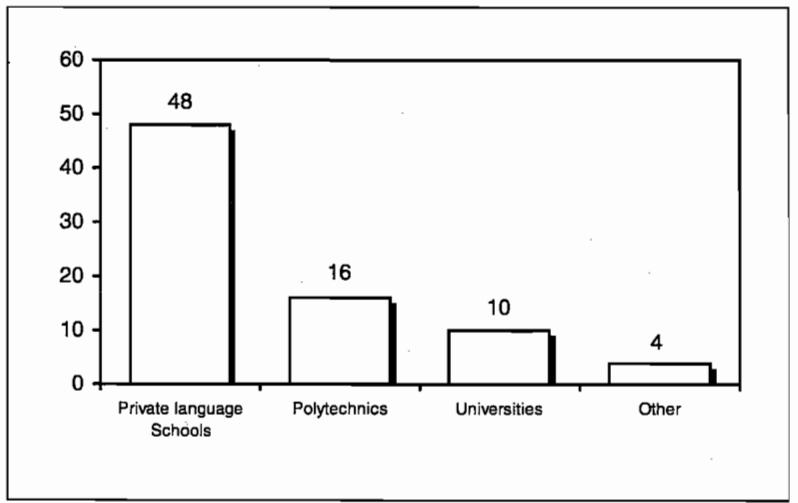
Figure 1: Types of Schools in Sample
In terms of immigration categories, as we intended most of the schools we surveyed (59 of them) offered English language programmes primarily for international students. There were also seven schools where most (at least 70%) of the learners were recent migrants and two others which specialised in teaching refugees. The remaining ten schools had no dominant group of students according to this classification.
We then looked at the extent to which the schools taught the kind of English courses that we were interested in investigating (Figure 2). Of the 78 schools, 60 reported that they offered a course specifically to prepare students to take IELTS. On the other hand, 45 had a course in EAP or EFS. The responses to another item showed that, by comparison, a much smaller number of schools offered a course to prepare students for TOEFL. This reflects the fact that IELTS is the preferred test of academic language proficiency in New Zealand, particularly among ESOL teachers, and also that the General Training Module of IELTS has a significant role as a measure of English proficiency for immigration applicants. Most of the schools providing IELTS courses (43/60) offered preparation for both modules; 16 prepared students just for the Academic Module, while one prepared them only for the other module.
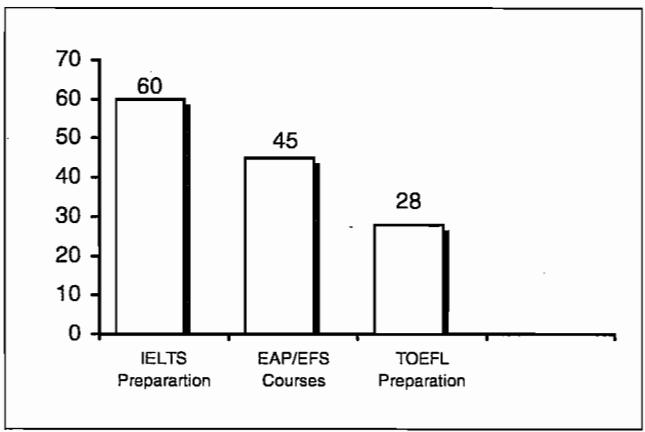
Figure 2: Types of Preparation Courses Offered
The 18 schools that did not offer any course to prepare for IELTS were asked to give a reason why not. The most common reason (6 schools) was that there was not sufficient demand from their students to form a class. In a couple of cases, students wishing to take IELTS were offered private tuition or a general exam preparation class instead. The second reason (4 schools) was that they did not offer courses of that kind or at that relatively high level of proficiency. Thirdly, three schools, all located in tertiary institutions, indicated that they concentrated on English for academic purposes, without including a test preparation component in their teaching programme. Other reasons given by one or two schools were that the school was just being established; an IELTS course was planned but not yet launched; and other education providers adequately met the local demand for IELTS preparation.
In summary, then, we found that IELTS preparation was widely available to international students in New Zealand, not only at the universities and polytechnics but also at numerous private language schools. IELTS courses were in fact more common than EAP or EFS ones, although this is partly due to the demand from immigration applicants to prepare for the General Training Module. Some longer-established schools reported that they had been preparing students for the test since it was introduced ten years ago, but on average schools had been engaged in IELTS preparation for five years.
2.3.2 Students in IELTS Courses
The schools which offered IELTS preparation were asked to report the reasons why their students took the test. The responses are summarised in Table 1. They confirm that the primary reason was to gain admission to a tertiary institution. By comparison, applicants for immigration formed a much smaller percentage of the students overall, comparable to the numbers who were taking the test for more personal reasons, as a measure of their level of proficiency or as an unspecified English language qualification. The other listed reason for taking IELTS was to meet the English proficiency requirement of a professional registration body, particularly in the health field. Only a few schools had any substantial number of overseas-qualified doctors and other professionals taking the test for this purpose.
| most or all | a lot | some | few or none | |||||
|---|---|---|---|---|---|---|---|---|
| Schools | %2 | Schools | % | Schools | % | Schools | % | |
| Immigration | 2 | 3.3 | 8 | 13.3 | 21 | 35.0 | 21 | 35.0 |
| Admission to tertiary institution | 28 | 46.7 | 18 | 30.0 | 8 | 13.3 | 3 | 5.0 |
| English level | 2 | 3.3 | 8 | 13.3 | 17 | 28.3 | 19 | 31.7 |
| Admission to professional bodies | 2 | 3.3 | 1 | 1.7 | 12 | 20.0 | 24 | 40.0 |
| English qualification | 1 | 1.7 | 8 | 13.3 | 16 | 26.7 | 21 | 35.0 |
| Other (literacy skills) | 1 | 1.7 |
Table 1: Reasons for students taking the test
Note: 2 % calculated on number of schools offering IELTS Preparation Courses.
The respondents were also asked to indicate what they thought was the most significant benefit that students expected to gain from IELTS instruction (Table 2). Interestingly, the top-ranked motivation was not related to the test itself; it was to improve their General English proficiency. However, three test-related benefits were ranked close behind: to gain an improved band score, to learn about test-taking strategies and to know about the format of the test. Getting practice under exam conditions was considered to be less of a motivation for the students. The lowest rated benefit was academic study skills. This presumably reflects the fact that many of the courses were comparatively short part-time ones that concentrated on preparing students for the test. As noted in the previous paragraph, there were not a large number of courses which integrated IELTS preparation into an EAP/EFS programme.
| most or all | a lot | some | few or none | |||||
|---|---|---|---|---|---|---|---|---|
| Schools | % | Schools | % | Schools | % | Schools | % | |
| Knowledge of Test | 18 | 30.0 | 13 | 21.7 | 19 | 31.7 | 4 | 6.7 |
| Test Taking Strategies | 17 | 28.3 | 18 | 30.0 | 14 | 23.3 | 4 | 6.7 |
| English Proficiency | 20 | 33.3 | 15 | 25.0 | 17 | 28.3 | 7 | 11.7 |
| Exam Conditions | 15 | 25.0 | 12 | 20.0 | 20 | 33.3 | 3 | 5.0 |
| Academic Study Skills | 8 | 13.3 | 15 | 25.0 | 21 | 35.0 | 6 | 10.0 |
| Improved Band Score | 18 | 30.0 | 16 | 26.7 | 17 | 28.3 | 1 | 1.7 |
Table 2: Benefits students expected to gain from IELTS instruction
2.3.3 Entry to IELTS Courses
In the interviews, we explored the criteria for admission of students to courses preparing them for IELTS. In terms of General English, one participant considered that students should be at an “advanced” level, but the largest group (11) reported that upper intermediate was the appropriate level. Another five teachers said that intermediate level students were accepted into their course, although two of them thought that upper intermediate would be more desirable. Another way to define the minimum level was in terms of IELTS band scores. The seven teachers who used this criterion generally agreed that, in order to have a realistic chance of obtaining an overall band 6.0 in the actual test, students needed to be at around band 5.0 when they were admitted to an IELTS preparation course. The responses ranged from 4.5 to 5.5, depending partly on the length and nature of the course involved.
The use of tests to help determine entry decisions to IELTS courses varied from one school to another. In many cases, the students were already in the school’s General English programme and so there was evidence of their proficiency level available from the placement test given to all incoming students and from in-course assessments of their subsequent progress. Nearly half (10) of the participants reported that their school used a specific assessment procedure for the IELTS preparation course. It took the following forms:
| Assessment procedure | Description |
|---|---|
| IELTS(-type) practice test material (5) | generally a selection of test tasks was used rather than a complete version of the test. |
| IELTS practice tasks, plus a test of grammar/vocabulary (3) | the rationale for including a grammar test was that students needed a solid foundation of language knowledge before being able to tackle academic study skills. |
| Interview (1) | a senior teacher met with each applicant to elicit information about their background and previous study and to assess their speaking ability. |
| Interview and writing sample (1). |
It was clear that there was a tension between the proficiency level that the teachers considered desirable and the demand from students for admission to an exam preparation course. Many students with limited English had little understanding of how demanding an IELTS course would be for them and they also had unrealistic expectations about how quickly they could improve their English proficiency to the level of IELTS band 6. Students from China and Korea, who came from very exam-oriented education systems, were mentioned specifically in this context. Teachers often had to spend time counselling these students and persuading them to be patient. Asked how she would deal with such a situation, one teacher said:
I’d be saying just to wait at least another three months, at least. Because it’s too difficult for them and they just struggle and they get very despondent about it. And it’s just not worth it for their sake. Unfortunately, a lot of students see these exams, they see that they’ve got to get them because it helps them for university or it helps them for polytech, and they don’t realise that it is difficult and that perhaps they’re not at that level. (Teacher 7)
Other teachers asked students to take an IELTS practice test or at least showed them some practice material to help convince them that the level was beyond them.
Apart from just advising them to study more General English, several participants recognised the need for an enhanced programme of study for lower proficiency students who eventually wanted to undertake tertiary study. This might take the form of a preparatory course which gave more emphasis than a typical General English course did to grammar, vocabulary and the development of writing skills. In two schools, such students were encouraged to follow an individual study programme, making use of the self-access centre.
Nevertheless, some schools operating on a commercial basis in a competitive environment found it necessary to accept lower level students into an IELTS course to avoid losing them to another school, in which case teachers had to cope as best they could. A lot depended on how motivated the students were to study hard. One strategy adopted at two schools was to start them on material from the General Training Module which was more suited to their level and at least satisfied them that they were engaged in IELTS preparation.
2.3.4 The Organisation of IELTS Preparation
As might be expected, IELTS preparation took a variety of forms. The questionnaire respondents were presented with three main options: IELTS as part of a General English course, as part of an EAP/EFS course and as a separate course. The responses are presented in summary in Table 3. The most common form of IELTS preparation was a separate course with a median length of 50 hours. These were mostly part-time courses, some running for as few as six hours just to familiarise candidates with the test, while others provided an extended period of practice and skills development. The second most frequent option was to offer IELTS preparation as part of a General English course. These courses had a median length of 91 hours and on average the IELTS component accounted for 40 percent of the class time. Two-thirds of the courses were full-time and a typical pattern seems to be to have General English classes in the morning, with IELTS preparation as an afternoon option available to more proficient learners preparing for academic study. The least frequent option, the inclusion of IELTS preparation in an EAP/EFS course, was (with one exception) offered only by language schools at universities and polytechnics. These were relatively long and mostly full-time courses, with a median length of 127 hours, of which IELTS preparation tended to account for a third.
| Statistical Profiles | General English | EAP/EFS | Separate Course |
|---|---|---|---|
| % of course dedicated to IELTS | 40% (IELTS-pm option) | 33% | 100% |
| Length of course: | |||
| range | 4 - 400 hours | 23 - 432 hours | 6 - 220 hours |
| median | 91 hours | 127 hours | 50 hours |
| Full-time | 2/3 | 2/3 | 1/4 |
| Part-time | 1/3 | 1/3 | 3/4 |
Table 3: Structure of IELTS Courses
The 43 schools which prepared students for both the Academic and General Training Modules were asked how they dealt with these two groups. About half (21) offered an integrated programme covering both modules, while 17 schools ran separate classes for each one. Presumably a major consideration here was whether the school had sufficient numbers of students at one time to justify offering separate classes. Exploring the differences between at least two courses in more detail is the focus of the classroom study that is reported in Section 3.
2.3.5 IELTS Preparation Teachers
The questionnaire elicited information about the qualifications and experience of IELTS preparation teachers. Table 4 shows how necessary various professional qualifications were considered to be. There was general agreement that teachers should have at least a specialist certificate (such as the Cambridge/RSA CELTA) and most respondents thought that a diploma (from the Cambridge/RSA scheme or a university postgraduate programme) was desirable if not essential. On the other hand, the responses were more evenly split on the question of whether it was necessary for the teacher to have a Masters degree or be a IELTS examiner.
| Qualification | Essential | Desirable | Not necessary | |||
|---|---|---|---|---|---|---|
| Qualification | Schools | %3 | Schools | %* | Schools | %* |
| Certificate | 38 | 63.3% | 23 | 38.3% | 0 | 0.0% |
| Diploma | 16 | 26.7% | 40 | 66.7% | 5 | 8.3% |
| Masters | 0 | 0.0% | 23 | 38.3% | 33 | 55.0% |
| IELTS Examiner | 1 | 1.7% | 28 | 46.7% | 27 | 45.0% |
Table 4: Desirability of professional qualifications
Note: 3 % calculated on number of schools offering IELTS Preparation Courses.
We also asked what other criteria were considered important in selecting teachers for IELTS preparation. The results are in Table 5. Not surprisingly, a majority of the respondents thought that “knowledge of IELTS” was essential. This item could perhaps have been worded more carefully to specify previous knowledge of the test, before becoming involved in IELTS preparation. There was also strong support for the desirability of having teachers with experience of preparing students for other English exams and experience of teaching English for academic purposes.
| Essential | Desirable | Not necessary | ||||
|---|---|---|---|---|---|---|
| Schools | % | Schools | % | Schools | % | |
| Experience with exam classes | 11 | 18.3 | 38 | 63.3 | 6 | 10.0 |
| Experience with EAP | 4 | 6.7 | 48 | 80.0 | 6 | 10.0 |
| Knowledge of IELTS | 37 | 61.7 | 20 | 33.3 | 2 | 3.3 |
Table 5: Criteria important in selecting teachers for IELTS preparation
Two questions obtained information about the actual experience of IELTS teachers. It was clear from the first question that most were quite experienced: three-quarters of them had taught General English for at least five years, and many for more than ten. Experience of teaching IELTS was somewhat more limited, in part because the test itself is only about a decade old. Nevertheless, over 60 percent of the teachers were reported to have been doing it for three years or more.
Thus, the picture that emerges from the questionnaire is that IELTS preparation is generally entrusted to well-qualified and experienced teachers.
2.3.6 Teaching Materials for IELTS Courses
One feature of the expansion of the IELTS test internationally has been the publication of numerous books, particularly in Australia, to provide materials for use by teachers and students in their preparation activities. In the questionnaire, the respondents were asked to indicate to what extent the books were used in their IELTS courses. The results showed that all 60 of the schools offering IELTS preparation made at least some use of these publications and in 90 percent of cases they were “usually” employed. By contrast, only 19 schools usually drew on locally written materials that were specifically designed for their programme. The majority of them (35) used such materials sometimes, mostly written by the classroom teachers themselves rather than by more senior members of the school staff.
The respondents also named up to three of the published volumes that teachers found very useful. The titles are listed in Table 6 in order of the frequency with which they were mentioned. The most frequently cited titles, with 25 mentions each, were IELTS Strategies for Study (Garbutt and O’Sullivan, 1991, 1995) and Prepare for IELTS (Todd and Cameron, 1996a, 1996b; Cameron, 1999). In addition, five respondents wrote The IELTS Preparation Course, which is the subtitle of Cameron (1999). Thus it appears that Penny Cameron’s books are the most widely used in New Zealand language schools. As expected, Australian publications dominated the list. Two books published in Britain (Hopkins and Nettle, 1993; Jakeman and McDowell, 1996) were ranked fifth and sixth in terms of frequency of mention. The one New Zealand book, Language Passport: Preparing for the IELTS Interview (Catt, 1996), which focuses just on the Speaking test, was listed ten times.
| IELTS Published materials | Schools | Percentage |
|---|---|---|
| IELTS Strategies for Study (Updated Edition). (M. Garbutt, and K. O’Sullivan. 1996) | 25 | 41.7 |
| Prepare for IELTS. (V.Todd and P. Cameron. 1996) | 25 | 41.7 |
| 101 Helpful Hints for IELTS (2nd Edition). (G.Adams and T. Peck. 1995) | 22 | 36.7 |
| IELTS Preparation and Practice - Reading and Writing General Module. (V. Pejovic et al. 1997) | 19 | 31.7 |
| Passport to IELTS. (D. Hopkins and M. Nettle. 1993) | 15 | 25.0 |
| Cambridge Practice Tests for IELTS. (V. Jakeman and C. McDowell. 1996) | 14 | 23.3 |
| 202 Useful Exercises for IELTS. (G. Adams and T. Peck. 1996) | 10 | 16.7 |
| Language Passport: Preparing for the IELTS Interview. (C. Catt 1996) | 10 | 16.7 |
| IELTS Practice Now. (C. Gibson et al. 1996) | 10 | 16.7 |
| Insight into IELTS. (V. Jakeman and C. McDowell. 1999) | 9 | 15.0 |
| IELTS to Success. (E. Van Bemmel and J. Tucker. 1997) | 7 | 11.7 |
| Prepare for IELTS: The IELTS Preparation Course. (P. Cameron 1999) | 5 | 8.3 |
Table 6: Published materials which teachers found most useful
The use of preparation books was also discussed with the teachers in the interviews. One difficulty in talking about these publications is that the similarity of their titles makes it easy to confuse them. Our participants were often vague about the author names and titles of books they wanted to discuss and so we had a reference list available at each interview to help clarify which book was being commented on. None of the courses taught by the interviewed teachers adopted a single IELTS text that the students were required to buy but several schools had a class set of one book, which was lent to the learners during the course. In addition, it was a common practice to have a range of preparation books available to the students in a library or self-access centre. Particularly in Auckland and Christchurch, these publications are also stocked in city bookshops, where anyone can buy them for self-study. In fact, some of our participants noted that certain books were more suitable for the students to study by themselves than for classroom use. Four teachers made this comment specifically about IELTS Strategies for Study (Garbutt and O’Sullivan, 1991, 1996).
Nevertheless, the ready availability of preparation materials in the school or the city could create practical problems for teachers in planning their classes and especially giving practice tests, as this participant observed:
It’s quite nice for the teacher to have a quite bountiful supply of materials to use that the students haven’t actually seen. When I was teaching the General course, a lot of the students had been and got books from the Library and so I’d try to do a practice test and they’d say “We’ve done it.” So that starts to be a bit of a problem. [Teacher 19]
Indeed, the schools included in the interview sample appeared to have a “bountiful supply” of preparation books as teacher resources and the teachers characteristically took an eclectic approach, drawing material from several books for any one course. Even when they initially expressed a preference in the interview for a particular book, they almost always went on to comment about the positive features of other volumes they used as well.
When asked whether the preparation materials were an accurate reflection of the actual test, nine of the interviewees gave a generally positive response. On the other hand, eight others pointed out that it was difficult for them to judge because they had never seen an actual IELTS test. The closest substitute is the test in the Specimen Materials Pack, which is a complete practice version produced by UCLES through the same development process as live forms of the test and available for purchase at IELTS test centres. Most of the teachers knew about this specimen test, but four of them did not. Teachers who are also certificated examiners see versions of the Speaking and Writing tests as part of their work, but even they do not normally have access to live Reading and Listening tests. One or two of our participants commented on the problem this lack of access to past test papers caused them:
It is a bit disconcerting that I’ve never seen the test because I’m also teaching FCE at the moment and I can show the students past papers and I can give them past papers so they feel like they are sitting an exam under exam conditions. Whereas here I’ve gotta, say if I’m giving them an IELTS test, “Well, this as close as you get, this is a practice test” but I don’t know if they’re really convinced. [Teacher 4]
In the absence of direct knowledge of the test, the teachers had two sources that they could draw on to answer the question. One was feedback from their students after they had taken the test. This was usually the only way that teachers could find out what scores their students obtained, because results are not sent to the language school unless the student specifically requests it. Feedback our participants had received was mixed, with some students being satisfied while others found that the level of the actual test was different from that of the practice ones they had taken. The other way that teachers could form an opinion was by evaluating for themselves the practice tests in the preparation books. Eight of our participants noted that practice tests varied in difficulty:
When I even look at a few practice tests that I’ve seen, they seem pretty variable. Some I think would really even knock a native speaker. [Teacher 13]
The part of IELTS that drew the most comments about variations in difficulty from six participants was the Listening test. One teacher found that his students performed better in the real Listening test than the practice ones whereas another reported the reverse for some of her learners. The other four participants compared the range of practice Listening tests and one put it this way:
And with the level I find that the level varies quite a lot in the listening practice tests. I think the students feel the same. Sometimes they say “Oh! It’s easy” and sometimes they think it’s so hard. Of course it can depend on the topic or whatever but I do feel they do vary quite a bit. [Teacher 2]
2.3.7 IELTS as a Measure of Academic Language Proficiency
There were several items in the interview schedule which addressed the issue of the washback effect of the IELTS test on international students. One of the key questions asked the participants whether they considered the test to be a good indicator of a candidate’s ability to cope with the language demands of academic study in New Zealand. The first reaction of half (11) of the respondents was a positive one, along the lines of “Yes I do”, “I think it is” and “On the whole, yes”. Another five responses could be interpreted as a qualified yes, while the others were more negative. An analysis of the full responses, though, showed that even those whose initial reaction was positive tended to qualify their answers by reference to the same concerns that led the others to respond more negatively.
Let us look first at favourable comments about the test. Perhaps the most positive response was this one:
Well I think gives you a, gives them quite a good indication of what, you know, the level of vocab they’re going to be dealing with in the texts that they’re reading at university and the kinds of essays they may have to write in the (…) formal style. And I mean the listening tasks are all based around, I mean, I think that’s very good, the way they’re all based around university study and even in the social context of talking to other students or approaching your lecturer for an extension on an essay or something like that, so I think that’s useful for the students, yeah. [Teacher 15]
Thus, the test had the merit of incorporating the kind of tasks and language that the students would need to deal with in their academic studies. This can be seen as relating to the discussion reported above of the need for students from a very different educational background to come to grips with the requirements and expectations of their New Zealand lecturers and tutors.
Another positive way of viewing IELTS was that it was the best English proficiency test available for the purpose: A couple of participants commented that it was better than other tests, such as TOEFL. When we asked specifically about TOEFL later in the interview, we found that eight of our participants were not familiar enough with the US test to give an opinion, or at least emphasised that their ideas about it were second-hand. Of the rest, four people had current experience of preparing students for TOEFL, while another five had done so in the past.
Overall, with just a single exception, the views expressed about TOEFL were mostly critical. This was one teacher’s response:
TOEFL strikes me as being the sort of exam where students learn how to sit it and they get to multi-guess their answers and can actually score really well on TOEFL and their actual language ability is still actually fairly minimal. I have met a lot of students who have very good TOEFL results and actually can’t even communicate in English and I think the Japanese are a good reflection of that. We’ve often had Japanese students who […] can blitz a grammar exam and get a really good score and actually can’t communicate, can’t cope in an English environment. If they’ve got the TWE that helps, it gives a better indication I think but Y
[Interviewer] The Test of Written English - are we talking about the same one?
Yeah. So I think it doesn’t actually test the skills that are required to function in the English language. It’s just a test of how you can sit the exam. [Teacher 12]
Taking an analytic approach to this and the other responses, we can identify five main criticisms of TOEFL, which overlap to some extent:
- It has too much focus on grammar (9 respondents) and vocabulary (2 respondents)
- It is based around the multiple-choice format (7)
- It is not a realistic measure of academic language skills (7)
- Answering the test items well involves learning particular strategies or ‘tricks’ (5)
- It does not include a required speaking test (4)
Explicitly or by implication, IELTS compared favourably with TOEFL on each of these grounds. The one teacher who expressed a largely positive opinion said that he incorporated both TOEFL and IELTS preparation material into his EAP teaching and he appreciated the structured approach to grammar and reading skills in TOEFL. Other participants acknowledged the beneficial effect of recent changes to the test, notably that in the computer-based version of TOEFL the writing test was now compulsory.
In spite of the favourable comparison with TOEFL, participants also referred to limitations of IELTS as an indicator of academic language ability. A commonly expressed concern was not about the test itself but rather the minimum IELTS score that international students were required to have, which is set by the tertiary institutions. Typically undergraduates need to achieve an overall band score of 6.0, while postgraduates should usually have a higher score of 6.5 or more. Not all of the participants were probed directly on this point but nine of them clearly indicated that they considered a score of 6.0 or 6.5 was not really adequate. One talked initially in terms of band 7 as the appropriate level until queried by the interviewer:
I think it’s a good proficiency test, yeah. I think it’s a useful measure and probably you know, quite a good measure of the ability. I mean if a student got a 7 on IELTS as an examiner or as a tutor or lecturer or something I think I have some information about that student whereas, if they come from some tertiary prep course, from anywhere else, what do I know? I don’t know. It’s all so varied.
[Interviewer] It’s a good standard measure. You say 7 though. I mean, for most tertiary academic study they need 6, 6.5. Do you think that that’s an appropriate undergraduate level?
If a student is getting 6 I think they have sufficient language to cope with all the normal international student strategies they’ll need in the first year. That is twice as much time to read at home, you know, using a dictionary and maybe using a tape recorder. I don’t think that makes them a self sufficient, whatever. I think that if they’re running higher than that then they got more chance. [Teacher 17]
In other words, a student with a score of just 6.0 would face considerable language-related difficulties in undertaking tertiary studies in New Zealand. Another participant put it more strongly:
I’m always amazed at how difficult, despite the fact that we tell them, I basically feel that it’s not that difficult for most of our students to get IELTS 6. But they then go on to do NZDB B you know, New Zealand Diploma in Business, or university. And the step up from what we are doing to what they do later is just horrendous. And a lot of them get 6 and a lot of them fail their first six months. [Teacher 5]
Of course, the reasons for failure presumably went beyond the limitations in their language proficiency. Many students, including native-speaking New Zealanders, face challenges in making the transition from secondary to tertiary education, and for international students there is the additional problem of cross-cultural differences, as these two teachers explained:
One of the points I emphasise to my students is, don’t worry if you think it’s nearly impossible. For me, university was hard, it’s hard for us, and that’s an important point that I try to get across to them. It seems a rather harsh, steep climb for the students to make, but I think it’s a necessary one. I think if they’re to understand certainly language in its social and cultural context as well. [Teacher 1]
The first thing I tell the students is I say, “Hey, the last student that came along said I got a big shock when I got to University” because some of them think, because in some countries you pass the entrance examinations and you get to University and you cruise. Hey man, it’s not like that in New Zealand, it’s the opposite. [Teacher 13]
This led to the related question of how adequately IELTS courses prepared students for the demands of tertiary study, as distinct from being able to pass the test. In a sense, this represents the key question concerning the washback effect of IELTS on international students and their teachers: to what extent does IELTS preparation involve just learning how to perform the test tasks rather than being able to cope with the actual requirements of academic study? When asked whether IELTS courses helped students prepare for academic study, six of the teachers gave a very positive response but most of the others produced a more qualified affirmative answer. Several of them emphasised that it was a first step: “it’s a start”; “it gives them an indication” or “it goes a short way towards it”. The time factor was a very important consideration. Shorter, stand-alone preparation courses were limited to familiarising students with the test and giving them practice with IELTS tasks; it was only longer courses that could address the wider range of student language needs, whether or not they were explicitly labelled as courses in English for academic purposes.
Another way to approach the issue was to ask whether IELTS preparation included academic study skills which were not required for the test. About half (11) of the participants said that their course did not cover any additional skills. Leaving aside EAP courses for the moment, skills that teachers did report including in their IELTS preparation courses were giving an oral presentation in class (4 mentions), notetaking (2 mentions), summary writing and reading long texts. As expected, it was mainly teachers preparing students for IELTS within a twelve-week full-time EAP course who were able not only to include the additional skills but also to set longer tasks such as reading a whole magazine article or book; listening to, and taking notes on, an extended talk or lecture; and writing a 1500-2000 word essay, with preparatory library research, drafting, editing and so on.
There was one interesting case of a course that had developed over time from being narrowly focussed on IELTS preparation to becoming a quasi-EAP course:
[Interviewer] Does your course focus on academic study skills which are not required for IELTS?
Yes, definitely. There are a lot of EAP skills in the course such as students present seminars, they do a lot of note-taking, summarising both orally and in written form of information, a lot of vocabulary related tasks, research in the library, internet. There’s quite a range really.
[Interviewer] So, you call your course an IELTS preparation course. How does your course differ from an EAP course?
Well, it doesn’t really at the stage it is in at the moment. Initially, when we first started running the IELTS course, here it was very short and it was really intended to be just a course to familiarise students with the exam and over time it just extended into something much larger which could now be considered an EAP course especially in the later stages of the course. In the beginning when we have low level students it’s probably directed more towards IELTS but certainly, as students progress, there’s more of an academic focus. Actually at the moment we’re in the process of changing name and we’re going to be calling an IELTS / EAP course. [Teacher 22]
This teacher went on to explain that “IELTS” would be retained in the course title for marketing reasons because there was such a demand from students for IELTS courses. She felt that the approach her school had adopted was more responsible than that of other schools which, in response to market demand, offered students intensive practice of IELTS test tasks when what they really needed was further development of their English proficiency and academic study skills.
3.0 The Classroom Study
The classroom study was the second phase of the research. It moved beyond the survey in two ways, by:
- focusing on two particular IELTS preparation courses as a comparative case study, and
- involving direct observation of the classes, rather than just teacher reports of what happened in the classroom.
The main objectives of the study were methodological as well as substantive:
- What are the significant activities in an IELTS preparation class, and how can they most usefully be recorded and classified?
- What other forms of data-gathering provide useful insights into what happens in an IELTS preparation course?
- What differences are there between a course which focuses very specifically on IELTS preparation and one that includes other learning objectives related to preparation for academic study?
- How do the teacher’s background and perceptions influence the way that the course is delivered?
- Is there evidence of student progress during the course towards greater proficiency in English for academic study?
3.1 The Research Setting and Participants
3.1.1 The Schools and the Courses
Our Phase 1 survey showed that there were various forms of IELTS preparation in New Zealand but perhaps the two most distinct types were these:
a) short courses that familiarise students with the test, offer them training in exam techniques and give them practice with IELTS tasks; and b) longer courses which take a broader approach by combining exam preparation with the development of language and academic skills.
For the classroom study, we chose an example from each of these broad categories at two different language schools, located in public tertiary institutions in Auckland. The two schools had been offering IELTS preparation for over four years and typically ran several classes each month.
Although both courses were designed for students preparing for the Academic Module of IELTS, they had different aims and structure:
School A had a 32-hour, part-time course that ran for two hours in the evening, four days a week. It was offered monthly subject to demand. Although it was possible for students to take the course for a second month, it was designed and advertised as a one-month course. There was no entry test, although the students’ level was informally assessed when they enrolled. Maximum class size was 22. According to Teacher A, the aim of the course was to “prepare the students in terms of exam technique, not in terms of language level. It focuses on the skills they need to cope with the exam and gives them quite a lot of practice in various aspects of the exam.”
School B offered a two-hour optional class to full-time students who were already studying a General English course at the school for three hours in the morning. It was topic or theme based. Students of a mid-intermediate level, as assessed by the school’s placement test, were eligible to take the course. Although it was possible to take it for just one month, students often remained in the class for several months. The complete course was 320 hours (eight months) long, but only one month of the course was observed. Maximum class size was 12 students. Teacher B described it as a “skills development course rather than just a familiarisation with the exam”. The course focused on “developing the general language skills, academic English skills, as well as familiarising students with the test”.
The data was gathered by Belinda Hayes in June 2000, just prior to the beginning of the second trimester of the academic year, in the expectation that the students studying IELTS at that time would be more motivated than at other times of the year. All lessons at both schools were observed for four weeks.
3.1.2 The Teachers
Teacher A was a qualified school teacher with many years’ experience teaching English at secondary school level. She had been teaching IELTS preparation at School A for approximately two years. Teacher B had been teaching ESOL for eight years. He had taught a number of Cambridge exam classes and had been teaching IELTS preparation at School B for approximately three years. He had an MA in another subject and an UCLES/RSA Certificate in TEFLA. Both teachers were studying for Masters degrees in the field of language teaching at the time of the study.
3.1.3 The Students
At School A, the course began with 22 students, but most days there were approximately 15 students in class and only nine were present for both the pre- and post-testing. All the data reported here are for these nine students.
All nine of the focal students at School A were Asian, with Chinese being the main language for eight of them. They were aged between 18 and 25 and had studied English for varying periods: three for more than ten years, three for less than three years, and the others in between. Only two of them had graduated from university before coming to New Zealand. While taking the IELTS preparation course in the evening, six of the students were also studying English at another language school for between five and 20 hours a week. Only one student had attempted IELTS previously but all intended to take the Academic Module within the following six months, in order to meet the requirements for entry into a tertiary institution. In terms of difficulty, on a five-point scale, three students rated the exam at 3, four gave it a 4 and two a 5.
At School B, the eight students who attended the course ranged in age from 17 to 45 but most were between 18 and 25. Six Asian nationalities were represented and Chinese was, as in School A, the main first language of the learners. Three students stated that they had been learning English for less than a year, but between four and nine years was typical. Most of them had already graduated from university in their home country, so they were different from the students at School A in this respect. They studied General English for three hours every morning at School B before taking the IELTS course in the afternoon. Half the class had taken IELTS once before and all except one planned to sit the Academic Module within six months after the course. The majority of the students were interested in getting a good IELTS band score in order to enter university. In terms of difficulty, two students rated it 3, two gave it 4 and two a 5.
Thus, in most respects, the students in the two courses were similar and fairly typical of candidates for the Academic Module of IELTS in New Zealand.
3.2 Methodology
We wanted to look at each course from a variety of perspectives, in order to achieve methodological triangulation of the research results, and so several data-gathering procedures were employed. These included classroom observation, teacher interviews, student and teacher questionnaires and pre- and post-testing of the students. The volume and complexity of the data mean that we have to present it somewhat selectively in this article. Let us look first at each form of data-gathering in turn.
3.2.1 Classroom Observation
The two courses ran concurrently over a four week period, one in the afternoon and the other in the early evening. Time and resource constraints would have made it difficult for a single researcher either to audio- or videotape the classes. Instead, two instruments were used to make structured observations of the activities in the two classrooms. The primary one was COLT (the Communicative Orientation of Language Teaching Observation Scheme) (Spada and Frohlich, 1995). First developed in Canada in the 1980s, COLT provides a macroscopic description of second language classrooms and has been used extensively in a variety of contexts to “describe the differences in the communicative orientation of language teaching and to determine whether and how this contributes to differences in L2 learning outcomes” (Spada and Lyster, 1997, 788). It can be refined and adapted to fit the focus of the research application and has been used in several recent language testing studies of washback, in Japan (Watanabe, 1996), Australia (Burrows, 1998) and Hong Kong (Cheng, 1999). In this study, Part A of the COLT scheme was used unadapted to allow the researcher to become familiar with the instrument as originally developed.
COLT Part B was not applied because it requires an audio-tape of the lesson. Detailed notes of the activities and episodes as well as the time, in minutes and seconds, were taken during the lessons and were reviewed the same day. All materials used during the lessons were collected for later analysis.
A second instrument was needed to identify and, if possible, measure the special features of IELTS preparation courses. In 1995 the University of Cambridge Local Examinations Syndicate (UCLES) commissioned Lancaster University to begin a long-term investigation into the impact of IELTS, with specific focus on the content and nature of activity in IELTS-related classes and materials, and the views and attitudes towards IELTS of user groups (IELTS Annual Review, 1997/98). Part 2 of the draft classroom observation instrument developed as part of the UCLES project was used as the basis for the second stage of the classroom observation in the present study. The instrument contained lists of text-types used in the classroom and a range of task types according to skill. It also identified teacher initiated, exam-related activities as well as grammar and vocabulary activities. When necessary, the instrument was modified to include categories not represented in its original form.
Several significant activities were observed during the lessons which were not specifically identified by either COLT or the UCLES instrument. These were recorded and analysed separately. For example, features such as the teacher giving the students information about the exam or discussing test-taking strategies, were specific to this type of exam class.. Instances of the teacher working with individuals or small groups were not adequately reflected within the COLT analysis, which focused on the primary classroom activity. Additionally, the study required a more detailed analysis of classroom materials than COLT could provide in its original form. In intensive courses, such as the ones observed, class time is limited, and therefore the amount and type of homework given to each group of students was also recorded. Finally, the instances of laughter in each of the lessons were recorded in order to gain some indication of the atmosphere in each lesson.
3.2.2 Teacher Interviews
Both Teachers A and B were interviewed before the courses began. Once the observations were underway, they were interviewed weekly to:
a) gather information about the teachers’ overall impressions of the class and b) give them the opportunity to describe the materials they had used and the rationale behind their choices.
All interviews were recorded and transcribed.
3.2.3 Student and Teacher Questionnaires
At the beginning of the classroom study the students were asked to complete a pre-observation questionnaire to collect information about their background, English language training, their perceptions of IELTS and their expectations of the IELTS preparation course. They were given another questionnaire at the end of the course to record any changes in their perceptions. Both questionnaires also included a series of questions about the structure of IELTS exam to assess the students’ knowledge of the test before and after the course.
Once the observations were complete, each teacher completed a questionnaire designed to elicit their reflections on various aspects of the course they had just taught.
3.2.4 Pre- and Post-Testing
In the first and last weeks of the courses the students were given the Listening, Reading and Writing modules of retired versions of IELTS as pre- and post-tests. The Writing tests were independently marked by the researcher and another teacher, both certificated and experienced
IELTS examiners. After completing the tests, the students were asked to fill out questionnaires to assess their perceptions of the difficulty of each of the modules.
3.3 Descriptions of the Courses
3.3.1 Course A
In Week 1 the teacher outlined the course and gave students a general overview of the IELTS test. She gradually began to introduce different question types commonly found in the Listening and Reading sub-tests, often using exercises which gave a section of an IELTS text or practice test and an example of a specific question type for students to complete. Appropriate strategies for each were discussed and students were given the opportunity to practise applying the strategies to IELTS tasks. Throughout the course the teacher frequently gave the students information about IELTS and tips about how to better cope with the tasks, particularly related to the time pressure created by the test. As the week progressed, the teacher moved on to writing skills. A model academic essay and several Task 2 essay rubrics were analysed. Students planned a Task 2 essay, which was assigned for homework. Some traditionally problematic areas of listening were briefly overviewed on the last day of week one and the students practised Phase 2 of the speaking test with a partner.
In the second week the teacher continued to introduce and give practice with different question types, using materials from IELTS preparation books. Students were given practice reading tests, mostly for homework, and reviewed the answers in class. Students planned two Task 2 essays and wrote part of one (the introduction) in class. They completed several sections of IELTS practice listening tests and checked the answers as a class. The teacher handed back some writing homework and followed up with writing skills practice exercises. The week ended with students practising Phases 1 and 2 of the speaking test.
Week 3 began with the class writing a timed Task 2 essay. Students continued to complete practice reading tests. Answers to these tests were marked in class and the teacher often reviewed the reading strategies she had previously introduced. Students completed two practice listening tests in class this week. Returning to writing, the students worked through a worksheet focusing on task fulfilment and elements of organisation of a Task 1 essay. The homework task that day was to write an essay which was in turn reviewed by peers in the next class. A second full listening test was administered. Students compared answers using an answer sheet and were encouraged to ask questions about possible alternative answers. The teacher read relevant sections of the tapescript. A practice reading test was given for homework. The teacher introduced a marking schedule which was to be used to code errors in student writing. The teacher reminded students that grammar and vocabulary were not being covered in any detail in the course and she encouraged them to take the initiative themselves and correct their own errors. However, because the students were making a large number of errors in the use of discourse markers, an exercise on connectors was given as homework and reviewed in class the next day. Phase 3 of the Speaking test was modelled and the students carried out a role-play in pairs. The teacher gave them the opportunity to practice applying a new strategy to completing a cloze reading exercise. Task 1 was the writing focus and after some language input the class discussed the features of an example rubric and wrote a timed essay. A further reading test was given for homework.
In the final week the teacher’s aim was to give the students more exam practice. Reading homework was reviewed and the students completed a listening task. The structure of the whole speaking test was overviewed and the teacher suggested what each phase of the test was designed to elicit. Functional language used to describe plans was elicited before the students practised Phases 3 and 4 of the test. A complete practice writing test, Tasks 1 and 2, was given to the students for homework. The teacher reviewed the speaking test and elaborated on the possible topics that could be discussed in Phase 2. The teacher demonstrated an interview with one of the students in the role of the candidate. She answered the students’ questions about different aspects of the speaking test and then gave the class time to practise Phases 2, 3, and 4. Sections 1,3 and 4 of a practice listening test were completed in class. The next day the students were given a reading test for homework. Two processes which could appear in Writing Task 1 were used as the focus of a speaking exercise and the students were presented with some appropriate language to use for this task. The teacher revised exam strategies which could be used in the listening test. On the final day the teacher handed back some writing she had marked and gave the students a copy of a model essay. She gave the class some feedback about some common errors they had made in the writing. The reading homework was marked and students completed three sections of a listening test. In the final hour the students carried out Phases 2-4 of an interview in pairs. The class ended with the teacher giving them advice to help them through the day of the test.
3.3.2 Course B
In the first week the overall theme of the course was Lifestyle and the first topic was Immigration. The students were given a series of discussion questions as an introduction. The resulting ideas and language were recycled in a role-play at the end of Day 1 and the following day. Revision of vocabulary and grammar was a common feature observed throughout the course and occurred on an almost daily basis. Graphs illustrating different aspects of immigration in New Zealand were used to introduce and revise the language used to describe statistics. They were used in several speaking, listening, writing and graph drawing activities. The students were given one section of a practice IELTS reading test on the topic and six questions to complete. The tests were put away and the class focussed on learning the meaning and pronunciation of some key vocabulary and phrases from the text. Students then re-read the reading text and attempted the questions again. Answers to the task were written on the board by students and reviewed as a class. The final 12 questions relating to the text were then completed and the answers similarly discussed and corrected. The teacher explained how the answers to a summary gap fill could be found by analysing the text.
Continuing with immigration, the second week began with an error correction exercise. The students completed two information exchanges with first a reading and then a listening text. A written summary of the information was assigned as optional homework. The teacher presented students with a Writing Task 2 rubric; the class analysed it and planned the answer. They read a model essay and completed several related vocabulary and discourse tasks. The following day, after correcting errors in homework writing, students in pairs wrote an introduction to the writing task. Students wrote their introductions on the board and reviewed them as a class. The teacher assisted students individually as they wrote the Task 2 essay. On Day 8 the teacher returned to graphs and describing statistics. This section was not related to immigration. The teacher provided some language input and students completed several activities which involved orally describing trends, drawing graphs and writing a paragraph describing a bar chart. They analysed a model of a Task 1 essay before composing one themselves. In addition, they were also given a section of academic word list for self-study at home.
In Week 3 a second topic, Women in Management, was introduced. Students discussed a series of questions designed to elicit key vocabulary and issues. They taught each other and practised writing sentences using the language. They were then given a section of a text to read and summarise in a paragraph. This section ended with a sentence completion exercise to check comprehension as well as vocabulary and grammar. Students were often asked to write their answers on the board where the teacher corrected any errors. Groups of students were given a Task 1 essay rubric with different graphs and charts illustrating trends in the positions of female managers. They described the information to each other then completed a series of questions. The answers were checked on the board. Sentences of a model answer to the Task 1 essay were given to the students to re-order. After analysing the model essay, the students wrote the task themselves. On Day 14 the students completed an IELTS practice listening test. The task was introduced with a pronunciation/listening exercise in which each student dictated a sentence from the listening text to their partner, who had to count the number of words. They listened to the test once under exam conditions, then split into smaller groups and listened several more times while discussing possible answers. Final answers were discussed and checked as a class. Twice in the third week the students completed speed-reading exercises.
In the final week the topic was Friendship, introduced with a running dictation exercise. Students discussed different aspects of friendship and shared sayings about it from their countries. A lexical set was introduced and practised. Each student was given a section of a text on the subject which they summarised orally while their partner took notes. On Day 16 a practice reading text on the topic of love was completed under exam conditions. Students taught classmates selected vocabulary items taken from the text and completed a gap-fill task. The vocabulary was revised the next day and the class discussed the answers to the reading text. Students were given two more sets of academic word lists for homework. The last class of the course was devoted to the IELTS Speaking test. The teacher introduced an activity which focused on functional language. Students grouped and ranked a number of phrases that could be used in the interview. After the completion of a CV form, the teacher reviewed each phase of the test, including possible topics. Two IELTS classes combined in the second stage of the class. The teachers demonstrated Phase 3 of the test and, after reviewing all phases of the speaking test again, the classes practised the interview with two different partners.
3.4 Analysis of the Observations
The lessons of each course were coded according to COLT Part A and the percentage of time spent on each of the categories was calculated. Results for School A and School B were then compared for each feature. Activities and episodes, as a percentage of the total class time, were used in the analysis of the data from the UCLES observation instrument as well as in the Further Analysis. Results showed large differences between the two courses.
3.4.1 The Results from COLT, Part A
A summary of the comparison between the two courses in terms of the five categories in Part A of the COLT Observation Scheme is presented in Table 7.
3.4.1.1 Participant Organisation
The first COLT category looks at whether classroom activity involves students working as a whole class, in groups or as individuals. In Class A, the most common type of interaction was Teacher to Class/Student, which means that the teacher was the main focus for most of the lesson. The exception was in Week 3, which included a number of practice tests, resulting naturally in individual students working on a single task. Overall, nearly half of the total class time was teacher centred, while another quarter of the time involved individual work on tasks. About 15% of the time was spent in groups or pairs, either reviewing answers to practice reading and listening tests or carrying out mock interviews.
In contrast, the most common type of organisation in Course B was students working in pairs or groups. They spent almost half of the lesson time working together in groups on speaking, listening and writing tasks. The teacher spoke to the class as a whole for less than 20% of the total class time. Individual work, which almost always involved practice at writing IELTS essays, accounted for 30% of the class activity.
Thus, the most obvious difference between the two courses was the extent to which they were engaged in whole-class activity. For Course A, this represented nearly 60% of their class time, mostly dominated by the teacher, whereas in Course B it took up only about a third of the time. Conversely, the students in Course B were working in small groups three times as much as those in Course A were. The classes spent similar amounts of time working on individual tasks.
3.4.1.2 Content Control
The second category looks at who determines the content of the lessons: is it the teacher, the students, or both? In Course A, the teacher was in solely in control for two-thirds of the time, whereas in Course B it was less than half (43%). In Course B, control of content was shared more between the teacher and the students (57 % of the time). This shared decision-making also occurred in Course A, but to a much lesser extent (only 35%). In neither course did the students alone ever decide what the content of their lessons would be. Thus, this category provides more evidence of the relatively teacher-centred versus student-centred contrast between the two courses.
| COLT (Part A) categories* | % of total class time4 | |
|---|---|---|
| Participant Organisation | Course A | Course B |
| Teacher to Student/Class | 48.0 | 18.0 |
| Student to Student/Class | 9.7 | 4.9 |
| Group - same task | 15.2 | 46.7 |
| Individual - same task | 27.0 | 29.5 |
| Content Control | ||
| Teacher/text | 65.1 | 43.0 |
| Teacher/text/student | 34.9 | 57.0 |
| Content | ||
| Procedure only | 17.5 | 8.9 |
| Form - vocabulary only | 2.0 | 14.1 |
| Form - pronunciation only | 0.1 | 1.5 |
| Form - grammar only | 1.2 | 1.6 |
| Function only | 1.5 | 1.1 |
| Discourse only | 4.1 | 1.0 |
| Form - vocabulary and Discourse | 1.6 | 2.6 |
| Form - vocabulary and Form - grammar | 0.3 | 15.2 |
| Narrow | 4.6 | 0.1 |
| Broad | 67.2 | 53.9 |
| Student Modality | ||
| Listening only | 46.6 | 19.3 |
| Speaking only | 1.8 | 12.6 |
| Reading only | 10.0 | 13.2 |
| Writing only | 6.8 | 21.3 |
| Listening + Speaking | 21.1 | 17.6 |
| Listening + Reading | 6.6 | 1.0 |
| Listening + Writing | 2.8 | 1.8 |
| Listening + Speaking + Reading | 3.1 | 3.9 |
| Listening + Speaking + Writing | 0.0 | 5.1 |
| Speaking + Reading | 0.0 | 2.3 |
| Materials Used | ||
| Minimal L2 - NNS | 24.5 | 41.1 |
| Extended L2 - NNS | 3.3 | 2.1 |
| Minimal + Extended L2 - NNS | 20.0 | 13.7 |
| Minimal + Audio + L2 - NNS | 4.6 | 4.3 |
| Extended + Audio + L2 - NNS | 0.0 | 1.9 |
| Minimal + Visual + L2 - NNS | 8.0 | 3.9 |
| Minimal + Student Made | 0.0 | 4.2 |
| Extended + Student Made | 1.6 | 3.1 |
| Minimal + Visual + L2 -NS | 0.0 | 2.0 |
| Visual + L2 - NNS | 0.0 | 1.5 |
Table 7: A summary of the COLT classification of activities in the two courses
Note: 4 Sub-categories which occurred less than 1% of the time in both classes have been excluded.
3.4.1.3 Content
Under Content, we consider whether the focus of class activity was classroom management, aspects of the target language, or other (non-language) topics. Taking classroom management first, we find that Teacher A spent twice as much time on procedural matters as Teacher B did, again reflecting the teacher focus of Course A.
In terms of language as content, Course A devoted a relatively small percentage of the time (11%) to aspects of language. This was a deliberate decision by Teacher A, which she explained in the pre-course interview and to the class on the first day. Language work in Course A mostly involved information about written discourse plus some vocabulary study. In contrast, language instruction played a significant role in the classes at School B, taking up over a third of their time. The learning of vocabulary was particularly important: Teacher B and his students spent 14% of the time working on new words, collocations and phrases, and in addition a comparable amount of time was devoted to combined vocabulary and grammar study. Again, this was an explicit element of the course design at School B.
With regard to non-language topics, it was the sub-category “Broad” that predominated. Broad topics are those outside the immediate concern of the classroom participants and, for the purposes of the COLT classification, this included the topic of the IELTS test itself. In Course A, broad topics accounted for two-thirds of the content time, covering the teacher’s frequent talk about the test and also the large number of other topics, 84 in all, that were the focus of the practice test tasks. Broad topics were also an important part of the Course B programme (54% of the time). The course design was topic-based, as previously noted: each week’s class activities were centred around a specific theme. This meant that the students encountered a smaller number of broad topics (just 16 overall, in addition to IELTS) but they discussed them in greater depth.
There was little attention to narrow topics in either course, which was to be expected, considering that the classes were meant for adult students and the focus of the courses was the IELTS test, rather than the students’ own experiences or feelings.
3.4.1.4 Student Modality
The fourth category of the COLT scheme classifies the language skills employed by the students in class, either separately or in combination. Listening was the most common skill required in Course A, representing by itself almost half of total class time. While some of this time was devoted to listening practice tests, the students were mostly listening to the teacher explaining procedures, giving information related to IELTS or checking answers to practice test materials. In combination with other skills, particularly speaking, listening accounted for another third of class time. Students read for 10% of the time and also combined reading with listening, usually when they reviewed reading tests with the teacher. Writing took up 7% of the class time but, since writing tasks were often assigned for homework, this figure under-represents the amount of writing included in the course.
In Course B there was a more even use of the four skills by the students. As separate skills, writing and listening were more frequently used than reading or speaking. However, one feature of Class B was the numerous combinations of skills, particularly involving listening and speaking, that the students were required to undertake classroom tasks. For instance, activities where they exchanged information and took notes drew on listening, speaking and writing; a combination of reading and speaking occurred when they read a text and summarised the information for a partner. In comparison to Class A, the students in Course B spent a lot less time on listening and more on speaking and writing in the classroom.
3.4.1.5 Materials Used
The final category covers the teaching materials used in class. One sub-category is the type of materials, printed text, audio or visual, with texts being further sub-divided into minimal and extended ones; the other is the source of the materials: were they originally intended for native speakers (NS) or specially prepared for learners (NNS) of the target language (L2)?
In Course A, minimal texts designed for non-native speakers (Minimal + L2 NNS) were the most common materials used (25% of the total class time). Examples of this category included IELTS Task 2 writing rubrics, speaking test role-play cards, and a range of short texts. Minimal and extended texts (Minimal + Extended L2-NNS), mainly in the form of practice reading tests, were used in activities that accounted for another 20% of class time. A third type, Minimal + Visual + L2-NNS, exemplified by IELTS Task 1 writing rubrics, were used for 8% of the time.
In Course B, the same two types of material as in Course A were the most commonly used. In this case, Minimal + L2-NNS materials were involved in over 40% of the class time and they included vocabulary revision exercises, discussion questions, and academic word lists. Minimal + Extended L2-NNS materials (again, typically practice reading tests) took up 14% of the time. One distinguishing feature of Course B, though, was the wider range of materials drawn on in class, including ones made by the students themselves.
Thus, the COLT instrument revealed a number of substantial differences between the two courses with regard to the organisation of class activity, the extent to which the teacher controlled the content, the amount of attention to language, the range of topics covered and the skills employed by the students in class.
In this section, we briefly summarise the findings from the UCLES Observation Instrument which, as previously noted, was designed more specifically for research in classrooms where students were preparing for IELTS. The whole instrument contains large numbers of items which are too detailed to present in this article.
3.4.2.1 Exam Related Activities
The first category focuses on the teacher and records activities which might be expected in exam classes. In Course A, the teacher gave the students tasks under exam conditions for 16% of the total class time and, during the third week, this rose to almost 40% of the time. Once the students had completed a practice reading or listening test, Teacher A most commonly provided feedback by giving the answers and explaining where in the text they could be found or, in the case of listening, reading from the tape-script.
Teacher B gave a lot fewer tasks under exam conditions: they took only 3% of the total class time. However, reviewing answers to other reading or listening tasks was a common activity, with the teacher simply providing the answers, identifying the answers in the text or tape-script or, on occasion, asking students to compare answers. The teacher only supplied answers after the students had spent some time discussing the task in groups and reaching agreement about what the answers should be.
When we compare the two courses, we find that Teacher A spent a lot more class time not only on practice tests but also on reviewing answers. One reason for this was that, unlike Teacher B, she set practice tasks to be completed for homework. Neither teacher gave any feedback to students in the form of IELTS band scores; feedback was of a more general nature.
3.4.2.2 Text Types
The UCLES instrument contains an extensive list of possible text-types. Examples include IELTS-type texts and tasks, such as complete reading tests, and texts designed to introduce or practise IELTS task types. It was found that a large number of the texts actually used in the classes did not fit into the existing categories and they were therefore recorded separately.
Teacher A used a wide range of text types that were directly modelled on IELTS test tasks and individual types tended to recur in two or three of the course weeks. In contrast, Teacher B not only used fewer practice tests but each type generally occurred only once. Some of the text types given to the students by Teacher A but not at all by Teacher B were: complete practice reading tests (11% of class time); exercises to introduce/practise IELTS question types or strategies (8%); and single sections of a practice listening test (3%).
On the other hand, Course B drew on several text types which were not directly based on the test but reflected the broader aims of the course in terms of its focus on language development and preparation for academic study. None of these text types were used by Teacher A. They included: minimal text (individual sentences, word lists, discussion questions) (32% of class time); charts and graphs (8%); and critical reviews of issues in non-specialist EAP fields (5%).
3.4.2.3 Grammar and Vocabulary
The amount of attention to grammar and vocabulary was previously covered by the COLT Instrument. Briefly, Class A spent a small percentage of their overall class time on these aspects of language form, but it increased to some degree as the course progressed. Cohesion in written discourse was the most common focus. Course B placed a great deal of emphasis on vocabulary study, so that the learning and revision of lexical items took up over 15% of class time.
3.4.2.4 Tasks in the Four Skills Areas
In reading, the most common task in Course A was the completion of practice reading tests, but these were completely absent at School B, where the students spent more time on general reading tasks. Class B engaged in a larger range of tasks which involved writing short answers, completing sentences or classifying information according to a text.
Writing activities were classified into those directly related to IELTS Tasks 1 and 2 and more general writing tasks. The students in Course A undertook one complete practice test and several individual Task 1 or Task 2 essays. They also planned a number of compositions and spent time analysing model essays provided by the teacher. At School B, while some writing tasks mirrored those in IELTS, more emphasis was placed on general writing skills through a large range of tasks. Organising, presenting and comparing data in Task 1 type writing was the most common activity in Course B, at over 6% of class time. while the corresponding figure at School A was less than 1%. Model essays were also given to Class B but the exercises were more likely to focus on language issues than essay structure.
In terms of listening tasks, practice tests took up the largest amount of class time in both courses, but the students at School A spent almost twice as much time on them (6.5% vs. 3.6%). Class A also practised a range of skills directly linked to the test, such as answering particular item types.
For speaking, both courses practised all phases of the IELTS speaking test but they were differentiated by the type of other tasks that they engaged in. In Course A the predominant speaking activity was students discussing the answers to reading tasks, which was a much less frequent task in Course B. The students in the latter course spent almost 9% of their time discussing issues and exchanging information, reflecting the topic focus of their course programme.
3.4.3 Further Analysis of the Observations
Obviously, the COLT and UCLES instruments captured a great deal of valuable information about the two courses and ways in which they contrasted. However, the researcher observed other aspects of the classroom activity that seemed to be significant and these are reported under the categories which follow.
3.4.3.1 IELTS Information and Strategies
Neither of the other instruments identified the number of times in the lesson when the teachers talked about the test. Both teachers referred to IELTS in two ways: they provided the students with factual information about the exam; and they gave them advice on test-taking strategies. Instances of this kind were recorded and calculated as a percentage of the total class time.
Although it was a small proportion of the total class time, Teacher A spent twice as much time giving information about IELTS as Teacher B did (2% vs. 1%). When it came to giving instructions about effective strategies to use in the exam, the discrepancy was much greater (13% in Course A, 1% in Course B). This partly explains why the COLT analysis showed that Teacher A was so often the focus of the class organisation and accounts for a portion of the class time spent discussing “Broad” topics.
The researcher kept a record of the particular test-taking strategies that the teachers recommended and grouped them according to skill. In all, one hundred strategies were recorded throughout the lessons. Teacher A referred to 94 of them, which took over 13% of class time. The strategy she spent them most time on was encouraging her students to predict the answers to listening tasks, followed by advising them to plan essay tasks before writing. Time management was also a common topic as it applied to several skills. By contrast, Teacher B spent only 1% of class time suggesting 20 strategies to his students. Using a range of language and avoiding repetition in writing tasks took the most class time, followed by advice about reading the writing rubric carefully and answering the question. Some strategies were common to the two teachers. For example, they both advised their students not to copy the Task 2 writing rubric and to scan the text for answers to reading tasks.
3.4.3.2 Teacher-Student Interaction
Another area of difference in the courses was the way in which the teacher interacted with the students. Teacher B often spent time assisting students while they were working on tasks, both individually and in pairs or groups. This secondary interaction focused on issues relating to task and language. The assistance given to the students by the teacher varied each week, depending on the type of tasks the students were working on. Teacher B helped his students more often during writing exercises. While students wrote, he attempted to give each student individual attention. This kind of help accounted for 15% of the total class time. During discussion exercises, he clarified the task for the students, answered questions about language and corrected errors as they occurred, for another 12% of class time.
While Teacher A occasionally went around the class monitoring the students, there was no significant interaction of this type. This individual attention and error correction was another important difference in the methodology between the two teachers. Students in Course B appeared to have greater access to the teacher.
3.4.3.3 Source of Materials
In an elaboration of one of the COLT categories, the sources of the materials used on each course, and the extent to which the teacher adapted the materials to suit the specific needs of the class, were both recorded. All materials, with the exception of work written on the board, were classified as originating from one of the following sources: from IELTS preparation/practice books; from other books; prepared by the school; prepared by the teacher for this specific class; or prepared by the students.
In Course A, IELTS preparation books were the predominant source of the materials used in activities representing almost 46% of the total class time. The second largest amount of class time, 6.5% overall, was spent on activities with materials made by the teacher. In comparison, in Course B activities with materials developed by the school formed the largest category, at almost 43% of the total class time. These materials consisted of adaptations of authentic texts and of IELTS, academic and general English textbooks, as well as supplementary exercises. Activities using material from ESOL texts, both in their original form and adapted, took up over 18% of the class time, followed by material from IELTS preparation books, at around 13%. Teachers A and B used their own materials for 6% and 4% of the total class time respectively.
3.4.3.4 Homework
As noted in passing above, the two courses differed in the amount of homework given. Over the course, students in Course A were given a total of five IELTS practice reading tests as homework. Two Task 1 essays, one Task 2 essay, one complete IELTS writing task and an essay of introduction were also assigned. All essays were marked by the teacher, who commented on the organisation of the writing and indicated errors in structure. The teacher also asked the students to prepare different phases of the speaking test at home by thinking about possible questions that might be asked during the interview.
Formal homework was not a regular feature of Course B. Students were occasionally given sections of the academic word lists for self study and completed any writing tasks they had not finished in class.
3.4.3.5 Incidence of Laughter
The overall atmosphere in each course was different and it was felt that counting the instances of laughter gave an indication of the general feeling in the classes. In Course A on average one instance per day was recorded, compared to 11 per day in Course B. The personalities of specific members of the class and the types of relationship which existed between students and between the students and the teacher could be expected to have affected instances of laughter in the classrooms. Laughter typically arose during pair or group activities, the very types of interaction which predominated in Course B.
3.5 Teacher Perceptions
The observational analysis that we have just reported obviously reflects the researcher’s perspective on what happened in the two courses. It was important to obtain a teacher perspective as well. The two teachers were interviewed before the course began and at the end, as well as on a weekly basis while the course was running. The weekly interviews provided a great deal of useful information but, because of space limitations, we present here only summaries of their pre- and post-course interviews.
3.5.1 Teacher A
3.5.1.1 Pre-course Interview
In the pre-course interview, Teacher A mentioned that there was no written prescription for the course. The content was dictated by the test format and the available commercial resources. The school prescribed neither the methodology nor the materials to be used on the course and therefore, she had complete control of course content. When planning her IELTS preparation course, Teacher A stated that she moved from a focus on skills in the beginning of the course to more exam practice as the course progressed. Typically, she tried to practice three skills in each lesson. Because there was often a strong demand from students for listening, she gave them additional practice if she agreed that they needed it. This also applied to the practice of other skills. In the third and fourth weeks of a typical course, the students completed one IELTS practice test. In the last week they were usually given two subtests in one lesson. Reading tests were traditionally given for homework in the first 2 weeks of the course, but in the final weeks they were given during class so students were working under strict time limits and could practice transferring their answers to the answer sheet.
When asked about the average level of the students coming onto her courses, Teacher A said that she often observed a discrepancy between particular skills: students might be stronger in some skills than others. She felt that this was often a reflection of their previous language learning experiences. Students from certain countries had extremely good reading and writing skills but were “still learning to tune into New Zealand English.” She later went on to identify listening as causing many students considerable anxiety. However, she felt that in general reading was the most problematic section of IELTS for the majority of her students, because of problems with vocabulary and unfamiliar concepts, coupled with time pressures.
3.5.1.2 Post-course Interview
After the course was over, Teacher A felt that the students had been fairly typical of those she usually had on these courses. However, she thought that there was a larger than normal proportion of “on the edge [doubtful] candidates” with a band score of 4.5 and 5, whose success in the test was possible but not probable. Most students were very motivated and expected answers from the teacher who they saw as an authority figure.
Teacher A felt she had met her objectives for the course. The students had been acquainted with the format of the test, learnt strategies and had enough practice to be able to approach the test with confidence. Although she thought the course had gone reasonably well, she was frustrated because the lack of time and suitable classroom space meant that she had not had the opportunity to establish much of a rapport with the students.
She thought that, as the course was so intensive, the content was completely directed towards coping with the exam. Therefore, there was no general skills or general language component in the course. “It’s basically IELTS exam technique and practice.” Her feedback to students was also influenced continually by the test. Teacher A felt that the intensity of the course influenced the methodology she used. In her opinion, although the IELTS tests many of the effects of communicative teaching, “it is quite hard to teach such an intensive course in a communicative way.” Methodology was an area that the teacher would have liked to change to allow her to have more interaction with the students. She also wanted to create more sense of learner responsibility in the class. If the course were longer and in a bigger room, Teacher A felt she could have spent more time working with individual students, giving them feedback on what they were doing.
Teacher A felt that the course had meet the learners’ needs in terms of giving them knowledge about the exam and test taking strategies and that it had provided them with practice under exam conditions. She thought her students had gained some knowledge about the language requirements of the exam and developed some study skills appropriate for university. Although she did not think the course had improved their General English proficiency, she said that she thought it would have given the students an improved IELTS band score.
3.5.2 Teacher B
3.5.2.1 Pre-course Interview
Teacher B said that the school prescribed 90% of the course content and the materials used on the course but that there was considerable flexibility when it came to methodology.
He described the students in the class as “very good on motivation” but commented that they had different levels of language ability and familiarity with the exam. They were a typical group and the classroom dynamics were good. Most of this group of students had already had some experience studying of IELTS preparation at School B. When asked how this course differed from other IELTS courses at the school, he said that basically the format was the same but that, particularly in the first week or two of a class consisting of students completely new to IELTS, there was more of a focus on the test itself, on question types in the different subtests, test-taking strategies and time limits. After the initial introduction, the format was similar for any type of class. The topics throughout the course were graded so that completely new classes begin on simpler units.
3.5.2.2 Post-course Interview
Teacher B felt that he had met the objectives set for the course but commented that time is always short in IELTS classes and there was always more he could do. While this was generally typical of the IELTS preparation course he usually teaches, he would normally get students to prepare and present a seminar and include more speed reading. He also observed that he had spent more time than usual on writing in this course because most of the students had been studying IELTS for some time and writing was an area they needed to spend more time on. On the whole he thought the topics were great and that most were from IELTS textbooks that had been developed by the school. He had no suggestions for changes to the methodology, given the time limits. However, if changes could be made, he thought that running an EAP course without any IELTS focus and another course solely to give students exam strategies and practice could be an alternative to the existing course. However, he acknowledged that the exam focus motivated students throughout the course.
When asked to comment on whether the IELTS test influenced his choice of methodology, Teacher B said that he felt that there was no significant difference from the way he taught General English. He thought that the content of the course was influenced by IELTS because of the inclusion of practice test materials. He felt that the feedback he gave the students was not significantly different from that of a General English class.
Reflecting on the course in general, Teacher B stated that it gave the students knowledge of the language requirements of the test and provided practice under exam conditions. He thought that the course met the students’ requirements in terms of improving their General English proficiency and developing their academic study skills. However, he acknowledged that the course had only given the students some knowledge of the structure of the exam and test taking strategies and had only improved the students’ band score to some extent.
3.5.3 Comparing the Interviews
The interviews brought out the point that Course A was much more self-contained than Course B. Teacher A had to teach a “complete” course of IELTS preparation within the one-month period, whereas Teacher B was delivering one of a series of IELTS courses at his school. Teacher A spent quite a lot of time introducing her students to the test and providing information that the students at School B had received in an earlier course. Furthermore, the students at School A came together just for this one course; those at School B had mostly continued from a previous course and, in addition, were concurrently following the General English programme at the same school
in the mornings.
Teacher B had the advantage of being able to draw on a course design and bank of materials that had been developed by a team of teachers at his school over several years. By contrast, Teacher A had to depend more on her own resources and the published materials which were available to her.
Although in one sense she had the freedom to teach Course A in a way that suited her, she was in reality constrained by the intensive nature of the course and the need to give the students a certain amount of practice on all the parts of the test. There was no time for the language development work or the topic-based study activities that were incorporated into Course B.
3.6 Test Results
We had no strong expectation that there would be any significant difference in the students’ IELTS scores from the beginning to the end of the course. It is generally recognised that students need an intensive and usually extended period of study to achieve any substantial increase in their score on a proficiency test like IELTS. Both of the teachers in our study were cautious in their expectations of any increase in their students’ scores after just a one month course.
For the nine students in Course A and the eight in Course B who completed both the pre- and post-tests, we obtained individual band scores for Listening, Reading and Writing, plus an “overall” score which was the average of the three. The overall pre- and post- test band scores are presented in Table 8.
| Course A | Course B | ||||
|---|---|---|---|---|---|
| Student | Pre_final | Post_final | Student | Pre_final | Post_final |
| 1 | 4 | 4.5 | 1 | 4.5 | 6 |
| 2 | 6 | 6 | 2 | 6.5 | 6 |
| 3 | 5.5 | 5 | 3 | 5 | 6.5 |
| 4 | 5.5 | 6 | 4 | 5 | 5.5 |
| 5 | 5 | 6 | 5 | 5.5 | 6 |
| 6 | 5 | 5 | 6 | 5 | 5 |
| 7 | 4.5 | 5 | 7 | 6 | 6 |
| 8 | 5.5 | 6 | 8 | 6 | 6 |
| 9 | 6.5 | 6.5 |
Table 8: Pre- and post-test band scores
As it turned out, five students in Course A and four in Course B did increase their overall scores by between 0.5 and 1.5. The others remained the same, except for one student in each class whose score was 0.5 lower. However, when we compared the pre- and post-test mean scores for each class, using a paired t-test, the difference was not significant in either case
Among the three test modules, the one interesting result was for Listening in Course A. All nine students tested increased their listening score in the post-test and the class mean went from 5.33 to 6.11, which was a statistically significant difference (t=-6.42 (two-tailed); df=8; p<.05). Thus, the large amount of class time devoted to listening tests and exercises seemed to pay off for the students in Course A. None of the other modules showed a consistent pattern of increase in individual scores for either class, although the post-test mean score for the class was slightly higher than the pre-test one in each case, apart from Reading in Course A.
3.7 Discussion
In observing these two IELTS preparation courses, we found that a combination of instruments was required to make an adequate analysis of the classroom activity. Neither the COLT nor the UCLES instrument was sufficient in itself and further categories needed to be devised to capture salient features that they did not cover. Our findings provide the basis for developing an elaborated observation instrument that would include information on: the test itself as the focus of classroom discussion; attention to test-taking strategies; patterns of class organisation and teacher-student interaction; sources of teaching material; and relevant learning activities undertaken by the students outside of class during the course.
In addition to the observations, we obtained various other data to get a more complete picture of each course. Obviously, the interviews with the teachers were important for understanding why each course was delivered in the way that it was and for gaining an insight into the constraints under which the teachers, especially Teacher A, operated. Another perspective is provided by the students in each course. The students completed a questionnaire at the beginning and end of the one-month period, but we decided not to incorporate student perceptions as a major focus of this study and have not included the questionnaire responses in the preceding presentation of our data.
Briefly, the students at both schools reported that they had enrolled in the course in the expectation that they would be able to achieve an improved IELTS band score as a result. By the end of the course, the general feeling, particularly in Class B, was that most if not all of the course had been helpful in improving their test performance. Furthermore, their ratings of how difficult the test would be for them had declined somewhat when the course finished, perhaps indicating an increase in confidence. The more objective evidence provided by the pre- and post-test scores showed some increase for about half the students, but the only statistically significant rise was in the Listening module for the Course A students.
The observational analysis showed clear substantive differences between the courses. Course A was very much a stand-alone IELTS preparation course. It offered the students intensive, teacher-directed preparation for taking the test, including information about its structure and content, advice on test-taking strategies and numerous practice tests. There was very little time to address the students’ wider language learning needs. In terms of methodology, Teacher A felt that her teaching was indirectly influenced by the test but that, while IELTS assesses the outcomes of a communicative approach to language teaching, she found it “quite hard to teach such an intensive course in a communicative way”, more because of time limitations than her philosophy of teaching. She had the freedom to design the course and select materials herself but the reality of the various constraints was that she had to rely largely on published IELTS preparation texts for her teaching resources.
On the other hand, Course B has to be seen in the context of, not only a sequence of IELTS preparation courses, but also the General English programme which the students were enrolled in at the same school. Moreover, Teacher B was part of an established team of teachers who had provided cumulative support for the course. In one sense, this gave him less freedom but he also had the opportunity to adopt a more student-centred methodology and to work on the students’ needs to develop their language competence as the basis for tackling academic study tasks more effectively.
4.0 Conclusions
This article has set out to give an overview of the role of the IELTS test in the preparation of international students for academic study in New Zealand. The first phase of the research, the survey, showed how much the test has become part of the English teaching scene in the tertiary/adult sector over the last ten years. IELTS has developed into big business, not only for the language centres associated with the universities and polytechnics, but also for a large number of private language schools which offer IELTS preparation courses as part of their programme. Often it seems that preparation for the test has become an end in itself, rather than part of a larger process to equip students from a very different linguistic and educational background to cope with the demands of tertiary study in New Zealand through the medium of English.
Through the questionnaire responses we have given a descriptive account of the types of IELTS preparation available through the various language schools and what kinds of students are attracted to these courses. The description has been elaborated through the interviews and the classroom study. There is clearly a demand for entry to the courses, frequently from learners whose level of proficiency is too low for them to achieve the minimum IELTS score required for tertiary admission, let alone being able to handle academic study in English. This creates difficulty both for school administrators and for teachers who are obliged to accept them into their classes. Thus, one of the shortcomings of IELTS preparation courses may be not so much the inappropriateness of the class activities as the fact that many of the students allowed in to the courses lack the vocabulary and grammar, as well as the relevant knowledge of the world, to be able to deal with the academic-style language use tasks in the test. It was this lack of language and content knowledge that the preparation courses at School B have been designed to remedy.
The teachers we interviewed adopted a cautiously positive view of IELTS as an indicator of preparedness for academic study, recognising it at least as the best proficiency test available in New Zealand for the purpose. They were well aware, though, that many of their students who “passed” IELTS were still poorly prepared to deal with the language requirements of full-time tertiary study. There is a good case for integrating IELTS preparation into an extended intensive programme of English for academic purposes, as many schools do, especially those associated with the universities and polytechnics. However, a substantial number of students have limited financial resources, which means that they are under pressure to find shortcuts which will allow them to proceed to their academic studies as soon as possible. The tertiary institutions, for their part, have financial incentives to impose only modest English language proficiency requirements in order to keep up their student numbers from overseas. Thus, the language-related difficulties experienced by many international students in tertiary study are not necessarily evidence that IELTS lacks predictive validity.
We have deliberately adopted a teacher perspective for the purposes of this study. Obviously, the student perspective is also important and would form a useful basis for further research. One of the frustrations of many IELTS preparation teachers is that they never find out what their students’ IELTS test results were, let alone how well they perform in their tertiary studies. This kind of follow-up research — whether it be individual case studies or a larger-scale quantitative approach — would be valuable also as a way to evaluate the relative effectiveness of different forms of IELTS preparation for students from specific linguistic and educational backgrounds. Another way in which the present research could be extended would be to look at IELTS preparation in the senior secondary schools, where it is incorporated into the structure and objectives of the secondary curriculum rather than functioning as a separate course of study. IELTS has become such a significant part of the educational scene in New Zealand that further investigation seems highly desirable.
Acknowledgements
We would like to thank IELTS Australia for the research grant which enabled us to undertake this study. Thanks also goes to all the teachers and administrators who agreed to participate in the study, and in particular the teachers who allowed their classes to be part of the classroom observation.
Bibliography
- Adams, G. and T. Peck. 1995. 101 Helpful Hints for IELTS (2nd Edition). Sydney: Adams and Austen Press.
- Adams, G. and T. Peck. 1996. 202 Useful Exercises for IELTS. Sydney: Adams and Austen Press.
- Alderson, J.C. and L. Hamp-Lyons. 1996. TOEFL preparation courses: a study of washback. Language Testing 13(3): 280-297.
- Alderson, J.C. and D. Wall. 1993. Does washback exist? Applied Linguistics 14(2): 115-129.
- Barrett-Lennard, S. 1997 Encouraging autonomy and preparing for IELTS: Mutually exclusive goals? Prospect 12(3): 29-40.
- Brown, J.D.H. 1998. An investigation into approaches to IELTS preparation, with particular focus on the academic writing component of the test. In S. Wood (ed.), IELTS Research Reports 1998. Volume 1. Sydney: ELICOS Association/Canberra: IELTS Australia.
- Burrows, C. 1998. Searching for washback: An investigation of the impact on teachers of the implementation into the Adult Migrant English Program of the assessment of the Certificates in Spoken and Written English. Unpublished PhD thesis, Macquarie University.
- Cameron, P. 1999. Prepare for IELTS: The IELTS Preparation Course. Sydney: Insearch Language Centre and International Programs.
- Catt, C. 1996. Language Passport: Preparing for the IELTS Interview. New Zealand: Longman.
- Cheng, L. 1999. Changing assessment: washback on teacher perceptions and actions. Teaching and Teacher Education 15(1999): 253-271.
- Deakin, G. 1996. IELTS in context: Issues in EAP for overseas students. EA Journal 15(2): 7-28
- Garbutt, M and K. O’Sullivan. 1996. IELTS Strategies for Study (Updated Edition). Sydney: Macquarie University.
- Gibson, C. et al. 1996. IELTS Practice Now. Adelaide: Centre for Applied Linguistics, University of Southern Australia.
- Hamp-Lyons, L. 1998. Ethical test preparation practice: The Case of the TOEFL. TESOL Quarterly 33(2): 329-337
- Hayes, B. and L. Watt, 1998. An IELTS preparation course for Asian learners: When practice doesn’t make perfect. EA Journal, Winter 1998,16 (1): 15-21
- Hopkins, D. and M. Nettle, 1993. Passport to IELTS. London: Macmillan Publishers.
- IELTS Annual Review. 1997/98. University of Cambridge Local Examinations Syndicate, The British Council, IELTS Australia.
- Jakeman, V and C. McDowell. 1996. Cambridge Practice Tests for IELTS. Cambridge: Cambridge University Press.
- Jakeman, V. and C. McDowell. 1999. Insight into IELTS. Cambridge: Cambridge University Press.
- Peirce, B.N. 1992. Demystifying the TOEFL Reading Test. TESOL Quarterly 26 (4): 665-689.
- Pejovis, V. et al. 1997. IELTS Preparation and Practice - Reading and Writing General Module. Melbourne: Oxford University Press.
- Raimes, A. 1990. The TOEFL Test of Written English: Causes for Concern. TESOL Quarterly 24 (3): 427-442.
- Saville, N and M. Milanovic. (ongoing). The IELTS Impact Project. University of Cambridge Local Examinations Syndicate.
- Spada, N. and M. Frohlich. 1995. COLT Observation Scheme. National Centre for English Language Teaching and Research (NCELTR). Macquarie University.
- Spada, N. and R. Lyster, 1997. Macroscopic and microscopic views of L2 classrooms. TESOL Quarterly 31(4): 787-795
- Todd, V and P. Cameron. 1996. Prepare for IELTS Academic Module. Sydney: Insearch Language Centre.
- Van Bemmel, E. and J. Tucker. 1997. IELTS to Success. Brisbane: Jacaranda Wiley Ltd.
- Wall, D. 1997. Impact and washback in language testing. C. Clapham and Corson, D. (eds), Encyclopedia of Language and Education. 7: Language Testing and Assessment. 291-302.
- Watanabe, Y. 1996. Investigating washback in Japanese EFL classrooms: Problems of methodology. Australian Review of Applied Linguistics Series S No 13: 208-239.