
Authenticity in the IELTS Academic Module writing test
Official IELTS research report on IELTS Test - Writing, published in 1999.
Abstract
The study reported here investigated the authenticity of the Task 2 component of the IELTS writing test (academic module). Specifically, the study’s aim was to find out the extent to which this component of the test corresponds to the writing requirements of university study. This was researched in two ways: through a survey of writing tasks set in the two domains, and through interviews with academic staff.
In the task survey, a total of 155 assignment tasks from a range of undergraduate and postgraduate courses were collected and then compared with a corpus of 20 IELTS Task 2 items. The tasks were compared according to four dimensions of difference: genre; information source; rhetorical function; object of enquiry. This part of the study found that the IELTS tasks bear some resemblance to the predominant genre of university study - the essay; however, a number of important differences were observed between the two corpora. The most important of these were:
i) the use of prior knowledge as the basis for writing in the IELTS tasks, compared with the prescription of a variety of research processes in the university assignments; ii) a restricted range of rhetorical functions in the IELTS items (with a focus on hortation), compared with a diversity of functions in the university tasks; iii) an emphasis on ‘real world’ entities (situations, actions, practices) in the objects of enquiry of IELTS items compared with a greater focus on abstract entities (theories, ideas, methods) in the university tasks.
From these findings, it was speculated that the type of writing prescribed in IELTS Task 2 items may have more in common with certain public non-academic genres - the newspaper editorial and letter to the editor - than those characteristic of the academic domain.
The staff survey was designed to obtain an alternative perspective on the university assignment tasks and their relationship to the IELTS Task 2 items. As a supplement to the main focus of the study, the staff survey was small in scale - consisting of interviews with twelve lecturers of first year undergraduate subjects. Overall, lecturers were positive about the nature of the IELTS Task 2 format and also the type of language instruction they imagined students would receive in preparing for it. Most however, identified substantial differences between the writing needed for the test and that required in their respective subjects. In general terms, these differences were similar to those found in the task analysis, including IELTS’s emphasis on opinionative styles of writing as opposed to the careful use and evaluation of sources in many university tasks.
In the final section of the report, a number of modifications to the format of Task 2 items are recommended. It is argued that if implemented, these changes would bring this component of the test more into line with the requirements of university writing and in so doing improve the test’s washback effect on pre-tertiary English programs.
1.0 Introduction
A central issue in validating direct assessments of writing is the authenticity of test tasks. Authentic test tasks are those which correspond closely to tasks which a language user is likely to encounter in the target situation (Bachman & Palmer, 1996). A second, related issue concerned with validity is that of a test’s impact. When a test influences programs of instruction, this impact is referred to as washback. Washback is said to have a harmful or negative effect on classroom practice if the teaching concentrates solely on preparing students to pass a test rather than for the broader demands of real world or target language use tasks. The washback effect is seen as particularly relevant in the case of large-scale public tests which have become the focus of teaching programs (McNamara, 1996: 23). In such circumstances, when tests are used for making important decisions about large numbers of people, the potential for impact on instruction or washback is high and therefore the authenticity of test tasks is of utmost importance (Bachman & Palmer, 1996:262).
The IELTS is an example of a large-scale public test, one which is used for university entrance selection. The expanded use of the IELTS test in recent years has been the result of an increase in the numbers of international students intending to study at English-speaking universities, along with an increase in the number of universities requiring IELTS as a prerequisite. A consequence of this situation is that many English language centres now include IELTS preparation within their EAP programs. In a recent Australian survey of teachers’ attitudes to IELTS (Deakin, 1997), it was found that despite an overall positive response to the test, almost half of those surveyed believed that IELTS had a less than efficacious washback effect on EAP teaching and university preparation. The increasing influence of IELTS and the apparent concerns about its washback effect on EAP programs highlights the need for the test to be as authentic as possible.
The current study takes up the issue of authenticity of test tasks on the IELTS Academic Writing Module. Specifically, its purpose was to investigate the degree of correspondence between tasks in the IELTS writing test and target language use tasks, ie. those that students are required to undertake in university study.
1.1 Background to the IELTS Writing Test
The IELTS test (academic module) is made up of four components: listening, reading, writing and speaking. The writing component is a direct test of writing, requiring candidates to produce two samples of writing in the 60 minutes allocated. In Task 1, candidates write a short description of information presented in the form of a diagram, table etc. Task 2 requires candidates to write a composition, usually an essay, in response to a proposition or question. In both tasks, candidates are assessed on their ability to write with ‘appropriate register, rhetorical organisation, style and content’ (UCLES, 1996).
In the present study, it was considered too large an undertaking to investigate the authenticity of both Tasks in the writing test. A decision was made to focus only on Task 2; this was partly because this component carries a heavier weighting on the test and also because anecdotal evidence suggests that this task is given greater attention in test preparation classes.
2.0 Previous Studies of University Writing Requirements
In recent years a number of large scale university surveys have been conducted to develop a picture of the type of writing that is required at tertiary level. Whilst some of these studies have been designed specifically for the purpose of test validation (eg. Bridgeman and Carlson, 1983; Hale et al. 1996), others, which include perhaps the most useful to date (Horowitz, 1986), have been motivated by more pedagogical interests, especially to assist in the processes of EAP course design.
The methods and data used in these writing surveys have been of two types: there are those studies which have drawn on academic staff (or students) as the main source of data and those which have focussed on the actual writing tasks set by these academics. The first type has involved surveying academic staff to obtain their impressions of writing requirements and practices in their faculties (Bridgeman and Carlson, 1983; Johns 1981; Ostler, 1980). These studies have used interview or questionnaire methods and usually included in their design some rank ordering of academic skills or tasks with respect to their frequency and importance. Academic staff, who are the ones who actually ‘create’ the writing requirements of university study, are obviously an important source of information in writing research. These survey studies however, have not been without their critics. Horowitz draws attention to one problem (also identified by Johns (1981) in her own survey study); that is the difficulty of knowing whether survey data reflect ‘what academics do, what they think they do, or what they want the researcher to think they do’(Horowitz, 1986; 448). Another problem concerns the metalanguage that is used unavoidably in this type of research. Many of the terms needed by researchers to characterise aspects of academic tasks (eg. genre, rhetorical function and the like) may not be readily comprehensible to survey respondents and can be a source of confusion.
These shortcomings of the academic staff survey have been the spur for the other type of study mentioned - surveys of academic tasks - with two US studies, Hale et al. (1996) and Horowitz (1986), the most substantial to date. A key element of this type of research has been the development of classification systems used for the analysis of task corpora. For example, Horowitz’s (1986) study, which analysed a total of 54 writing tasks from one US university, employed a classification system based mainly on the type of information sources to be used in the preparation of the task. Horowitz identified seven categories: i) summary/reaction to reading; ii) annotated bibliography; iii) report on a specific participatory experience; iv) connection of theory and data; v) case study; vi) synthesis of multiple sources and vii) research project. The main finding from this work was that almost all tasks collected involved research processes of some kind, requiring students to collect and reorganise some specified source material. Very few tasks, by contrast, required students to draw exclusively on personal experience.
Hale et al. (1996) was a considerably larger study, involving the collection and analysis of tasks from 162 undergraduate and postgraduate courses at eight US universities. As mentioned, this study was conducted for test validation purposes, specifically for the development of future versions of the TOEFL test. The classification system used was considerably more elaborate than that used in Horowitz (1986) involving six broad ‘dimensions of difference’: locus of task (ie. in class; out of class); prescribed length of product; genre; cognitive demands; rhetorical task; pattern of exposition. Under each of these dimensions was a set of sub-categories. For example, included under cognitive demands were the following: retrieve/organise and apply/analyse/synthesise. Whilst this study is impressive in scope, its findings are a little inconclusive. This is due in part to the complexity of the classification scheme used, as well as the difficulty of achieving interjudge agreement across the six researchers on the project.
The rationale for the ‘task survey’ study is that the tasks themselves, rather than the lecturers who set them, are able to reveal more directly what students are required to do in their university writing. We are also of this view, but note that this approach is not without its own shortcomings. The researcher in this type of study must engage in a good deal of interpretation. This interpretation enters not only into the process of analysing tasks according to the classification system used, but also into the development of this system in the first place. Despite the claim that these classification systems are data-driven (Horowitz, 1986), it needs to be acknowledged that the system decided upon will invariably reflect the researcher’s notions of what is salient in a task, which may or may not be identical with those of the task’s designer. Clearly, there is a place for both the task-based and the staff-based approach.
The present study is, in essence, a task survey study and borrows to some extent from the work of Hale et al. (1996) and Horowitz (1986), especially for the development of the classification system used. However, it does not rely exclusively on writing tasks as data. In the second part of the study, a small scale survey of academic staff was conducted as a means of supplementing the findings from the task analysis. Our study also differs from these previous works in several other ways. First it is a comparative study, with comparisons drawn between writing requirements in two distinct domains: university courses and on the IELTS writing test. Second, it is more linguistically based than these previous studies, drawing to a greater extent on the methods of discourse analysis. Finally, to our knowledge, it is the first wide-scale survey of this kind which uses Australian data.
3.0 Method
This section describes the two stages of the study: the task survey and the interviews with academic staff.
3.1 Task Survey
For the task survey section of the study, assignment handouts were collected from a range of courses taught at two Australian universities, Monash University and the University of Melbourne. Assignments were obtained from first year undergraduate, and postgraduate subjects (excluding degrees by research only). For the study, it was important that the sample of tasks represented the types of writing international students can expect to encounter in tertiary study. There was therefore, some targeting of subject areas with high enrolments of international students, including economics, computing and management.
Letters were sent to academic staff from selected disciplines requesting two writing tasks from a subject they teach. Of the 98 academic staff contacted, 79 provided tasks, yielding an overall response rate of 81% across the two universities. This rate compares very favourably with those obtained in previous task surveys (Horowitz, 1986; Hale et al., 1996). The sample consisted of 155 tasks; 125 from undergraduate and 30 from postgraduate courses. Table 1 shows the distribution of the sample according to discipline areas.
For the comparison with IELTS, a total of 20 Task 2 items was used. The IELTS corpus consisted of two items from the current IELTS specimen materials (1995) as well as a sample taken from recent commercially-produced materials (see Appendix 4.1 for details of the IELTS corpus). An assumption was made here that items from these sources would reflect the nature of those used in official versions of the test. Unfortunately, neither current nor retired official Task 2 items were available to the study.
Tasks from the two domains were analysed and compared using a classification scheme developed for the study. The formulation of a scheme which would enable useful comparisons of the two sets of data represented a major challenge in the project. The one eventually settled on was derived from several sources, including previous survey studies of academic writing (discussed above), taxonomic frameworks from the field of discourse analysis, and a preliminary survey of our own data. Details of the classification scheme as well as the process by which it was formulated are provided in Section 3.3.
| DISCIPLINE AREAS | TOTAL | UNDER GRADUATE | POST GRADUATE |
|---|---|---|---|
| Accounting | 5 | 3 | 2 |
| Agriculture | 3 | 3 | |
| Anthropology | 2 | 2 | |
| Architecture | 4 | 4 | |
| Biology | 5 | 5 | |
| Business dev’t | 4 | 4 | |
| Chemistry | 2 | 2 | |
| Communication | 2 | 2 | |
| Computing | 12 | 11 | 1 |
| Economics | 11 | 11 | |
| Education | 7 | 7 | |
| Engineering | 7 | 3 | 4 |
| English literature | 1 | 1 | |
| Geography | 1 | 1 | |
| History | 6 | 6 | |
| Law* | 16 | 15 | 1 |
| Linguistics** | 8 | 5 | 3 |
| Management | 18 | 11 | 7 |
| Marketing | 3 | - | 3 |
| Medicine | 8 | 3 | 5 |
| Philosophy*** | 7 | 7 | |
| Physics | 2 | 2 | |
| Politics | 10 | 10 | |
| Psychology | 1 | 1 | |
| Social work | 2 | 1 | 1 |
| Sociology | 3 | 3 | |
| Tourism | 3 | - | 3 |
| Visual Arts | 2 | 2 | |
| Total | 155 | 125 | 30 |
Table 1 Number of tasks collected by discipline * includes a range of subjects offered in the faculties of Law - Torts, Legal Process, Jurisprudence, also Business Law offered in the Faculty of Business. ** includes Japanese Linguistics *** includes History and Philosophy of Science, Bioethics
3.2 Staff Survey
In stage two of the study, interviews were conducted with twelve of the academic staff who had provided tasks in stage one. The aims of these interviews were:
i) to provide an alternative perspective on the task analysis; ii) to obtain feedback on the suitability of the IELTS writing test in relation to the writing demands of various subjects; iii) in a more general way to gain further information about the nature of university writing tasks.
Interviews were conducted with first year teaching staff from the following discipline areas: Chemistry, Computing, Economics, Engineering, Geography, Law, Linguistics, Management, Politics, and Communications. Prior to the interviews, a schedule of questions including two sample IELTS tasks was sent to each interviewee (see Appendix 4.2 for interview schedule). The interviews were approximately 20 minutes in length and were tape recorded.
The interview was divided into two sections. In the first part, staff were asked to elaborate on the task(s) they provided for stage one of the study - including:
i) characteristics distinguishing the assignment from other academic genres, ii) sources of information students were expected to consult, iii) criteria used in assessing students’ work.
The questions in the second section were designed to probe staff perceptions of Task 2 items and their suitability with respect to the writing demands of their subject. Interviewees were asked to comment on the degree of correspondence between characteristics of tasks in the two domains.
3.3 The Classification Scheme
The methods used in stage one of the study to analyse and compare assessment tasks were based to an extent on the methods used in the field of discourse analysis to analyse whole written texts. Whilst there are obvious differences between these two types of written data, we believe there are reasonable grounds for analysing them in similar ways. First of all, the rubrics of assessment tasks do constitute texts in themselves, even though of their nature they are much shorter than whole texts. The second reason relates to the special communicative function of assessment tasks, which is to prescribe the composition of another text ie. an essay, report etc. From the nature of the task in question, it is possible, to varying degrees, to make informed predictions about the type of text that will be produced in response to it. It needs to be acknowledged however, that this predicting involves an act of interpretation on the part of the analyst, a point that will be taken up in more detail later in the discussion of the results of the study.
The field of discourse analysis offers many different frameworks and taxonomies for analysing written texts including, for example, Systemic Functional Linguistics (Halliday, 1985) Rhetorical Structure Theory (Mann and Thompson, 1989), Genre Analysis (Swales 1990). In our study, we did not seek to employ any single taxonomic framework, believing that a syncretic approach would be more useful to deal with the specialist data used.
Furthermore, it was thought sensible not to begin with any a priori set of theoretical categories, but to draw initially on the data to establish broad ‘dimensions of difference’ and then to refer to relevant theoretical frameworks later to refine the classification scheme.
The classification scheme was developed in the first place through analysis of a selection of university assignment tasks and IELTS Task 2 items. From this process, the following broad categories were generated:
A Genre B Information source C Rhetorical function D Object of enquiry
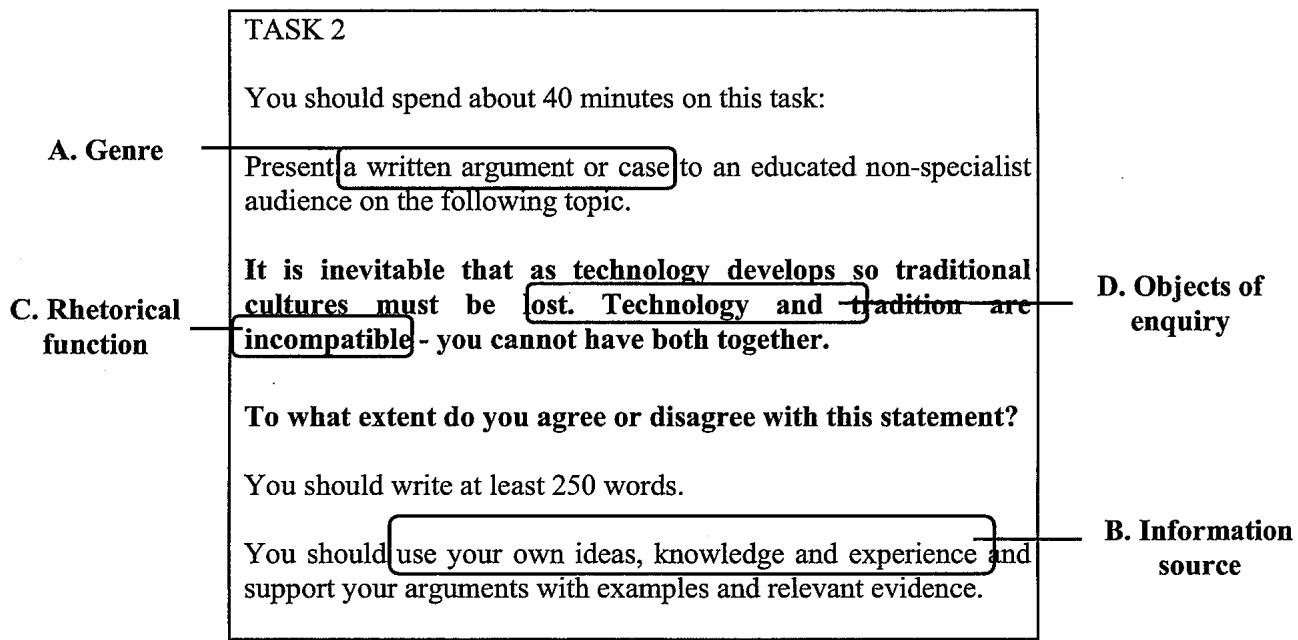
Figure 1: Sample IELTS Task 2 (IELTS Handbook, 1996)
3.3.1 Genre
Genre, the first category used in the classification scheme, has become a difficult concept in discourse analysis, with a variety of definitions being offered for the term (eg. Swales, 1990 and Martin, 1989), as well as disagreement about how this concept might relate to associated concepts, such as ‘text-type’ and ‘speech event’ (Levinson, 1979; Paltridge, 1996). Another source of complexity is the variety of genre taxonomies that have been generated by analysts. For example, Martin’s (1984) categories of report; recount; explanation etc. bear no obvious correspondence to the categories used by other genre theorists such as Swales (1990) eg. research article; reprint request etc. In the present study, we sought to avoid these theoretical difficulties. As the first category in the analysis, the concept of genre was used in an unproblematical, self-referential way - that is, the genre of a task was taken to be the name given to the required written product as outlined in the task rubric ie. whether students were asked to write an essay, a literature review etc. Our survey of the collected tasks generated the following genre categories:
| Genre |
|---|
| Essay |
| Review |
| Literature Review |
| Experimental Report |
| Case Study Report |
| Research Report (other) |
| Research Proposal |
| Summary |
| Exercise |
| Short Answer |
| Written argument/case* |
| Other** |
A Genre [G]
By what name is the task described? (Select one category)
| No. | Category | Code |
|---|---|---|
| 1. | Case Study Report | [G-CaseR] |
| 2. | Essay | [G-Ess] |
| 3. | Exercise | [G-Ex] |
| 4. | Experimental Report | [G-ExR] |
| 5. | Literature Review | [G-LitR] |
| 6. | Research Report (other) | [G-ResR] |
| 7. | Research Proposal | [G-ResP] |
| 8. | Review | [G-Rev] |
| 9. | Short Answer | [G-SAns] |
| 10. | Summary | [G-Sum] |
| 11. | Written argument or case | [G-Arg] |
| 12. | Other | [G-Oth] |
B Information source [I]
On what information source(s) is the written product to be based? (Select one category)
| No. | Category | Code |
|---|---|---|
| 1. | Prior knowledge | [I-pk] |
| 2. | Primary sources | [I-ps] |
| 2.1 provided in task | [I-ps-p] | |
| 2.2 collected by student | [I-ps-c] | |
| 3. | Secondary sources | [I-s] |
| 4. | Primary/secondary source* | [I-p/s] |
| 5. | No specification of source | [I-n] |
*Categories 2.1 and 2.2 were also applied to the primary source component of these tasks
C. Rhetorical function [R]
What is the task (or component of the task) instructing students to do? (Select one or more categories)
- EPISTEMIC [R-E]
| No. | Category | Code |
|---|---|---|
| 1.1 | Comparison | [R-E-co] |
| 1.2 | Description | [R-E-d] |
| 1.3 | Explanation | [R-E-ex] |
| 1.4 | Evaluation | [R-E-ev] |
| 1.5 | Prediction | [R-E-p] |
| 1.6 | Summarisation | [R-E-s] |
| 2. DEONTIC [R-D] | ||
| 2.1 | Hortation | [R-D-h] |
| 2.2 | Instruction | [R-D-i] |
| 2.3 | Recommendation | [R-D-r] |
D. Object of enquiry [O]
With which type of phenomenon is the task mainly concerned? (Select one category)
| No. | Category | Code |
|---|---|---|
| 1. | Phenomenal | |
| 2. | Metaphenomenal |
Table 2: The Classification Scheme * The category Written argument or case was a genre designation peculiar to the IELTS data. Its relationship to the university genres is discussed later in Section 4.1.1. ** The category Other refers to genres that appeared only once in the data. These included the following: Annotated Reference, Computer Program, Education Program Proposal, Homepage, Letter, Project Brief, Resume.
The analysis of the data according to genre was mainly an empirical procedure, but not in all instances. In a number of tasks, no genre term was specified in the task rubric. In these cases, a category was assigned, if there was other contextual information that enabled a plausible judgement to be made about the genre-type. For example, if a task instructed students to write up the results of a laboratory experiment, this task was assigned to the category experimental report. To assist in the process of allocating unspecified tasks, the following rough definitions of genre categories were drawn up. These were based on information provided in those tasks that were genre-explicit:
| Genre | Definition |
|---|---|
| Essay | a task with a variety of features and specifications. In its prototypical form, an essay is a task requiring the presentation of an argument in response to a given proposition or question. |
| Review | a task requiring the summarisation and appraisal of a single text (including non-verbal texts eg. film, painting). |
| Literature Review | a task requiring the identification, summarisation and appraisal of a range of texts relevant to a specific field of knowledge. |
| Experimental Report | a task requiring the description and analysis of data obtained from an empirical research procedure. |
| Case Study Report | a task involving identification and discussion of a problem(s) arising from a given situation, along with suggested ways for solving the problem. |
| Research Report (other) | a task similar in many respects to the Experimental Report, but requiring the description and analysis of information of a non-empirical nature eg. that obtained from interview or participant observation. |
| Research Proposal | a task requiring the description of an intended research project, including a statement of its rationale. |
| Summary | a task requiring the representation of the main contents of a text or texts. |
| Exercise | a task requiring the application of some discipline-specific tool or model to a given situation. |
| Short Answer | a task requiring mainly the reproduction of previously provided items of knowledge eg. from lectures or textbooks. |
3.3.2 Information source
The second dimension of difference used in the classification scheme was information source. This category was concerned with the type of information that was to be used in the completion of a task; for example, whether students were required to read from a list of prescribed readings or to analyse data obtained from an experimental procedure or to examine case material. The following sub-categories were included under this dimension, derived in part from the classification of Taylor (1989):
- Prior knowledge
- Primary sources 2.1 provided in task 2.2 collected by student
- Secondary sources
- Primary*/secondary source
- No specification of source
* Categories 2.1 and 2.2 were also applied to the primary source component of these tasks.
The first category - Prior knowledge - was used for tasks which did not require students to draw on any external sources of information. For tasks in this category, the contents of the piece were to be based exclusively on the writer’s pre-existing knowledge, experience, beliefs, intuitions and the like.
The two categories Primary sources and Secondary sources were applied to those tasks which required the use of external sources of information; in other words, tasks which involved research of some kind. The category Primary sources, denoted those sources which might otherwise be called ‘data’. Examples of primary sources in our corpus included:
i) the documents provided for analysis in a history assignment; ii) the details of a case given in a law assignment; iii) the experimental data to be collected and analysed in a chemistry practical.
The category Primary sources was further divided into two types: those provided in the task itself and those to be collected by students via some prescribed research procedure. Of the sample sources above, i) and ii) would be classified as provided and iii) as collected. The category Secondary sources was used for those tasks which required students to engage with and incorporate in their writing works of an ‘interpretative’ nature - monographs, research articles and so on.
The combined category primary/secondary sources was assigned to tasks which prescribed sources of both varieties. Examples from the corpus here were various research tasks which required students to collect and analyse their own data (primary source), but also to situate their work within previous research (secondary sources). Similarly, in a number of case study tasks, students needed to analyse case material (primary sources) but also to draw on relevant theoretical frameworks to help resolve issues raised in the case (secondary sources). The category No specification of sources was used when there was no mention of information sources in the assignment guidelines and when it was not possible to infer from the task itself the nature of sources to be used.
3.3.3 Rhetorical function
The concept of rhetorical function has been used widely in the field of discourse analysis (eg. Lackstrom, Selinker and Trimble, 1973; Meyer, 1975; Hoey, 1983) and has led to the generation of an array of functional categories. eg comparison/contrast; cause/effect; definition; problem/solution. By one definition, the rhetorical function of a text is ‘that which a given unit of discourse is trying to do’ (Trimble, 1985), eg. comparing entities, explaining the cause of an entity. Applied to the study of academic tasks, the concept can be modified to mean ‘that which a task (or unit of a task) is instructing students to do’.
Our attempts to develop a systematic set of rhetorical categories began with an initial distinction being drawn between tasks that involved a more ‘analytical’ rhetoric and those with a more ‘practical’ orientation. This difference can be illustrated in the following two tasks, the first from the pure discipline of sociology and the other from its applied counterpart, social work:
i) Write an essay on the following topic: Do young people from different class backgrounds experience the world differently? ii) Discuss some of the problems currently facing youth in Australia. Using a social theory, discuss how the situation of youth could be improved in Australian society.
The first task requires the writer to ‘analyse’ a situation and to assert whether something does (or does not) happen - in this case whether class has a bearing on young people’s experience of the world. The focus of the second task, at least the second part of it, is not on what does happen, but rather on what could be done to change what happens - by way of a solution to the problems identified.
The rhetorical difference noted in these two tasks is captured in the distinction traditionally drawn in semantics between epistemic and deontic modality. An epistemic clause, as Huddleston (1982) explains, has the status of a proposition; it asserts whether something is true, partly true, false etc. A deontic clause, in contrast, has the character of an action: ‘what is at issue is not whether something is true but whether something is going to be done’ (Huddleston, 1982:168) 31. The difference between these two modal meanings can be illustrated in the following ambiguous sentence (with epistemic and deontic interpretations given below):
This task must be an essay.
‘I am forced to conclude that this task is an essay’ (epistemic)
‘This task is required to be an essay’ (deontic)
The distinction between the deontic and epistemic was used in the study to establish a first level of rhetorical categories. Under these two broad categories, the following sets of subcategories were generated. An explanation of each of these is given below.
| EPISTEMIC CATEGORIES | DEONTIC CATEGORIES |
|---|---|
| . Comparison | . Hortation |
| . Description | . Instruction |
| . Explanation | . Recommendation |
| . Evaluation | |
| . Prediction | |
| . Summarisation |
EPISTEMIC CATEGORIES
| Category | Definition |
|---|---|
| Comparison | This category was applied to tasks (or components of tasks) which required students to identify the similarities and/or differences between two or more entities or phenomena. The prototypical ‘comparative’ question was in the form: What are the similarities and/or differences between X and Y? |
| Description | This category was applied to tasks (or components of tasks) which required students to give an account of the nature of a given entity or phenomenon. The prototypical ‘descriptive’ question was in the form: What is the nature of X? |
| Explanation | This category was applied to tasks (or components of tasks) which required students to give an account of the causes for a given entity or phenomenon. Note that both non-volitional causation (eg. cause, reason) and volitional causation (eg. purpose, motive) were included under this category. The prototypical ‘explanatory’ question was in the form: What is the cause of X? |
| Evaluation | This category was applied to tasks (or components of tasks) which required students to make a judgement about the value of a given entity or phenomenon with respect to its validity, importance, relevance etc. The prototypical ‘evaluative’ question was in the form: How valid/important/relevant is X? |
| Prediction | This category was used for tasks (or components of tasks) which required students to speculate about the future state of a given phenomenon or entity. The prototypical ‘predictive’ question was in the form: What will happen to X? |
| Summarisation | This category was used for tasks (or components of tasks) which required students to give an account of an author’s views on a given entity or phenomenon. The prototypical ‘summary’ question was in the form: What is author A’s view of X? |
DEONTIC CATEGORIES
| Category | Definition |
|---|---|
| Hortation | This category was used for tasks (or components of tasks) which required students to make a judgement about the desirability of a given entity or phenomenon, especially those concerned with actions and states of affairs. The prototypical ‘hortatory’ question was in the form: Should X happen/be done? |
| Recommendation | This category was used for tasks (or components of tasks) which required students to suggest ways of dealing with a given entity or phenomenon, usually presented in the form of a problem. The prototypical ‘recommendatory’ question was in the form: What can be done about X? 32 |
| Instruction | This category was used for tasks (or components of tasks) which required students to outline a sequence of procedures for a given entity or phenomenon. The prototypical ‘instructional’ question was in the form: What must be done to achieve X? |
3.3.4 Object of Enquiry
A final dimension of difference, one that to our knowledge has not been considered in studies of this kind, is what we have referred to as object of enquiry. This dimension was concerned with probing the nature of the variable X referred to in the discussion of rhetorical function categories above. The need for this additional category arose from our observation that some tasks in the corpus, of their nature, required a more ‘abstract’ form of writing than others. This difference can be illustrated in the following two topics from a first year management subject:
i) Discuss the role of the manager in Australia in the 1990s.
ii) Are there significant differences between ‘systems’ and ‘classical’ views of management?
These topics, it can be argued, deal with two distinct domains. In the first, the ‘object of enquiry’ might be regarded as the real world of the manager (ie. what managers do or need to do, in their real world activities). The second topic, in contrast is concerned less with the world of managers and more with the abstract or ‘metaphenomenal’ world of management theorists (ie. how these theorists view the world). This difference in our view is not trivial; we would argue that the pattern of discourse elicited by each topic is likely to be of a different kind. In terms of Hallidayan grammatical categories (1985), responses to the first topic are likely to include a preponderance of clauses with the following configuration:
| Clause element | Example |
|---|---|
| managers | do |
| Actor | Process:material |
In contrast, the predominant clauses in responses to the second topic are more likely to be of the following form:
management theorists
Actor
believe
Process: mental
In the classification scheme, this difference in the objects of enquiry was captured in the following two categories, using additional terms from Halliday (1985: 229):
Phenomenal
Metaphenomenal
The Phenomenal category was used for those tasks which directed students primarily to consider such ‘real world’ entities as events, actions, processes, situations, practices etc. The Metaphenomenal category, in contrast, was applied to tasks concerned mainly with the abstract entities of ideas, theories, methods, laws etc. 33
3.4 Sample Analyses
In the following section, the way in which we applied the classification system to our data is demonstrated through the analysis of four tasks: one sample IELTS Task 2 item and three university tasks from the disciplines of sociology, chemistry and management. These tasks were selected for the range of disciplines they cover, as well as for the variety of their generic forms. Among other things, this discussion is intended to demonstrate the interpretative nature of the task analysis.
Task 2
You should spend about 40 minutes on this task:
Present a written argument or case to an educated non-specialist audience on the following topic.
The first car appeared on British roads in 1888. By the year 2000 there may be as many as 29 million vehicles on British roads.
Should alternative forms of transport be encouraged and international laws introduced to control car ownership and use?
You should write at least 250 words.
You should use your own ideas, knowledge and experience and support your arguments with examples and relevant evidence.
Sample 1: IELTS Task 2 item (Source: IELTS Specimen Materials, 1995)
In the analysis of this task, the first two categories genre [G] and information source [I] can be applied unproblematically. For the category genre, the task instructs students to present ‘a written argument or case’ and is thus allocated to the category [G-Arg]. For information source, students are instructed to draw on their ‘own ideas, knowledge and experience’ which would mean allocation to the category prior knowledge [I-Pk].
Analysing tasks according to the remaining dimensions of difference is a more interpretative activity. For rhetorical function [R], the principal modality of the topic is deontic [R-D], signalled by the auxiliary ‘should’. Further to this, students are asked to express a view about the desirability of a social practice, (ie. whether alternative forms of transport should be encouraged), hence the task is classified as hortatory [R-D-h]. The task however, also includes an epistemic element [R-E], which relates to the requirement of ‘supporting the argument with relevant evidence’. To support their arguments, students would need to state the advantages and/or disadvantages of alternative forms of transport. The task therefore also includes the rhetorical category of evaluation [R-E-ev]. For object of enquiry, the task is concerned with a real world activity, namely transportation usage, and hence is classified as phenomenal [O-m]. The above analysis thus gives the following configuration of categories:
| Category | Classification |
|---|---|
| Genre | written argument or case |
| Information source | prior knowledge |
| Rhetorical function | hortation; evaluation |
| Object of enquiry | phenomenal |
Essay Question
Compare and contrast Scientific Management with the Human Relations approach to work. Which in your view is the more valid approach?
Essays should be approximately 2,000 words. You are encouraged to read more widely than the references provided. Also do not forget to read the ‘Departmental Policy on Plagiarism’ in this booklet.
Sample 2: Sociology
This task from a first year sociology subject prescribes an essay [G-ess]. The task instructs students to use a wide range of ‘references’, hence information source would be classified as secondary [I-s]. For rhetorical function, the modality is epistemic, glossed in the following question: What are the similarities and differences between the two approaches? For specific functions, clearly the task involves comparison [R-E-co]. Implicit in this part of the task however, is also summarisation [R-E-s]; presumably a summary of the two approaches would be necessary before they could be compared. In the final part of the task, students are asked to evaluate the two approaches [R-E-ev]. Finally the object of enquiry is metaphenomenal [O-m], with students being asked to focus on two theoretical approaches to the subject matter, ‘work’. This analysis of the task gives the following configuration of categories:
| Category | Classification |
|---|---|
| Genre | essay |
| Information source | secondary |
| Rhetorical function | summarisation; comparison; evaluation |
| Object of enquiry | metaphenomenal |
This exercise is intended to give you an introduction to an important aspect of research in chemistry by writing a short formal report of an experiment you have done. You will be assigned by your demonstrator, either the analysis of Hortico or cement to write up in full.
Your report should include:
i) a description of the problem and its background
ii) a description of the important principles and approaches
iii) a description of resources and procedures used to obtain results
iv) a well ordered presentation of experimental observations
v) consideration and explanation of results
Sample 3: Chemistry
Sample task 3 from a first year chemistry subject prescribes a ‘formal report of an experiment’, and is thus classified under the genre category of experimental report [G-ExR]. The principal source of information for the task is the data collected from the experimental procedure and so is classified as a primary source - collected [I-ps-c]. The rhetorical functions of the task are clearly epistemic [R-E], glossed in the following questions (What was the experimental procedure? What were the results? What might be the explanations for the results?). As can be seen in the task rubric, the rhetorical functions are mainly descriptive [R-E-d] ie. descriptions of the problem, the procedure and the results. The final component of the task v) asks students to explain the results, hence explanation [R-E-ex]. For the object of enquiry, the experiment involves analysing one of two substances ‘Hortico or cement’, which are categorised as phenomenal [O-p]. This analysis of the task gives the following configuration of categories:
| Category | Classification |
|---|---|
| Genre | experimental report |
| Information source | primary - collected |
| Rhetorical function | description; explanation |
| Object of enquiry | phenomenal |
Case study
JP Hunt is a large department store. Senior management has become concerned about a high turnover rate in the Credit and Accounts Receivable (CAR) Department of the store. As a first step towards addressing the problem, JP Hunt has contracted a consulting firm to conduct a survey of (CAR) Department employees
Your syndicate has now been contracted by the consulting firm to prepare a report which:
-
Provides background about the company;
-
Analyses the survey data shown in the summary table. (On the basis of this analysis identify and diagnose strengths and problem areas in the (CAR) Department);
-
Makes suggestions for resolving problems;
-
Develops an action plan for feedback to the CAR department.
Sample 4: Management (Abridged version)
This final task from a postgraduate management subject instructs students to prepare a case study report. [G-CaseR]. The main information source is in the form of survey data provided for analysis, and thus would be allocated to the category primary source - provided [I-ps-p]. The rhetorical functions in the task include both epistemic and deontic elements. The epistemic elements are those concerned with providing background information about the company ie. description [R-E-d] and with then identifying the ‘strengths and problems’ in the CAR Department ie. evaluation [R-E-ev]. The deontic elements are those concerned with making suggestions for resolving problems ie. recommendation [R-D-r] and then with outlining the specific ‘actions’ to be taken. ie. instruction [R-D-i]. Finally, for the object of enquiry, the task would be classified as phenomenal, concerned as it is with real world problems in an organisation. This analysis of the task gives the following configuration of categories:
| Category | Classification |
|---|---|
| Genre | case study report |
| Information source | primary - provided |
| Rhetorical function | description; evaluation; recommendation; instruction |
| Object of enquiry | phenomenal |
4.0 Results and Discussion
The results of the two stages in the study - the task survey and the staff interviews - are discussed in the following two sections.
4.1 Task Survey
In this section, the findings from the analysis of the total university corpus are presented under the four dimensions of difference in the classification scheme. Each set of findings is then considered in relation to those obtained from the analysis of the IELTS corpus. Whilst the data presented include those of a quantitative nature, it needs to be acknowledged that the analysis was not a strictly empirical one. As mentioned previously, the process of analysing tasks involved a degree of interpretation and inference on the part of the researchers. Thus, it is intended that the numerical data not be seen as a definitive set of results; rather they are designed to provide a broad picture of the types of writing required in the two domains.
The analysis of the university corpus found a great diversity of writing requirements, both within and across disciplines. Whilst in all subjects, written work of some kind had to be submitted, this varied considerably with respect to the type and the amount required, ranging from a single short report in engineering to a series of lengthy essays in philosophy. In the discussion that follows some interdisciplinary variations are discussed.
4.1.1 Genre: university assignments
The diverse nature of university writing is evidenced in the wide range of genres identified in the university corpus (see Table 3). Of these types however, the essay was clearly the most common, accounting for almost 60% of tasks. This assignment type appeared most frequently in subjects in the humanities and social sciences, but was also prescribed in a range of other disciplines, including biology, computing and medicine. As a generic form, the essay was characterised in a variety of ways in assignment handouts; common to most definitions however, was the requirement that students argue for a particular position in relation to a given question or proposition. The following is a comprehensive account provided for students in a history subject:
| GENRE | Number | % |
|---|---|---|
| Essay | 90 | 58 |
| Case Study Report | 15 | 10 |
| Exercise | 12 | 8 |
| Research Report (other) | 10 | 6 |
| Review | 7 | 5 |
| Experimental Report | 6 | 4 |
| Literature Review | 2 | 1 |
| Research Proposal | 2 | 1 |
| Summary | 2 | 1 |
| Short Answer | 2 | 1 |
| Other* | 7 | 5 |
| TOTAL | 155 | 100 |
Table 3 Genres of university assignments
* Annotated Reference, Letter, Project brief, Resume, Homepage, Computer Program, Educational Program Proposal.
The next most common genre was the case study report (10% of tasks), confined to subjects in certain applied disciplines: management, accounting, law, computing, and engineering. Case studies typically required students to analyse case material (in narrative and/or statistical form) and to suggest ways of resolving the issues raised in the case. Sample task 4 (3.4) is an example of a case study report from the corpus.
The genre category exercise (8% of tasks) included a range of minor tasks often set as a first piece of work in subjects and usually requiring students to demonstrate their understanding of a particular concept or technique by applying it to an exemplary situation. The following is one such task from the corpus, set in a Literature/Cultural Studies subject:
Choose a television program (eg. news broadcast, quiz show) and develop an analysis of this program in terms of its i) mode of address ii) programming iii) genre iv) internal organisation.
The only other genre to appear with any frequency was the Research Report (non-experimental). In these tasks, students were required to collect their own data and to describe and explain them. Research reports of this kind were set in a broad range of disciplines. The following is an example from a Linguistics subject:
Write a report which examines the structure of greetings in a wide sample of languages. What are the most common types of information used in greetings? Can you construct a grammar that represents the first moves of the greeting sequence?
The corpus also included a small number of experimental reports. These were confined to the disciplines of physics, chemistry and psychology.
Genre: Comparisons with IELTS Task 2 items
Analysis of the IELTS corpus found that the genre specifications were standard for all items. In each case, students were instructed to ‘present a written argument or case’ on a given topic, taken from the rubric used in official versions of the test. The ‘topic’ part of all items consisted either of a question or a proposition often followed by a prompt asking students to indicate the extent of their agreement or disagreement with the proposition.
Whilst the written argument nomenclature does not correspond exactly to any of the genre terms identified in the university corpus, clearly IELTS Task 2 items most resemble the format of the university essay. Indeed, on earlier versions of the official test, the Task 2 was referred to as an essay. The avoidance of the essay label in current versions of the official test suggests, however, that test developers have been mindful of certain differences between the university essay and the IELTS version of this form. The differences we have found are discussed below under the remaining categories considered in the task survey.
4.1.2 Information source: university assignments
Table 4 shows the results from the analysis of information sources prescribed in the tasks from the university corpus. The most notable finding is that almost all tasks involved a research component of some kind, requiring the use of either primary or secondary sources or a combination of the two. The most frequently prescribed sources were secondary sources (55% of the corpus), usually described in tasks as ‘references’. These included monographs, journal articles and textbooks. The use of secondary sources was required in tasks from a broad range of disciplines, but with a higher aggregation in disciplines from the humanities and social sciences. There was a good deal of variation in the amount of information provided about the secondary sources to be used, ranging from tasks which included a simple exhortation for students to base their work on ‘wide reading’ to those which provided a specific list of references to be incorporated in the written product. One feature common to most tasks prescribing the use of secondary sources was the inclusion of information about citation practices in the discipline, along with warnings about plagiarism.
| INFORMATION SOURCES | Number | % |
|---|---|---|
| Secondary | 85 | 55 |
| Primary/secondary | 33 | 21 |
| Primary | 28 | 18 |
| Prior knowledge | 5 | 3 |
| No specification of sources | 4 | 3 |
| TOTAL | 155 | 100 |
Table 4 Information sources prescribed in university assignments
Tasks prescribing the use of primary sources (or data) were also from a wide range of disciplines, but especially in the more research-oriented, as opposed to theoretical, disciplines. As suggested in section 3.3.2, there was a good deal of variation in the types of primary sources prescribed. These ranged from quantitative and qualitative data in the natural and social sciences, to case study material typically used in the disciplines of law, management and economics. As mentioned, a distinction was made in the classification scheme between primary sources that needed to be collected by students and those that were provided in the task itself. In the latter type, students were not required to collect data but only to be engaged in their interpretation. The results from this analysis are shown in Table 5. It is of some interest that the majority of prescribed primary sources were of the provided-type, both at
Source note: The source PDF skips printed pages 96-97 at this point. The surrounding text is left as it appears in the available PDF.
| RHETORICAL FUNCTION | MODALITY E= Epistemic D= Deontic | No. of tasks incorporating function | % of tasks incorporating function |
|---|---|---|---|
| Evaluation | E | 104 | 67 |
| Description | E | 71 | 49 |
| Summarisation | E | 55 | 35 |
| Comparison | E | 54 | 35 |
| Explanation | E | 43 | 28 |
| Recommendation | D | 35 | 23 |
| Hortation | D | 15 | 15 |
| Prediction | E | 11 | 7 |
| Instruction | D | 5 | 3 |
| TOTAL FUNCTIONS | 393 |
Table 6 Rhetorical functions in university assignments
The epistemic category of evaluation was found to be the most common, with about two-thirds of tasks in the corpus adjudged to involve this function. Evaluation was found to be characteristic of tasks across a wide range of disciplines in the corpus. Tasks (or components of tasks) prescribing evaluation required students to make a judgement of the value of some entity or phenomenon with respect to its validity, importance, relevance etc. The following are two sample ‘evaluative’ questions taken from tasks set in sociology and management.
How plausible do you find Marx’s account of social inequality? (Sociology).
To what extent can people be regarded as the most important resource of an organisation. (Management)
It was noted that there was some variation in the nature of entities to be evaluated in tasks. This can be seen in the two sample questions above. In the first question, it is the views of a particular writer (Marx) which are to be evaluated; the second in contrast requires an evaluation to be made of a particular state of affairs, namely ‘human resources in an organisation’. This difference corresponds to the distinction drawn earlier between metaphenomenal and phenomenal objects of enquiry and is considered in greater detail in section 4.1.4.
As can be seen in Table 6, the next most common functions were also epistemic in nature: description, summarisation, comparison, explanation. Several sample questions under each of these categories are given below.
Description
What is the biology of toxoplasmosis? (Biology)
Describe what is meant by international, domestic and mass tourism? (Tourism)
Summarisation
Explain Plato’s theory of the tripartite soul. (Philosophy)
What are the main points Christine Halliwell is making about the status of women in society in her chapter ‘Women in Asia: Anthropology and the study of women’? (Anthropology)
Comparison
What differences and what similarities emerge from a comparison of Egyptian and Mesopotamian temples? (Architecture)
Where do the arguments of Oakey and Gati differ? (History)
Explanation
What are the causes of the current high levels of unemployment in Australia? (Economics)
Adolescent mental health is a growth industry. Discuss factors which have contributed to this growth. (Medicine)
As mentioned, the deontic functions - recommendation, hortation, instruction - were less frequent in the corpus than the epistemic. Of these, recommendation was clearly the most common and was especially prominent in the more applied disciplines. In tasks involving recommendation, the entity to be analysed was presented as being problematic in some sense and students were required to suggest ways in which it could be resolved. ‘Recommendatory’ questions tended to be framed around the notion of possible action (or ‘can-ness’) as in the following examples:
What strategies can be used to make internet contributors self-regulating? (Computing)
How can the land degradation problems of the Parwan Valley be overcome. (Agriculture)
The other deontic category that appeared in the data, though to a much lesser extent than recommendation, was what we have termed hortation. In hortatory tasks students were asked to comment on the desirability of a given course of action or state of affairs. These tasks were framed around the notion of necessary action (or ‘should-ness’) and were most characteristic of disciplines with an ethical or polemical element to their contents, including law, medicine, politics, philosophy. The following are sample hortatory questions:
Since no person is an island, society should regulate private behaviour. Discuss. (Politics)
People subject to the power of the state need the protection of a bill of rights. Discuss. (Law)
The remaining categories used in the classification scheme - prediction and instruction - appeared infrequently in the corpus. The following are single examples of each of these respective categories:
What major changes in the Australian business environment are likely to impact on managers over the next decade. (Management)
In an assignment requiring the writing of a computer program:
Outline to any potential users precisely how the program is to be used. (Computing).
Rhetorical function: comparisons with IELTS Task 2 items
A similar analysis of rhetorical functions was made of the IELTS items, the results of which are shown in Table 7. All items, it can be seen, involved evaluation of some kind. (This is a finding consistent with the ‘argumentative’ nature of the Task 2 genre, as it is described in official versions of the test). In the following example, taken from the IELTS specimen materials (UCLES, 1995), the quality to be evaluated is ‘compatibility’. (It needs to be noted that this task also comprises the function of comparison).
It is inevitable that as technology develops so traditional cultures must be lost.
Technology and tradition are incompatible - you cannot have both together. To what extent do you agree or disagree with this statement?
| RHETORICAL FUNCTION | No. of IELTS items incorporating function (n=20) | % of items incorporating function |
|---|---|---|
| Evaluation | 20 | 100 |
| Hortation | 14 | 70 |
| Prediction | 3 | 15 |
| Comparison | 3 | 15 |
| Explanation | 3 | 15 |
| Recommendation | 2 | 10 |
| Description | - | - |
| Summarisation | - | - |
| Instruction | - | - |
Table 7 Rhetorical functions in IELTS items
Whilst all tasks involved some form of evaluation, in many instances this was found to be accompanied by another function, namely hortation. As mentioned, hortatory elements in tasks were those framed around the notion of necessity (or should-ness). The following three tasks are representative of the 14 tasks which were found to incorporate this function:
Higher mammals such as monkeys have rights and should not be used in laboratory experiments. (Source 5)
A government’s role is only to provide defence capability and urban infrastructure (roads, water, supplies etc.) All other services (education, health and social security) should be provided by private groups or individuals in the community. (Source 7)
Television nowadays features many programs of a violent nature. For this reason, it is necessary for parents to impose strict controls on their children’s viewing habits. (Source 8)
The other rhetorical functions that showed up in the analysis were prediction, comparison, explanation and recommendation, although each of these was confined to a total of only two or three tasks. The following are examples of tasks (or components of tasks) which incorporated these functions:
Prediction
The idea of having a single career is becoming an old fashioned one. The new fashion will be to have several careers or ways of earning money and further education will be something that continues throughout life. (Source 6)
Comparison
… Which subjects can be better taught using computers? (Source 7)
Explanation
News editors decide what to broadcast on television and what to print in newspapers. What factors do you think influence these decisions?… (Source 6)
Recommendation
…What are the most effective ways of reducing population growth? (Source 8)
The patterns of rhetorical functions identified in the IELTS Task 2 items were clearly different from those in the university corpus, as Table 8 shows.
| RHETORICAL FUNCTION | University assignments(% incorporating rhetorical function) | IELTS items(% incorporating rhetorical function) |
|---|---|---|
| Evaluation | 67 | 100 |
| Description | 49 | - |
| Summarisation | 35 | - |
| Comparison | 35 | 15 |
| Explanation | 28 | 15 |
| Recommendation | 23 | 10 |
| Hortation | 15 | 70 |
| Prediction | 7 | 15 |
| Instruction | 3 | - |
| Total number of functions identified in corpus | 393 | 45 |
Table 8 Comparison of rhetorical functions in university tasks and IELTS items
The more notable differences can be summarised thus:
i) The functions of summarisation and description, which were common in the university corpus, did not appear in the IELTS sample. ii) The functions of comparison, explanation and recommendation were less frequent in the IELTS sample. iii) The function of hortation, which was relatively rare in the university corpus, was, along with evaluation, the predominant rhetorical mode in the IELTS sample.
Of these findings, the last is perhaps the most significant. Indeed it is interesting to speculate about why hortation should figure so prominently in IELTS items. We can posit only one explanation here - this is that writing in a hortatory mode, of its nature, may not require the same amount of background knowledge that is needed to engage with topics of an epistemic nature. To take the topic area of animal experimentation as an example, it seems fair to
| No. | Object of enquiry |
|---|---|
| 1 | the relationship between technology and tradition |
| 2 | government regulation of motor car usage |
| 3 | retirement age |
| 4 | telecommuting |
| 5 | studying abroad |
| 6 | paternal responsibilities in child care |
| 7 | government regulation of new technology |
| 8 | government provision of health care |
| 9 | the use of animals in scientific experiments |
| 10 | studying abroad |
| 11 | government funding of tertiary education |
| 12 | editorial policies of newspapers |
| 13 | the future of work |
| 14 | provision of aid by wealthy nations |
| 15 | patient attitudes to medical treatment |
| 16 | government provision of social services |
| 17 | computers in education |
| 18 | capital punishment |
| 19 | parental regulation of children’s television habits |
| 20 | population growth |
Table 11 Objects of enquiry in total IELTS corpus
On our analysis the following items would fall within this overarching theme - items 2, 6, 7, 8, 9, 11, 12, 14, 16, 18, 19. In most instances, the agent in question is ‘the government’; others include ‘wealthy nations’ (14), the scientific community (9), parents (19), fathers (6). This focus on the responsibilities of certain authorities is clearly connected to the rhetorical function of hortation and can be adduced here as additional evidence for the fairly restricted nature of Task 2 items.
4.1.5 Summary of Findings
The main findings from the comparative task analysis can be summarised thus:
i) The predominant genre in the university corpus was the essay. Whilst this term is not used to refer to IELTS Task 2 items, the genre that is specified - a written argument - is thought to resemble most closely the university essay.
ii) Almost all university tasks required for their completion the use of external sources - either primary or secondary sources or a combination of the two. IELTS Task 2 items in contrast were framed around the use of prior knowledge.
iii) The university tasks covered a broad range of rhetorical functions, mainly of an epistemic nature. The most common categories were evaluation, description, summarisation, comparison and explanation. Of the deontic functions, recommendation was the most common. Like the university corpus, evaluation was the predominant category in IELTS items. A distinctive feature of the IELTS corpus, however, was the disproportionately high number of hortatory tasks.
iv) The objects of enquiry in the university corpus were mainly of a phenomenal nature; but there was also a fair proportion of metaphenomenal tasks. The IELTS items in contrast, were all of a phenomenal nature.
These differences in the two corpora appear rather technical in the terms described above. Taken in combination however, they suggest a distinction that can be characterised in broader terms. University tasks, by definition, prescribe academic modes of discourse, or to be precise, the discipline-specific discourses required of novice scholars. Whilst the IELTS items clearly share features with those set at university, the form of writing they prescribe, on analysis, would appear to bear a closer resemblance to certain public forms of discourse. In particular, the emphasis placed on the spontaneous expression of opinion is suggestive of such public, non-academic genres as the letter to the editor or the newspaper editorial.
This section of the report concludes with a final comparison of tasks, one that captures well some of the differences discussed above. The first task is an IELTS item and the second an assignment from a bioethics subject. The comparison here is instructive, because the two tasks, on face value, appear similar in a number of respects. Both are concerned with a similar content area ie. (government provision of health care) and seemingly with a similar rhetorical focus (hortatory - should); yet they are quite different.
IELTS item
The most advanced medical treatment tends to be expensive. However, people’s access to good health care should not depend on social factors such as their level of income or social status. Discuss.
Bioethics essay
Should a just state provide health care for its citizens? How can relevant ethical theories help to resolve this question?
What is required in the IELTS task above is that candidates express a point of view on the issue; one that is based on their own beliefs and knowledge. The Bioethics task, in contrast, is concerned not so much with students expressing a point of view, but with them discussing the theoretical means by which a point of view might be reached. This difference can be understood in terms of some of the contrasts that have been considered so far; that is between prior knowledge and research; between a deontic and an epistemic rhetoric and between the phenomenal and the metaphenomenal. The nature of the two tasks is different, and it is fair to say that the language skills needed for the fulfilment of each will also be different.
4.2 Staff Survey
While the task survey was the main part of this study, follow-up interviews with a sample of the lecturers who had submitted tasks, provided an alternative data source representing a different perspective on the university tasks. In addition, in the interviews the lecturers gave feedback on the suitability of the IELTS in relation to the writing demands of their disciplines (see Appendix 4.2 for interview schedule). In the staff survey, twelve lecturers were interviewed from ten discipline areas with comments provided on a total of 19 tasks submitted for the first stage of the study. The distribution of the genres of these tasks was similar to that in the corpus overall, with essays being the most common. Table 12 is a list of the tasks which formed the basis of the interviews.
| DISCIPLINE AREA | GENRE | NUMBER |
|---|---|---|
| Chemistry | Experimental report | 1 |
| Computing | Computer program | 1 |
| Economics | Essay | 2 |
| Engineering | Case study report | 1 |
| Geography | Essay | 2 |
| Law | Essay | 3 |
| Case study report | 1 | |
| Linguistics | Research report (other) | 2 |
| Management | Essay | 3 |
| Politics | Essay | 2 |
| Communications | Research report (other) | 2 |
Table 12 Interview data: Number and types of tasks from each discipline The following discussion focuses on common themes arising from the interviews. It begins with a summary of the more notable features of the university tasks as perceived by those who set them, and then deals with perceptions of the sample IELTS tasks.
4.2.1 University Assignments
Rhetorical function was one of the categories used by the researchers to analyse university assignments in the first stage of the study and was also the subject of a specific question in the interviews. The main rhetorical functions required in university assignment tasks were identified by the lecturers; the results of this process are shown in Table 13 together with the results from the task analysis. This comparison reveals a surprising degree of correspondence between the results from the two stages with the order of frequencies almost the same. The only variation in order was a greater number of tasks requiring recommendation than explanation in the lecturers’ analyses.
| RHETORICAL FUNCTION | Lecturer perceptionsStage 2(% of tasks incorporating function) | Task analysisStage 1(% of tasks incorporating function) |
|---|---|---|
| Evaluation | 63 | 67 |
| Description | 63 | 49 |
| Comparison | 53 | 35 |
| Summarisation | 37 | 35 |
| Recommendation | 32 | 23 |
| Explanation | 26 | 28 |
| Hortation | 16 | 15 |
| Prediction | 11 | 7 |
| Instruction | 5 | 3 |
Table 13 Rhetorical functions in university assignments: A comparison of interview and task analysis results
In the interviews, the lecturers were also asked to comment on the key characteristics of their tasks and on the qualities that would distinguish an outstanding assignment. Their comments fell into two main areas - those concerned with the research process and those with features of the written product. Almost all lecturers, regardless of discipline, emphasised the importance of research skills and many noted that a discriminating feature of outstanding assignments was evidence of extensive independent research. The following comments give a sense of the value lecturers placed on the use of sources. The first from a geography lecturer is interesting for the number of references recommended and as well as the detail he provides on acceptability of different types of references; the second, from a politics lecturer, specifies the research skills and types of sources one could expect from a ‘better’ essay in the subject he teaches:
a minimum of at least 10 references are required - really good essays would use 20 or more … students should avoid encyclopedias and textbooks if possible… and should probably avoid using WWW pages as they are very difficult to verify. Students need to recognise that New Scientist and Scientific American are not exactly refereed journals… books by single authors are fine, as long as they are not university level textbooks… dictionaries are unacceptable … if they’re using them repeatedly to define terms.
students need to show the ability to use footnotes and bibliographies to jump off into other texts … [and] a familiarity with other kinds of cultural documents, perhaps literary works, works of visual art, an understanding or familiarity with architecture of the period, as a way of giving the historical framework.
Another aspect of assignments that many lecturers considered important was the structure and organisation of the written product. Students were expected to be aware of and to conform to the structural conventions of the relevant genre, such as the different sections of a research report (introduction, methodology etc) or of an essay (introduction, body and conclusion).
In the interviews, lecturers were asked to make comparisons between their tasks and two sample IELTS tasks (items 1 and 2 in Appendix 4.1), and then to consider whether training for IELTS Task 2 items would be useful preparation for writing tasks in their disciplines.
In their discussion of the degree of correspondence between the tasks (academic and sample IELTS) comments about intrinsic similarities were most common among those lecturers from disciplines in which the task genre was an essay. The similarities noted by these lecturers tended to be of a general nature, especially in relation to the broad area of argumentation in writing. The following were two observations of similarities:
In short I don’t think there are big differences. I’m asking them to write a coherent piece of work, not a set of dot points or scattered ideas… it is essential that they construct the arguments that they present with examples and relevant evidence… The tasks that I set … usually ask them to compare and contrast, do you agree or disagree, to what extent is this statement relevant, or I have a quote, do you agree. So in many ways the sorts of tasks I set are quite similar … (Economics)
the requirements of the IELTS tasks arguing two sides of an issue, responding to a proposition seem similar to the requirements of my subject (Law)
The focus of staff responses, however, was more frequently on differences. IELTS tasks tended to be perceived as much simpler than academic tasks, with several lecturers comparing them to secondary school tasks.
5.0 Conclusions and Recommendations
In this final section, we draw on the results of the two stages of the study to suggest ways in which the IELTS Task 2 format might be adapted to resemble more closely the requirements of university writing. Optimising the ‘authenticity’ of a test is an important objective of any test development process (Bachman and Palmer, 1996). In the case of the IELTS test, with its increasing use as a university selection instrument and its corresponding influence on programs of English for academic purposes, this objective seems especially pressing. Any recommendations for enhanced authenticity however, need to take account of the special constraints imposed on writing in a test situation. For the IELTS writing test in its existing format, these constraints can be outlined as follows:
- the task must be able to be performed in the time frame available (40 minutes)
- the task must not make unwarranted assumptions about the background knowledge of candidates
- the task must be, as far as possible, a test of candidates’ writing skills, and should not require to any major extent the use of other skills for its completion.
- the task should elicit a sample of writing that is assessable according to the existing criteria used on the test.
The suggestions which follow are organised around the categories used in the classification scheme.
5.1 Genre
The study found that the essay is the pre-eminent written genre of university study. It was also found that the standard Task 2 item resembles the essay genre more closely than any of the other generic forms identified in the university corpus, a point also made by a number of academic staff in interview. For this reason, the current format of the IELTS Task 2, requiring candidates to ‘present a written argument or case’ in relation to a given topic, would appear to be the most suitable. Within this basic format however, a number of modifications are suggested.
5.2 Information Source
One of the main findings of the study was the difference in prescribed information sources in the two domains, with the extensive use of sources required in university tasks and a contrasting reliance on prior knowledge in the IELTS Task 2 format. This was a difference also identified by staff in the interviews.
There are several options which might be considered to deal with this disparity. The two discussed here involve what might be termed a strong and a weak reading-writing link. In the ‘strong link’ option, writing tasks could be accompanied by a range of reading materials (secondary source), with candidates required to incorporate these materials in their responses. Such an approach, which would represent a close simulation of university essay tasks, is already used in a number of university entrance tests, including, for example, the Faculty of Arts Essay Admission Test used at Monash University (see Appendix 4.3). Whilst the strong link option, in our view, represents an optimal task design, it does not fit well with some of the constraints on the IELTS writing test listed above. This format, for example, would require more time than the currently prescribed forty minutes. Furthermore, the obligation to include source material in responses would make this as much a test of reading as of writing.
An alternative option would be to draw on the framework used in the pre-1995 version of the IELTS Task 2. In this former version, at least one text in the reading test was thematically linked to the writing task and candidates were given the option of referring to this text in their written response. Included in the task rubric was the following instruction to candidates:
You may use ideas from Reading Passage 1, but do not copy directly from it.
In the light of the study’s findings, a return to such a framework would seem to be an option worth considering. Inclusion of this kind of reading-writing link would serve to enhance the test’s authenticity and would also be compatible with test constraints. In terms of test washback, a link between the reading and writing components of the test would provide a basis in EAP programs for the teaching of the important academic skills associated with citation.
5.3 Rhetorical Function
The task analysis found a restricted range of rhetorical functions in the IELTS corpus, with a disproportionately high number of hortatory tasks and a corresponding lack of summarisation, comparison, explanation, recommendation. (This was a finding supported in the interviews, although not discussed by informants in the same precise terms.) These results, it needs to be acknowledged, are only strictly relevant to the sample of IELTS practice materials used in the study. As mentioned, official Task 2 items -live or retired - were not available to the study and so it is difficult to know the extent to which the findings might apply to them. Nevertheless, the study’s recognition of the need for rhetorical diversity in Task 2 items is a point that probably needs to be heeded by test developers.
It was mentioned earlier that writing in an epistemic mode (eg. summarisation, comparison, explanation) will normally require more specialised knowledge. If such functions are to be incorporated to a greater extent in IELTS items, it is important that topic areas are chosen carefully to ensure that candidates have sufficient background knowledge to be able to engage with the task (Constraint 2). One way of dealing with this would be to use tasks which draw on candidates’ knowledge of their country of origin. The following is an example of a possible explanatory task employing such an approach:
What is the pattern of population shift in your country? From rural to urban areas or from urban to rural areas? What are some of the possible reasons for this pattern?
It should also be pointed out that the inclusion of relevant reading materials (discussed in the previous section) could also serve to provide necessary epistemic content, as well as allowing for the incorporation of the function of summarisation in tasks.
5.4 Object of Enquiry
The task survey found that university tasks were concerned with both phenomenal and metaphenomenal entities, whereas tasks in the IELTS corpus were all of a phenomenal nature. This was a difference also noted by several staff in interviews. Whilst it is clearly not possible in a testing context to use a given theory (eg. a particular ethical theory) as the basis for topics, it may be possible to frame tasks so that they at least elicit a more metaphenomenal form of discourse. This could be achieved by incorporating in tasks propositions which are attributed either to individual scholars or to a general school of thought, as in the following two examples:
Ballard and Clanchy argue that students preparing to study abroad need to do more than develop their English language skills. They also need to learn about the academic culture of English-speaking universities. To what extent do you agree with this view?
Some educationists argue that a student’s success at school is mainly due to the quality of learning that takes place in the home. To what extent do you agree with this view?
Whilst such modifications in wording may appear minor, tasks framed in this way would be formally more akin to many set in the university domain. We would also argue that ‘attributed tasks’ like the examples above would encourage a more academic style of writing, one that would be more focussed on the metaphenomenal lexis of ‘views’, ‘arguments’, ‘beliefs’ and the like.
5.5 Summary of Recommendations
The suggestions made in the foregoing discussion are summarised in the following set of specific recommendations:
- It is recommended that the subject of Task 2 items be thematically linked to at least one passage from the reading test and that candidates be given the option of making reference to this reading passage in their written response.
- It is recommended that a minimal number of Task 2 items be framed around what we have termed a ‘hortatory rhetoric’, that is items that require candidates to discuss the desirability (or not) of a particular social practice, public policy and the like.
- Following on from 2, it is recommended that Task 2 items be designed to incorporate a diverse range of rhetorical functions. An effort should be made to include the following functions, either singly or in combination: description; summarisation; comparison; explanation; recommendation.
- It is recommended that some Task 2 items be framed to include an attributed proposition in the task rubric. These propositions could either have a generic attribution (eg. many psychologists argue, some educationists believe etc.) or be attributed to a specific scholar.
5.6 Implications for Teaching Programs
The results of the present study have been used as a basis for assessing the authenticity of the IELTS Writing Task 2 format and also for suggesting ways in which the test might be modified to enhance this authenticity. We believe the study also has implications for the design of pre-enrolment EAP language programs which seek to prepare students simultaneously for the IELTS test and for university study. In this section we discuss briefly two issues:
i) the likely impact of the Task 2 component of the test on teaching programs ii) how program designers and teachers might best approach test preparation within the broader context of pre-tertiary EAP.
The issue of a test’s impact on teaching programs (or washback effect) is a complex one. Alderson and Wall (1993) suggest that our thinking about washback should not be restricted to some ‘general’ and ‘vague’ notion of influence (either positive or negative). Instead, they argue, we need to refine the concept to take account of a variety of possible specific effects, including inter alia, effects on:
- how teachers teach
- how learners learn
- what teachers teach
- what learners learn
The results of the present study can shed no light on the way IELTS Task 2 might impact on matters of teaching methodologies and learning processes (ie. effects 1 and 2); but they do suggest a likely effect on curriculum (ie. effects 3 and 4). On this score, we would conclude that the writing curriculum implicit in the current Task 2 format is a comparatively narrow one. Whilst the test would appear to provide a basis for the teaching of a number of important aspects of academic writing (eg. structuring of paragraphs, writing coherently, arguing a case), there are other important areas which are unlikely to receive coverage in test preparation programs. Perhaps the most significant of these are the skills, both linguistic and cognitive, associated with the integrating of other writers’ ideas into one’s own writing. We would also point to the limited rhetorical range intrinsic to the IELTS writing curriculum.
The way to best handle IELTS preparation within the broader context of pre-enrolment EAP language programs represents a significant challenge for teachers and program designers. In a survey of Australian language centres, Deakin (1997) identified a number of different models currently in use, including:
i) ‘integrated’ models, where IELTS preparation is incorporated into EAP courses; ii) ‘separated’ models, where IELTS preparation courses and EAP courses are run separately; iii) ‘exclusive’ models, where IELTS preparation courses only are run, with no option of EAP for students
Deakin (1997) points out that program design decisions in language centres are motivated by a number of factors, some of which are administratively-based and some educationally.
We believe the present research can provide some guidance for the design of IELTS /EAP programs, at least in those situations where decisions can be based primarily on educational imperatives. The first point to be made is that preparation for the IELTS writing test should not be seen as adequate preparation in itself for the literacy demands of tertiary study. In this regard, the ‘exclusive’ model, from the alternatives above, should be viewed as the least adequate. Of the other options mentioned, the study’s findings probably lend greater support to the ‘separated’ model. As we have suggested, the IELTS task 2 prescribes a form of writing which is distinct from that required in the academy, one which is arguably more akin to certain public non-academic genres eg. the letter to the editor. For this reason, the more prudent option would appear to be to run two separate programs. Whilst ‘integration’ of IELTS and university preparation may be a worthwhile objective, without systematic attention given to the distinctions discussed above, such programs run the risk of presenting students with a confusing model of university writing.
5.7 Further Research
This report concludes with some suggestions for further research. These can be divided into areas; those related specifically to the IELTS writing test and those concerned with broader issues of writing research. In the first area, this study has only considered the Task 2 format of the IELTS writing test, clearly there is any equally pressing need to investigate the authenticity of the Task 1 format with respect to university writing requirements. The methodology used in the present study, in our view, would also be suitable for any study of this other component of the test. An additional objective in a survey of Task 1 items could be to investigate how it fits with the Task 2 format and also the extent to which it might fill some of the rhetorical and linguistic gaps identified in the present study.
The present study has discussed the advantages and also shortcomings of each of the sources of data used ie. the tasks themselves and staff perceptions of tasks. An additional source of data which might be drawn on in further authenticity studies is the actual written texts (particularly exemplary texts) produced in response to university and test tasks. This data would lend itself to more conventional ‘discourse analysis’ procedures and, as Hale et al. (1996) suggest, would enable one to obtain ‘an even more concrete picture’ of the nature of writing in the university and testing domains.
In the broader area of writing research, the present study has made some contribution to that field of discourse analysis concerned with the classification and analysis of writing tasks. One limitation however, of the taxonomic procedures used is that our dimensions of difference were all considered independently of each other. Clearly there is a need to investigate in what ways these dimensions might relate to each other systematically; and in particular, to find out the extent to which categories of genre can be understood in terms of specific configurations of the other dimensions used: information sources; rhetorical functions; objects of enquiry. A better understanding of the nature of academic genres, as this study suggests, will have obvious benefits for the field of language testing - to improve the way in which students are selected for university study. But it is likely to have even greater benefits for the field of language teaching - to help students to be better prepared for their studies.
Acknowledgments
The researchers wish to thank the following for their assistance with this project:
- staff at Monash University and the University of Melbourne who provided copies of their writing assignments, and also those staff who agreed to be interviewed;
- Associate Professor Gordon Taylor, Associate Professor Brian Lynch and Dr. Brian Paltridge who provided advice on a range of methodological issues;
- Judith Bishop and Caryn Nery, who acted as research assistants in the collection of data and the interviewing of academic staff.
The researchers also wish to thank IELTS, Australia for their support of this project.
Bibliography
- Alderson, J. C. and D. Wall. (1993). Does washback exist? Applied Linguistics 14,2: 115-29.
- Bachman, L. F. and A. S. Palmer. (1996). Language testing in practice. Oxford: Oxford University Press.
- Becher, T. (1989). Academic tribes and territories: Intellectual enquiry and the cultures of disciplines. Buckingham: Open University Press.
- Bridgeman, B and S. Carlson. (1983). Survey of academic tasks required of graduate and undergraduate foreign students. (Research Rep. no 15). Princeton, NJ. Educational Testing Service.
- Deakin, G. (1997). IELTS in context: Issues in EAP for overseas students. EA Journal.15: 7-28.
- Hale, G., C. Taylor, B. Bridgeman, J. Carson, B. Kroll and R. Kantor. (1996). A study of writing tasks assigned in academic degree programs. (Research Rep. no 54). Princeton, NJ. Educational Testing Service.
- Halliday, M. A. K. (1985) An introduction to functional grammar. London: Edward Arnold.
- Horowitz, D. (1986). What professors actually require of students: Academic tasks for the ESL classroom. TESOL Quarterly 20: 445-62.
- Huddleston, R. (1982). Introduction to the grammar of English. Cambridge: Cambridge University Press.
- Hoey, M. (1983). On the surface of discourse. London: George Allen and Unwin.
- Johns, A. (1981). Necessary English: A faculty survey. TESOL Quarterly 15: 51-57.
- Lackstrom, J., L. Selinker and L. Trimble. (1973). Technical rhetorical principles and grammatical choice. TESOL Quarterly 7: 127-36.
- Levinson, S. (1979). Activity types and language. Linguistics 1 7: 356-99.
- Lyons, J. (1977). Semantics Vol. 2. Cambridge University Press: Cambridge.
- McNamara, T. F. (1996). Measuring second language performance. Harlow: Longman.
- Mann, W. and S. Thompson. (1989). Rhetorical structure theory: A theory of text organisation. In L. Polanyi (ed). The structure of discourse. Norwood NJ: Ablex.
- Martin, J. (1984). Language, register and genre. In F. Christie (ed) Language studies: Children’s writing reader. Geelong: Deakin University Press.
- Martin, J. (1989). Factual writing: exploring and challenging social reality. Oxford: Oxford University Press.
- Meyer, B. (1975). The organisation of prose and its effects on recall. New York: North Holland.
- Ostler, S. (1980). A survey of academic needs for advanced ESL. TESOL Quarterly 14: 489-502.
- Paltridge, B. (1996) Genre, text type, and the language learning classroom. ELT Journal 50:237-43.
- Swales, J. (1990). Genre analysis: English in academic and research settings. Cambridge: Cambridge University Press.
- Taylor, G. (1989). The student’s writing guide for the arts and social sciences. Cambridge: Cambridge University Press.
- Trimble, L. (1985). English for science and technology: A discourse approach. Cambridge: Cambridge University Press.
- UCLES (1996). The IELTS handbook. Cambridge: UCLES publications.
- UCLES (1995). IELTS Specimen Materials. Cambridge: UCLES publications.