
An impact study of two IELTS user groups: candidates who sit the test for immigration purposes and candidates who sit the test for secondary education purposes
Official IELTS research report on Impact and Washback - Stakeholder attitudes, published in 2003.
An impact study of two IELTS user groups: candidates who sit the test for immigration purposes and candidates who sit the test for secondary education purposes
Brent Merrylees
LTC Language & Testing Consultants Pty Ltd
Sydney
1.0 Background
Since the launch of the IELTS test in 1989, the number of candidates taking the IELTS test has continued to grow with an increasing number sitting the test for reasons other than it was originally designed for. The test in its original format was designed to assess whether candidates were ready to study or train in the medium of English and increasingly candidates who intend to complete Secondary School studies or need proof of English Language proficiency for immigration purposes are sitting the test. In 1995, the New Zealand Immigration Service adopted the test as the preferred English Language test and in 1998 the Australian government decided to use the IELTS test for immigration purposes after withdrawing funding for the access: 1 test. As a result of these two policy decisions, the incidence of candidates presenting for the IELTS test in Australia and New Zealand for immigration reasons has increased significantly. Also in Australia, the number of students coming to the country to complete their Secondary School studies has been slowly increasing and a number of secondary schools have approached IELTS centres to discuss the appropriacy of the IELTS tests for candidates in the age range of 15 to 17.
With the increase in candidature of both user groups, there is an increasing need to investigate and analyse how each group is performing on the test in terms of nationality, age, gender and other factors. At the time this research project was proposed, impact studies were being carried out to investigate the views and attitudes of IELTS user groups and also to establish a profile of the IELTS test taking population. Given these impact studies were under way and the fact that the two user groups in this project had the potential of becoming a significant presence in the IELTS test taking population, a study into the particular groups was considered important.
2.0 Methodology
2.1 User Group 1 Candidates who present for IELTS for immigration purposes
A sample population of immigration candidates was constructed detailing age, gender, date of birth, nationality, first language, band scores and whether a candidate had sat the IELTS test previously. The sample population consisted of 379 records. The original criterion for inclusion in the sample population was if a candidate had nominated immigration on the application form as the reason for taking test. Another criteria was added to the original as it was discovered candidates were not always nominating reasons for taking test on the application form. The second criteria was the information completed on candidate Curriculum Vitae form which he/she fills out before sitting the Speaking test. On this form, the question “why are you taking this test?” is posed and it was discovered that candidates always completed this accurately. By using both criteria, accuracy in constructing the sample population was ensured. The sample population was drawn from candidates who sat the IELTS test at the University of Technology (UTS), in September, October, November and December, 1999. Once the sample population had been constructed, it was analysed to establish a profile of the group according to nationality, age, gender and performance on the Reading, Writing, Speaking and Listening modules of the test. This profile was then compared to the profile of all candidates who sat the test in 1999 at the University of Technology, Sydney centre - 4,675 candidates.
In addition to this analysis, a sample of immigration candidates was surveyed via a questionnaire to determine their attitudes towards the test. A total of 8 Australian and New Zealand IELTS centres were invited to take part in the survey and the questionnaires were given to candidates who had nominated immigration on their application form as being the reason for sitting the test. The questionnaires were distributed on the day of the IELTS test once the candidates had completed all four test modules. The centres which took part in the project were:
| Centre | Number of completed questionnaires returned |
|---|---|
| Sydney (UTS) | 63 |
| Perth | 4 |
| Auckland | 21 |
| Wollongong | 13 |
| Gold Coast | 6 |
| Brisbane | 12 |
| Melbourne (Hawthorn) | 25 |
| Melbourne (RMIT) | 44 |
| TOTAL | 188 |
2.2 User Group 2 Candidates who present for IELTS for secondary education purposes
A sample of IELTS candidates in the age range of 15 to 17 was selected from the UTS 1999 IELTS test population. An organisation which is involved in sending Japanese students to an Australian high school for a year was asked to take part as the organisation had used the IELTS test in previous years to assess students’ on-arrival English proficiency levels and their proficiency levels once they had completed 10 months schooling in Australia. 41 Japanese students made up the sample and sat the General Training module of the test at the University of Technology on February 27 1999 and 27 November 1999.
The analysis of the secondary school age group took the form of a comparison of test performance in the February and November tests. This comparison was broken down into each test module with particular reference to the Listening and Reading modules. Performance on the Listening, Reading, Writing and Speaking module was investigated by comparing band scores across the two tests. The analysis was augmented with a survey of the group which probed views and attitudes towards the IELTS test. The survey was carried out via a questionnaire which was distributed to the candidates once they had finished all 4 test modules in the November test. The reporting of both the analysis and results of the survey were grouped according to the Listening, Reading, Writing and Speaking modules of the test.
3.0 Research Findings For User Group 1 - Candidates who present for IELTS for immigration reasons
3.1 Profile of User Group 1
3.1.1 Nationality
| Sample population of candidates sitting IELTS at UTS for immigration reasons, 1999. | Total UTS IELTS test population, 1999 |
|---|---|
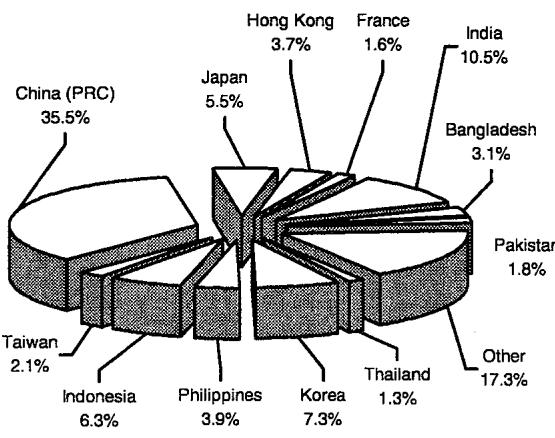 | 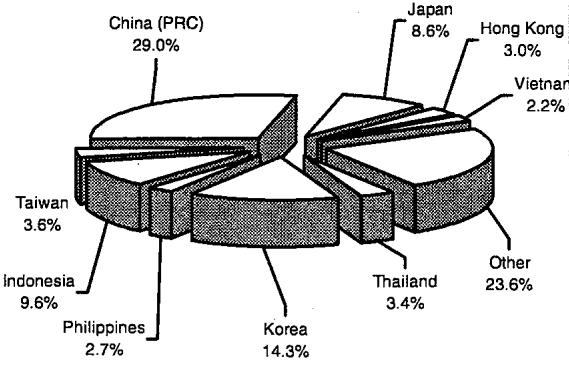 |
Graph 1 Enrolment patterns according to nationality groupings, immigration sample vs UTS 1999 cohort
We can see that candidates from China (PRC) are the single largest grouping in the immigration sample comprising over 35%. This trend is also seen in the total UTS 1999 cohort although the percentage here is lower at 29%. The predominance of this nationality group at the UTS centre has only occurred since 1998 with the Korean group predominating in previous years. Indeed, in the immigration sample the Korean group is only 7.3% as opposed to 14.3% of the total UTS 1999 cohort. Candidates from India, Bangladesh and Pakistan make up a noticeable component of the sample at 10.55%, 3.16% and 1.84% respectively whereas in the total UTS 1999 cohort they only contribute 4.4% when combined. In 1999, candidates from India sitting the test at UTS increased significantly when compared to 1998 - an increase of 180% which was the fastest growing group in terms of enrolments at the UTS centre. The contribution of the Taiwanese, Indonesians, Thais, Japanese and Philippines is also important to note as they are the most significant groups to present for the test - a trend which is also seen in the 1999 UTS group.
3.1.2 Age profile
| Sample population of candidates sitting IELTS at UTS for immigration reasons, 1999. | Total UTS IELTS cohort, 1999. |
|---|---|
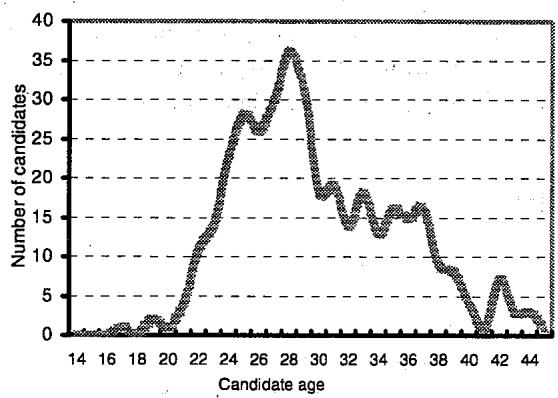 | 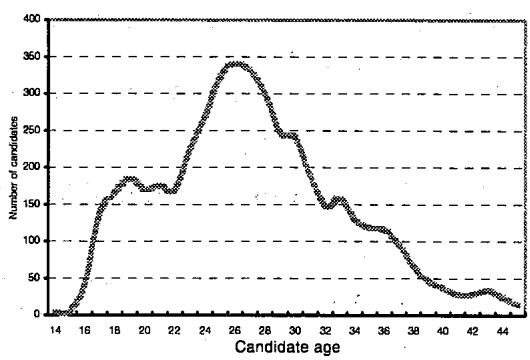 |
Graph 2 Age profile, immigration sample vs UTS 1999 cohort
The mean age for the immigration group was 30.36 with a minimum age of 17 and a maximum of 49. We can see from Graph 2 that there is a peak at age 28 with few candidates between the ages of 14 to 20 sitting the test for immigration reasons. If we compare this age group (14 to 20) to the total UTS 1999 group there is a noticeable difference as significant numbers are present in the total UTS test population because of academic module candidates sitting the test for entry into undergraduate courses. The total UTS 1999 group also differs from the immigration group as the mean age is lower at 26.99. Apart from these two differences, the two groups are reasonably similar in terms of spread of ages and the decreasing numbers in the older age ranges.
If we compare the mean ages between selected nationalities across the two groups we can see that across the board, the mean ages are higher for immigration candidates. This is to be expected given the mean age of the whole immigration group is almost four years higher.
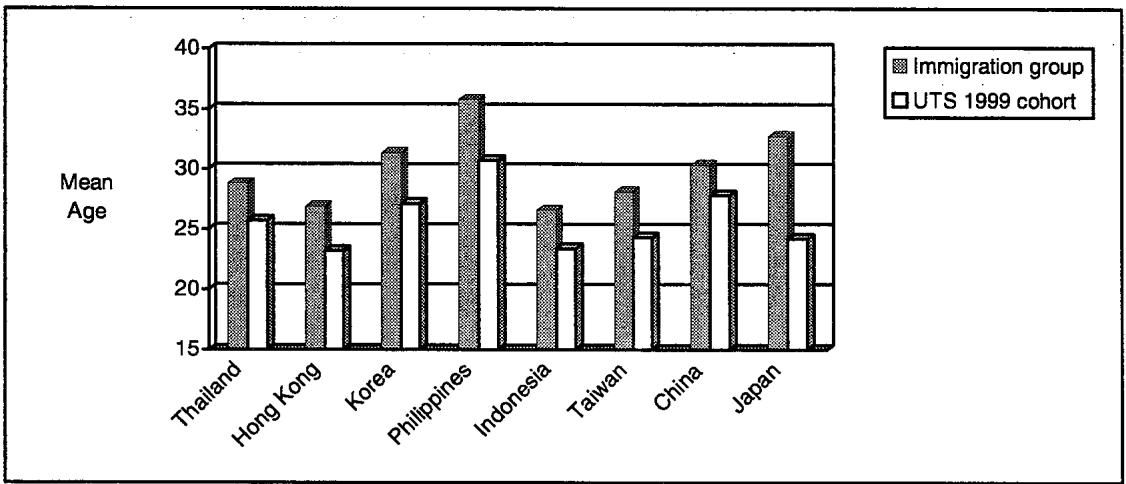
Graph 3 Mean ages across selected nationalities, immigration sample vs UTS 1999 cohort.
3.1.3 Performance profile
The nationality performance profiles created in this report show performance on each test module (Reading, Writing, Listening, Speaking) as well as overall performance, minimum and maximum age of the group and how the group is divided in terms of gender. It is important to note that the mean band scores illustrated should be treated with caution as a variety of factors could be responsible for the differences in the scores between the nationality groups in the immigration sample. Whether a student has pre-departure English language training as opposed to intensive on-arrival training, how many times the candidate has taken the test and the age of the candidate are all important variables which could affect the final result.
3.1.3.1 IELTS candidates from China (PRC)
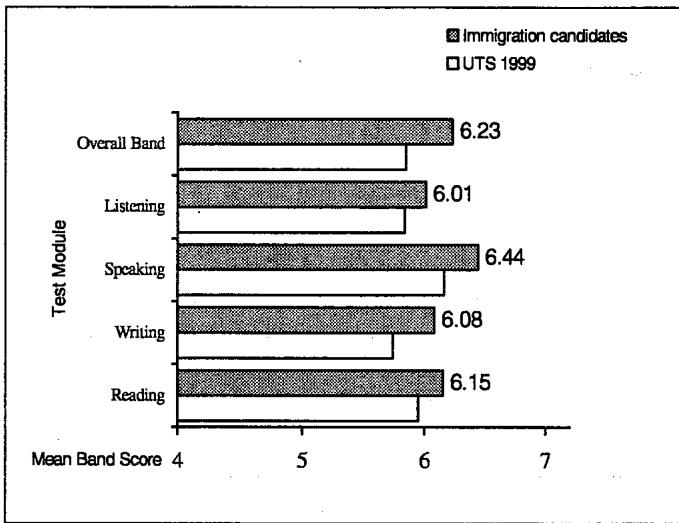
Graph 4 Performance profiles of immigration candidates from China PRC vs UTS 1999 cohort.
Age profile
Mean age = 30.3 (27.8)
Maximum age = 53 (53)
Minimum age = 17 (14)
Gender profile
Male students = 63 % (52%)
Female students = 37% (48%)
Immigration candidates from China (PRC) are achieving quite high mean scores on the IELTS test and it is significant to note that these scores are even higher than those of the UTS 1999 cohort. The performance on the Speaking test is high at 6.44 and remains, along with the Philippines group, one of the highest of the nationalities tested at UTS. The overall profile is still reasonably “flat” and there is a predominance of males presenting for the test when compared to the UTS 1999 cohort where the gender spread is more even.
3.1.3.2 IELTS candidates from Korea
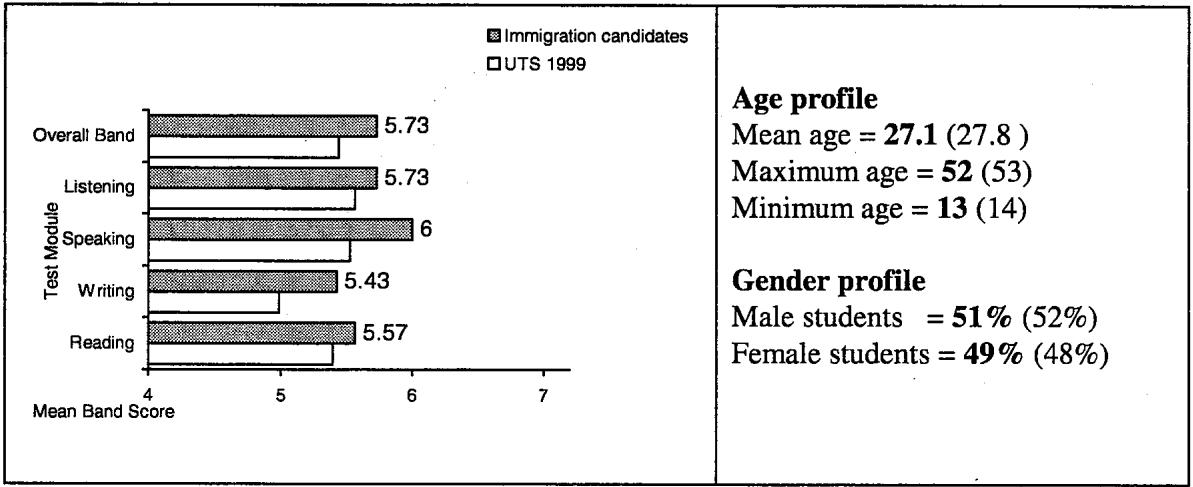
Graph 5 Performance profiles of immigration candidates from Korea vs UTS 1999 cohort.
The composition of this group is similar to the UTS 1999 cohort when comparing mean ages, age range and gender spread. The performance on each module, however, is uniformly higher than for the UTS cohort with Writing being the weakest skill and Speaking the strongest.
3.1.3.3 IELTS candidates from Japan
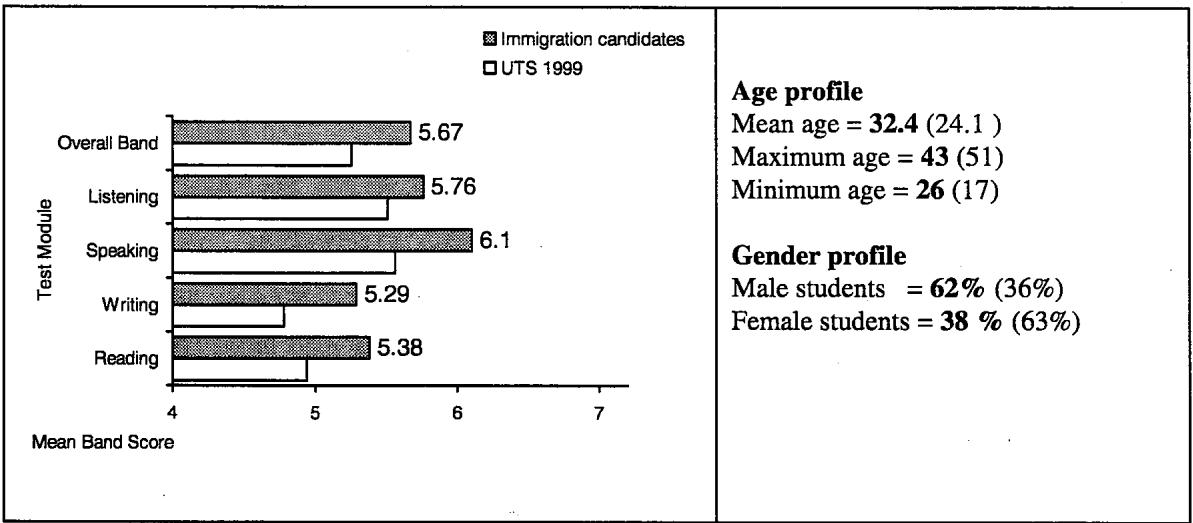
Graph 6 Performance profiles of immigration candidates from Japan vs UTS 1999 cohort.
The strongest module performance for this group was Speaking which is quite high at a mean of 6.1. As in the UTS 1999 cohort, Writing remains the weakest module. At 32.4 the mean age is one of the highest for the immigration group and is noticeably higher than the UTS 1999 cohort. Males predominate for immigration which is in contrast to the UTS group where females are in the majority.
3.1.3.4 IELTS candidates from India
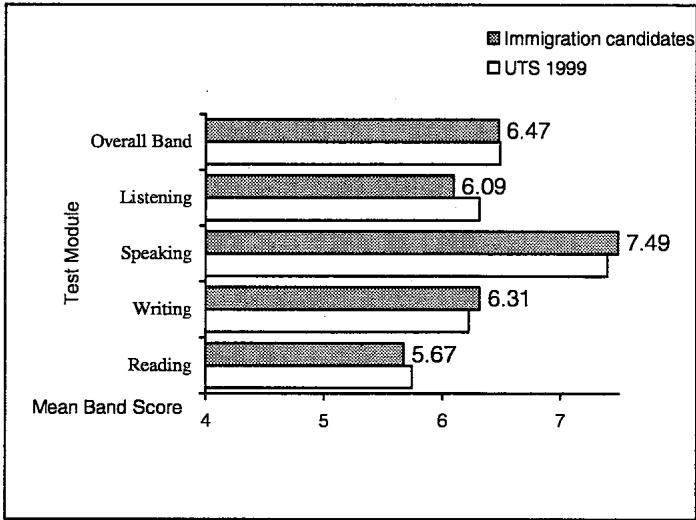
Graph 7 Performance profiles of immigration candidates from India vs UTS 1999 cohort.
Age profile
Mean age = 31.05 (30.8)
Maximum age = 45 (63)
Minimum age = 22 (17)
Gender profile
Male students = 82% (64%)
Female students = 28 % (36%)
With an overall band mean score of 6.47, candidates from India are the highest scoring group in the immigration sample. Performance on the Speaking test is particularly impressive and it is interesting to note that Reading is the weakest skill which is in contrast to many of the other groups where Writing is the weakest. As with the Japanese and China (PRC), males predominate.
3.1.3.5 IELTS candidates from Indonesia
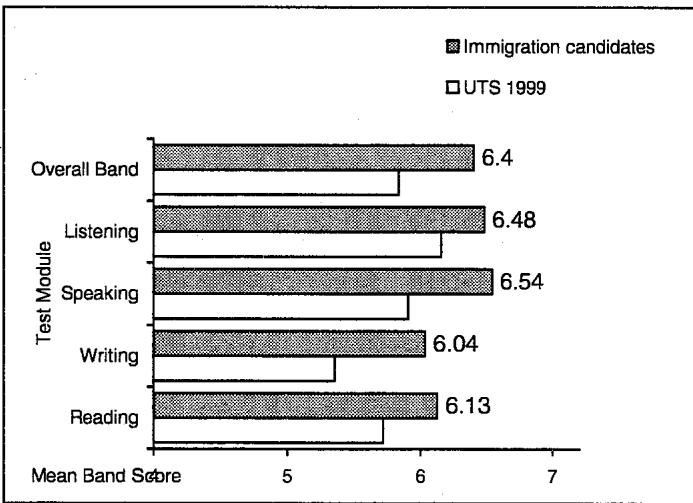
Graph 8 Performance profiles of immigration candidates from Indonesia vs UTS 1999 cohort.
Age profile
Mean age = 26.6 (24.2)
Maximum age = 38 (67)
Minimum age = 22 (12)
Gender profile
Male students = 58% (36%)
Female students = 42 % (64%)
The Indonesian group is second to the India group in overall performance. The overall performance profile is different as it is significantly “flatter” than the Indian group with only a half band difference between the weakest (Writing) and strongest (Speaking) skill. Again we see males predominating, a reverse trend to that of the UTS 1999 group whereas the mean age is very similar in both groups.
3.1.3.6 IELTS candidates from The Philippines
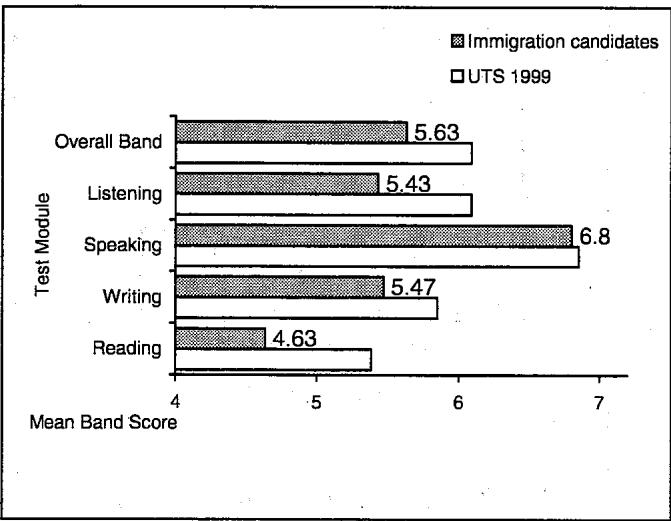
Graph 9 Performance profiles of immigration candidates from Philippines vs UTS 1999 cohort.
Age profile
Mean age = 35.8 (30.7)
Maximum age = 46 (54)
Minimum age = 28 (17)
Gender profile
Male students = 60% (32%)
Female students = 40 % (68%)
Performance of candidates from the Philippines who present for the IELTS test for immigration reasons is weaker across all modules when compared to the UTS 1999 cohort. For all the other groups investigated in this study the trend is the opposite. The majority of candidates from the Philippines who sit the test at UTS sit the academic module. These candidates come to Australia to take up employment as registered nurses and have been recruited by the New South Wales Nurses Registration Board, NSW HEALTH 2. The Board has contacted UTS on a number of occasions to verify whether the IELTS test is an appropriate test to be used for screening English proficiency of prospective employees. Speaking is the strongest skill by far with Writing being the weakest and it is interesting to note there is a difference of over 2 bands between the two. The mean age is quite high at 35.8 and is the highest of the groups investigated
3.2 Survey of User Group 1:
To establish views and attitudes towards the IELTS test
3.2.1 Listening Test
Eight IELTS test centres in Australia and New Zealand participated in distributing the IELTS candidate questionnaire and 188 candidates responded. In the questionnaire the candidates were asked to indicate whether they agreed or disagreed with a proposition. The highest level of agreement was strongly agree and the highest level of disagreement was strongly disagree. Please refer to Appendix 1.1 for the questionnaire instrument used in survey.
| Prompt 1 | Prompt 2 |
|---|---|
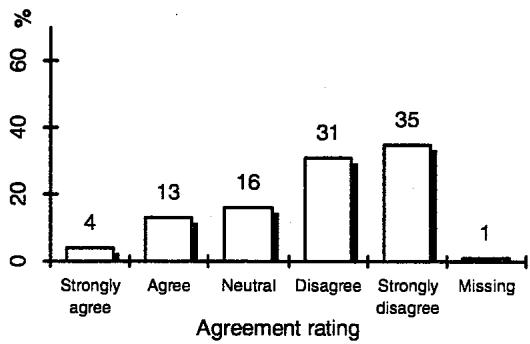
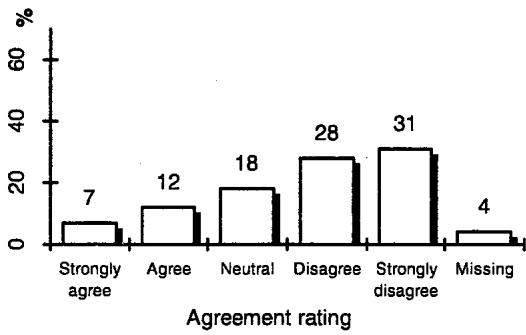
| Q5 There were many words on the tape I didn’t understand. | Q6 There were some questions I didn’t understand. |
 |  |
| Q7 The instructions in the Listening test were easy to understand. | Q13 There were some subjects in the Listening test I didn’t understand. |
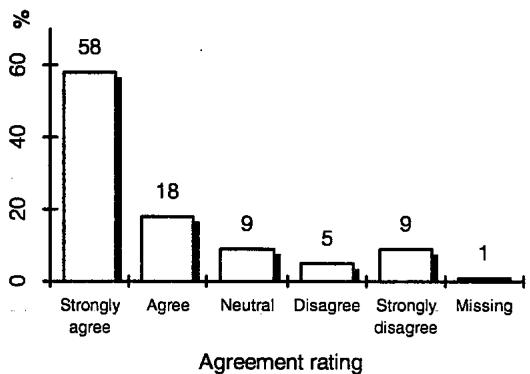 | 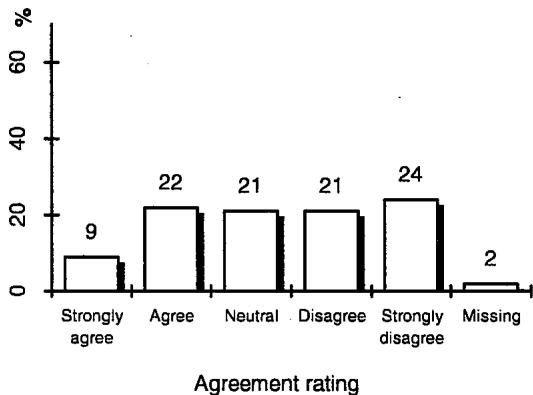 |
Prompts 5, 6, 7 & 13 on the questionnaire dealt with any problems the candidates might encounter with language, subjects, rubrics or instructions in the test. It is apparent that no significant problems occurred with the instructions with 78% stating they found them easy to understand. The ability to deal with the ‘words’ and ‘questions’ in the test is not as high as with the instructions but is nevertheless significant with only 17% stating there were words on the tape they didn’t understand and only 19% stating there were some questions they didn’t understand. The reaction to prompt 13 which asked whether there were ‘subjects’ in the Listening test they didn’t understand is interesting as it shows 31% had difficulty with these subjects - a disapproval rating significantly higher than prompts 5, 6, & 7. This result would suggest some candidates were having difficulty with the subject matter in the Listening although the word ‘subject’ was not specifically defined in the questionnaire.
Prompts 12 & 14 addressed the issue of timing and pacing of the Listening test
| Prompt 1 | Prompt 2 |
|---|---|
| Q12 The speakers on the tape spoke too fast. | Q14 There was enough time to do the Listening test properly. |
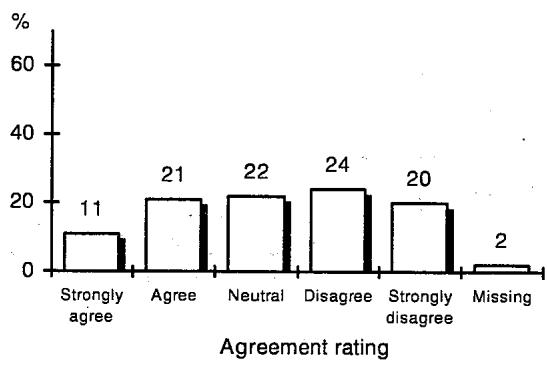 | 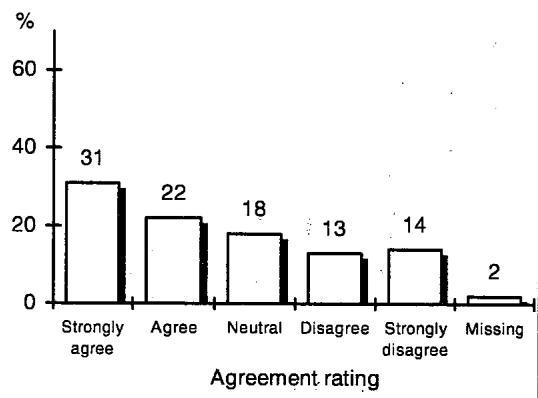 |
The response to prompt 14 which asked whether the candidates had enough time to do the test properly is positive with stating they agreed or strongly agreed and stating they were neutral on the subject. The response to whether the speakers spoke too fast is different as perhaps one might expect. This refers to the candidate’s ability to deal with the pacing of speech involved in the test. said they agreed or strongly agreed with the proposition whereas didn’t agree ie they didn’t think the speakers spoke too fast. Given the different levels of difficulty and language complexity in the four sections of the test, this response could be anticipated as language complexity is often equated with speakers talking too fast for adequate comprehension on the part of the listener. The misgivings some candidates had about the overall timing of the test and speed of delivery of some of the speakers is further evidenced by some of the comments made in the questionnaire:
Too short time given to read the questions first.
The first section is very easy but too slow compared to the rest. You tend to relax and think it is easy but then suddenly the speaker on the tape start to speak very fast. The fourth section is way too fast and some difficult words very difficult to catch.
Sometimes I feel when I write some words down I miss the listening.
Somewhere the speaker speaks too fast.
I found reading the questions time was much less than it required. That makes me to difficult to coordinate between questions and listening.
Prompts 8, 9, 10 & 11 surveyed the candidates’ views of the 4 sections in the Listening test. The structure of the prompt for each section was the same and asked the candidate to agree or disagree with the proposition that the section was easy or not.
Q8 The first section of the Listening was easy.

Q9 The second section of the Listening was easy.
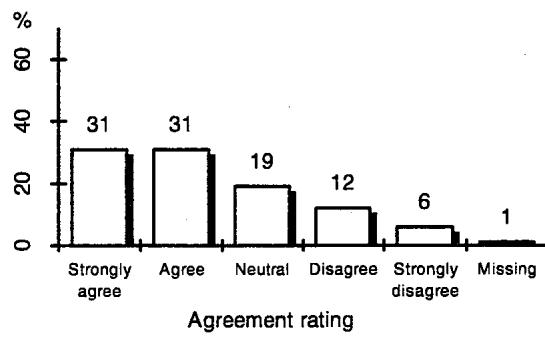
The reaction to section 1 was overwhelmingly positive with 79% stating they considered it easy whereas for section 2 the reaction was a little less favourable with 62% stating they found this section easy.
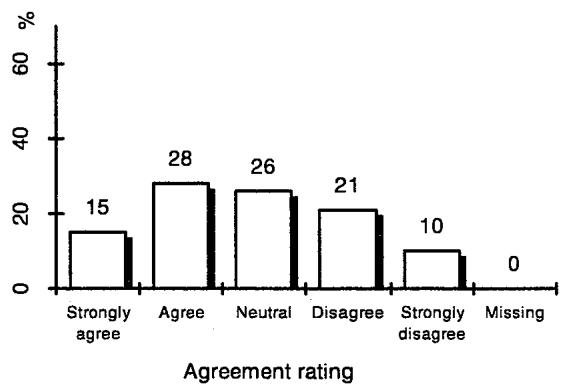
Q10 The third section of the Listening was easy.
Q11 The fourth section of the Listening was easy.
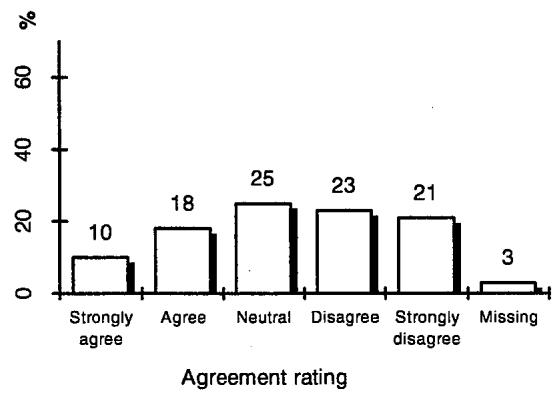
The reactions to section 3 & 4 were markedly different to the previous two sections with only 43% stating they thought section 3 was easy and only 28% stating section 4 was easy. Given the different levels of difficulty of the sections in the Listening test this reaction could perhaps be predicted.
Overall, the reaction to the Listening test in the survey was positive and this is further borne out by some of the comments offered in the completed questionnaires:
This is a very good test, real situations, from easy to difficult distributed fairly, tricks are reasonable, do not ask for examinees too much knowledge about detailed understanding of a particular situation which sometimes could be unfair to a new comer.
Words and sentences easy to catch except for the last section. Overall, not too difficult.
Not very difficult, very nice.
- Impact study of immigration & secondary school IELTS candidates
The test is well designed, but we could have more time between the sections.
I did miss some points, but generally it’s pretty easy just a matter of concentration.
There were, however, some critical comments about the Listening test with issues such as accents used, test appropriacy for immigration candidates and clarity of accents used on the tape:
English accent is hard to understand.
Real British accent sounded out of place in Australia where people are sometimes harder to understand.
Listening test is too hard for me, it is not suitable to candidate for immigration.
It was very basic and doesn’t really serve the purpose of an ENGLISH TEST.
Listening test is terrible. I had no enough time to do listening and writing down simultaneously.
3.2.2 Reading Test
For the Reading test, the candidates were asked for their attitude to the instructions, timing and the three different sections of the test.
| Prompt 1 | Prompt 2 |
|---|---|
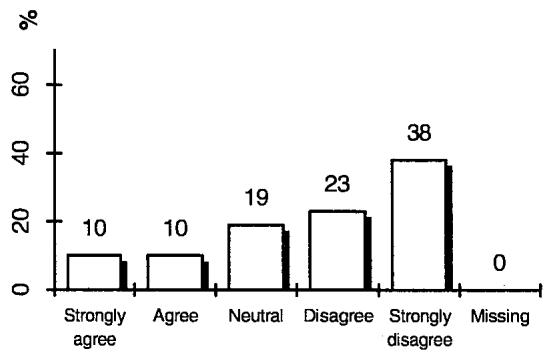
| Q15 There were many words in the Reading test I didn’t understand. | Q16 There were some questions I didn’t understand. |
 Agreement rating | 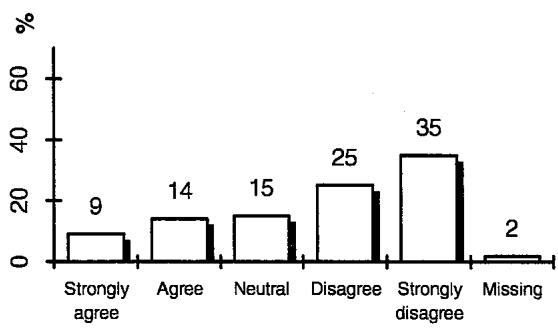 Agreement rating |
Q17 The instructions in the Reading test were easy to understand.
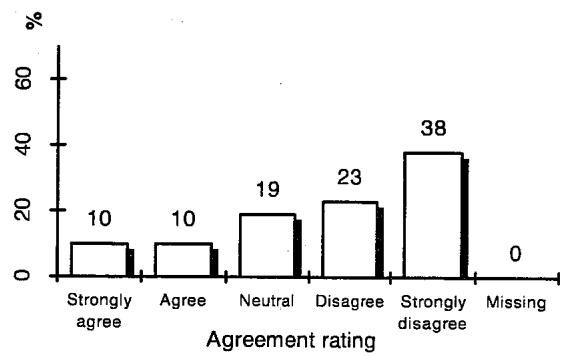
As in the Listening test, the candidates did not appear to have any significant problems with the instructions with 73% agreeing with the proposition. 23% stated there were some questions they did not understand and only 20% said there were many words in the Reading test they didn’t understand. The overall response to the Reading module was then quite positive although there were some comments made about difficulty with lexical items used in the texts.
There are so many complicated vocabs there.
Good, but some words and questions can’t understand properly.
Last section of the Reading test was difficult & couldn’t understand some of the terminalism (sic) or jargon.
Prompt 21 addressed the issue of timing and asked the candidates whether there was enough time to answer the Reading test properly.
Q21 There was enough time to answer the Reading test properly.
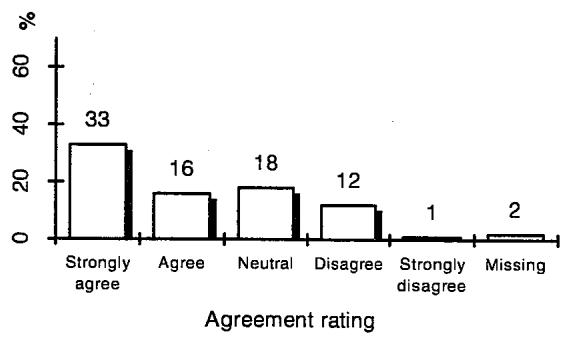
49% of respondents stated they thought there was enough time to complete the Reading test, 13% did not. Many of the comments in the questionnaire related to the issue of timing and it would seem that it is an issue for some of the candidates in this survey.
Some of the comments relating to timing were :
I think they(sic) is not enough time, certainly when you start the last sections, when it gets difficult, you become nervous and it gets difficult to concentrate and that’s how you make mistakes. Fifteen minutes more would have been perfect.
The test time is too short to finish the reading test, I need a half hour more at least.
Not enough time.
There should be an additional minutes for you to review the answers. Pls. extend 10 minutes.
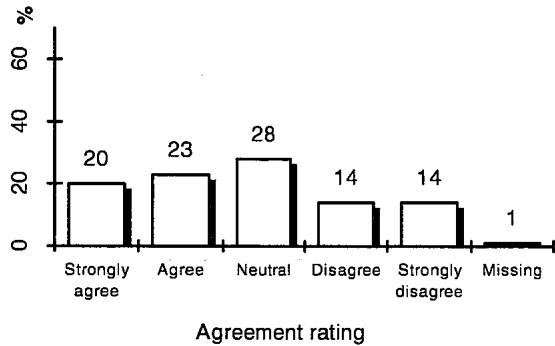
Prompts 18, 19 & 20 related to the candidate’s impressions of the three sections of the Reading test.
| Prompt 1 | Prompt 2 |
|---|---|
| Q18 The first section of the Reading was easy. | Q19 The second section of the Reading was easy. |
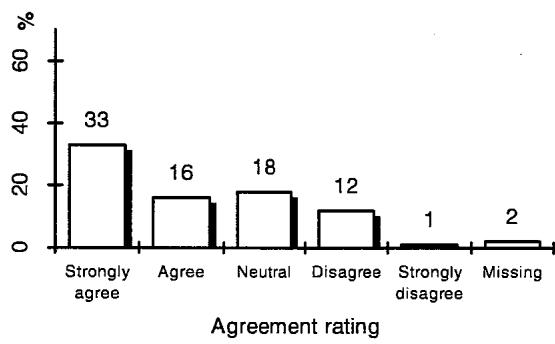 | 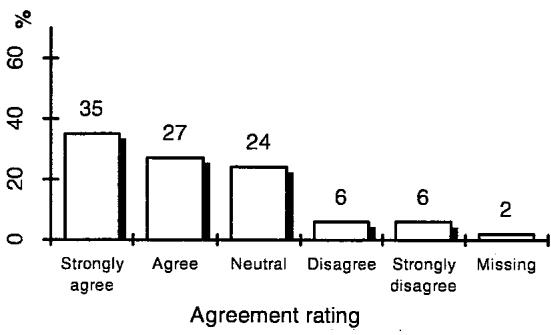 |
| Q20 The third section of the Reading was easy. | The response to perceived “easiness” of section 1 was very positive with 66% stating they thought it was easy and 62% stating section 2 was easy. Section 3, however, did not elicit such a positive response with only 43% declaring they agreed/strongly agreed with the proposition it was easy. It is also significant that for section 3, 28% said they were “neutral” to the proposition. |
 | The response to perceived “easiness” of section 1 was very positive with 66% stating they thought it was easy and 62% stating section 2 was easy. Section 3, however, did not elicit such a positive response with only 43% declaring they agreed/strongly agreed with the proposition it was easy. It is also significant that for section 3, 28% said they were “neutral” to the proposition. |
The most interesting responses to the different sections of the Reading test were in the comments made. One feature of the test which comes in for some criticism was the use of True/False/Not Given item type in the Reading module. Some of the comments made were:
There are too many true or false questions which are sometimes confusing. Question difficult to answer. That is to say two answers can be correct.
True-or false-not-given questions are confusing. some questions can be inferred but it can be classified as “not given” or “true”.
I think that TRUE, FALSE or NOT GIVEN question is not good. FALSE and NOT GIVEN are similar and confusing.
It is difficult to distinct (sic) No and Not Given in the question No, Yes, Not Given.
Most of the disputes comes from “true/false/not given”, sometimes this is examining the logic method of thinking.
Although there were criticisms of item type and timing used for the Reading test, there were some positive comments made by the candidates in the survey:
Generally speaking, it is a good and efficient test.
Reasonable and acceptable.
It is better to put a reading passage and questions about it on the same pages.
Sometime I can understand very well about passage, but I can’t choose the answer because it is confused. I prefer to TOEFL which I took before.
3.2.3 Writing Test
For the Writing test, the candidates were asked for their impression of Writing task 1 and Writing task 2.
Writing Task 1
Q22 The task 1 question was easy to understand.
Agreement rating
Q25 I had enough time to answer the question properly.
Agreement rating
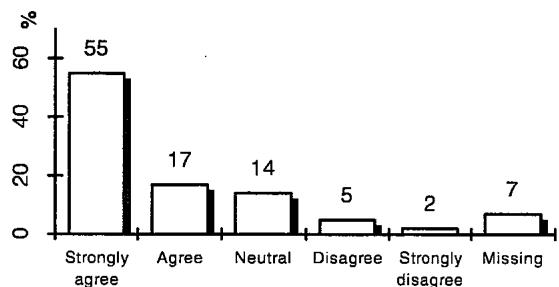
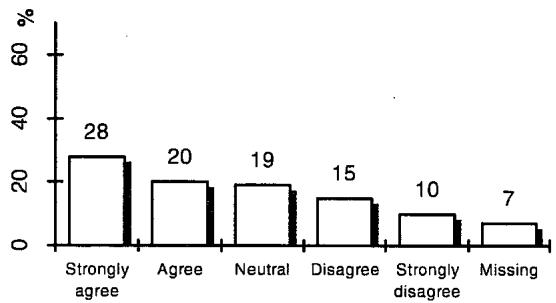
The response to ease of task 1 was very positive with 72% of candidates agreeing with the proposition. The issue of timing for task 1 was less clear cut with 25% stating they did not have enough time to complete the task. The importance of timing was stressed in some of the comments made on the questionnaire:
1 hour was too short to finish both tasks.
Time allocation is very important in this section. I will rate this section as fair level of difficulty.
The time for the task 1 is used more than 20 minutes generally if you want to perfectly show what the graph shows.
Prompts 23 & 24 probed the issue of difficulty for the candidate because of the subject dealt with or the lack of vocabulary required to complete the task.
Q23 It was difficult to write an answer because I did not know the subject.
Q24 It was difficult to write an answer because I did not have the English words.
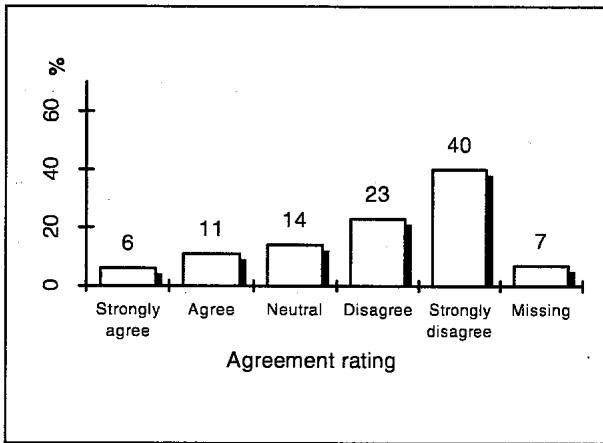
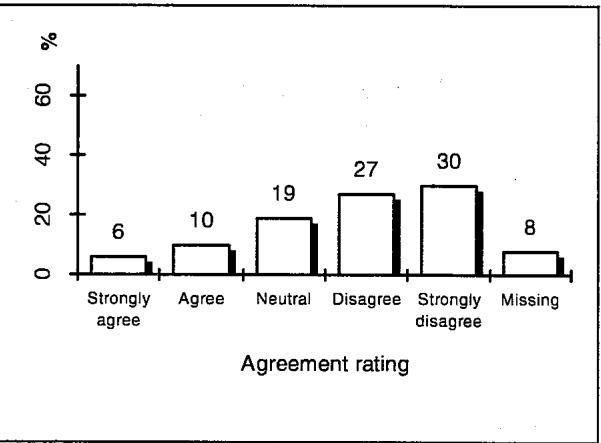
The issue of task 1 subject being a problem in the test is reasonably strongly refuted with 63% disagreeing with the proposition that it was difficult to write because of the subject matter. The issue of having the necessary vocabulary range to complete task 1 is not as clear with 16% saying this was an issue for them.
Writing Task 2
| Prompt 1 | Prompt 2 |
|---|---|
| Q26 The task 2 question was easy to understand. | Q29 1 hour was long enough to answer both questions (task 1 and task 2). |
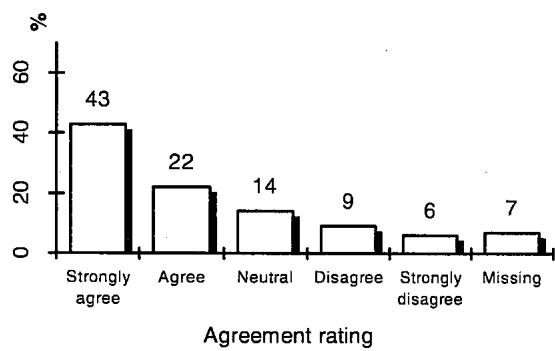 | 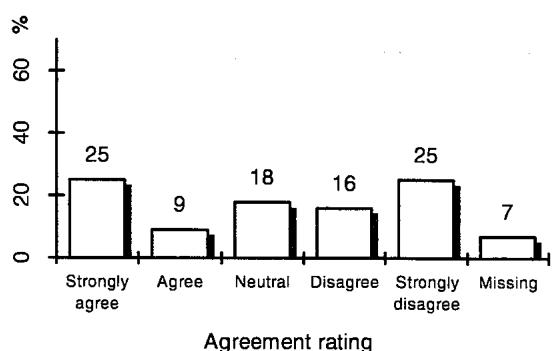 |
The response to ease of task 2 was similar to the attitude to ease of task 1 although 65% of candidates agreed with the proposition as opposed to 72% for task 1. Length of time allowed for both task 1 and task 2 appeared to be an issue for some candidates with 41% stating they did not think 1 hour was long enough for both tasks - this would had further strength to the responses to prompt 25 which elicited a response of 25% expressing dissatisfaction with the time allocated for task 1.
Some of the comments related to task 2 confirmed the problems some candidates were having with only being allowed one hour for the writing test:
To write a really good letter or essay with substantial arguments for and against a certain issue, it is necessary to have more time. Within 1 hour, I mostly focused on structure and to achieve the required words in each task rather than on the contents.
To finish task 2 on time is not difficult at all. The only problem is that such a short time is pretty hard to arrange your ideas properly. That is, it is hard to write a very good article for this topic in such a short time.
There is time pressure from the start to the end.
Prompts 27 & 28 addressed the issue of difficulty for the candidate because of the subject dealt with or the lack of vocabulary required to complete task 2.
| Prompt 1 | Prompt 2 |
|---|---|
| Q27 It was difficult to write an answer because I did not know the subject. | Q28 It was difficult to write an answer because I did not have the English words. |
 Agreement rating | 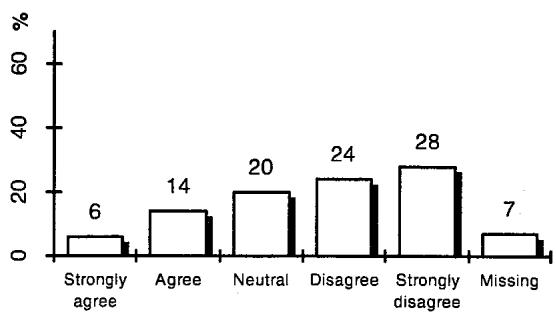 Agreement rating |
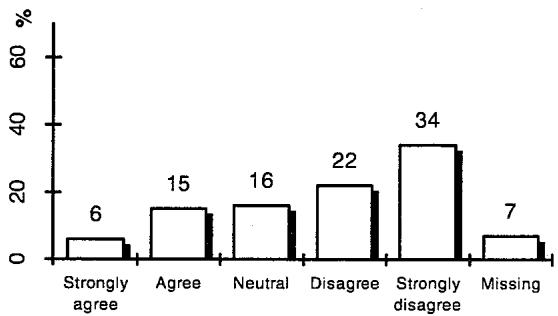
The issue of task 2 subject being a problem in the test is apparent with 21% agreeing with the proposition that it was difficult to write an answer because of the subject. The issue of subject occurred a number of times in comments written on the questionnaire:
It was difficult to write task 2 because I did not have an opinion.
The task 2 is very difficult because I haven’t enough material to write about it.
Task 2 is quite hard. The situation is not familiar to me, hard to think of something to write.
Writing test task 2 is more difficult for me to finish in 40 minutes.
3.2.4 Speaking Test
The first two prompts on the Speaking 3 test asked the candidates whether they found it difficult to understand the interviewer and whether the interview made them nervous.
1. Impact study of immigration & secondary school IELTS candidates
| Prompt 1 | Prompt 2 |
|---|---|
| Q30 It was sometimes difficult to understand the examiner during the interview. | Q31 The interview made me nervous. |
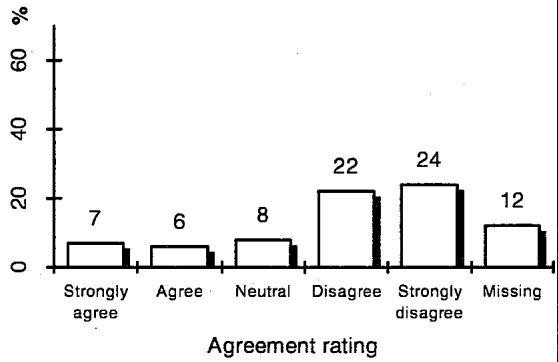 | 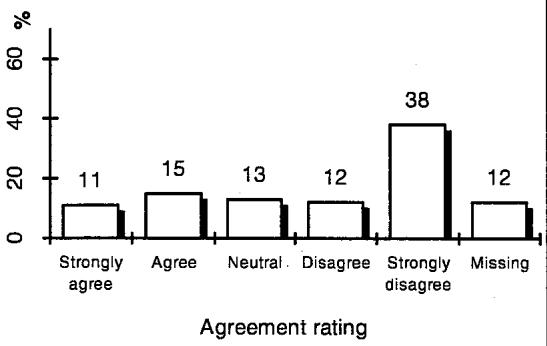 |
Most candidates did not have any significant difficulties with the Speaking test with only 13% having difficulty with understanding the examiner and 26% stating that the interview made them nervous. The comments on the Speaking test in relation to the interaction between the candidate and the examiner were mainly positive:
I have no comments on the speaking test. I was nervous but the teacher made me feel relax.
Examiner is very friendly and I don’t feel nervous.
The interviewer made me relax. He explained the instruction clearly.
Prompts 32 & 33 investigated the candidates’ opinion of different phases in the interview with particular reference to phase 3 where he/she is required to obtain information from the examiner and phase 54 where speculation about the future is asked for.
| Prompt 1 | Prompt 2 |
|---|---|
| Q32 The section of the interview when I had to ask questions was easy. | Q33 The section of the interview at the end when I had to talk about myself was easy. |
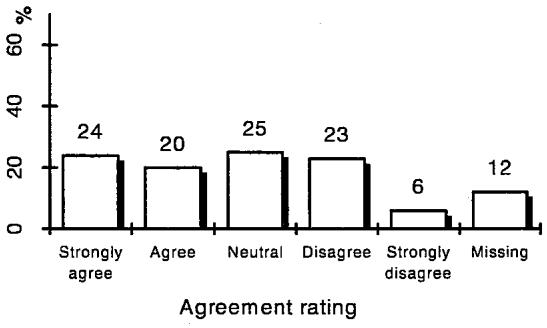 | 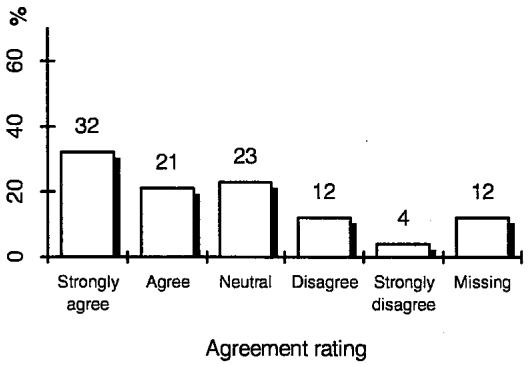 |
The response to prompt 32 was interesting as we can see some candidates had difficulty with phase 3 of the interview - 29% disagreed with the notion that it was easy and this is noted in some of the comments on the questionnaire. It is informative to compare this response to prompt 33 which investigated the candidates’ attitude to the latter part of the interview where he/she is invited to speculate about the future as only 16% of the candidates stated they thought this section was not easy. It was interesting to note, however, that some candidates expressed misgivings about being asked about the future:
I don’t think it is very proper to ask personal questions, such as my future.
Roll-play section is hard to imagine question for a short time.
The final prompt in the questionnaire asked the question whether the interview was too short to show English level.
| Figure | Summary |
|---|---|
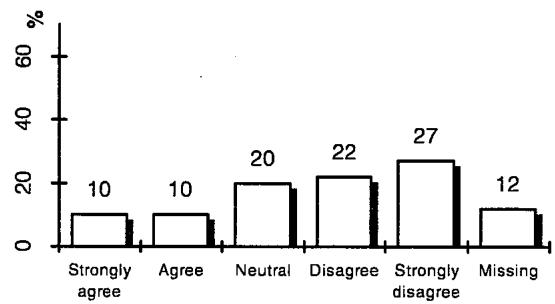 Agreement rating | We can see from this prompt that only 20% of candidates surveyed thought the interview was too short. 12% of the candidates did not respond to this question which is also interesting although it has to be noted that this was the same for the other questions associated with the Speaking test and may indicate that some candidates did not respond to this section of the questionnaire. |
The final section of the questionnaire was open ended and invited the candidates to comment on anything they liked or disliked about the questionnaire.
The question “Is there anything you like about the IELTS?” produced the following comments:
Like or dislike? It’s hard to say. But I would say it is better than TOEFL.
Yes. It test your real ability of English Language.
It is not difficult and it is arranged very well. The staff member are very friendly and helpful.
Practical. Fair in terms of not asking for very deep understanding of some local or area customs, etc.
It’s very practical compared with Japanese English test.
I believe the speaking test is the best way to see if somebody can express himself can understand English.
I like the interview test, free talking is quite comfortable.
It is very good test for me to understand my English ability.
the writing section is good because you can give your own opinion about the theme, if you agree or disagree.
- Impact study of immigration & secondary school IELTS candidates
The question “Is there anything you dislike about the IELTS?” produced the following comments:
Some of the questions seemed to judge my I.Q. rather than my English ability. The test was a bit tricky.
Yes, the topic is unfamiliar and sometimes makes me nervous.
Writing the essays. Sometimes that is not indicate our ability to write in English. Some people may can not write well because they do not know the subject (what to write) not because they cannot writing in English.
The Listening module is too long, I mean each section should use the multiple choose.
Too expensive. Time is not enough!
The final question was “Do you have any general comments to make about the IELTS test?” and some of the following comments were made:
I think IELTS exam is difficult for general I wonder general is made more easy. but academic is suitable.
Just give us some more time.
IELTS should be separated by age and level of English, so on the Writing task would be easier for young people to talk about another thinks instead of general interests, which just mature people liked and know how to talk about it.
Good. More efficient than TOEFL. It focuses on the practical skills.
Try to get the speaking section more controllable. I mean get more standardised ways to ask questions and the scope the question refers.
It’s practical and helpful for daily life. After preparing IELTS you do feel the improvement of English.
Test seems appropriate for migration purposes.
Not enough materials to prepare for the exam. Only one sample paper is not enough.
Fair!!
4.0 Research Findings For User Group 2 Candidates who present for IELTS for secondary education purposes
Forty-one Japanese secondary school students arrived in Sydney, Australia in February 1999 to spend Year 11 in an Australian high school. They sat the IELTS test on 27 February, 1999 which was a week after they had arrived from Japan and sat the test again on 27 November 1999 which was two weeks before they were due to return. The students sat the General Training module both times and sat different versions of each module in each test. The module versions used were:
| Listening version | Reading version | Writing version | |
|---|---|---|---|
| Test A | 14 | 9 | 29 |
| Test B | 16 | 11 | 36 |
4.1 Performance in Listening Test A and Test B
Listening Band Score
| Student | Test A | Test B |
|---|---|---|
| Student 1 | 4 | 4.5 |
| Student 2 | 3 | 4 |
| Student 3 | 3 | 3 |
| Student 4 | 4 | 4.5 |
| Student 5 | 3 | 4 |
| Student 6 | 4 | 6 |
| Student 7 | 5 | 6 |
| Student 8 | 4 | 4.5 |
| Student 9 | 4.5 | 6 |
| Student 10 | 4 | 4.5 |
| Student 11 | 5 | 6 |
| Student 12 | 3 | 4.5 |
| Student 13 | 4.5 | 4.5 |
| Student 14 | 4 | 5 |
| Student 15 | 3 | 4 |
| Student 16 | 4.5 | 6 |
| Student 17 | 3.5 | 4.5 |
| Student 18 | 2 | 4.5 |
| Student 19 | 4 | 5.5 |
| Student 20 | 4.5 | 5.5 |
| Student 21 | 3.5 | 4 |
| Student 22 | 4.5 | 6 |
| Student 23 | 3.5 | 6 |
| Student 24 | 4 | 5.5 |
| Student 25 | 4 | 5.5 |
Listening Band Score
| Student | Test A | Test B |
|---|---|---|
| Student 26 | 3.5 | 6 |
| Student 27 | 4.5 | 6 |
| Student 28 | 3 | 6.5 |
| Student 29 | 3.5 | 6 |
| Student 30 | 2 | 4.5 |
| Student 31 | 3.5 | 6 |
| Student 32 | 3 | 4.5 |
| Student 33 | 3 | 6 |
| Student 34 | 3 | 4 |
| Student 35 | 5 | 6 |
| Student 36 | 4 | 5 |
| Student 37 | 4 | 6 |
| Student 38 | 3.5 | 5 |
| Student 39 | 5.5 | 6.5 |
| Student 40 | 2 | 3 |
| Student 41 | 4 | 5.5 |
| Student 42 | 3 | 4.5 |
| Student 43 | 3.5 | 5 |
| Student 44 | 5.5 | 5 |
| Student 45 | 6.5 | 6 |
| Student 46 | 4 | 5.5 |
| Student 47 | 3 | 5.5 |
| Student 48 | 4 | 4 |
| Student 49 | 1 | 4.5 |
| Student 50 | 4.5 | 5 |
| Statistic | Value |
|---|---|
| Mean improvement in Listening Band Score from Test A to Test B | 1.35 |
| Maximum improvement in Listening Band from Test A to Test B | 3.5 |
| Minimum improvement in Listening Band from Test A to Test B | -0.5 |
Table 1 Comparison of candidate performance on 2 Listening tests taken 9 months apart (User Group 2)
From the table above we can see that the mean improvement in performance on the Listening test was 1.35 bands with two students achieving a lower score than on Test A (students 44 and 45) and one student achieving an improvement of 3.5 bands which is quite impressive (student 28). Comparing the overall improvements in the Listening Band Score to the other band improvements, Listening ranks as the third highest improvement after Writing and Speaking.
4.2 Attitudes towards the Listening test
All candidates in the secondary school age user group were surveyed at the end of Test B to establish their views on the IELTS test. In the questionnaire the candidates were asked to indicate whether they agreed or disagreed with the proposition. The highest level of agreement was strongly agree and the highest level of disagreement was strongly disagree. Please refer to Appendix 1.1 for questionnaire instrument used in survey.
| Prompt 1 | Prompt 2 |
|---|---|
| Q5 There were many words on the tape I didn’t understand. | Q6 There were some questions I didn’t understand. |
 |  |
| Q7 The instructions in the listening test were easy to understand. | Q13 There were some subjects in the listening test I didn’t understand. |
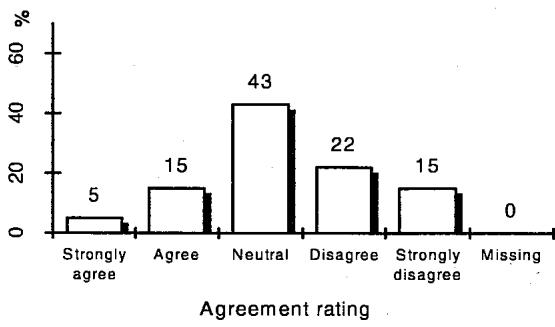 | 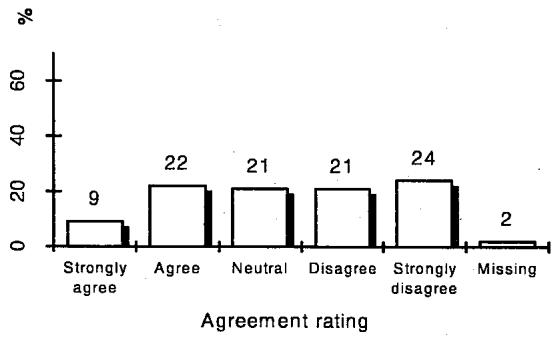 |
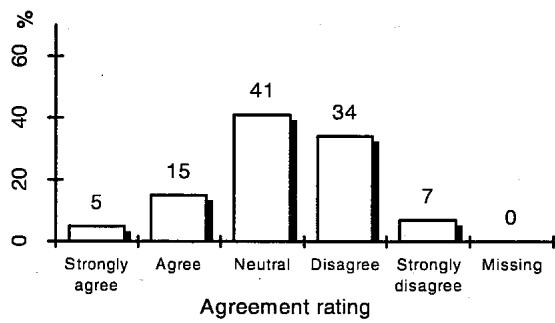
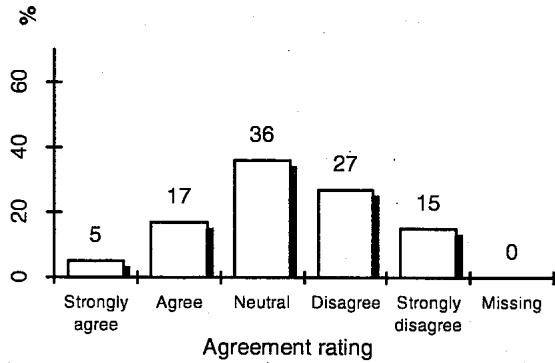
Prompts 5, 6, 7 & 13 on the questionnaire dealt with any problems the candidates might encounter with language used, subjects, rubrics or instructions in the test. It would appear that some of the candidates had problems with the instructions in the test as only 20% stated they found them easy to understand as opposed to the immigration user group where 78% found them easy. The ability to deal with the ‘words’ and ‘questions’ in the test is also interesting as only 18% agreed with the proposition there were words on the tape they didn’t understand whereas 23% said there were some questions they didn’t understand. The reaction to prompt 13 which asked whether there were ‘subjects’ in the listening test they didn’t understand shows that 20% had difficulty with these subjects - a disapproval rating which was lower than for the immigration group. For prompts 5, 6, 7 & 13 the incidence of candidates marking a ‘neutral’ response to the proposition is as high as 41% which might suggest the candidates are not be willing to give frank views on the test.
Prompts 12 & 14 addressed the issue of timing and pacing of the listening test
| Prompt 1 | Prompt 2 |
|---|---|
| Q12 The speakers on the tape spoke too fast. | Q14 There was enough time to do the Listening test properly. |
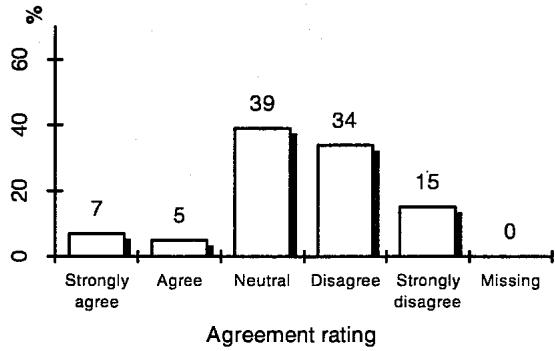 | 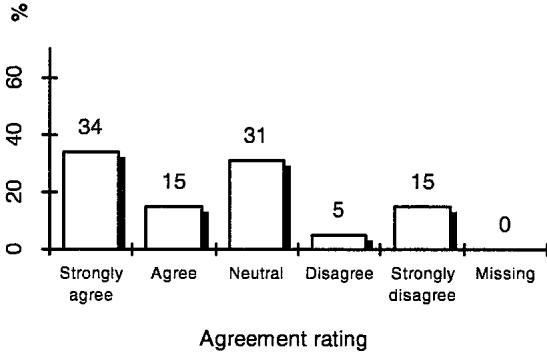 |
The response to prompt 12 is of note as only stated they thought the speakers on the tape spoke too fast which is quite low. said they had enough time to do the test properly with stating they didn’t. Generally speaking, the candidates did not seem to have any serious misgivings about the overall timing of the test and speed of delivery although comments were made which indicated some were having difficulty with the instructions at the beginning:
I couldn’t understand that how to answer the question at first so I was waiting for the next question but it was already gone so I missed some questions and I think I could answer them.
Sometimes I don’t understand, when did say the answers. That’s mean I lose the question/answer.
Prompts 8, 9, 10 & 11 surveyed the candidates’ views of the 4 sections in the Listening test. The structure of the prompt for each section was the same and asked the candidate to indicate how easy they found each Listening section.
| Prompt 1 | Prompt 2 |
|---|---|
| Q8 The first section of the Listening was easy. | Q9 The second section of the Listening was easy. |
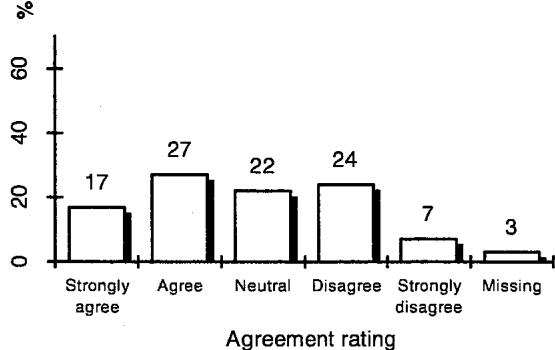 | 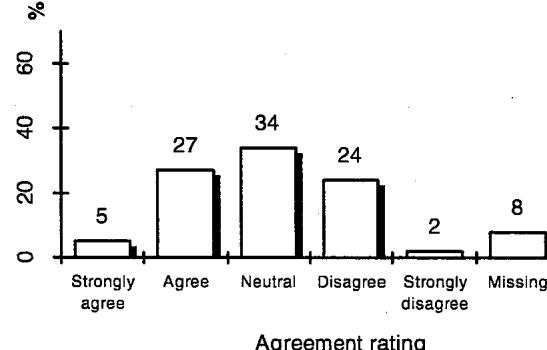 |
The reaction to section 1 was reasonably positive with 44% saying they considered it easy and 31% expressing some difficulty. For section 2 the reaction was even less favourable with 32% stating they found this section easy and 26% expressing some difficulty.
1. Impact study of immigration & secondary school IELTS candidates
| Prompt 1 | Prompt 2 |
|---|---|
| Q10 The third section of the Listening was easy. | Q11 The fourth section of the Listening was easy. |
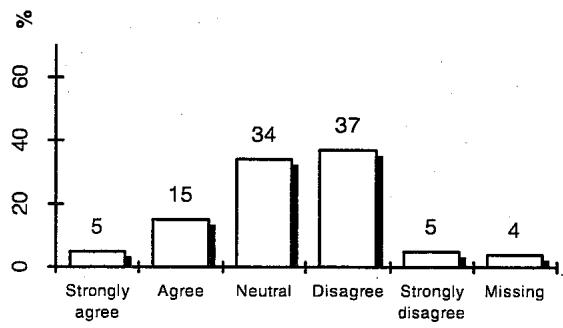 Agreement rating | 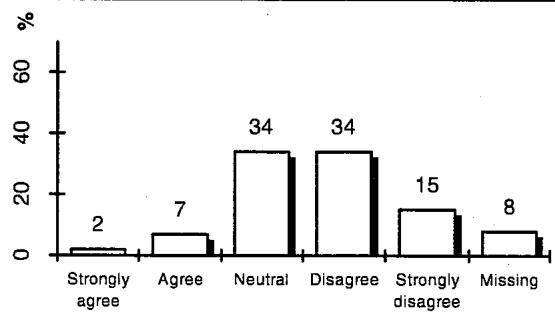 Agreement rating |
The response to prompts 10 and 11 is even stronger than to 8 & 9 with only 20% stating they thought section 3 was easy and a mere 9% stating section 4 was easy. It would seem from these figures that the candidates had quite a lot of difficulty with section 4 and slightly less difficulty with section 3. It would be interesting to probe this issue further as the survey results would tend to indicate a distinct difference in attitude towards the different sections and it would be interesting to investigate whether there are significant performance differences between the sections. Difficulties with sections 3 & 4 are also borne out in some of the comments made on the questionnaire:
The third section was difficult because what the radio speaker say is different from the answer we have to write.
I almost didn’t understand
There were no critical comments about the Listening test with issues such as accents used and test appropriacy for secondary school age and most of the comments were positive:
I think it was a bit easy to understand.
I prepared for Listening test in advance, so I didn’t panic.
This was my second time and I thought both of them were really good in testing my listening skills.
4.3 Performance in Reading Test A and Test B
Reading Band Score
| Student | Test A | Test B |
|---|---|---|
| Student 1 | 3 | 3 |
| Student 2 | 2 | 3 |
| Student 3 | 3 | 3 |
| Student 4 | 2 | 4 |
| Student 5 | 3 | 4 |
| Student 6 | 3.5 | 4 |
| Student 7 | 3.5 | 5 |
| Student 8 | 2 | 4.5 |
| Student 9 | 4 | 6 |
| Student 10 | 3 | 3.5 |
| Student 11 | 4 | 5 |
| Student 12 | 2 | 3 |
| Student 13 | 3.5 | 3.5 |
| Student 14 | 3 | 3.5 |
| Student 15 | 2 | 4 |
| Student 16 | 3.5 | 4.5 |
| Student 17 | 3 | 4.5 |
| Student 18 | 2 | 3 |
| Student 19 | 3.5 | 3.5 |
| Student 20 | 3.5 | 4 |
| Student 21 | 3 | 3 |
| Student 22 | 3 | 4 |
| Student 23 | 4 | 5 |
| Student 24 | 3.5 | 4.5 |
| Student 25 | 4 | 4.5 |
Reading Band Score
| Student | Test A | Test B |
|---|---|---|
| Student 26 | 3 | 5 |
| Student 27 | 3 | 4 |
| Student 28 | 3 | 4.5 |
| Student 29 | 3 | 5 |
| Student 30 | 3.5 | 3.5 |
| Student 31 | 2 | 4.5 |
| Student 32 | 3 | 3 |
| Student 33 | 3 | 5 |
| Student 34 | 3.5 | 3 |
| Student 35 | 3.5 | 4.5 |
| Student 36 | 2 | 4 |
| Student 37 | 3.5 | 5 |
| Student 38 | 3 | 5.5 |
| Student 39 | 4.5 | 4.5 |
| Student 40 | 2 | 2 |
| Student 41 | 3 | 4.5 |
| Student 42 | 3 | 4.5 |
| Student 43 | 3 | 5 |
| Student 44 | 4.5 | 6 |
| Student 45 | 5 | 6.5 |
| Student 46 | 3.5 | 5 |
| Student 47 | 2 | 4 |
| Student 48 | 2 | 4.5 |
| Student 49 | 2 | 3.5 |
| Student 50 | 3.5 | 3.5 |
| Statistic | Value |
|---|---|
| Mean improvement in Reading Band Score from Test A to Test B | 1.12 |
| Maximum improvement in Reading Band from Test A to Test B | 2.5 |
| Minimum improvement in Reading Band from Test A to Test B | -0.5 |
Table 2 Comparison of candidate performance on 2 Reading tests taken 9 months apart (User Group 2)
With performance in the Reading module we can see that the mean improvement was 1.12 bands which was the lowest mean improvement across the four IELTS test modules. One student achieved a lower score than on Test A (student 34) whereas 10 students did not appear to achieve any improvement in Reading between Test A and Test B which is surprising as they had been studying for 10 months in an Australian high school by the time they sat Test B. 5 of the students recorded 0.5 band improvement in performance, 12 a 1 band improvement in performance and 10 a 1.5 band improvement. It would be interesting to investigate how the candidates performed on sections 1, 2 & 3 of the Reading test to see whether the low overall band improvement in Reading performance can be attributed to any
- Impact study of immigration & secondary school IELTS candidates
particular Reading section. As different Reading versions were used in the two tests, this is problematic and beyond the scope of this project as the items in each version have differing levels of difficulty and discrimination and cannot be directly compared. It is interesting, however, to look at the students’ views of the Reading test and see whether their perception of the Reading module matches the difficulties some of them were encountering with it.
4.4 Attitudes towards the Reading test
For the Reading test, the candidates were asked for their attitude to the instructions, timing and the three different sections of the test.
| Prompt 1 | Prompt 2 |
|---|---|
| Q15 There were many words in the reading test I didn’t understand. | Q16 There were some questions I didn’t understand. |
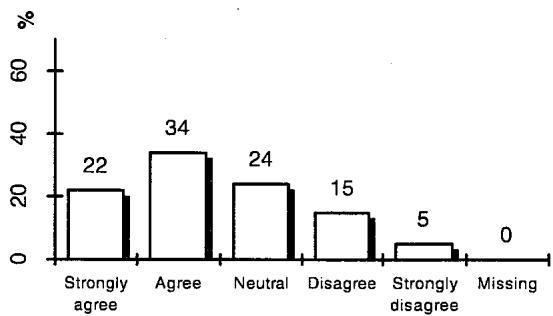 Agreement rating | 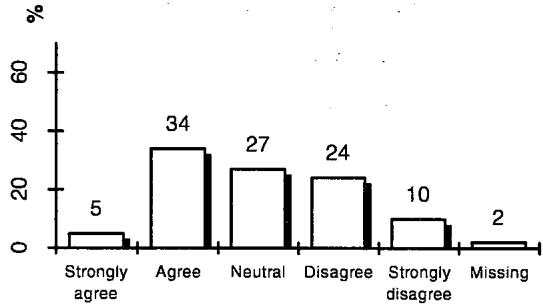 Agreement rating |
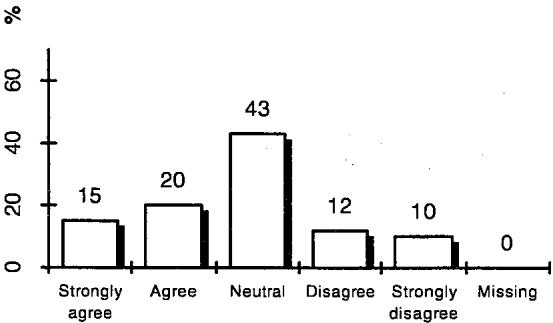
Q17 The instructions in the Reading test were easy to understand.
Agreement rating
In the Reading module, some candidates seem to be having difficulty with the instructions as only 35% stated the instructions were easy, 32% said they were not and 43% were non committal. In prompt 15 we can see that 56% said there were many words in the Reading test they didn’t understand and in prompt 16, 39% said there were some questions they didn’t understand.
The response to these three prompts would tend to confirm the suspicions raised earlier about the candidates finding the Reading module difficult. The issue of difficulties with the vocabulary and questions used in the texts are raised in some of the comments made in the questionnaire:
I can’t understand some question at all. please more easy questions.
I was nervous when I saw the Question papers because there were many words there so they made me feel nervous.
It was a bit hard to me, because I don’t understand some words.
Prompt 21 addressed the issue of timing and asked the candidates whether there was enough time to answer the Reading test properly.
Q21 There was enough time to answer the Reading test properly.
| Figure | Summary |
|---|---|
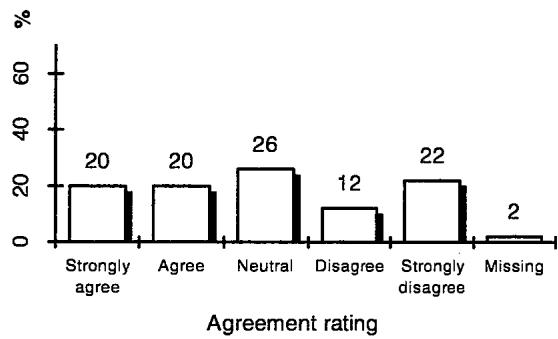 | 40% stated they thought there was enough time to complete the Reading test whereas 33% did not agree that the time was sufficient. The response to this prompt would suggest that timing is a significant issue for at least 1/3 of the candidates. We can also see this in one comment made in the questionnaire: |
There were many questions but not enough time.
Prompts 18, 19 & 20 related to the candidate’s impressions of the three sections of the Reading test.
| Prompt 1 | Prompt 2 |
|---|---|
| Q18 The first section of the Reading was easy. | Q19 The second section of the Reading was easy. |
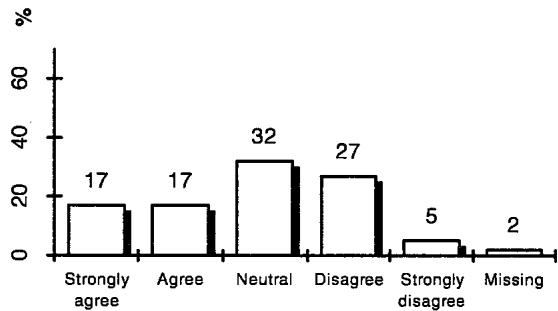 Agreement rating | 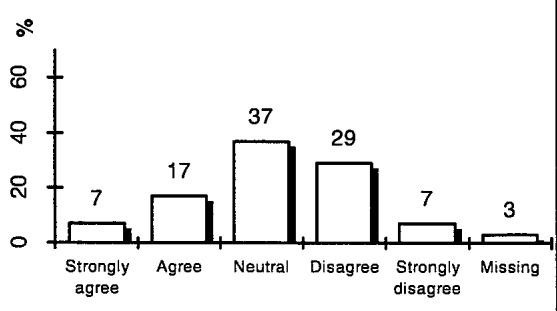 Agreement rating |
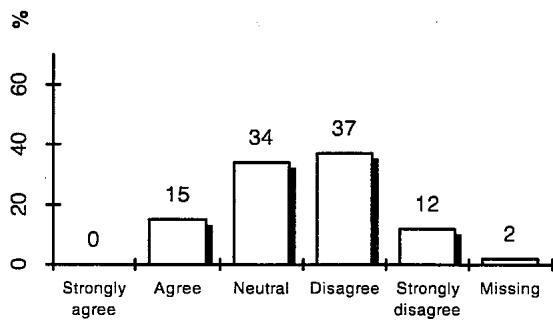
Q20 The third section of the Reading was easy.
Agreement rating
The response to section 1 was the most positive of the three sections with 34% stating they thought it was easy. Section 2 did not fare as well with only 24% stating they thought it was easy and 36% expressing difficulty. The response to prompt 20 which enquired about section 3 is the most illustrative as only 15% thought it was easy with 49% indicating difficulty and 34% indicating a neutral response.
It is apparent from the responses to these three prompts that many candidates experienced significant difficulties with the Reading module with section 3 in particular causing the greatest concern. General comments made on the questionnaire support this:
I think that was quite hard. If I had a word which I can’t understand that hard to do that question. Some part is not so difficult but some part was difficult.
Sometimes I couldn’t understand the meaning of the sentence.
It was a bit hard to me, because I don’t understand some words.
4.5 Performance in Writing Test A and Test B
Writing Band Score
| Student | Test A | Test B |
|---|---|---|
| Student 1 | 2 | 4 |
| Student 2 | 4 | 5 |
| Student 3 | 1 | 4 |
| Student 4 | 1 | 6 |
| Student 5 | 3 | 5 |
| Student 6 | 2 | 6 |
| Student 7 | 3 | 6 |
| Student 8 | 1 | 5 |
| Student 9 | 2 | 6 |
| Student 10 | 1 | 5 |
| Student 11 | 3 | 5 |
| Student 12 | 0 | 6 |
| Student 13 | 1 | 5 |
| Student 14 | 1 | 5 |
| Student 15 | 1 | 4 |
| Student 16 | 2 | 6 |
| Student 17 | 2 | 5 |
| Student 18 | 1 | 4 |
| Student 19 | 1 | 4 |
| Student 20 | 3 | 5 |
| Student 21 | 1 | 4 |
| Student 22 | 3 | 6 |
| Student 23 | 2 | 6 |
| Student 24 | 2 | 4 |
| Student 25 | 1 | 5 |
Writing Band Score
| Student | Test A | Test B |
|---|---|---|
| Student 26 | 2 | 6 |
| Student 27 | 2 | 5 |
| Student 28 | 1 | 5 |
| Student 29 | 2 | 5 |
| Student 30 | 1 | 5 |
| Student 31 | 1 | 5 |
| Student 32 | 1 | 4 |
| Student 33 | 1 | 6 |
| Student 34 | 1 | 2 |
| Student 35 | 5 | 6 |
| Student 36 | 3 | 5 |
| Student 37 | 3 | 7 |
| Student 38 | 1 | 4 |
| Student 39 | 4 | 5 |
| Student 40 | 1 | 3 |
| Student 41 | 2 | 6 |
| Student 42 | 3 | 4 |
| Student 43 | 2 | 5 |
| Student 44 | 4 | 6 |
| Student 45 | 4 | 6 |
| Student 46 | 4 | 6 |
| Student 47 | 2 | 5 |
| Student 48 | 2 | 5 |
| Student 49 | 0 | 5 |
| Student 50 | 4 | 5 |
| Statistic | Value |
|---|---|
| Mean improvement in Writing Band Score from Test A to Test B | 3.04 |
| Maximum improvement in Writing Band from Test A to Test B | 6 |
| Minimum improvement in Writing Band from Test A to Test B | 1 |
Table 3 Comparison of candidate performance on 2 Writing tests taken 9 months apart (User Group 2)
Improvement in the Writing module was the most marked across the four test modules with a mean improvement of 3.04 bands being achieved. All candidates improved their Writing in the two tests which is in contrast to the Listening and Reading modules where some experienced a fall off in their band scores. Six candidates improved by 1 band, 10 by two bands and 15 by three bands. One student achieved an improvement of 6 bands although not too much store should be put in this as it was from band 0 to band 6 and band 0 means the candidate did not attempt any of the tasks.
- Impact study of immigration & secondary school IELTS candidates
4.6 Attitudes towards the Writing test
For the Writing test, the candidates were asked for their impression of the task 1 and task 2 in the module.
Writing Task 1
| Prompt 1 | Prompt 2 |
|---|---|
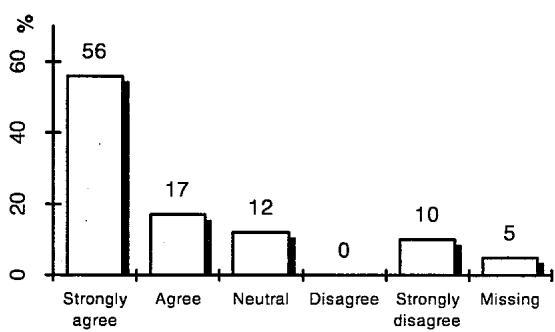
| Q22 The task 1 question was easy to understand. | Q25 I had enough time to answer the question properly. |
 Agreement rating | 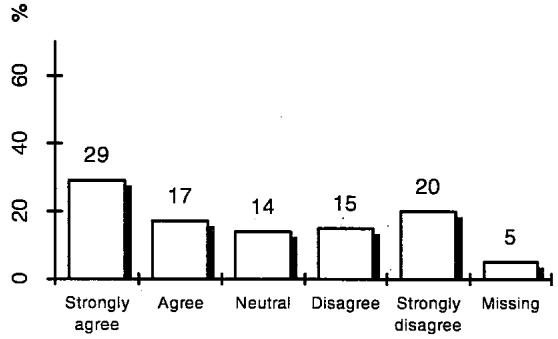 Agreement rating |
The response to ease of task 1 was very positive with 73% of candidates agreeing that task 1 question was easy to understand. 43% stated they had enough time to complete the task and 35% said they did not which would indicate some candidates had difficulty with timing. The issue of timing was detailed in some of the comments made on the questionnaire:
I didn’t have enough time to write task. I wanted have another 20 minutes.
Just not enough time and question was hard to explain and to answer.
First parts was quite easy but suddenly section 2 was hard to do that.
Prompts 23 & 24 investigated the issue of whether there was any difficulty for the candidate because of the subject dealt with or the lack of vocabulary required to complete the task.
| Prompt 1 | Prompt 2 |
|---|---|
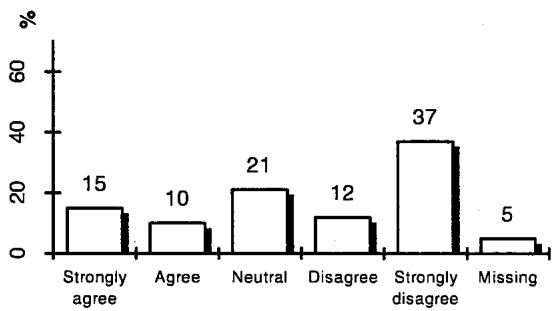
| Q23 It was difficult to write an answer because I did not know the subject. | Q24 It was difficult to write an answer because I did not have the English words. |
 Agreement rating | 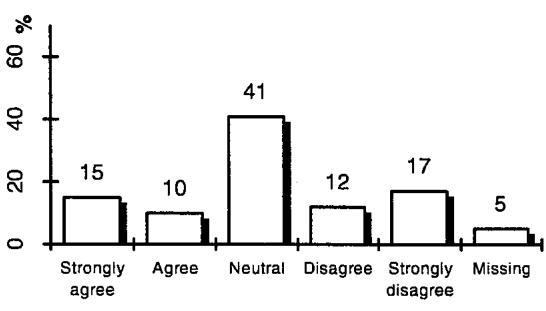 Agreement rating |
of the candidates didn’t agree with the proposition that it was difficult to write an answer because of unfamiliarity with the subject did think it was a problem. Having the necessary vocabulary range to complete task 1 was an issue with of the candidates whereas said it was not; a reasonably even spread of responses.
Writing Task 2
| Prompt 1 | Prompt 2 |
|---|---|
| Q26 The task 2 question was easy to understand. | Q29 1 hour was long enough to answer both questions (task 1 and task 2). |
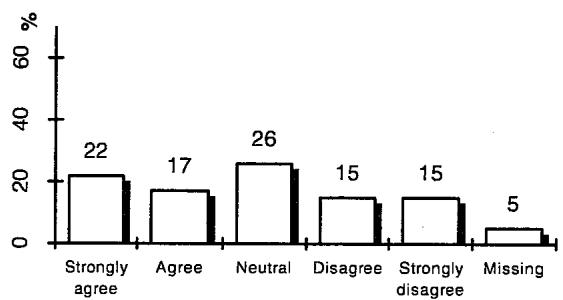 Agreement rating | 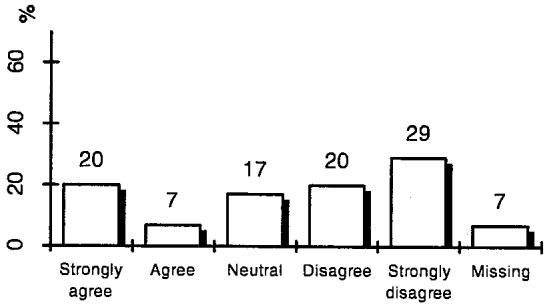 Agreement rating |
39% of the respondents considered task 2 easy to understand whereas 30% stated they thought it was difficult. Length of time allowed for both task 1 and task 2 was an issue for some candidates with 49% stating they did not think 1 hour was long enough for both tasks. Some of the comments related to task 2 confirmed the problems some candidates were having with the one hour time limit for the writing test:
I think too short.
Writing task test 2 was not enough time to think and write.
I didn’t have enough time to finish.
Prompts 27 & 28 addressed the issue of whether the candidate had difficulties because of the subject dealt with or the lack of vocabulary required to complete the task.
| Prompt 1 | Prompt 2 |
|---|---|
| Q27 It was difficult to write an answer because I did not know the subject. | Q28 It was difficult to write an answer because I did not have the English words. |
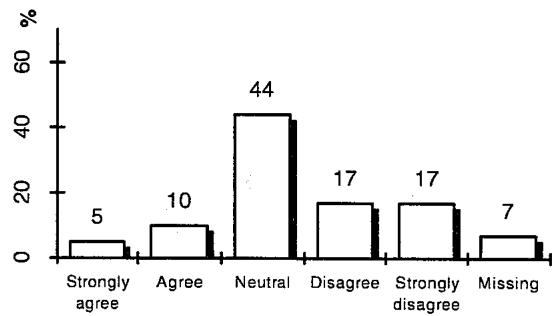 Agreement rating | 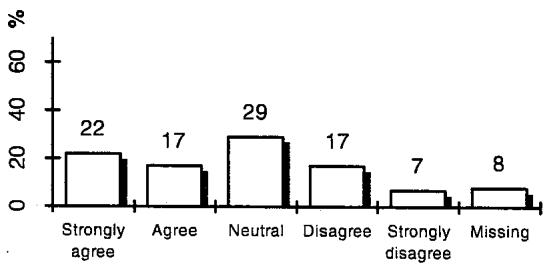 Agreement rating |
15% of the candidates agreed with the proposition that it was difficult to write an answer because of difficulties with the subject matter whereas 34% didn’t see this as a problem - the most striking feature to this prompt was 44% were neutral to the issue. 39% thought it was difficult to write an answer because of a general lack of vocabulary.
4.7 Performance in Speaking Test A and Test B
Speaking Band Score
| Student | Test A | Test B |
|---|---|---|
| Student 1 | 4 | 5 |
| Student 2 | 3 | 4 |
| Student 3 | 2 | 5 |
| Student 4 | 5 | 6 |
| Student 5 | 3 | 6 |
| Student 6 | 3 | 5 |
| Student 7 | 2 | 5 |
| Student 8 | 4 | 5 |
| Student 9 | 6 | 6 |
| Student 10 | 4 | 6 |
| Student 11 | 5 | 6 |
| Student 12 | 4 | 6 |
| Student 13 | 2 | 6 |
| Student 14 | 3 | 6 |
| Student 15 | 3 | 6 |
| Student 16 | 4 | 6 |
| Student 17 | 4 | 6 |
| Student 18 | 3 | 5 |
| Student 19 | 3 | 5 |
| Student 20 | 3 | 5 |
| Student 21 | 2 | 5 |
| Student 22 | 4 | 6 |
| Student 23 | 4 | 5 |
| Student 24 | 4 | 5 |
| Student 25 | 3 | 5 |
Speaking Band Score
| Student | Test A | Test B |
|---|---|---|
| Student 26 | 4 | 5 |
| Student 27 | 4 | 5 |
| Student 28 | 4 | 6 |
| Student 29 | 5 | 6 |
| Student 30 | 4 | 6 |
| Student 31 | 5 | 6 |
| Student 32 | 3 | 5 |
| Student 33 | 2 | 5 |
| Student 34 | 3 | 5 |
| Student 35 | 6 | 6 |
| Student 36 | 5 | 6 |
| Student 37 | 4 | 6 |
| Student 38 | 4 | 5 |
| Student 39 | 3 | 6 |
| Student 40 | 4 | 5 |
| Student 41 | 4 | 5 |
| Student 42 | 4 | 5 |
| Student 43 | 4 | 5 |
| Student 44 | 6 | 6 |
| Student 45 | 6 | 6 |
| Student 46 | 4 | 7 |
| Student 47 | 3 | 5 |
| Student 48 | 3 | 6 |
| Student 49 | 4 | 5 |
| Student 50 | 5 | 6 |
| Statistic | Value |
|---|---|
| Mean improvement in Speaking Band Score from Test A to Test B | 1.7 |
| Maximum improvement in Speaking Band from Test A to Test B | 4 |
| Minimum improvement in Speaking Band from Test A to Test B | 0 |
Table 4 Comparison of candidate performance on 2 Speaking tests taken 9 months apart (User Group 2)
From the table above we can see that the mean improvement in performance on the Speaking test was 1.7 with one student achieving an improvement of 4 bands which is quite impressive (student 13). Comparing the overall improvements in the Listening Band Score to the other bands improvements, Speaking ranks as the second highest improvement after Writing.
4.8 Attitudes towards the Speaking test
The first two prompts on the Speaking test asked the candidates whether they found it difficult to understand the interviewer and whether the interview made them nervous.
| Prompt 1 | Prompt 2 |
|---|---|
| Q30 It was sometimes difficult to understand the examiner during the interview. | Q31 The interview made me nervous. |
 Agreement rating | 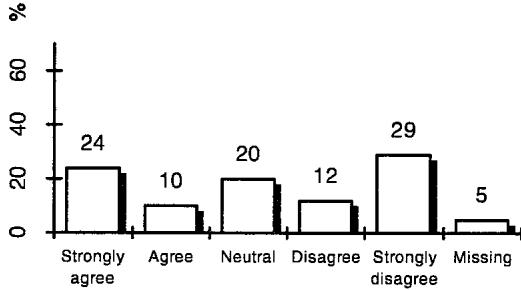 Agreement rating |
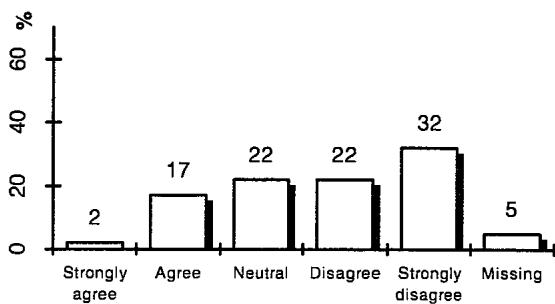
Some candidates had difficulties with the Speaking test with 19% stating they had difficulty with understanding the examiner and 34% saying the interview made them nervous. The comments on the Speaking test in relation to the interaction between the candidate and the examiner were very positive however which is perhaps surprising given the indications of disquiet felt by some of the candidates:
I like IELTS speaking test!! I was nervous but when I started interview I could relax by examiner.
My grammar was so poor. I didn’t understand what I said, but I really enjoyed speaking exam. I spoke feeling. I relaxed.
Good test as the examiner makes the atmosphere relaxed. They have to know that when we get nervous, the grammar can be destroyed.
Prompts 32 & 33 investigated the candidates’ opinion of different phases in the interview with particular reference to phase 3 where he/she is required to obtain information from the examiner and phase 55 where speculation about the future is asked for.
| Prompt 1 | Prompt 2 |
|---|---|
| Q32 The section of the interview when I had to ask questions was easy. | Q33 The section of the interview at the end when I had to talk about myself was easy. |
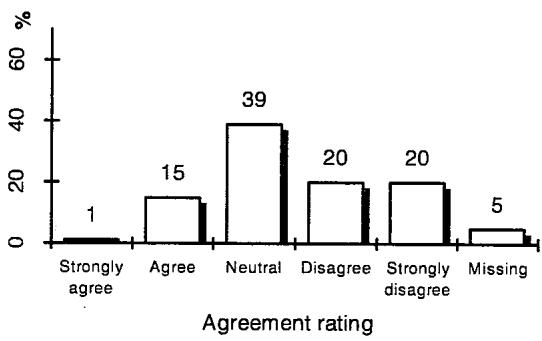 | 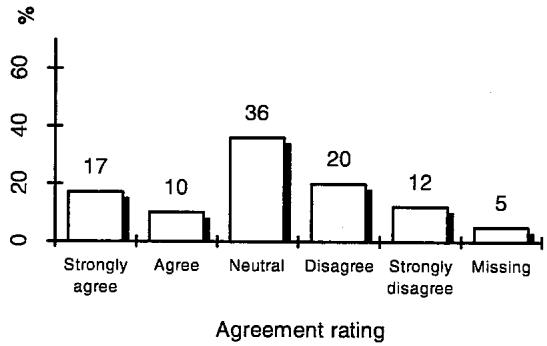 |
As some of the candidates had indicated some nervousness with the interview it is perhaps not surprising that some also had difficulty with phase 3 of the interview - 40% disagreed with the notion that it was easy and this is noted in some of the comments on the questionnaire. The response to prompt 33 which investigated the candidates’ attitude to the latter part of the interview where he/she is invited to speculate about the future was also interesting as 27% of the candidates stated they thought this section was easy. One comment stressed the difficulty encountered during phase 3 of the interview:
It’s a bit hard to questions about the card.
The final prompt in the questionnaire asked whether the interview was too short to show English level.
Q34 The interview was too short for me to show my English level.
| Figure | Summary |
|---|---|
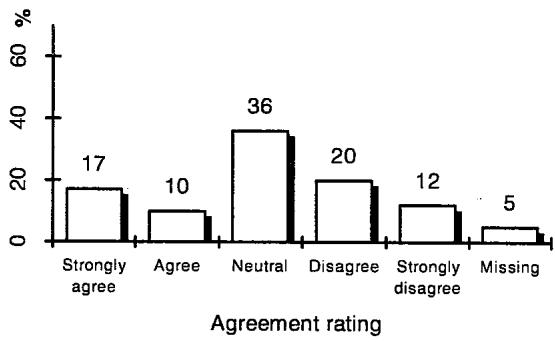 | We can see from this prompt that 27% of candidates surveyed thought the interview was too short. 36% of the candidates did not respond to this question which may indicate that some candidates did not bother answering these questions in the survey as they were towards the end. |
The final section of the questionnaire was open ended and invited the candidates to comment on anything they liked or disliked about the questionnaire.
The question “Is there anything you like about the IELTS?” produced a number of positive comments about the Speaking test:
Nice interviewer in speaking test.
SPEAKING, because I like to talk with someone.
The interviewer is very kind and friendly so I felt relaxing very much. Thank you.
I like speaking test because teachers are very friendly. I can talk easy.
The question “Is there anything you dislike about the IELTS?” produced a number of comments about the time allowed for each test module:
A bit too long. We probably need breaks between each test!
Need more time to do writing test. That’s not enough to show my skills of English.
I don’t like writing, because it was too short time.
I strongly feel that speaking test is not enough to show how I can speak.
The final question was “Do you have any general comments to make about the IELTS test?” and most of the comments were very positive:
There were quite difficult for me. I never had test like this It is real English.
Nothing to say. The IELTS test is the best exam I’ve ever done, I think. It’s a good time to show our skills.
Good test! I really like this test!
I like this exam, because I can compare my English ability last exam and this exam.
5.0 Overall Findings And Conclusions
The profiling of the immigration candidate sample investigated in this report matches the total IELTS candidature for 1999 quite closely with candidates from China (PRC) comprising the largest grouping. The age profile is, however, different for the two groups with few candidates below the age of 20 in the immigration sample. The analysis of overall performance of the immigration sample does not appear to show this group is encountering any significant problems with the IELTS test and indeed when compared to the performance of the total UTS IELTS 1999 candidature, they achieved higher band scores. Some misgivings were expressed about the IELTS test in the survey conducted and these centred around the timing allocation for the Reading and Writing test modules, non-Australian accents used on the Listening modules and particular test item types used in the Reading module with Yes/No/Not Given in particular coming in for some criticism. The overall impression given about the IELTS test in the survey, however, was positive with a number of comments made about the appropriacy and effectiveness of the IELTS test for immigration purposes.
The performance of the secondary school age group in two IELTS tests 9 months apart indicated that although there was a discernible improvement for the group in terms of English proficiency, which is perhaps to be expected, some misgivings were expressed about some
- Impact study of immigration & secondary school IELTS candidates
components of the test. The Listening test, especially section 3 and 4, and Reading module, section 3 were both mentioned as a source of concern for some students. The response to the Speaking test was much more positive with a number of students declaring they enjoyed the whole interview. As with the immigration group, the issue of timing of each module was also mentioned.
Further research
The survey of immigration candidates was carried out in Australian and New Zealand IELTS centres. To complement this survey it would be interesting to survey immigration candidates sitting the test in New Zealand only as this would enable a comparison to be made between the two cohorts.
Given the problems some of the secondary school age group were having with sections of the Listening and Reading modules, it would also be informative to investigate further the issues with these sections that were causing problems for this group. In particular, it would be interesting to establish whether it was the textual complexity and/or subject matter dealt with in these sections of the General Training module.
IELTS TEST - CANDIDATE QUESTIONNAIRE
A survey commissioned by IELTS Australia
What is your First Language? ____
Age? ____ Gender (M/F) ____
How have you prepared for the IELTS test?
For the sections on the writing/reading/listening/speaking test, tick one of the boxes according to how much you agree or disagree with each statement.
LISTENING TEST
Tick √ one response for each statement (1 = Strongly agree, 5 = Strongly disagree).
| Statement | 1 | 2 | 3 | 4 | 5 |
|---|---|---|---|---|---|
| There were many words on the tape I didn’t understand (Q5) | |||||
| There were some questions I didn’t understand (Q6) | |||||
| The instructions in the listening test were easy to understand (Q7) | |||||
| The first section of the listening was easy (Q8) | |||||
| The second section of the listening was easy (Q9) | |||||
| The third section of the listening was easy (Q10) | |||||
| The fourth section of the listening was easy (Q11) | |||||
| The speakers on the tape spoke too fast (Q12) | |||||
| There were some subjects in the listening test I didn’t understand (Q13) | |||||
| There was enough time to do the listening test properly (Q14) |
General comments on listening test:…
READING TEST
Tick √ one response for each statement (1 = Strongly agree, 5 = Strongly disagree).
| Statement | 1 | 2 | 3 | 4 | 5 |
|---|---|---|---|---|---|
| There were many words in the reading test I didn’t understand | |||||
| There were some questions I didn’t understand | |||||
| The instructions in the reading test were easy to understand | |||||
| The first section of the reading was easy | |||||
| The second section of the reading was easy | |||||
| The third section of the reading was easy | |||||
| There was enough time to answer the reading test properly |
General comments on reading test:…
- Impact study of immigration & secondary school IELTS candidates
WRITING TEST
Tick √ one response for each statement (1 = Strongly agree, 5 = Strongly disagree).
Writing test task 1
| Statement | 1 | 2 | 3 | 4 | 5 |
|---|---|---|---|---|---|
| The task 1 question was easy to understand | |||||
| It was difficult to write an answer because I did not know the subject | |||||
| It was difficult to write an answer because I did not have the English words | |||||
| I had enough time to answer the question properly |
Writing test task 2
| Statement | 1 | 2 | 3 | 4 | 5 |
|---|---|---|---|---|---|
| The task 2 question was easy to understand | |||||
| 1 hour was long enough to answer both writing questions (task 1 and task 2) |
General comments on writing test:…
SPEAKING TEST
Tick √ one response for each statement (1 = Strongly agree, 5 = Strongly disagree).
| Statement | 1 | 2 | 3 | 4 | 5 |
|---|---|---|---|---|---|
| It was sometimes difficult to understand the examiner during the interview | |||||
| The interview made me nervous | |||||
| The section of the interview when I had to ask questions was easy | |||||
| The part of the interview at the end when I had to talk about myself was easy | |||||
| The interview was too short for me to show my English level |
General comments on speaking test:…
Is there anything you like about the IELTS test?
Is there anything you dislike about the IELTS test?
DO YOU HAVE ANY GENERAL COMMENTS TO MAKE ABOUT THE IELTS TEST?
Thank you very much for completing this questionnaire
Appendix 1.2 - Immigration candidates’ comments on Listening test
Good
British accents were difficult for me to catch. Outside was noisy (car?)
Too short time given to read the questions first
listening test is little past when we practice book.
The first section is very easy but too slow compared to the rest. You tend to relax and think it is easy but then suddenly the speaker on the tape start to speak very fast. The fourth section is way too fast and some difficult words very difficult to catch
Words and sentences easy to catch except for the last section. Overall, not too difficult.
Not very difficult, very nice.
Don’t have time to write words while listening
It’s better to get easier listening test.
Good organised
I prepare to listen to the second time.
It was very hard
Questions come very frequently.
the test is well designed, but we could have more time between the sections
The speed of the tape is OK
I can’t hear very well the Australian accent.
The first section was quite easy, but last section is quite difficult.
good
Too little time to transfer answers
Sometimes I feel when I write some words down I miss the listening
Good. It is the students responsibility to learn harder. There should be more cheaper and efficient preparing materials.
The third and fourth section, some words and questions I didn’t understand. The tape spoke a little bit fast.
Too much spelling demand.
English accent is hard to understand.
We need a Australian speaker in the tape and also Australian question.
Some words cant understand as quickly we here it.
the teacher asked the questions I am not interested
It’s understandable but some of the speakers didn’t talk properly.
listening test is too hard for me. it is suitable to candidate for immigration.
General listening test should be different from Academic listening.
It was very basic and doesn’t really serve the purpose of an ENGLISH TEST. The speakers were not very clear, something wrong with the speakers.
It was easy except last conversation about American ex-president.
In some part’s the listener, should probably be confused, and it look’s like an test to show a ability to react quickly
The speaker is quite fair for the listener, but he/she should speak clearly.
Pls. extend 5 minutes.
The fourth part is too difficult.
no enough instructions in the answer sheet.
I found reading the questions time was much less than it required. That makes me to difficult to coordinate between questions and listening.
I think forth section of listening test must be easy
not easy
I didn’t know what to do in the beginning, there was no enough introduction to tell us the model of the question
too fast. more instructions needed as hints.
more difficult compare to others
Some questions are hard to be understood without listening the tape. I don’t think it is necessary to test listening abilities in this way.
1. Impact study of immigration & secondary school IELTS candidates
They were good actually but in the section…maybe 3 the library one was difficult for me, it was a bit too fast.
Sometimes I don’t whether or not I should stop writing because I’m not sure.
only one time playing the tape
Somewhere the speaker speaks too fast.
The instruction is easy to follow. Full attention on every single words from the tape. Sometimes the speaker speak too fast & miss out certain points.
Overall the listening test was “OK” but the last section of questions was little bit complex.
Its better if its played twice.
Happy and satisfy.
it went out well. no comment.
I did miss some points, but generally it’s pretty easy just a matter of concentration. too fast in the fourth section, but I can still accept it.
Overall it is good but need to concentrate to catch up
It was hard to listen in one time.
A little bit hard
The speaker should a bit faster and more clearly
The listening ex. was easy
Generally os OK
gapfill is quite difficult
Listening test is terrible. I had no enough time to do listening and writing down simultaneously. And the sound effort is the worst one I have met!
LISTENING TEST’S MOST PARTS WERE EASY, SOME PART WAS A LITTLE FASTER. AS A STANDARD OF TEST, IT WAS OK.
There are some mumble words in it that result difficulties in answering some question
difficult to follow up
The speaker speak too fast and sometime not so clear.
speakers on the tape spoke too fast
How could we understand / remember every section??
Nil
listening test is easy but when we have to do reading question & answers simentenously it’s difficult.
fair test for General understanding of living English.
1.”If you do not know the forms of the question, that will be horrible even if you have very good listening ability. 2. At first, the recorder is not loud enough.
The listening test was easy. The records, sound, conversations everything was fine. But the problem was at the same time the candidates have to listen and write down it on the paper. It is really hard to do the two thing simontaniously.
To do it well, need some practice.
very houd to I am understand because tape very fast and many words all so yours hulef for me
The listening test is difficult. esp. a lot of trickies.
The accent was more defined and some words were spoken undertone, specially in second & third part. Objective wise questions were easy but three word questions were sometimes difficult as speaker speaks fast and in typical accent.
very hard test
The test is not that easy as the practice test book, also the format is quite similar
Test seemed quite simple. Real British accent sounded out of place in Australia where people are sometimes harder to understand.
A general problem in the listening section is the right timing. Sometimes there are 2 or 3 questions at once, while sometimes one has to wait for the next question.
Hard
Very clear and very basic english its easy to understand
It’s OK.
please add more time to do listening test listening test was very easy and very godd
It is well-structured, but the last section covers too much political opinion.
it was OK
The speed of speaking is fine but the 4th section is so difficult to follow, there is not enough information - hint to catch
The last part is not easily understood completely.
Listening test must be separately taken that everyone can adjust volume.
There was a bit accent problem otherwise test of the thing was fine
If I was not too nervous in the beginning and in the end, maybe it could have been more easier.
This is a very good test, real situations, from easy to difficult distributed fairly, tricks are reasonable, do not ask for
examinees too much knowledge about detailed understanding of a particular situation which sometimes could be unfair to a new comer.
sections one-three are easy, section four is difficult. I was lost a bit.
It’s much more difficult compared with sample test.
the speaker of 4th section talks in the way I am not quite familiar.
The speakers on the tape spoke too fast, the sent from speakers is not clyea.
Sometimes is confusing the order of the questions, ie, you have to write in answer sheets but in the handbook you have an order difficult to follow according to the speaker’s order.
none
Appendix 1.3 - Immigration candidates’ comments on Reading test
Good
not enough time last section (third) not easy
I think they is not enough time, certainly when you start the last sections, when it gets difficult, you become nervous and it gets difficult to concentrate and that’s how you make mistakes. Fifteen minutes more would have been perfect.
Types of questions not so variefied. Too many YES, NO, NOT GIVEN ones in my opinion. It will be better to be permitted more time.
Some questions like ‘YES’ or ‘NO’ or ‘NOT GIVE’ are quite difficult for me easy.
It is difficult to answer questions.
The test time is too short to finish the reading test, I need a half hour more at least.
I couldn’t understand
Texts are too long.
there wasn’t enough time, third section said very badly.
not enough time.
Time is not enough to finish that.
not enough time.
There are so many complicate vocals there.
good
The third part is too long.
Generally speaking, it is a good and efficient test. The supervisors are nice.
In second section, it is different to choose the correct heading.
No. Not given. It is difficult to select these two.
good, but some words and questions cant understand poperly
a little bit of difficulties
as the reading test is concerned well, for me I do understand it clearly.
There are too many true or false questions which are sometimes confusing.
Too short time. Question difficult to answer. That is to say two answers can be correct.
True-or false-not-given questions are confusing. some questions can be inferred but it can be classified as “not given” or “true”.
still OK
Again it was very basic and not good enough to test a persons English knowledge.
Not enough time
There shld be an additional minutes for you to review the answers.
Pls. extend 10 minutes.
Too much time in the reading section.
Essay, particularly third one, was to big for the time allocated. Needs really fast reading.
not so difficult
It was good.
reasonable and acceptable
They was very difficult in this test and there was not enough time and I think not just only me that thought the same thing. limited time
Some articles are too long and questions are too many
Last section of the reading test was difficult & couldn’t understand some of the terminalism or jargon. Passage is too long on the third section. General is OK.
Overall reading test is “OK” but third section was complex not much time to read and answer them.
A simple one will do.
Happy and satisfy.
good.
to answer properly (perfect) - not enough time
Too many “yes/no/not given” questions.
Too short time to finish all the Questions.
I think that TRUE, FALSE or NOT GIVEN question is not good. FALSE and NOT GIVEN are similar and confusing.
overall it is good but sometime the topic is not familiar
It was hard to answer the questions such as answering TRUE FALSE NOT GIVEN
Confused
The reading test should be more specific about the topic that we are reading
I think the only problem in the reading ex. is the time.
Good
The topic is not general enough that if majored in chemical or the other related subjects I would do better.
YOU SHOULD EXPAND TIME FOR THIS SECTION.
I haven’t enough time to answer the questions properly.
not enough time.
not good enough time to answer the reading test properly
Nil
Need more time to read & answer the Questions
fair test for General Reading.
It is difficult to distinct No and Not Given in the question No, Yes, Not Given.
The reading module is also perfect. But in the last sections the passages were too long to read & then answer it. I have a suggestion for this you can make the passage shorter with more information.
this for giste immegrason par pes not for the university sound for cluse
There are too many T/F questions.
It was easy and there was enough time to answer.
hard test
It is better to put a reading passage and questions about it on the same pages.
Generally speak, the reading test is relatively easier than the other sections.
Not too hard. But not easy to get high marks
again very basic and simple english
Not difficult as long as enough exercise is done before the test.
as above
Reading test is good and we learn more good things.
It was good
find
Sometime I can understand very well abot passage, but I can choose the answer because it is confused. I prefer to TOEFL which I took before.
Easy.
Very good way.
It was okay.
Most of the disputes came from “true.false/not given”, sometimes this is examining the logic method of thinking, but naturally this is one advanced part of understanding a language. Others are very practical, relevant skill testings.
reading test is not difficult.
It’s easy compared with other section.
there are some questions can be answered either “false” and “not given”
In my opinion wy nid mor time
Try to condense information in the same page, and avoid turn over the page to read the text, makes the applicant lose time and sequence of the questions
not enough time
Appendix 1.4 - Immigration candidates’ comments on writing test
1 hour schedule was a little tight.
It was difficult to write task 2 because I did not have and opinion.
Time is not enough. question is also long understand not so easy spend time.
I think the students in general didn’t have enough time to finish they work. Why do we get that little time? Normally I like to write essays, but I could not concentrate at the examination, time was going to fast!
We would have needed 1 hour more!
Time too limited. Have no spare time to think more carfully about hoe to write well, but just finish them.
The time is a little bit limited.
The task 2 is very difficult because I havn’t enough material to write about it.
No too bad.
It is not easy.
task 2 was too hard to understand
The topic isn’t very close to the Uni student, but it easy to be understood and more materials for this topic.
need more time!!
Not enough time.
Just need more time
not enough time and the subject I didn’t know anything about it.
Task 2 is quite hard. The situation is not familiar to me, hard to thing of something to write
The question is not clear.
good
Good, efficient test. The supervisors are good.
The second task was more academic.
Not enough situation was given. Hard to make up stories.
good but some more time need for task 2
Everything is okay and I understand clearly.
1 hour was too short to finish both tasks
In Modern world of technology this test is of no relevance.
The time was very short on this part of the test, compared to the Listening and Reading.
fair enough for the writing test
Pls. extend more 15 minutes
no enough time to write
The questions was all right, but the time was tight. I can writ as well as I can.
the subject should be clear rather than ambiguous
I think, if give us more time it would be better.
limited time
Time allocation is very important in this section. I will rate this section as fair level of difficulty.
Overall writing test was “OK”.
Should have more time.
Happy and Satisfy.
good.
The topic sometime is more difficult and unfamiliar than others
It was hard to make structures in short time.
Too hard.
A little less time should be given for the written test
Good
I guess that question level fluctuates time by time. Some one knows some arguments very well, he can take advantage, but the others know little about the arguments.
These may result in unfairness
NO COMMENTS
Writing test task 2 is more difficult for me to finish in 40 minutes.
Not enough time.
not good enough time
Time was just right, I would advice the IELTS to provide some rough papers for the writing test.
fair test on writing skills. More difficult part for me.
The time for the task 1 is used more than 20 minutes generally if you want to perfectly to show what the graph shows It was also fine & understandable. In tast 2 it is a bit confusing that in what aspect should I write- the cindergarten ?ys. or the mothers are returning to the workforce of their comments about the children.
this all so lettleet hourd
Writing is easy. But time is too limited. In ordinary life, we have time to write. Time limited makes the writing very rush and bad.
Easy and effective tool to judge the English competency.
Writing test is ranked second difficult section of IELTS test.
Would be easier with a computer. Notepads should be provided so that answer sheet stays a bit cleaner.
To write a really good letter or essay with substantial arguments for and against a certain issue, it is necessary to have more time. Within 1 hour, I mostly focused on structure and to achieve the requires words in each task rather than on the contents.
Tasks are suitable to all participants very good. It made me think, and sharpen my brain out.
Can we have draft paper? Because we don’t have enough spaces to draft both questions. Time is not enough, 1.30 for 2 questions will be better.
To finish task 2 on time is not difficult at all. The only problem is that such a short time is pretty hard to arrange your ideas properly. That is, it is hard to write a very good article for this topic in such a short time.
writing test is good and I enjoy my writing test
It was OK
time is so limited
That’s my worse part. I reckon.
Very good way.
It takes little bit time to answer the question when you don’t know about the topic.
It was okay by me.
One hour is not enough. But maybe 2 hours will make most of the candidates get the same good results. For me, if I got some more time, I can do it better. For a foreigner to write in english, it is benefit for him if have time to review it few times.
The total time is not enough
There is time pressure from the start to the end.
There should be a room on the test paper to write something before start writing the article.
For writing test is not inatt time
I want more easy topic
Appendix 1.5 - Immigration candidates’ comments on Speaking test
Good
The interviewer’s voice was quite soft and she wasn’t that friendly.
everything is suitable.
I have no comments on the speaking test. I was nervous but the teacher made me feel relax.
Some difficult as to how to answer the questions properly. May not have given core answers to them.
examiner is very friendly and I don’t feel nervous.
I don’t think it is very proper to ask personal questions, such as my future.
I like it.
It is difficult to prepare.
The teachers pronunciation is good and easy to be understood. but why not use earphone?
Very friendly
good.
the questions that I had to answer made me feel nervous.
It’s just normal conversation. A pleasant environment made you clam and the examiner is friendly
It’s not a good way to test my English ability effectively.
The examiner was very friendly and kind to me, therefore I was not nervous at all. Honestly, I really enjoyed it very much.
Tape recorder made me really nervous
Roll-play section is hard to imagine question for a short time.
good
I enjoy my speaking test coz the examiner deliver easily her words upon having the interview and I do understand everything what she was discussing for.
I had 25 minutes interview and we covered an extensive topics
still OK
no comment
Nothing!
interviewer has good attitude to the candidate
The interview was easy and I didn’t have a chance to talk much.
interesting and challenging
The interviewer was good, (John Bell) He made me very comfy when I was in the room, and he spoke easy to understand.
General is the easiest part of the test.
Overall speaking test was good.
Very Good
Happy and Satisfy
good
overall it is good
The interviewer made me relax. He explained the instruction clearly.
O.K.
Good
The most nervous one can drive me mad.
NO COMMENTS
The interview is easy for me.
Good enough.
When nervous could not do the test well
The interviewer was nice, and did give me confident in espressing myself.
fair test on speaking test.
It is also correctly placed. The interviewer was nice & friendly. It was easy to talk about myself & therefore I feel free.
Make students calm down before asking questions.
this OK no problem
Good style of simulating environment
Good and exhaustive
Nice interviewer
It is very good.
Speaking test is very easy I don’t have any problem to understanding.
It was fine.
When I nervous I couldn’t speak well, but after I relaxed, I can do well.
Very glad to talk to the interviewer.
Very good way.
Jeniffer made me feel completely at ease, & it was nice & enlightening interacting with her.
Interviewer is first class professional people. I was very nervous at first, my voice was even trembling but face to such a nice listener, I gathered my confidence again soon.
Interview is easy
I love speaking test very much
It’s interesting and the interviewer is nice.
I’m did not have problems speaking with the interview, thys test is ezy for my.
The interviewer could give you an overview or introduction about how is going to be the interview, then you can be prepared that you have to ask her some questions. honestly I didn’t expected, but it was OK.
examiner very kindful
Appendix 1.6 - Immigration candidates’ likes, dislikes and general comments on test
IS THERE ANYTHING YOU LIKE ABOUT THE IELTS TEST?
This test covers everything for testing my English skill. Like I said at the beginning. It is a very good examination.
The Speaking Test
interview
I believe the speaking test is the best way to see if somebody can express himself can understand English
It’s an overall test about the four skills in English.
No
clear
I like the interview test, free talking is quite comfortable.
Reading, speaking
speaking.
Not really.
Yes, the full skills of English.
I can get the result.
No
Total system is good
Is a good opportunity for students or adults from countries which English is not the main language.
Yes, the speaking test, to help me to speak more english. listening as well.
It’s a good test to assess my English ability
interviewer is very kind and interesting.
Interview.
writing
No
I thought everyone was very helpful and friendly which made it is easy to site such an examination. There are a great range of subjects, chance to know much more about the world.
yes i like multiple chose
writing
just so so.
The break between reading and writing.
yes, I like all about the IELTS
The examiner.
Everything coz you can show your capability upon speaking, wriring, reading and listening with regards to english.
Its preparation materials are easy to obtain and the structure of the test is easy to follow.
No
The examiners were pleasant especially on the speaking section.
speaking interviewer is kind
yes I like the way how this was organised.
No
Speaking Test.
1. Impact study of immigration & secondary school IELTS candidates
yes, it offer me special experiences.
though the result is something like a nightmare.
It’s very practical compared with Japanese English test.
OK
no
Good facility
efficiency to register
The committees are so kind and it’s not look difficult in taking exam. Also, the place is in city, so, it’s quite comfortable for me to come.
every staffs was very good.
Just the interview because there’s no fixed restriction in interview. no fixed answers, you just be yourself.
It is very good test for me to understand my English ability.
Fun.
Strictly, and challenging
No.
The good thing about IELTS test that I like is they are doing the good Job by giving the Education to student.
No
meet a new friends
interview.
reading
Compared with TOEFL. the IELTS tast has interview.
Yes, it can improve my English ability
Speaking test
speaking test
Speaking
Comprehensive test
Yes it give me confidence to have a conversation with other people.
Like or dislike? It’s hard to say. But I would say it is better than TOEFL.
Challenge
Nothing.
There were four different section
(listening, writing, reading, speaking) to be tested.
No
speaking and interviews
I think this test can indicate our level of english properly in the three sections (listening, reading, speaking).
speaking test
Its good fun
Interview W/ goodlooking one
The test really made me to recap my English. While preparing for my test, my English improved.
It is easy-going, well organised.
Interview
No
It is easy to take because the test holds twice a month generally.
The speaking test I enjoyed most.
Yes. It test your real ability of English Language.
Speaking test is quite good.
It has four modules to test my English in all aspects.
people accept the result of the test. and the test given my English standard level.
Good aid to judge the english knowledge. probably not.
N/A
It’s well organised
No special.
Yes, it improves my memory
Held at saturday.
It is not difficult and it is arranged very well. The staff member are very friendly and helpful.
Yes, the examiners test speaking very friendly
Examiners are so polite.
a way to test english level.
No
We know how to learn good Englis, and good writing.
The English required by the test is very practical.
good structure
N/A
writing, speaking
more vocabulary
It’s not difficult to me.
Yes way of exam.
Writing and reading test is good test for recognizing my level of English
I like the people who interview me.
Because she was very good and her way of asking question was superb.
Practical. Fair in terms of not asking for very deep understanding of some local or area customs, etc.
No
No.
the writing section is good because you can give your own opinion about the theme, if you agree or disagree.
with interview is good
IS THERE ANYTHING YOU DISLIKE ABOUT THE IELTS TEST?
No.
No
Some of the questions seemed to judge my I.Q. rather than my English ability. The test was a bit tricky.
The WRITING TEST, if topic is not given in advance, we cannot be prepared to write with a good structure.
writing.
I believe it is a question of luck whether you score high marks for the listening test.
Why not permitted to retake the test within 3 months?
Reading test is a little bit difficult. most
It would be better if every one has his own ear-phone.
I dislike the writing task 2 because sometimes it is very confused to me.
Listening
listening.
No fun.
the equipment of listening.
The time is too short.
inost of all
I think both reading and listening needs easy text.
should be separate according the level of english and ages. the reading and tasks had a difficult interpretation to my age.
Too long the reading part.
Speaking test, because every examiner has different opinion.
reading
No
Not enough time for reading part.
interview. It is too short for people to understand what level they are.
have to wait for the speaking test. No M.C.
It takes almost a whole day.
Too expensive. Time is not enough No
yes spelling is difficult for me
listening - filling in blanks. Multiple choice is better.
There should be more preparing materials for it.
No, it isn’t
writing.
English test in England people
The fee is expensive.
one thing only, about the listening coz sometime the speaker didn’t speak clearly.
I don’t like too many true or false questions.
1. Impact study of immigration & secondary school IELTS candidates
looking at pictures, shapes, and filling in boxes. Answers can vary but how examiners mark is a question.
too difficult
Honestly, I don’t see a need for someone who has learnt english for 25 years to do this test.
No
The air conditioning in the exam hall was a bit cool.
not enough time to read and write
No.
No
writing test, it was boring.
Yes, it’s listening module, I think I can understand it all without a pencil in my hand!!! but with a pencil, I find myself an idiot.
In reading section, 1 hour is a little bit short for me.
No
Yes I had to do it.
Waiting time before speaking test
The testing room is too big.
Nothing
The test started too early and my place was very far from the city. So I had to got up very early and no bus pass my place on Saturday as well.
about the answers. what you have answered have to be same as the answer sheet that examiner got, even a little bit mistakes, otherwise, you die!
There is no earphone during the listening test.
None
Time-consuming. Miss my weekend.
No.
No
No
Take up my whole saturday.
Not enough time in reading and writing writing test.
the reading on science topic.
listening
I can’t take next test within 3 months after finishing test.
Yes, the topic is unfamiliar and sometimes makes me nervous
Sometimes the subjects of reading test were not familiar for me.
writing test
Writing
The test can only be taken every 3 months No.
No
The facility of playing tape is poor. Even in China, we use headphone, instead of a single speaker.
Writing test was not long enough to complete 2 tasks.
No
Listening. too quick to follow
Writing the essays. Sometimes that is not indicate our ability to write in English.
Some people may can not write well because they do not know the subject (what to write) not because they cannot writing in English
listening test
It takes time
Delayed result. Have to be fast
No, except for the sect 3 of the Reading test. I believed most of us have difficulty in choosing the correct title for the answer.
Not at the moment.
Listening
No
Listening facilities are not good.
The listening test. Because of the hearing & writing at the same time.
No
Marking of writing is subject to the subjectivity of Examiners
The speaking module is different from the other tests and I am not familiar
A little bit earlier.
listening test is very hard.
Listening
English listening test should have a speaker with flawless accent and should speak slowly.
The listening module is too long, I mean each section should use the multiple choose.
N/A
Better have earphone when take listening test
N/A
Wait 3 months to retake IELTS. The waiting period maybe too long.
I hope the start time is 9.30, so that candidates not living in city do not need to be in a hurry in the morning.
No.
Time is too short
costing my money
Make me nerves
No
The topic of the last section of the speaking was not familier by me. Many works I don’t know.
reduce the # of students in each room. too long. interview arrange too late.
Listening
some reading test is not very well presented clearly, such as not given.
It’s not necessary to take the test.
Adjustment of time.
Listening and writing test, I don’t have time to think and prepare to answer. do not have enough time
No
I really prefer a more comfortable time period for writing.
time for writing is not enough
Waiting a long time for the interview.
It is too long, but I guess there is not other way to measure the English level
None
DO YOU HAVE ANY GENERAL COMMENTS TO MAKE ABOUT THE IELTS TEST?
No, thanks!
There seems to be variation in difficulty between test versions.
No
I think IELTS exam is difficult for general. I wonder general is made more easy. but academic is suitable.
Just give us some more time!
Not bad.
sometimes, it will be easy, and sometimes it will be difficult. I suggest that a fix form of questions should be adopted.
General Test is not easy.
Why limit the period of per exam (three months?)
MAKE IT EASY PLEASE!
overall it’s good. Thanks.
Ielts should be separated by age and level of English, so on the writing task would be easier for young people to talk about another thinks instead of general interests, which just mature people liked and know how to talk about it.
No.
No.
It’s ok.
Interview!!! We have to wait 1-2 hrs generally. It’s wasting time!!! I think we should divide into two or 3 groups and when one groups sit on writing test, the other do interview ISN’T IT GOOD IDEA, huh??
No
During the test time, it was almost all the time silent but there were some exceptions such as noise from the outside of the room. I believe that there could be some thing to reduce that.
No is OK
1. Impact study of immigration & secondary school IELTS candidates
Thanks
No.
Good. More efficient than TOEFL. It focuses on the practical skills.
No comment
I hope the task 2 can change style in writing.
To get the IELTS text book in G. Coast is very difficult. I came to the centre to photocopy the textbook but the listening tape is not available to rent, because I am not a TAFE student. I think more text book and tape should be available at public librar
Please make Australian version of IELTS.
To have more time in reading and writing Nothing at all coz I learn a lot from it.
I hope the topic covered in this test could be more diversified.
Too many “True-false-not-given” questions.
make listening test easily
Too much time is spent on the test, it is very unfair to spend a full day doing this test.
No
Just fair enough what is done in IELTS
For general training, Listening Test is too difficult.
No, I don’t have.
I hope the designer of the text should consider to sweep the examiner’s nervousness ASAP, especially those brought about by the listening module.
No
Try to get the speaking section more controllable. I mean get more standardized ways to ask questions and the scope the question refers.
No. and thank you
Reading section too difficult & so I need more time for that, and need more time for writing section as well.
should get high speed to face the exam.
I appreciate all the help from organiser and all candidates to make the test run smoothly.
very well organised.
Very Good
No
None
Thankyou for your help and understanding.
No.
I thought there would be a section on grammar
I think it is better than TOEFL in testing applicators English ability
I think this test is well prepared and very good
No.
No.
It’s practical and helpful for daily life.
After preparing IELTS you do feel the improvement of English.
No
please provide headphone. shorten the period between two exams. If I fail, I must wait for THREE MONTHS! Why can’t the test change the questions frequently so that we don’t need to wait.
difficult to get good scores
maybe some changes in writing assessment are needed.
TEST SEEMS APPROPRIATE FOR MIGRATION PURPOSES.
English speaker as their second language should be considerable gets higher mark as the first speaker language.
None.
No
Listening section can not perfectly examine the listening ability.
If the Listening module could be change it will be a more efficient test to justify the candidates listening ability.
Give more general information about IELTS test such as samples of test.
reduce the time of giving result. about one week after test.
No.
As above.
Should be easy
It was short of instruction for answer sheet before test. Such as, pen or pencil, how to delete wrong answers, etc. It may need to take question time before test.
No
Not enough materials to prepare for the exam. Only one sample paper is not enough.
It is a good test. Examiners are very good. they are helpful.
No.
Every part of test is relatively fair to test one’s English Level.
IELTS is very good. Overseas student must do IELTS test below they learn good english.
The test is good.
It was very good to people who want to coming to Australia
N/A
To understand the main meaning of the essay is more important to write down a certain word.
Very Good!
Again, it is very glad to talk to the interviewer. Her name is Ingrid.
I think you should ask about time adjustment the candidates also.
Nope.
Fair!!
No
No
No.
More time.
expensive
Appendix 1.7 - Secondary school age candidates’ comments on Listening test
The third section was difficult because what the radio speaker say is different from the answer we have to write.
I almost didn’t understand.
It was difficult.
I did have time to write answers, when I was writing first speaker is doing second questions.
The number parts are a bit too fast so I can’t hear nor understand.
I felt the IELTS test which I did today was more difficult than the model tests.
This time is little bit easy but most listening task is difficult for us
It was a bit difficult.
It was not so hard.
very clear!
It was a little bit difficult for me.
I couldn’t understand that how to answer the question at first so I was waiting for the next question but it was already gone so I missed some questions and I think I could answer them.
The tape didn’t clear so I couldn’t get what did he/she say.
In the room I took the exam, because the room was large, the sound reflected and I couldn’t hear it clearly. The contents of the exam was good as it contained general topic.
I think it was a bit easy to understand.
I prepared for listening test in advance, so I didn’t panic.
This was my second time and I thought both of them were really good in testing my listening skills.
Sometimes I don’t understand, when did say the answers. That’s mean I lose the question/answer.
Appendix 1.8 - Secondary school age candidates’ comments on Reading test
It was difficult
| Response 1 | Response 2 |
|---|---|
| I can’t understand some question at all. please more easy questions. | Sometimes I couldn’t understand the meaning of the sentence. |
| It was difficult. | very difficult to understand |
| I think that was quit hard. If I had a word which I can’t understand that hard to do that question. Some part is not so difficult but some part was difficult. | I didn’t understand any questions and sentences. |
| The reading passage is like information. So it’s kind of fun to read but sometimes it’s too difficult words, so I can’t understand sometimes | there were many questions but not enough time |
| I was nervous when I saw the Question papers because there were many words there so they made me feel nervous. Sometimes I couldn’t understand but it is basic questions so my skills is poor I found | I thought this test also had general topic, and good sources for us to pick up the informations |
| I was nervous when I saw the Question papers because there were many words there so they made me feel nervous. Sometimes I couldn’t understand but it is basic questions so my skills is poor I found | It was a bit hard to me, because I don’t understand some words. |
| I was nervous when I saw the Question papers because there were many words there so they made me feel nervous. Sometimes I couldn’t understand but it is basic questions so my skills is poor I found | I thought it was a bit hard to find the answers of “Not Given” sometimes. |
| I was nervous when I saw the Question papers because there were many words there so they made me feel nervous. Sometimes I couldn’t understand but it is basic questions so my skills is poor I found | It’s hard to understand that the meanings. |
Appendix 1.9 - Secondary school age candidates’ comments on Writing test
| Comment 1 | Comment 2 |
|---|---|
| The letter to a friend was easy to write because I can write it like an informal letter and I don’t need to write should I or Please. | The question should change more popular thing! |
| The letter to a friend was easy to write because I can write it like an informal letter and I don’t need to write should I or Please. | I think too short |
| I didn’t have enough time to write task. I wanted have another 20 minutes. | I didn’t have enough time to finish |
| I didn’t have enough time to write task. I wanted have another 20 minutes. | It was a bit difficult, but I wasn’t confused because I prepared well. |
| It was difficult subject. | Writing task test 2 was not enough time to think and write |
| First parts was quite easy but suddenly section 4 was hard to do that. | just not enough time and question was hard to explain and to answer. |
| I had been learning formal letter such as complain, request, suggestion, information & apologies, very had, so I was very sad when I read the test task. | I misunderstood the word ‘Costume’ as custom. Also, if I could write more freely, I might have done a bit better. |
| Task 2 (general) I thought the question was not appropriate because costumes are very different among countries. | It wasn’t that easy because I lack creativity. |
| This time’s test was I’m not interested in the question so I couldn’t write very much. | It’s hard to write “250 words” like that. |
Appendix 1.10 - Secondary school age candidates’ comments on Speaking test
The interviewer was very friendly so it was very easy to speak.
Question was difficult to answer. It was hight level for me. I had to think a lot.
The interviewer was a nice person.
I like IELTS speaking test!! I was nervous but when I started interview I could relax by examiner.
I had a speaking test at 2.20 in 642 classroom. My examiner was a man who was a so kind to me, when I got a word which I couldn’t understand that words meaning, then I asked him. He taught some very easy word so I could understand properly. Morover I
I was thinking what I am going to say, but I couldn’t because examiner gave me the subject, so I didn’t have a time to introduce myself
Examiner should make good behaveier.
I like speaking test, examiner was good.
My grammar was poor.
I was very very nervous.
My grammar was so poor. I didn’t understand what I said, but I really enjoyed speaking exam. I spoke feeling. I relaxed, but.
The examiner was not friendly so I think I couldn’t do my best.
Good test as the examiner makes the atmosphere relaxed. They have to know that when we get nervours, the grammar can be destroyed.
I had a nice time.
I wanted to talk more because I couldn’t show my real skill.
It’s a bit hard to questions about the card.
Appendix 1.11 - Secondary School Age Candidates’ Likes, Dislikes And General Comments On Test
IS THERE ANYTHING YOU LIKE ABOUT THE IELTS TEST?
I can know how much I improve better than other test.
Speaking test was quite difficult but It’s like real english.
Nothing.
nice interviewer in speaking test.
speaking test
Speaking test and listening test because they’re conversation sytle.
examiners are very kind and helpful
I can take speaking test.
Nothing special
Writing test
Speaking test.
We can do 4 kinds of exam.
The speaking test was so funny.
Reading
Speaking test
SPEAKING, because I like to talk with someone.
Nothing special
I enjoyed the speaking and writing.
Interviewer was kind.
The interviewer is very kind and friendly so I felt relaxing very much. Thank you
We can know our EACH English skills.
Speaking test because speaking test is not boring and make me norvoce.
I like speaking, because my favourite English section is speaking.
It is a very good test to test how much my English has improved.
It can test my English thoroughly
- Impact study of immigration & secondary school IELTS candidates
I can know my English skill on the bast way.
Speaking
I like speaking test because teachers are very friendly. I can talk easy.
IS THERE ANYTHING YOU DISLIKE ABOUT THE IELTS TEST?
| Comment 1 | Comment 2 |
|---|---|
| speaking made me nervous. | LISTENING, READING, WRITING, because they are difficult. |
| Writing time is short. | LISTENING, READING, WRITING, because they are difficult. |
| Reading was difficult. | difficult |
| It was very cold. | Nothing special |
| Need more time to do writing teat. That’s not enough to show my skills of English. | Nothing |
| makes me nervous | The writing room was very very cold. |
| nothing much | A bit too long. We probably need breaks between each test! |
| Nothing special | Reading test because it makes me really annoy. |
| I waited for long time to have speaking exam. | I don’t like writing, because it was too short time. |
| Listening and reading. | I strongly feel that speaking test is not enough to show how I can speak No. |
| Nothing special | I strongly feel that speaking test is not enough to show how I can speak No. |
| the topic of speaking test was so difficult | I strongly feel that speaking test is not enough to show how I can speak No. |
| I saw a lot of Asian who were still writing though it finished. | Too cold |
| Interview | Nothing |
| writing | I dislike reading test because sometimes it shows that I don’t understand. |
| Writing test |
DO YOU HAVE ANY GENERAL COMMENTS TO MAKE ABOUT THE IELTS TEST?
There were quite difficult for me. I never had test like this It is real english. NoI enjoyed to talk with him very much in English, actually I had no confidence in my English at all but today I could enjoyed to speak English. Thankyou so much, Mr. I had a great time to talk with you. Writing Task 1 (general test) might be a bit too easy. Some people who take a IELTS test are not good behaveier. It made annoy to me. I don’t like those people. Examiner should more strict to us!I think this test is fair. Nothing to say. The IELTS test is the best exam I’ve ever done, I think. It’s a good time to show our skills.nothing special. I like this exam, because I can compare my English ability last exam and this exam. Thank you very muchNothing specialNo. Good test! I really like this test!
Nothing especially
Nothing special
No.
The listening exam was not very clear but I reckon it is very good questions! Thank you.
I think it a bit difficult for Japanese students because they can do English but it’s depends on the test so it’s hard for us